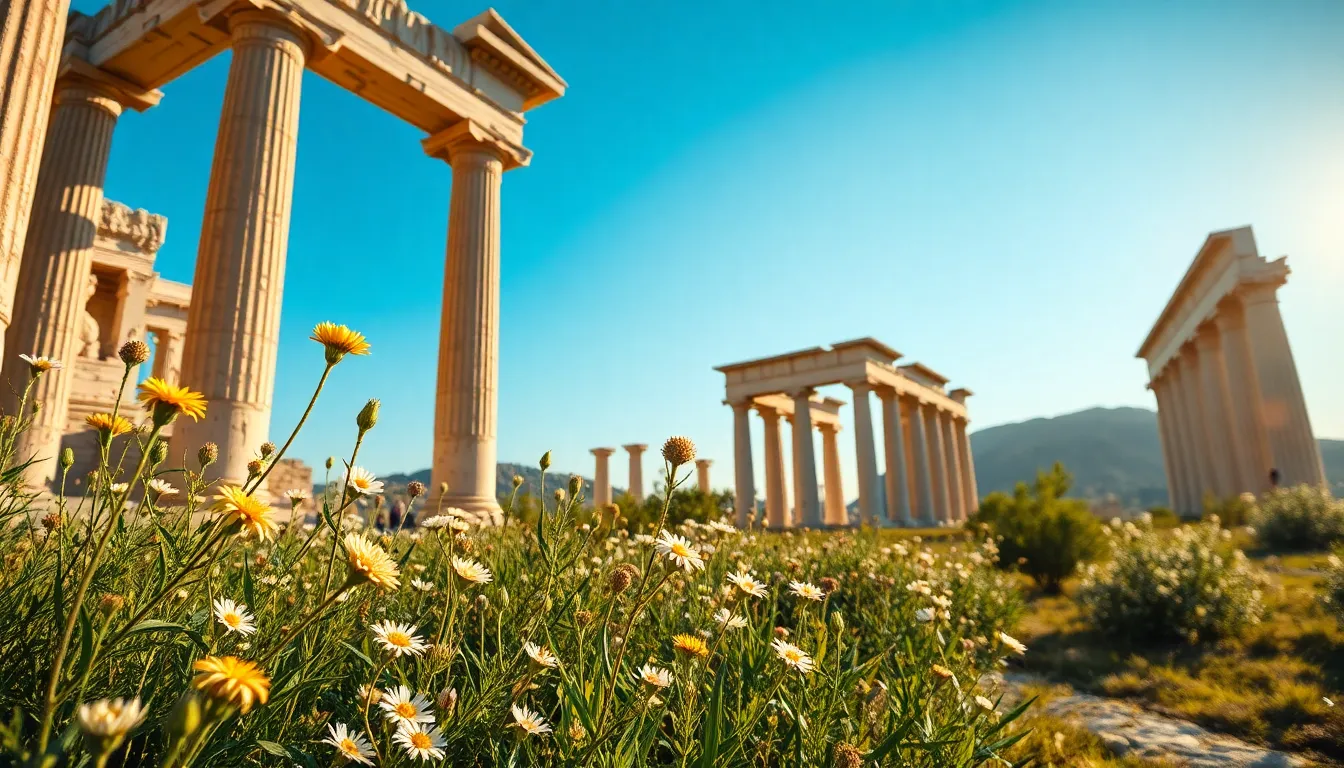
People assume the season question is about weather, and it mostly is not. After enough years leading groups through Greece, I can tell you spring and autumn feel almost identical on the thermometer. The real difference is what the light is doing, what the calendar is doing back home, and what kind of mood you want your group walking into. Both windows are excellent. They are the two best times to bring a heritage group to Greece, and choosing between them comes down to a few things that have little to do with degrees.
Let me put them side by side.
Why Both Beat Summer and Winter
First, the easy part. Summer in Greece is hot, often punishingly so at exposed sites like Corinth and the Areopagus, and it is crowded and expensive. Winter is mild but wet, with shorter days and some sites and island routes on reduced schedules. The sweet spots are the shoulder seasons: spring, roughly April to early June, and autumn, roughly mid-September to October. Comfortable walking temperatures, thinner crowds, and open sites. So the real question is never whether to go in a shoulder season. It is which shoulder.
The Case for Spring
Spring in Greece is green and blooming. April and May bring wildflowers up through the ruins, the hillsides are alive, and there is a freshness to the country that photographs beautifully and lifts a group’s spirit. Standing among the columns at Corinth with poppies between the stones is a particular kind of lovely.
The light in spring is soft and clear. Mornings are crisp, the air is washed, and the longer days mean more daylight to work with as the season moves toward June.
Where Spring Wins on the Calendar
For Christian groups, the spiritual resonance of spring is real. Easter and Pentecost fall in this window, and traveling in the season of resurrection and the birth of the church gives a Pauline journey an added layer of meaning. For many congregations, that alignment is reason enough.
The Honest Catch with Spring
Two things. Greek Orthodox Easter draws large domestic and pilgrim crowds and can tighten availability and pricing at popular sites, so the dates around it need planning. And early spring weather is slightly less settled than autumn, with a higher chance of a rainy day, especially in April. Nothing that derails a trip, but worth packing for.
The Case for Autumn
Autumn is the season I quietly favor for a smooth, settled trip, and here is why. By September the sea and the land have soaked up a summer of warmth, so days are reliably mild and evenings are pleasant. The weather is the most stable of any time of year, with the lowest chance of a washed-out day. For a group with older travelers or a tight itinerary, that reliability is worth a great deal.
The summer crowds have thinned by mid-September, but the full tourism infrastructure, ferries, island sites, restaurants, is still running at strength before the winter wind-down. You get quiet sites without reduced schedules.
Where Autumn Wins on the Calendar
For Jewish groups, autumn carries its own resonance. The High Holidays fall in September and October, and a heritage journey through the Sephardic world of Thessaloniki and Rhodes in that season can be deeply meaningful, which I touch on in our guide to Jewish heritage in Greece. Autumn also suits congregations whose calendars are simply freer after the summer than before it.
The Honest Catch with Autumn
The light shifts earlier. As October moves on, daylight shortens noticeably, which compresses how much you can fit into a day late in the season. And the landscape is drier and more golden than spring’s green, beautiful in its own way, but if your group is dreaming of wildflowers, autumn will not deliver them.
How I Help Groups Choose
When a leader is genuinely torn, I ask about three things rather than the weather.
Your community’s calendar comes first. If Easter or Pentecost gives your trip meaning, go in spring. If the High Holidays shape your group’s year, or your congregation is simply freer in fall, go in autumn. The biblical and communal calendar usually decides this faster than any forecast.
Then the group itself. For older travelers or a tightly packed itinerary where a rained-out day would hurt, I lean autumn for its stability. For a group that wants the green, blooming, resurrection-season feel, spring.
And then the islands. If your trip includes Patmos or Rhodes, both shoulders work, but late autumn starts to thin island schedules, so very late October trips want a closer look at ferry timing, which I cover in our comparison of land tours versus an Aegean cruise. Either way, both windows beat the summer crush by a wide margin.
Honestly, you cannot go wrong. I have led extraordinary groups in both, and no one has ever come home wishing they had picked the other shoulder.
What Each Season Asks You to Pack and Plan
The seasons differ less in temperature than in the small planning details, and those details are where a leader earns a smooth trip.
Spring asks you to plan around two things. Pack layers and a light rain shell, because April especially can hand you a wet morning, and the evenings stay cool. And watch the Orthodox Easter dates closely. The week around it tightens hotel availability and crowds the popular sites, so you either build the trip to embrace that energy or you place your dates a comfortable distance from it. Spring rewards a leader who books early, because the season is popular and the best group hotels fill.
Autumn asks less of your packing, since the weather is settled and warm into October, but it asks you to respect the shortening light. As the season moves on, the sun sets earlier, which quietly compresses how much a day can hold. Late-October itineraries want their site visits front-loaded into the daylight, and any island leg checked against the thinning ferry schedules. The upside is that autumn’s stability means fewer contingency plans for weather.
Neither set of planning notes is heavy. But knowing them ahead of time is the difference between a trip that flows and one that scrambles.
FAQ: Spring or Autumn for Greece
Is spring or autumn better for a Greece heritage tour?
Both are excellent and the weather is similar. Spring brings wildflowers, green landscapes, and the resonance of Easter and Pentecost for Christian groups. Autumn brings the most stable weather, thinned crowds with full infrastructure still running, and the High Holidays for Jewish groups. The choice usually comes down to your community’s calendar more than the climate.
What is the best month to visit Greece for a faith group?
May and late September into early October are the strongest single months. May gives you spring at its peak before the heat, and late September gives you settled, reliable weather after the summer crowds thin. Both keep you well clear of the summer heat and the winter wet.
Should we avoid Greek Orthodox Easter?
Not necessarily, but plan around it. The dates draw large crowds and can tighten availability and pricing at popular sites and on the islands. For some Christian groups the Easter season is the whole point, and we build the itinerary to work with the crowds. For others, the weeks just before or after are calmer.
Which season is easier for older travelers?
Autumn, generally, because the weather is the most stable of the year and the chance of a disruptive rainy day is lowest. Both shoulders offer comfortable walking temperatures, but if your group includes less mobile travelers and a rained-out day would be costly, autumn’s reliability is the safer bet.
Does the time of year affect the free group leader benefit?
No. When your group reaches fifteen paying participants, the group leader travels free in any season, covering flights, hotels, meals, and ground transportation. Seasonal pricing can affect the overall cost of the trip, but the leader benefit applies year-round.
If you are weighing the two windows for your community, I am glad to help you line it up with your calendar and your group. You can see how we build these journeys on our Greece heritage page or how the group format works on our group heritage tours page.
Contact us whenever you are ready to start planning.