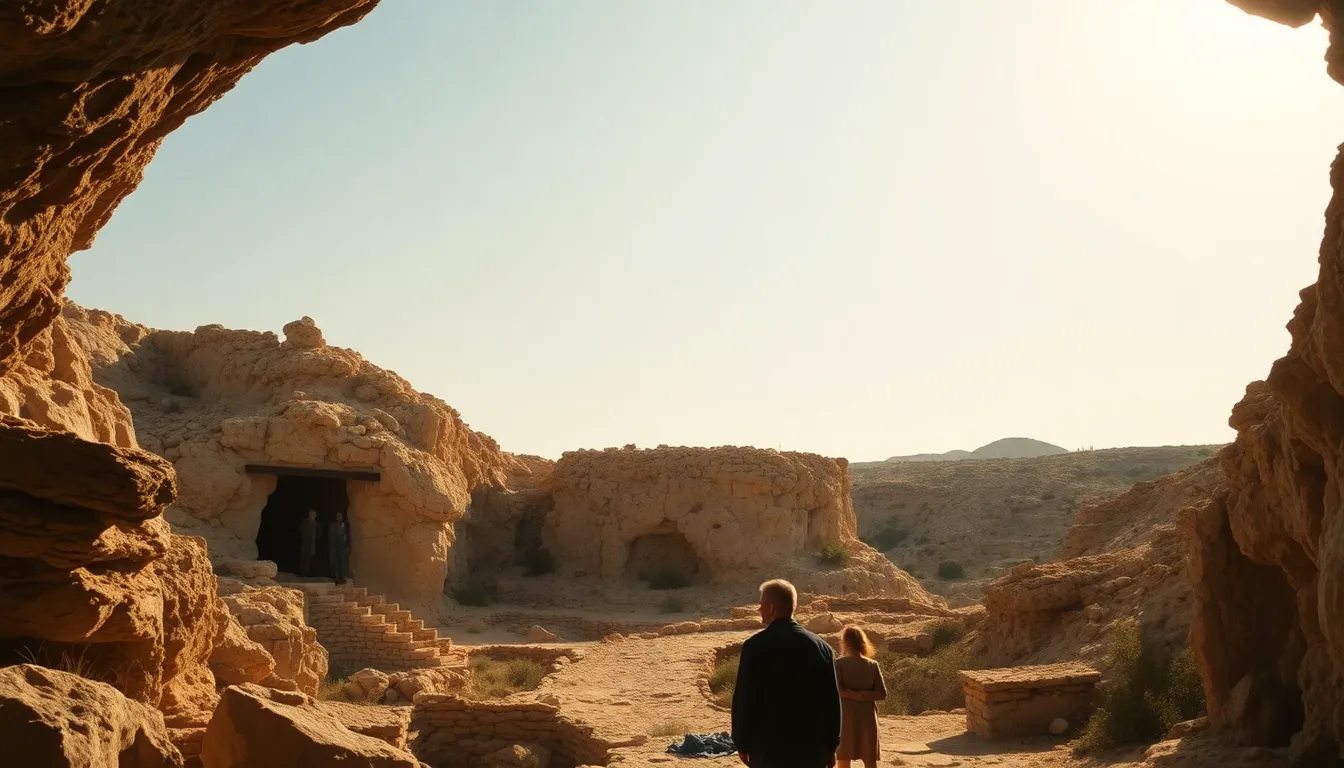
Most Greece itineraries treat Patmos as an afterthought, a pretty island you tack onto the end if there is time. I build it the other way around. When a group comes to Greece to study the Book of Revelation, every day should bend toward that low, cramped cave on Patmos where John, exiled and alone, received the visions that close the New Testament. Get there cold, on day one, and it is just a cave. Get there having built the whole trip toward it, and grown men weep at the entrance. I have seen it more than once.
This itinerary is for pastors, teachers, and study groups who want Revelation to be the spine of the trip, not a souvenir at the end. We use mainland Greece to set the stage, the Aegean to feel John’s distance and isolation, and Patmos as the destination the whole journey has been climbing toward. The Seven Churches of Revelation are across the water in Turkey, but their context, the world they lived in, runs straight through the Greek sites we visit on the way.
Let me walk you through how I build the climb.
Day 1: Athens, Arrival and the World John Knew
We start in Athens, and on a Revelation trip I use the first day to establish the empire John was writing against. The Acropolis and the agora are not just ancient Greek sights here. They are the visible face of the Roman and Greek world, the imperial cult, the temples to emperors as gods, that makes Revelation’s language about Babylon and the beast snap into focus.
Standing in the agora, I lay out the stakes for the group. John was not writing fantasy. He was writing to real churches under real pressure to worship the emperor, and Revelation was resistance literature for people who could lose everything. That frame changes how the whole trip reads.
Day 2: Corinth and the Pressure on the Early Church
The drive to Ancient Corinth grounds the group in the daily reality of the first Christians. Corinth was loud, commercial, pagan, and morally complicated, exactly the kind of city where following Christ cost you socially and sometimes economically. Paul’s letters to Corinth show a church wrestling with how to live in a hostile culture, which is the same pressure, escalated, that Revelation addresses.
The bema where Paul stood trial before Gallio is a useful, physical reminder that the Roman state was a real presence breathing down the neck of the early church. By the time we leave Corinth, the group understands why John’s readers needed a vision of the throne room of heaven to keep going.
Day 3: Thessaloniki and the Cost of Conviction
We move north to Thessaloniki, where Paul’s preaching triggered a riot and he was run out of the city. This is the day I talk about persecution honestly, because Revelation is a book written to and for the persecuted. The early churches of Thessaloniki, the Rotunda and Hagios Demetrios, are among the oldest Christian buildings in the world, evidence that the faith John was fighting to preserve actually survived.
Thessaloniki also carries one of the great Jewish heritage stories in Europe, once called the Jerusalem of the Balkans. For a group studying Revelation’s deep roots in Jewish apocalyptic literature, this context matters. You can read more about the city’s layered history in our 10-day heritage itinerary for Greece.
Day 4: Philippi, the First Church and the Long Story of Faithfulness
Philippi is where the first European church was planted, and on a Revelation trip I use it to complete the arc from beginning to end. Here is the first European church being born, and in Revelation we see the church, decades later, under fire and being called to endure. Standing at Lydia’s baptism river, the group feels the whole span: from the first convert to the final visions.
It is a quiet, gentle site, and the contrast between its peace and the intensity of Revelation is exactly the point. The faith that began at this riverside is the faith John was begging the Seven Churches not to abandon.
Day 5: The Crossing, Feeling John’s Distance
This is the day the itinerary turns toward Patmos, and I treat the journey itself as part of the experience. We make our way south and to the Aegean for the sea crossing toward the Dodecanese. The water matters. John was exiled to Patmos, sent away across this same sea, cut off from his churches. A group that flies straight to a cave misses this. A group that crosses the water begins to feel, in their bodies, what isolation and exile meant.
I keep the group reflective on the crossing day. Reading from the opening of Revelation on the water, where John writes that he was on the island called Patmos “for the word of God and the testimony of Jesus,” hits differently when the island is rising on the horizon ahead of you.
Day 6: Patmos, the Cave of the Apocalypse
This is the destination the whole trip has been building toward. Patmos is small, rocky, and quiet, and the Cave of the Apocalypse sits partway up the hillside, where tradition holds that John received the Revelation. It is low and cramped, and you can see the cleft in the rock said to be where the voice came through “like a trumpet.”
I do not rush this. After five days of building context, the group descends into that cave with the whole weight of the trip behind them. We read from Revelation 1 inside or just outside it. The Monastery of Saint John the Theologian above, a UNESCO World Heritage Site, holds one of the great libraries of the Orthodox world. But it is the cave that undoes people. This is the moment the itinerary was designed to deliver.
Give Patmos unhurried time. A morning at the cave, an afternoon in the hilltop town of Chora, an evening to sit with what the group has just experienced.
Day 7: Patmos Reflection, or the Return
A Revelation trip should not end the instant the group leaves the cave. I build in a reflection day, either a second day on Patmos to let it settle or a slower return journey with time for the group to talk through what they saw. The visions of Revelation are dense and strange, and a group that has just stood at their source has questions worth a full day.
For groups combining this with a wider Aegean route, the Patmos climax fits naturally into a cruise structure, which I cover in our Greek islands cruise heritage itinerary. For groups tracing Paul more broadly first, our apostle Paul in Greece guide pairs well as a front half.
Building Your Revelation Itinerary
The shape of this trip flexes around your group’s study focus. A group going deep on the Seven Churches may pair this Greek route with a Turkey extension to reach Ephesus, Smyrna, Pergamum, and the rest. A group focused tightly on John and Patmos can compress the mainland days and give Patmos more time. We build the climb around what your group came to study.
One thing worth knowing as you plan: with Heritage Tours, the group leader travels free when you bring fifteen or more participants.
FAQ: Planning a Revelation Itinerary in Greece
Are the Seven Churches of Revelation in Greece?
No. The Seven Churches, Ephesus, Smyrna, Pergamum, Thyatira, Sardis, Philadelphia, and Laodicea, are all in modern Turkey. Patmos, where John received and recorded the Revelation, is a Greek island. Many groups pair a Greek Patmos itinerary with a Turkey extension to reach the churches, and we help structure that combined trip.
What is the Cave of the Apocalypse?
It is the cave on Patmos where, by long tradition, the apostle John received the visions of Revelation during his exile. It sits on the hillside below the Monastery of Saint John, and you can see the cleft in the rock said to be the source of the voice. For a Revelation-focused group, it is the climax of the entire journey.
How do you get to Patmos from mainland Greece?
Patmos is reached by ferry through the Aegean, typically via Athens and the Dodecanese, or as part of an island cruise. We treat the sea crossing as part of the experience, because feeling the distance helps the group understand John’s exile. The journey takes planning, and we arrange it around your group’s pace.
How long should a Revelation-focused trip take?
Plan seven to nine days for the Greek route building toward Patmos. Add three or more days if you want a Turkey extension to the Seven Churches. The point of this itinerary is the build, so rushing the mainland days undercuts the climax at the cave.
Is this itinerary right for a serious study group?
Yes. It is designed for groups who want Revelation to be the backbone of the trip, with each day adding context, pressure, and meaning before the arrival at Patmos. Teachers and pastors leading a Revelation study find the on-the-ground sequence makes a notoriously difficult book far more comprehensible.
If you want to give your group the Book of Revelation as a place they have actually stood, I would love to help you build the climb toward Patmos. The destination earns its weight when the whole trip points to it. See our Greece heritage page or learn how the group experience works on our group heritage tours page.
Contact us whenever you are ready to start planning.