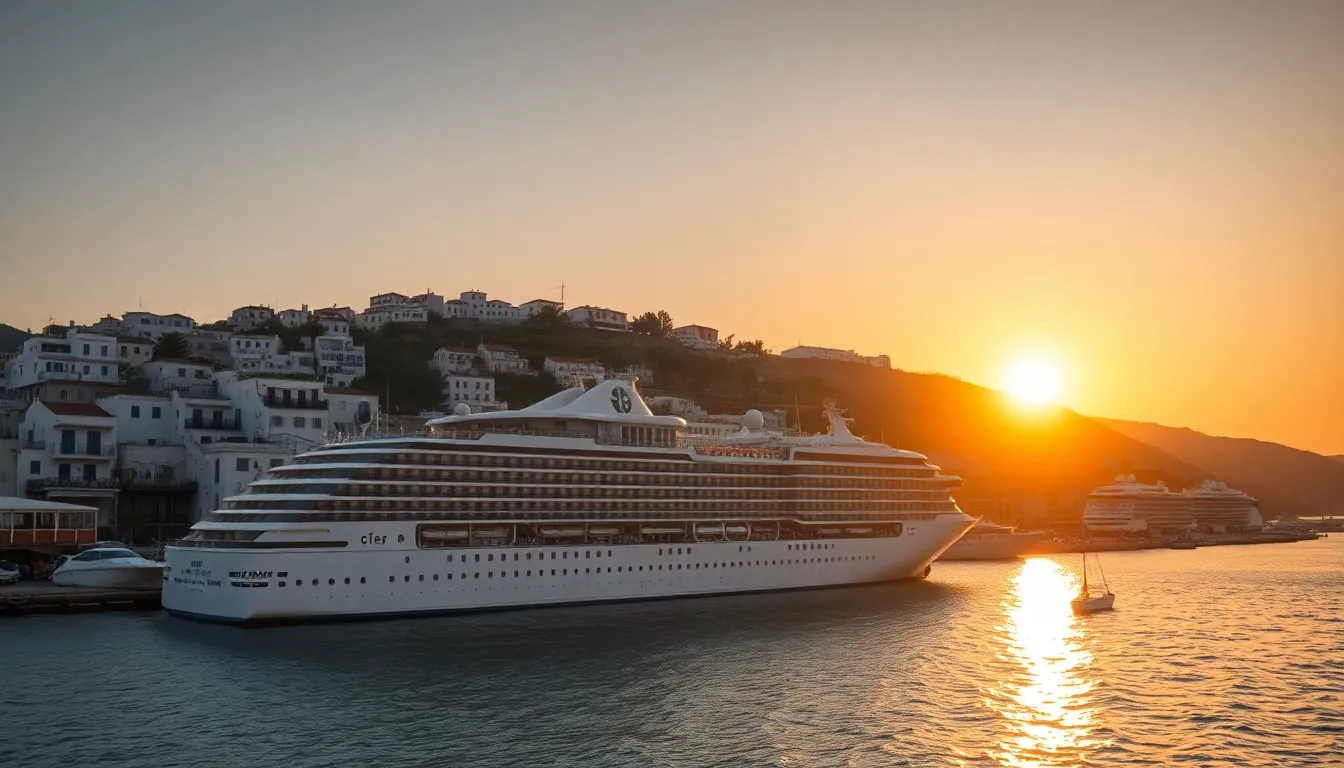
I have a complicated relationship with cruises for heritage groups, and I will be honest with you about it. A standard Aegean cruise will sail your congregation past some of the most important sites in the New Testament and let them off for three hours of shopping and a beach. The water is gorgeous, the food is endless, and the heritage gets reduced to a photo stop. I have watched it happen, and it is a missed opportunity on a grand scale.
But a cruise built right is one of the best things you can do for a heritage group, especially one with older travelers. You unpack once. You sleep in the same bed every night. The ship handles the logistics while your group wakes up in a new sacred harbor each morning. The trick is to bring the meaning aboard with you, to turn each port from a shopping stop into a heritage encounter. That is what this itinerary does. It takes the comfort and ease of an Aegean cruise and threads real Pauline and Revelation depth through every port.
Here is how I would shape a heritage cruise so the islands actually preach.
Before You Sail: Two Days in Athens
I never let a group board the ship cold. We spend two days in Athens first, because the cruise makes far more sense once the group has stood on the ground where the story is anchored. The Acropolis and the ancient agora set the Greco-Roman stage. The Areopagus, Mars Hill, where Paul preached to the philosophers about an unknown god, gives the group the theological frame they will carry from port to port.
By the time we board at Piraeus, the group is not a set of tourists looking for sun. They are a heritage group who understand what they are sailing toward. This pre-cruise grounding is the single most important thing you can do to keep a cruise from going shallow.
I also use these two days to set expectations about how shore excursions work. On a cruise you get hours, not days, in each port, so the group needs to know which ports we will move through quickly and which we will give everything we have. A group that understands the rhythm in advance does not waste the precious Patmos hours looking for souvenirs. They arrive at the cave ready.
Day 1 at Sea and Mykonos: Setting the Tone Aboard
The first sailing day is where you establish that this is a heritage cruise, not a holiday that happens to have churches in it. I run a devotional or study session on the ship, on the deck if the weather allows, laying out the route ahead and what each island holds. Establishing that rhythm early, a study session at sea between ports, is what carries the meaning across the whole trip.
Mykonos itself is light on heritage and heavy on charm, and that is fine. Every cruise needs a port that simply lets the group breathe, wander the whitewashed lanes, and rest. I use the easy ports honestly, as rest, and save the depth for the ports that earn it.
Day 2, Patmos: The Cave of the Apocalypse
Patmos is the heart of a heritage cruise, and it is the reason I steer groups toward Aegean routes that include it. This is the island where John was exiled and where he received the visions of the Book of Revelation. The Cave of the Apocalypse sits on the hillside, low and cramped, with the cleft in the rock said to be where the voice came “like a trumpet.”
On a standard cruise this is a quick optional excursion. For a heritage group it is the spiritual peak of the voyage. We go up to the cave with intention, read from Revelation 1 at the site, and visit the Monastery of Saint John the Theologian above, a UNESCO World Heritage Site holding one of the great Orthodox libraries. If your group wants to build the whole trip around this moment, our Revelation-focused Greece and Patmos itinerary goes deeper on how to construct that climb.
Patmos is the proof that a cruise can carry real weight. Plan your shore time here generously and do not let it become a rushed stop.
Day 3, Rhodes: Medieval Walls and a Vanished Community
Rhodes gives a heritage cruise a different kind of depth. The medieval Old Town is a UNESCO World Heritage Site, and inside it sits La Juderia, the old Jewish Quarter, and the Kahal Shalom Synagogue, built in 1577, the oldest synagogue in Greece still standing. Before the war the Jewish community of Rhodes numbered around two thousand. In 1944 the entire community was deported. The Square of the Jewish Martyrs steps from the synagogue marks where they were gathered.
For an interfaith or Jewish heritage group, Rhodes is a profound port, and even for a Christian group it is a sobering and important stop. The cruise format makes Rhodes easy to reach, which on a land itinerary requires a separate flight or ferry. This is one of the real advantages of sailing.
Day 4, Crete or Santorini: Ancient Roots and an Easier Day
Most Aegean heritage routes touch Crete or Santorini, and I use whichever the cruise offers as a change of register. Crete carries a New Testament connection, Paul sailed along its coast on his voyage to Rome as recorded in Acts 27, and the harbor of Kaloi Limenes, the “Fair Havens” of that account, is on the south coast. Santorini, by contrast, is pure beauty and rest, a port to simply enjoy.
I am honest with groups about which ports are heritage and which are restorative. A good cruise needs both. Stacking heavy sites back to back exhausts a group; the lighter ports are what let the meaningful ones land.
Day 5, Back Toward Athens, or a Thessaloniki Land Extension
As the cruise loops back, I encourage groups to consider a land extension rather than flying straight home. The northern Pauline sites, Thessaloniki, Philippi, and Lydia’s baptism river, are not reachable by Aegean cruise, and they are central to the story. A group that has sailed the Revelation and Rhodes ports gains enormously from adding a few land days in the north. Our 10-day heritage itinerary for Greece shows how the northern sites fit, and our apostle Paul in Greece guide lays out the mainland route in full.
Why a Cruise Works So Well for Older Groups
The unbeatable advantage of a cruise for a heritage group is comfort. You unpack once. There are no early-morning bus departures with luggage. Meals, beds, and medical support are all aboard. For a congregation with older members or limited walkers, this removes the single biggest source of trip fatigue. The walking is concentrated into the shore excursions, and the ship is always there to return to.
The honest tradeoff is shore time. You get hours in each port, not days, so the heritage has to be focused and the guiding has to be excellent. That is exactly what we bring aboard. We send a guide ashore with the group at each port rather than handing your people off to the ship’s generic excursion, which is the difference between a Revelation reading at the Cave of the Apocalypse and a rushed photo on the steps. The on-board study sessions between ports do the rest of the work, knitting the stops into one journey instead of a string of disconnected mornings.
One thing worth knowing as you plan: with Heritage Tours, the group leader travels free when you bring fifteen or more participants.
FAQ: Planning a Greek Islands Heritage Cruise
Can a Greek islands cruise be a genuine heritage trip?
Yes, if you bring the heritage aboard. A standard cruise treats sacred ports as shopping stops. A heritage cruise pairs the ship’s comfort with on-board study sessions and focused, well-guided shore excursions at ports like Patmos and Rhodes. The difference is entirely in the framing and the guiding, not the route.
Which Greek islands have the most heritage significance?
Patmos is the most significant, as the place where John received the Revelation, with the Cave of the Apocalypse and the Monastery of Saint John. Rhodes holds the oldest standing synagogue in Greece and a profound Jewish heritage story. Crete carries the Acts 27 connection to Paul’s voyage. We build the trip around whichever of these ports your cruise reaches.
Is a cruise better than a land tour for an older group?
For comfort, often yes. You unpack once, sleep in the same bed nightly, and avoid daily luggage handling and early bus departures. The tradeoff is shorter time in each port. For groups with limited walkers or older travelers, the comfort usually outweighs the shorter shore visits.
Can we add the mainland Pauline sites to a cruise?
Yes, and I recommend it. Thessaloniki, Philippi, and Lydia’s river in the north are central to Paul’s story and are not reachable by Aegean cruise. A land extension before or after the sailing rounds out the trip. We help structure the combined cruise-and-land itinerary.
How long is a typical heritage cruise trip?
The cruise portion usually runs four to seven nights, and I add two pre-cruise days in Athens for grounding. With a northern land extension, the full trip runs ten to twelve days. We shape the length around your group’s time and budget.
If you like the comfort of a cruise but refuse to give up the meaning, I would love to help you build one that does both. The Aegean can carry real weight when the heritage sails with you. See our Greece heritage page or learn how the group experience works on our group heritage tours page.
Contact us whenever you are ready to start planning.