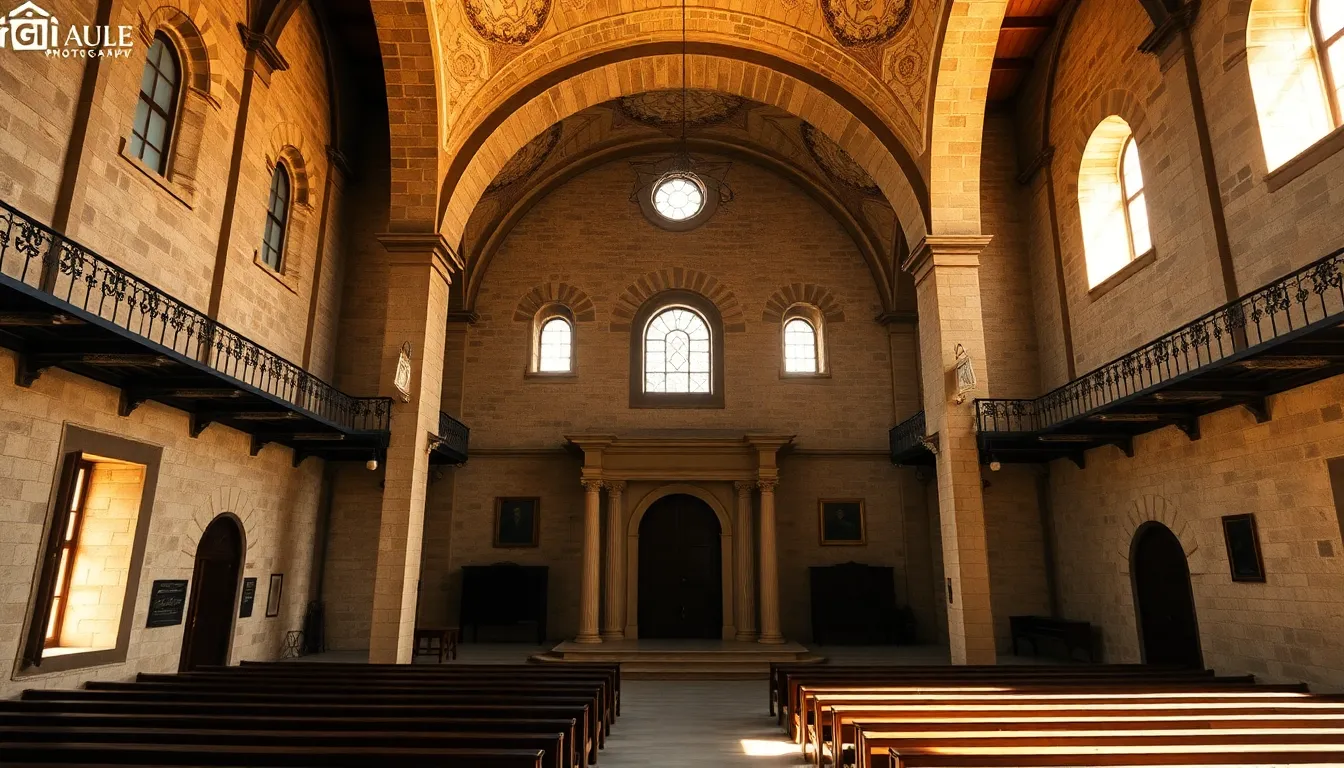
A rabbi I worked with told me, near the end of his congregation’s trip, that he had spent his whole career thinking of the Jewish Diaspora as a story that ran through Spain, Poland, and Germany, and that Greece had quietly rewritten the map for him. He was standing in the Kahal Shalom Synagogue in Rhodes, the oldest in Greece still in use, and he said it almost to himself: I did not know this was here. Most of your congregation will not know either. That is exactly why this journey is worth building.
Greece holds one of the great untold chapters of Jewish life, and it is nearly invisible to most American congregations. Thessaloniki was once roughly half Jewish, one of the foremost Sephardic centers in the world, known as the Jerusalem of the Balkans. Ioannina has kept the Romaniote tradition alive for over two thousand years, a Jewish world entirely separate from the Sephardic one. And the Holocaust nearly erased both. Building a journey through this is one of the most meaningful things you can do as a spiritual leader, and I want to walk you through how to do it well.
The Three Cities That Anchor a Jewish Greece Itinerary
A Jewish heritage journey in Greece centers on three cities, each a different chapter of Diaspora life. Get these right and the trip has a spine.
Thessaloniki: The Anchor
Thessaloniki is where you build the trip around. Before the war it was one of the largest and most influential Sephardic communities on earth, with a Jewish life so central that the port reportedly closed on Shabbat. The Jewish Museum of Thessaloniki, the Monastir Synagogue, the Holocaust memorial, and the old neighborhoods need at least two full days, and I would lean toward three if your group wants to go deep. This is not a place to rush. The scale of what was lost here is hard to absorb in an afternoon.
Rhodes: The Island Chapter
Rhodes adds the Mediterranean dimension. La Juderia, the old Jewish quarter, is one of the best preserved in Europe, and the Kahal Shalom Synagogue at its heart, founded in 1577, is deeply moving to stand inside. The Jewish Museum of Rhodes and the square of the martyrs, where the community was gathered for deportation, tell the rest of the story. A day and a half on Rhodes is well spent.
Ioannina: The Romaniote World
Ioannina, in the mountains of the northwest, is where you encounter something most of your congregation has never heard of: the Romaniote Jews, Greek-speaking, present since antiquity, with their own liturgy and customs entirely distinct from the Sephardim. The Kehila Kedosha Yashan Synagogue still stands by the lake. It takes effort to reach Ioannina. It is worth every hour of the drive, because there is nowhere else quite like it.
What Congregations Underestimate About Greece
The thing I hear most from rabbis after a Greece trip is that they did not expect the history to run this deep. Greece is not Israel and it is not Poland. The Jewish story here is its own thing, enormous and almost unknown, and most of your congregation will be meeting it for the first time. That puts a particular weight on your role as teacher. You are not just visiting sites. You are introducing your people to a civilization they did not know was part of their inheritance. Plan for that. Build in the time to teach it.
The second thing worth knowing: these sites are not crowded. You will frequently have a synagogue or a memorial to yourselves. There is no jostling, no tour groups stacked three deep. That quiet changes the quality of the experience in a way that is hard to put a price on. A kaddish said in an empty synagogue in Rhodes lands differently than the same words said in a crowd.
Where Greece’s Two Heritage Stories Meet
If your congregation has any interest in the broader history, Thessaloniki is also where the Jewish and Christian stories overlap, and it is worth knowing even for a Jewish-focused trip. Paul preached in the synagogue here, and the Jewish community he engaged had already been established for centuries. For a congregation that draws members from interfaith families, or for a community that wants to understand the full layered history of the city, this overlap is a gift rather than a distraction. We cover how that works for combined groups in our guide for pastors and rabbis, and the Christian side of the city in our piece on Paul’s footsteps in Greece. For a Jewish journey, you simply lead it as your own. The Sephardic and Romaniote story stands fully on its own.
How the Free Leader Benefit Changes the Math
Here is the part that matters when you bring this to your board or your congregation. The group leader travels free when you bring fifteen or more participants. Your flights, hotels, ground transportation, and site entry are covered. You are not fronting your own costs and asking the congregation to make you whole afterward.
For a rabbi, this does two useful things. It removes the personal expense from the conversation entirely, so the discussion is about the journey and not about your travel budget. And it frees you to lead, because you are not the one managing logistics or money on the ground. Groups usually range from fifteen to forty. If you are unsure your community can fill fifteen, start early. Many leaders are surprised by the interest once the destination and the purpose are clear, because few congregants know this story exists. You can see how the group structure works on our group heritage tours page.
Leading the Journey on the Ground
A professional local guide handles the history and the archaeology at each site. Your job is the part only you can do. You teach the meaning. You lead the kaddish at the Holocaust memorial in Thessaloniki. You connect the Sephardic story to your congregation’s own questions about identity, exile, and survival. You decide where the group slows down and sits with something.
Plan two or three of those moments in advance and choose what you will say and read at each. The Holocaust memorial in Thessaloniki is one. The Kahal Shalom Synagogue in Rhodes is another. The empty Romaniote synagogue in Ioannina is a third. You do not need a teaching moment at every stop. You need a few that your people carry home.
Choosing an Operator Who Understands This Trip
Greece is not a simple destination to build well for a Jewish group. Booking a hotel in Athens is easy. Arranging meaningful access to the synagogue in Ioannina, coordinating a group visit to a small community site, or building an itinerary that honors all three Jewish traditions takes relationships on the ground and real knowledge of the destination.
Here is what to ask. Does the operator understand that a Jewish heritage itinerary in Greece is not the same as a generic Greece package? Do they have ground operators in the smaller cities, not just Athens? Do they build around you as the leader rather than handing you a binder? If the planning feels like you are doing their job, that is a signal. At Heritage Tours, we know this destination deeply and we build the Jewish heritage journey as its own thoughtful trip, not a side note to a Christian one.
FAQ: Building a Jewish Greece Journey
What is the core route for a Jewish heritage trip to Greece?
Thessaloniki for two to three days as the anchor, Rhodes for a day and a half, and Ioannina for a day. Athens can serve as the arrival or departure point with a stop at the Jewish Museum of Greece. This covers all three of Greece’s distinct Jewish traditions: Sephardic Thessaloniki, Sephardic Rhodes, and Romaniote Ioannina.
How many people do I need for the leader to travel free?
Fifteen. With a group of fifteen or more participants, the leader’s full travel costs, including flights, hotels, ground transportation, and site entry, are covered. Smaller groups are possible but do not qualify for the free leader benefit.
Will my congregation already know this history?
Most likely not, and that is part of the value. The Sephardic civilization of Thessaloniki and the Romaniote tradition of Ioannina are nearly unknown to American congregations. Your role as teacher becomes central, and the discovery itself is one of the most moving parts of the trip.
How far ahead should we plan?
Six to nine months for a group of fifteen to thirty. Trips timed around the Jewish holidays or specific commemoration dates should plan nine to twelve months ahead. Earlier planning also gives you more time to build interest and teach the background before you go.
Can a Jewish trip also include the Christian heritage of Greece?
It can, and Thessaloniki is the natural meeting point, but it is not required. The Sephardic and Romaniote story stands fully on its own. We help interfaith and combined congregations build a journey that honors both traditions when that fits the community.
If this is a journey you want to build for your congregation, the right time to start is now. The story is extraordinary, the sites are quiet and intact, and most of your people will be encountering this world for the first time. See how we structure these trips on our Greece heritage page, and when you are ready, contact us and we will build it with you.