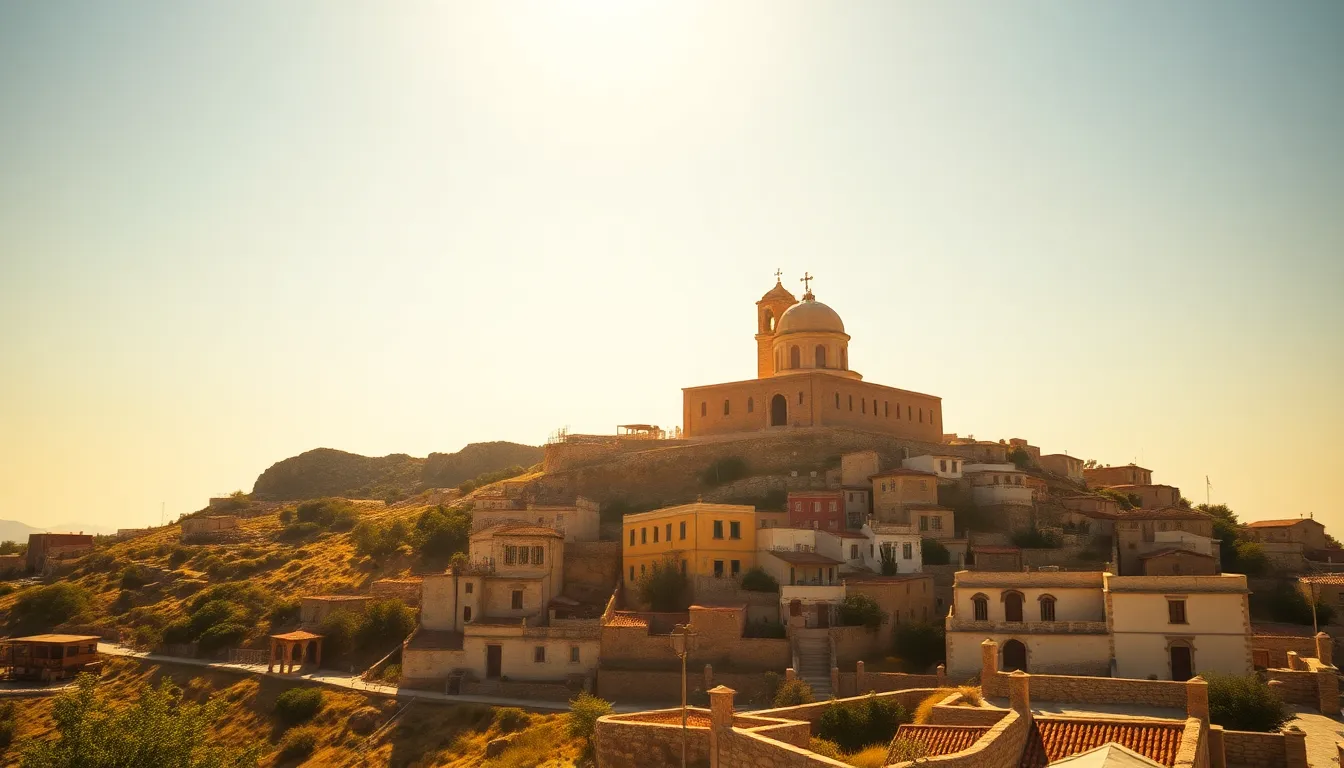
The first time I brought a group to Patmos, we came in by ferry at the end of a long itinerary, and people were tired. Then the island came up out of the water, that fortified monastery sitting on top of the hill like a crown, and the whole boat went quiet. One of the pastors leaned over to me and said, “This is where it was written.” That is the thing about Patmos. You read the Book of Revelation your whole life, and then you stand on the rock where John heard the voice “like a trumpet,” and the book stops being abstract.
Patmos is small. You can drive across it in twenty minutes. But for a faith group, it carries more weight per square mile than almost anywhere in Greece, because the last book of the Bible was given here.
Let me walk you through what a visit actually looks like, and how to plan one for your congregation.
Why John Was on Patmos
It helps your group to understand the why before they arrive. John tells us himself in Revelation 1:9 that he was on Patmos “for the word of God and the testimony of Jesus Christ.” Tradition holds that he was exiled here under the emperor Domitian, near the end of the first century, banished to a small rocky island in the Aegean the way Rome dealt with troublesome voices.
That detail matters. Patmos was not a retreat. It was a place of exile, isolated and hard. And it was here, in that isolation, that John received the vision that became the Book of Revelation, addressed first to the seven churches of Asia Minor across the water. When your people stand on the island and feel how cut off it is, the courage of what was written here lands differently.
The Cave of the Apocalypse
The heart of any Patmos visit is the Cave of the Apocalypse, the grotto on the hillside between the port at Skala and the hilltop town of Chora. Tradition holds this is the cave where John lived and where he received the vision.
The cave is now enclosed within a small monastery complex, and you descend into it. Inside, it is dim and close. Tradition marks the spot where John rested his head, the handhold he used to pull himself up, and the triple crack in the rock above, which the Orthodox understand as a sign of the Trinity and the place from which the voice of God spoke. Whether your group reads those marks as literal or as devotional tradition, the experience of standing inside the actual grotto, reading Revelation 1 aloud, is one your people will not forget.
I give the cave its own full treatment in our guide to the Cave of the Apocalypse on Patmos, because it deserves more than a paragraph. For planning purposes, know that it is a working sacred site, quiet, and reverent, not a museum. Dress modestly and keep voices low.
The Monastery of Saint John the Theologian
Above the cave, crowning the island, is the Monastery of Saint John the Theologian, founded in 1088 by the monk Christodoulos. It is a fortress as much as a monastery, with thick walls built to withstand pirate raids, and it has been a center of Orthodox learning and pilgrimage for almost a thousand years.
Inside, your group will find a treasury that genuinely belongs in the conversation with the great collections of Christendom. There are icons, vestments, and a library holding ancient manuscripts, including early codices of the Gospels. The monastery, the cave, and the historic town of Chora together are a UNESCO World Heritage Site, recognized as one of the most important religious and historical sites in the Christian world.
For a group, the monastery is where the long arc of the faith becomes visible. You have the cave where the vision was given, and then a thousand years of monks who came here to guard and study what was written. That continuity moves people.
How Groups Reach Patmos
Here is the practical reality that shapes every Patmos visit: there is no airport. You arrive by sea. That is part of what keeps the island the way it is, but it means you need to plan the logistics with care.
Most groups reach Patmos one of two ways. The first is by ferry from Athens (the port of Piraeus) or from nearby islands like Kos, Rhodes, or Samos. The second, and the one I usually recommend for heritage groups, is as part of an Aegean cruise that includes the island as a port of call. Several faith-focused cruises that trace the steps of Paul and John include Patmos for exactly this reason.
A few things I tell every group leader planning Patmos:
- Give it real time. A rushed half-day where everyone runs from the cave to the monastery and back to the boat undercuts the whole reason you came. If you can, build in a slower morning.
- Mind the season. Ferry schedules thin out sharply outside the summer and shoulder seasons. Late spring and early fall give you both good weather and reliable connections.
- Plan the uphill. Chora and the monastery sit at the top of the island. There is transport up, but the historic lanes are steep and cobbled. For older group members, this is a place to take it slow.
Where Patmos Fits in a Greece Itinerary
Patmos works beautifully as the closing movement of a Greece heritage trip. You can spend your first week tracing Paul on the mainland, then cross to the islands and end on Patmos with John and the Revelation. That sequence carries your group from the founding of the European church all the way to the final vision of scripture. It is a complete biblical arc, and ending it on Patmos gives the whole journey a sense of resolution.
For groups whose focus is the Revelation specifically, Patmos also pairs naturally with the Seven Churches of Asia Minor across the water in modern Turkey. I cover how to bridge those two in our guide to the Seven Churches connection and the Aegean crossing. And for the wider picture of biblical Greece, our hub page on Greece’s spiritual sites lays out the full map.
One thing worth knowing as you build the trip: with Heritage Tours, the group leader travels free when you bring fifteen or more participants. For a pastor planning a Revelation-focused journey for a congregation, that changes the budget conversation, and it is worth factoring in from the start.
FAQ: Visiting Patmos
Why is Patmos important in the Bible?
Patmos is the island where the Apostle John received the vision recorded in the Book of Revelation, the final book of the New Testament. John writes in Revelation 1:9 that he was on Patmos “for the word of God and the testimony of Jesus Christ.” Tradition holds he was exiled here near the end of the first century, and the entire book of Revelation was given to him on this island.
Can you visit the cave where Revelation was written?
Yes. The Cave of the Apocalypse is open to visitors and is the central site on the island. It is now enclosed within a small monastery between the port and the hilltop town. Inside, tradition marks the place where John rested and the spot from which the divine voice is said to have spoken. It remains a working sacred site, so groups should dress modestly and keep the visit reverent.
How do groups get to Patmos?
By sea only, since the island has no airport. Most faith groups arrive either by ferry from Athens or nearby islands, or as part of an Aegean cruise that includes Patmos as a port of call. We help groups choose the approach that fits their itinerary and pace.
How much time should a group spend on Patmos?
I recommend at least a full day if your schedule allows. The two essential sites, the Cave of the Apocalypse and the Monastery of Saint John, sit close together, but the island rewards a slower pace. A rushed half-day off a cruise ship works, but it misses the quiet that makes Patmos meaningful.
When is the best time to visit Patmos?
Late spring (May to June) and early fall (September to October) are ideal. The weather is comfortable, the summer crowds have eased, and ferry connections are still running on a full schedule. Outside those windows, sea connections thin out and need careful planning.
If a Revelation journey is taking shape in your mind for your congregation, I would love to help you build it. Patmos is one of those places where the trip plans itself once your people are standing on the rock where the book was written. You can see how we structure these journeys on our Greece heritage page or learn how the group experience works on our group heritage tours page.
Contact us whenever you are ready to start planning.