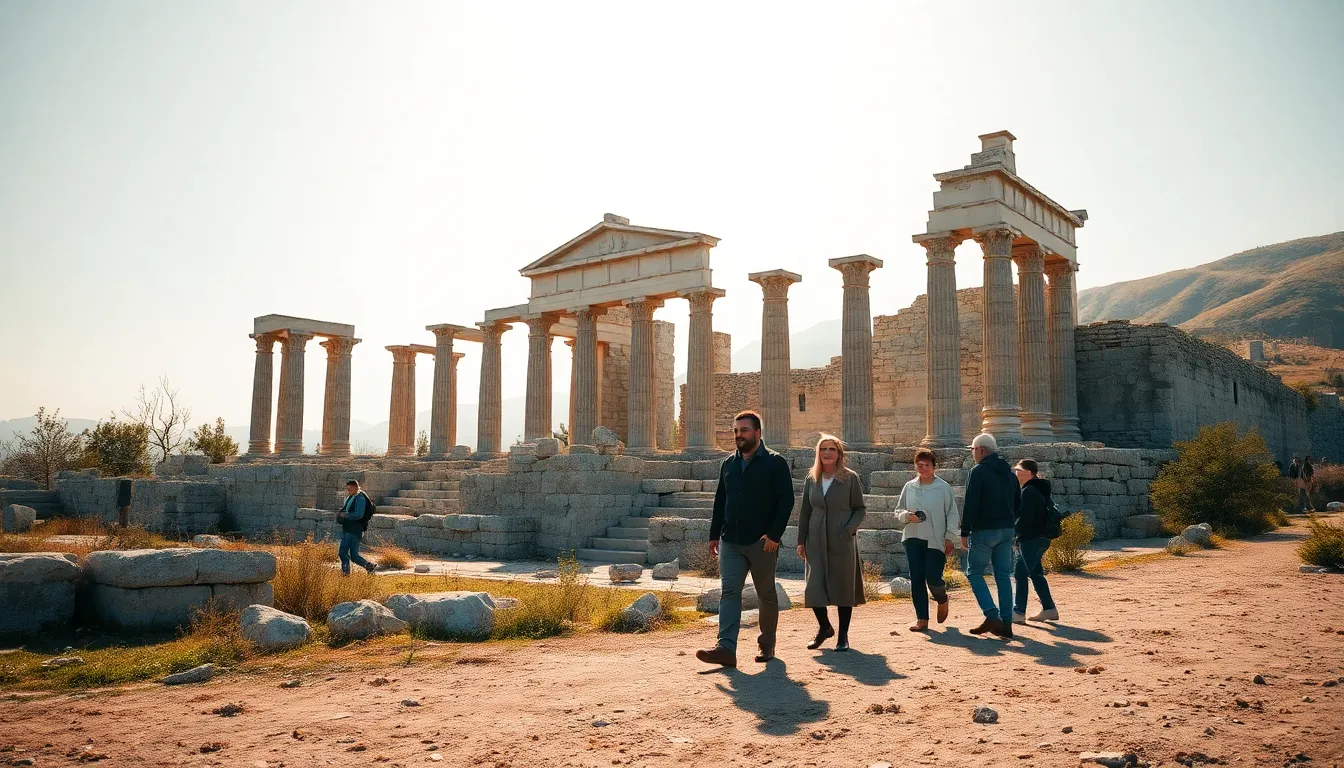
The first time I helped a pastor lead a group to Greece, he called me about three weeks before departure, quietly worried that he had taken on something too big. He had preached through Acts a dozen times, but he had never run an international trip, and he kept circling the same question: what if I get up there and I don’t know what to say? I told him what I will tell you. By the time your group is standing at the river outside Philippi where Lydia was baptized, the place does most of the work. You just have to bring your people there and get out of the way.
If this is your first heritage trip, that worry is normal, and it is not a reason to wait. Greece is one of the most forgiving destinations a pastor can start with, because the sites line up along Paul’s route in a logical order and the story is one you already know cold. Let me walk you through how to lead it well the first time, from the decisions you make now to the moments you will be glad you planned for.
Why Greece Is a Good First Trip for a Pastor
Some heritage destinations are hard to lead because the geography is confusing or the biblical sites are uncertain. Greece is the opposite. Paul’s second missionary journey runs from the north to the south, Acts 16 through 18 is your itinerary, and the cities are excavated and open. You can trace the whole mission in sequence: Philippi, Thessaloniki, Berea, Athens, Corinth.
That sequence matters more than you might think for a first-time leader. It means you are not improvising a route. You are following a story your congregation has heard you preach, in the order it happened, with a clear beginning and a clear end. By the time you reach Corinth, where Paul stayed eighteen months, your group has lived the arc. For a deeper walk through that full route, our guide to the footsteps of Paul in Greece lays out each city in order.
The other reason Greece works for a first trip: you do not have to be a logistics expert. Your job is the spiritual and teaching side. The operator handles the rest. More on that below.
The First Decisions You Make
Before you announce anything to the congregation, settle a few things. These shape everything that follows.
How Many Days
Eight days covers the core Pauline route at a comfortable pace. That is the number I steer most first-time pastors toward. Shorter than that and you are rushing the quiet moments that make the trip, which is the most common mistake I see. If you want to add Meteora, the monasteries on their rock pillars, or an island extension to Patmos where John received the Revelation, plan for ten to twelve days.
Which Route
If your time is tight and you cannot do the whole route, choose the leg that connects to what you have been preaching. The northern cities, Philippi and Thessaloniki, are where Paul planted his earliest European churches. Athens and Corinth in the south give you Mars Hill and the bema where Paul stood before Gallio. Most eight-day trips do the full north-to-south run, and I recommend that for a first trip because it tells the complete story.
When to Go
Late spring, May to June, and early fall, September to October, are the sweet spots. The weather is good for walking the sites and the summer crowds have thinned. Avoid July and August if you can, both for the heat and for older members of your group.
Understand the Free Leader Benefit Before You Set the Price
Here is the piece that changes the math for most pastors, and you want to understand it before you ever quote a number to your congregation.
The group leader travels free when you bring fifteen or more participants. That means your flights, hotels, ground transportation, and site entry are covered. You are not paying your own way and then asking the church to reimburse you. With a group of fifteen, the cost is carried by the group, and you travel at no personal cost.
This matters for a first-time leader in two ways. First, it removes the awkwardness of justifying a personal expense to your board or your congregation. Second, it frees you to focus entirely on leading, because you are not the one tracking receipts and budgets. Groups usually land between fifteen and forty people. If you are not sure you can fill fifteen, start the conversation early, and our guide to how to recruit and fill your group walks through the ask step by step. Most pastors are surprised by the interest once the purpose is clear. We explain how the group side works on our group heritage tours page.
Leading the Group, Not Guiding the Tour
This is the distinction that takes the pressure off. You are not the tour guide. A professional local guide handles the history, the dates, and the archaeology at each site. You are the spiritual leader. Those are two different jobs, and you only have one of them.
What that means in practice: at each site, the guide explains what your group is looking at. Then you step in for the part only you can do. You read the passage. You connect it to what your people are walking through. You lead a short devotion at the river in Philippi, or a moment of reflection on Mars Hill in Athens. You decide where to slow down and let the group sit with something.
Plan those moments in advance. Pick three or four places where you will pause and lead, and choose the passage for each. Philippi and the baptism site of Lydia is one. The Areopagus in Athens, where Paul preached to “an unknown god,” is another. Corinth, where you read First Corinthians on the ground in the cosmopolitan city that letter addresses, is a third. You do not need a moment at every stop. You need a few that land.
What to Tell Your Congregation Before They Go
A short pre-trip meeting saves you a hundred questions on the ground. Cover the pace, the walking, and the fact that some sites have uneven footing. The rock of the Areopagus is smooth and slippery, and the Acrocorinth involves a climb. For older members, those are places to take it slow, and it helps if they know in advance.
Tell them to bring a Bible they can read from at the sites, comfortable shoes, and a willingness to go quiet when the moment asks for it. Set the expectation early that this is not a sightseeing trip with a religious theme. It is a journey through their own story. People rise to that framing when you give it to them.
What the Operator Should Handle So You Don’t Have To
For a first trip especially, the right operator is the difference between leading with a clear head and drowning in logistics. Here is what should be off your plate entirely: flights, hotels, ground transport, local guides, site entry, the daily schedule, and the contingencies when something shifts. If you find yourself doing the operator’s work, something is wrong.
What you should expect from a good operator is a planning partner who understands faith-based travel, builds the itinerary around your teaching, and makes the logistics invisible. At Heritage Tours, we have built these journeys for decades, and we are used to first-time leaders. We will not hand you a binder and wish you luck. We build the trip with you and stay reachable while you are on the ground.
FAQ: Leading Your First Greece Heritage Trip
Do I need to be an experienced traveler to lead a Greece trip?
No. You need to know your congregation and your passages. The operator handles flights, hotels, transport, and local guides, and a professional guide covers the history at each site. Your job is the spiritual leadership, which is the part you are already equipped for. Plenty of pastors lead a strong first trip with no prior international group experience.
How many people do I need for the leader to travel free?
Fifteen. With a group of fifteen or more participants, your full travel costs, including flights, hotels, ground transportation, and site entry, are covered. Smaller groups are possible but do not qualify for the free leader benefit.
How far ahead should I start planning a first trip?
Six to nine months for a group of fifteen to thirty is comfortable. Earlier is better for a first-time leader, because it gives you more runway to build interest in the congregation and to settle the details without pressure. Trips timed around Orthodox Easter need nine to twelve months.
What if I am nervous about leading the devotional moments?
Plan three or four of them in advance and pick the passage for each. The sites carry more weight than you expect. Standing where Paul stood does most of the work, and your people will feel it. You are guiding a moment, not delivering a lecture.
Can I add other sites to a Pauline itinerary?
Yes. Meteora and an island extension to Patmos are the two most common additions, and both fit a ten to twelve day trip. Thessaloniki also holds a major Jewish heritage story if your group has interest there. We help you decide what fits your time and your people.
If you are imagining this trip for the first time, that is the right moment to start the conversation. The route is clear, the sites are real, and the story tells itself once your people are standing in it. If you want the full playbook before you begin, read the complete guide for group leaders. See how we structure these journeys on our Greece heritage page, and when you are ready, contact us and we will help you shape your first trip.