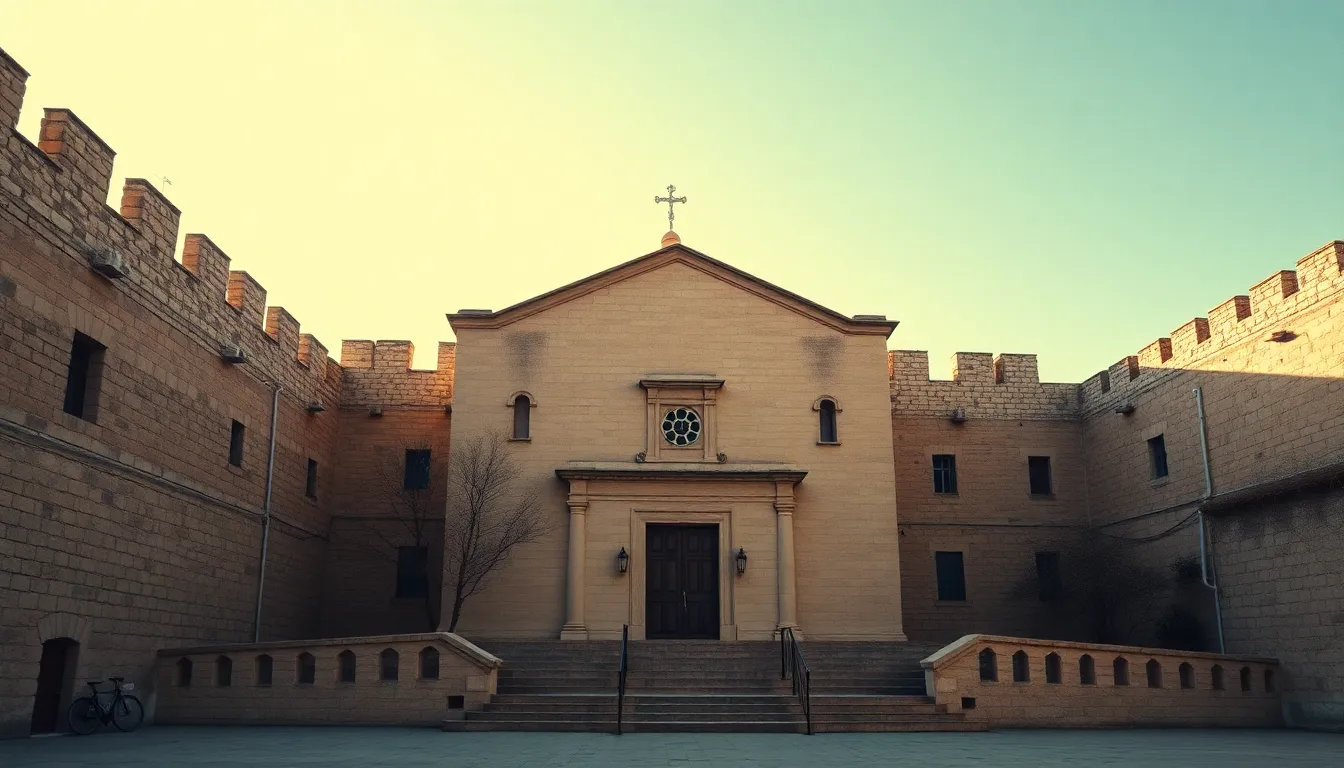
The drive to Ioannina takes you through the mountains of northwestern Greece, and I always tell groups that the journey is part of the point. By the time you reach the lake and the old castle walls, you understand that this community lived somewhere remote, somewhere apart from the better-known Jewish centers of Greece. And then you walk through the gate of the castle, into the Kastro, and the synagogue is right there inside the fortress walls, where Jews have prayed for longer than almost anyone realizes. Kehila Kedosha Yashan means the Old Holy Congregation. The name is honest. This is old in a way that changes how you think about Jewish history.
Let me tell you what makes Ioannina different, and why I consider it essential rather than optional.
The Romaniote Tradition: Greece’s Most Ancient Jewish World
Most people, even those well read in Jewish history, assume the Jews of Greece descend from the Spanish expulsion of 1492. In Thessaloniki and Rhodes, that is largely true. In Ioannina, it is not.
The Jews of Ioannina are Romaniote. The Romaniote are Greek-speaking Jews whose ancestors lived in the eastern Mediterranean long before the Sephardim arrived from Spain. Their roots in Greece stretch back well over two thousand years. When the Sephardic exiles reached Greece after 1492, the Romaniote communities had already been established here for more than a millennium.
This is not a small distinction. The Romaniote developed their own liturgy, their own melodies, their own customs, along a path entirely separate from the Sephardic world. They prayed in Greek and Hebrew rather than Ladino. Their tradition is one of the oldest continuous strands of Jewish life anywhere in the Diaspora, and Ioannina is its surviving heart. When you understand that, you understand that Jewish life in Greece was not a single story imported from Spain. It was indigenous, ancient, and rooted in this exact ground.
A Synagogue Inside the Castle Walls
The Kehila Kedosha Yashan synagogue stands within the Kastro, the old fortified city of Ioannina, built into the stone walls that ring the headland on the lake. The setting is unusual and tells its own story. The Jewish community lived inside the castle, woven into the protected core of the city, not pushed to its margins.
The synagogue is one of the largest and oldest surviving in Greece, dating in its present form to the early nineteenth century, though the community’s presence on the site is far older. The interior follows the Romaniote arrangement, with the bimah and the ark positioned in the traditional way, the names of donors and the departed inscribed on the walls and on memorial plaques. It is a building of stone and quiet, and the weight of continuity sits heavily in it.
Standing inside, you are in a space shaped by a tradition that exists almost nowhere else on earth. That is not a phrase I use lightly. The Romaniote world was largely destroyed, and Ioannina is one of the few places its physical and living traces remain.
The Loss and What Endured
I tell this part plainly, because the community deserves to be remembered as it was and as it ended.
Before the war, the Jewish community of Ioannina numbered roughly 2,000 people. In March 1944, nearly the entire community was rounded up and deported to Auschwitz. Fewer than 100 returned. A tradition that had survived in these mountains for over two thousand years was almost entirely erased in a single operation.
And yet the synagogue still stands. It was not destroyed. Descendants of the community, many now living in Israel, the United States, and elsewhere, have kept its memory alive and return to it. The building is maintained, opened for visitors, and used for services when there is a gathering large enough to hold one. The oral histories collected by those descendants, the records, the memorial walls, are among the last living evidence of the Romaniote way of life.
For a congregation, standing in this synagogue is an encounter with both the depth of Jewish endurance and the scale of what was lost. Both belong in the visit.
What Groups See and Do
A visit to Ioannina centers on the synagogue within the Kastro. We enter slowly, take in the Romaniote interior, and read the memorial inscriptions. This is a fitting place for a short reflection or a few words from your rabbi on the breadth of Jewish experience in the Diaspora and the meaning of a tradition that nearly vanished.
The community’s small Jewish museum tells the fuller story of Romaniote life through objects, photographs, and documents. It gives faces and names to the numbers and shows the customs that set this community apart.
Beyond the synagogue, the Kastro itself rewards a walk. The old fortified town, the lakeside setting, and the surrounding mountains give the visit its context. The remoteness you felt on the drive in is the same remoteness that shaped this singular community.
Ioannina is the third pillar of a full Greek Jewish heritage journey, alongside the Sephardic worlds of Thessaloniki and Rhodes. For the wider picture, see our overview of Jewish heritage in Greece and our deep dive on the Kahal Shalom Synagogue of Rhodes, which tells the Sephardic island side of the story.
A Practical Word on Access
Ioannina sits in northwestern Greece, reached by a mountain drive of several hours from Thessaloniki. The journey is long but scenic, and it is part of the experience rather than a chore. Plan it as a full day, or build in an overnight so the visit is not rushed.
Within the Kastro, the streets are old stone and the ground is uneven in places, but the synagogue is reachable on foot without serious climbing. Opening hours are limited and the synagogue is not always staffed, so access must be arranged in advance. We coordinate that ahead of time so your group arrives to an open door and, where numbers allow, someone to receive you. For mixed-age groups, we keep the walking gentle and the pace unhurried.
FAQ: Visiting the Kehila Kedosha Yashan Synagogue
What is the Romaniote Jewish tradition?
The Romaniote are Greek-speaking Jews whose presence in Greece predates the Sephardic communities by well over a thousand years. Their liturgy, music, and customs developed independently of the Sephardic world. Ioannina is the primary surviving center of this ancient tradition.
Where is the Kehila Kedosha Yashan synagogue?
It stands inside the Kastro, the old fortified city of Ioannina, in northwestern Greece, built into the castle walls beside the lake. It is one of the oldest and largest surviving synagogues in Greece.
What happened to the Jewish community of Ioannina?
The community numbered roughly 2,000 before the war. In March 1944, nearly all of them were deported to Auschwitz, and fewer than 100 returned. The synagogue survived and is maintained today by descendants who keep the community’s memory alive.
Can groups visit the synagogue?
Yes, but access must be arranged in advance because hours are limited and the building is not always staffed. We coordinate the visit ahead of time so your group arrives to an open door. The adjacent Jewish museum can usually be included.
How does Ioannina fit into a Greece heritage trip?
Ioannina is one of three pillars of a full Jewish heritage journey, alongside Thessaloniki and Rhodes. It represents the Romaniote tradition, distinct from the Sephardic story of the other two. It is usually a full day, including the mountain drive, and is best with an overnight.
Ioannina is where a Greek Jewish heritage journey reaches its deepest point, an ancient tradition that nearly disappeared and still holds its ground inside the castle walls. If you are a rabbi or community leader planning this journey, I would be glad to help you build Ioannina into it with the care it deserves. Group leaders travel free with fifteen or more participants. You can see how we structure these trips on our Greece heritage page or explore our group heritage tours.
Contact us whenever you are ready to start the conversation.