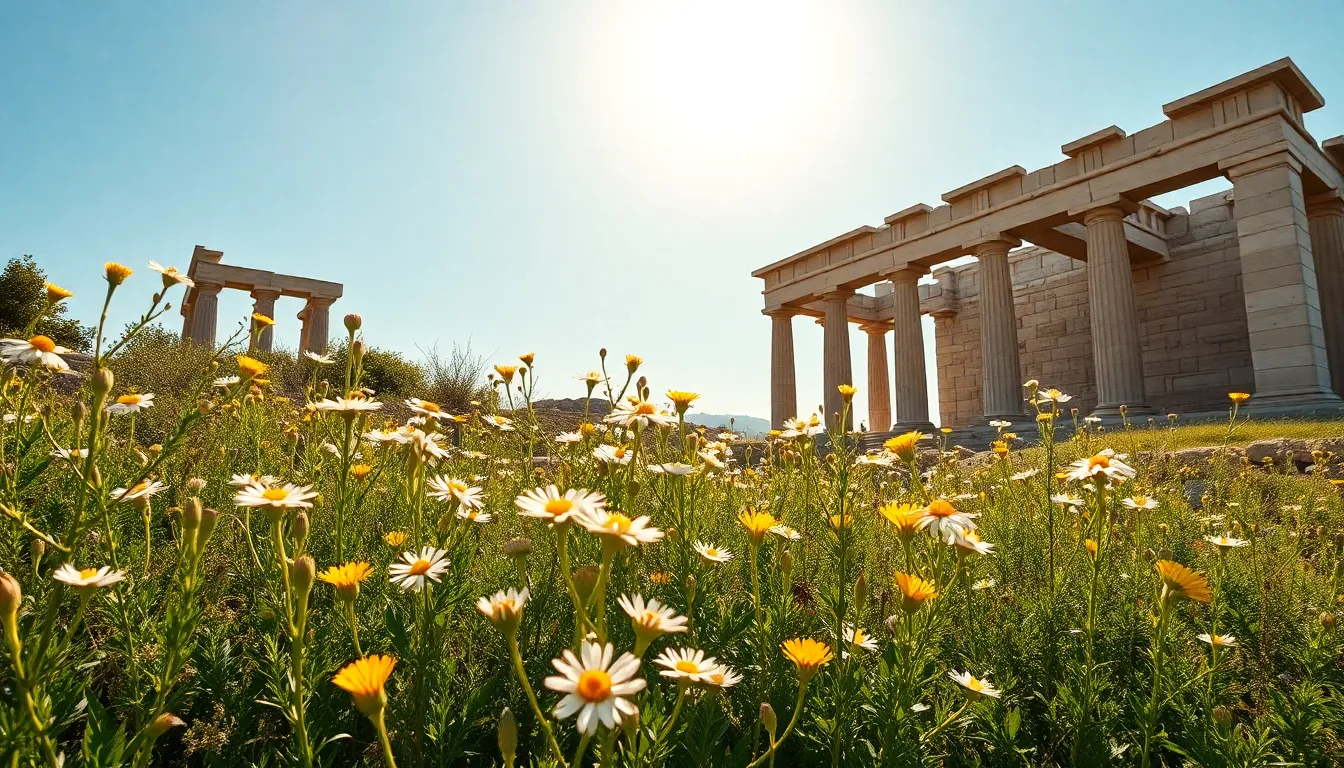
If a group leader asks me to pick one window for a first Greece heritage trip, I usually point to spring. Not because the other seasons are bad, but because spring in Greece does something specific that helps a faith group. The country is green, the wildflowers are out among the ruins, the heat has not yet arrived, and the summer crowds are still weeks away. You stand on Mars Hill in early May with a comfortable breeze and room to think, and the whole experience opens up.
Spring is also the season that carries the most spiritual weight, because Orthodox Easter usually falls inside it. For a Christian group, traveling Greece during or around Easter changes the texture of the trip entirely. Let me walk you through the spring window the way I talk it through with pastors, month by month, so you can see which slice fits your congregation.
Why Spring Works So Well for Heritage Groups
There is a simple reason spring earns its reputation. The two things that make Greece hard in summer, the heat and the crowds, are both still mild in April, May, and early June. The archaeological sites that fill your itinerary, the Acropolis, ancient Corinth, Philippi, Delphi, are almost all outdoors and exposed. In July they bake. In May they are pleasant.
For mixed-age groups, this matters more than anything. When you are leading people in their sixties and seventies up the steps at Meteora or across the rock of the Areopagus, comfortable weather is not a luxury, it is the difference between everyone being present and half the group sitting it out in the shade. Spring keeps your whole group in the experience.
There is also the look of the place. Spring is the one season the Greek landscape turns genuinely green. Wildflowers grow up through the stones at the ruins. The light is soft. Photographs from a May trip simply look better, and the land feels alive in a way that reads beautifully against the ancient sites.
April: Easter, Wildflowers, and a Quieter Greece
April is the start of the spring window, and in many years it holds the single most meaningful date on the Greek calendar: Orthodox Easter. The date moves, sometimes landing in late April, sometimes in early May, occasionally in April alongside Western Easter, so you have to check the specific year. But when your trip aligns with it, April becomes extraordinary.
Greek Orthodox Easter is the high point of the religious year here, and the whole country observes it. The candlelit midnight services, the processions, the breaking of the fast, all of it is open to a respectful visitor in a way that can move your group deeply. I give Greek Easter its own full treatment in our guide to Orthodox Easter in Greece, because it deserves real planning.
Weather-wise, April is mild and occasionally wet. Daytime temperatures in Athens sit around 18 to 22°C (64 to 72°F), cooler in the north around Thessaloniki and Philippi. Pack a light rain layer. The reward is a green, uncrowded Greece before the season fully starts.
One honest note: if your trip falls during Orthodox Easter week itself, some businesses and sites keep holiday hours, and domestic travel is busy as Greeks head to their villages. This is worth planning around rather than being surprised by.
May: The Sweet Spot Inside the Sweet Spot
If I could bottle one month for Greece heritage travel, it would be May. The weather has settled into reliably warm, dry days without the brutal heat of high summer. Athens runs around 24 to 28°C (75 to 82°F). The sea is warming for groups adding an island extension. And the peak tourist crush of July and August is still ahead, so the major sites are busy but not overwhelming.
May is long enough after Easter in most years that the holiday rush has cleared, which makes logistics smoother. For a Pauline itinerary running north to south through Philippi, Thessaloniki, Berea, Athens, and Corinth, May gives you comfortable walking weather at every stop. I lay out that full route in our guide to following the Apostle Paul in Greece.
This is also the month I recommend most often for first-time group leaders. The pace is forgiving, the weather cooperates, and nothing about the conditions distracts from the spiritual and historical core of the trip.
June: Warm, Long Days Before the Peak Heat
June is the back end of the spring window, and it tilts toward summer. Days are long, light, and warm, often reaching 30°C (86°F) or higher in Athens by late June. It is still very workable, but the heat starts to factor into how you plan the day.
The move in June is simple: front-load the outdoor sites into the morning, build in a midday rest, and save the evenings for the lighter walking. The long daylight actually helps here, giving you more usable hours at the cooler ends of the day. June also brings the start of the summer crowds, especially at the Acropolis and the most famous island ports, so early starts pay off twice, beating both the heat and the lines.
For groups that can only travel after the school year ends, June is a perfectly good answer. You just plan it as a warm-weather trip rather than a mild one.
How to Choose Your Spring Slice
Here is how I help group leaders pick:
- Want the Easter experience? Target April, and check the Orthodox Easter date for your year, then decide whether to travel during it or just after.
- Want the most reliable weather and easiest pace? Choose May. It is the safest bet for a mixed-age congregation.
- Tied to the school calendar? June works well as long as you plan around the heat with early starts and midday rest.
One thing worth knowing as you weigh dates: with Heritage Tours, the group leader travels free when you bring fifteen or more participants. That changes the budget conversation with your congregation, and spring trips tend to fill faster, so the earlier you set your dates, the easier the math.
FAQ: Greece Heritage Travel in Spring
Is spring a good time to visit Greece?
Yes, it is one of the best. April through June gives you mild-to-warm weather, green landscapes with wildflowers among the ruins, and crowds that have not yet reached the summer peak. For heritage groups doing outdoor archaeological sites, the comfortable temperatures keep your whole group, including older members, fully in the experience.
When is Orthodox Easter in Greece?
The date moves each year and is calculated on the Orthodox calendar, so it usually falls in April or early May, sometimes aligning with Western Easter and sometimes weeks apart. You have to check the specific year you plan to travel. If aligning your trip with Greek Easter matters to your group, build your dates around that date first.
What is the weather like in Greece in May?
May is close to ideal. Athens averages around 24 to 28°C (75 to 82°F) with dry, sunny days, and the north around Thessaloniki and Philippi runs a few degrees cooler. Rain is uncommon. It is comfortable walking weather at every site on a typical heritage itinerary.
Should I avoid Greece during Orthodox Easter week?
Not necessarily, but plan with awareness. Easter week is the most meaningful religious time in Greece and can be a profound experience for a faith group. The trade-off is that some sites and businesses keep holiday hours and domestic travel is busy. If your group wants the Easter experience, embrace it and plan around the closures. If you want simpler logistics, travel in the weeks just after.
Is June too hot for a Greece heritage tour?
No, but it is warm. By late June, Athens can reach 30°C (86°F) or more, so you plan it as a warm-weather trip: outdoor sites in the morning, a midday rest, lighter walking in the long evening hours. With that structure, June works well, especially for groups tied to the school calendar.
Spring is where I send most first-time Greece groups, and it rarely disappoints. The hard part is just picking your slice of it and locking the dates before the trip fills. If you are weighing April against May against June for your congregation, I would love to help you think it through. See how we build these journeys on our Greece heritage page or our group heritage tours page.
Contact us whenever you are ready to start planning.