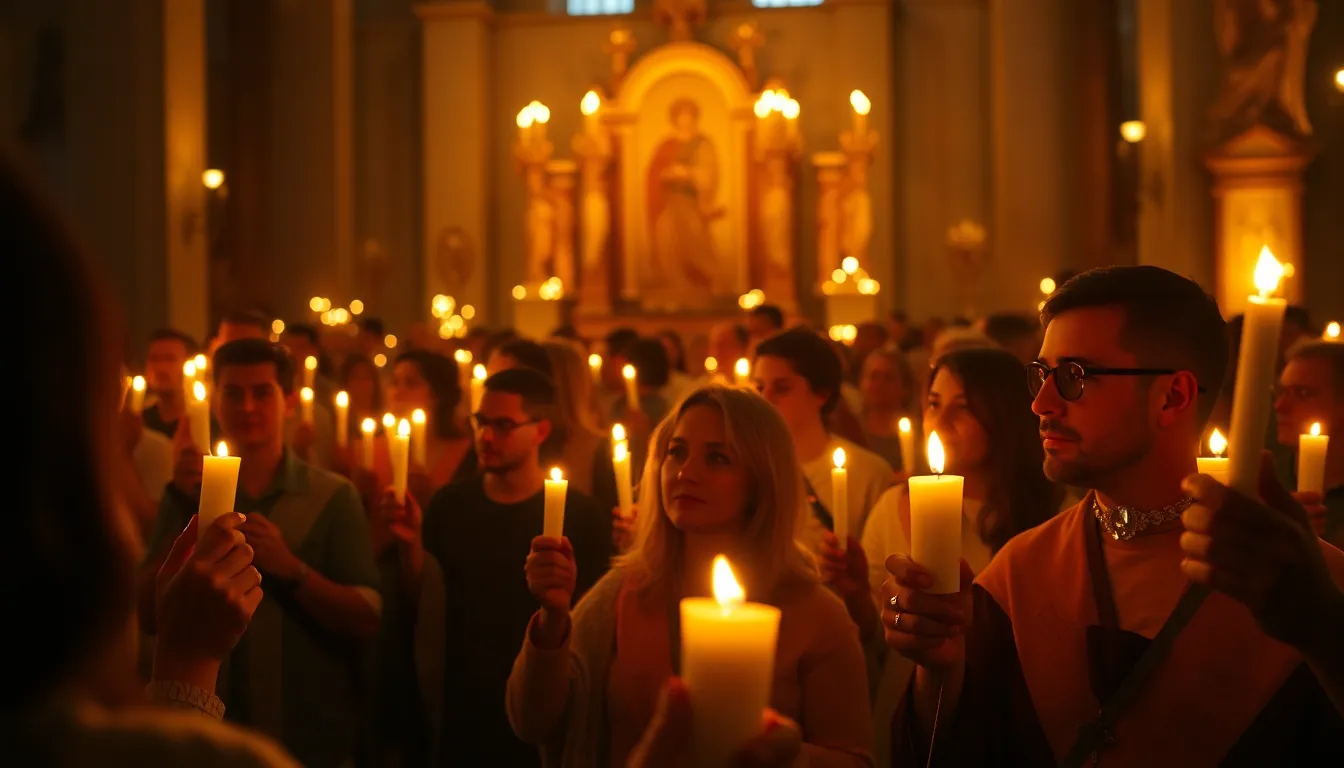
I have led a lot of trips, and I can count on one hand the experiences that left an entire group changed. The midnight Resurrection service on Greek Orthodox Easter is one of them. You stand in a square outside a church, just before midnight, in the dark. The lights go out completely. Then a single flame appears at the altar, the priest steps out with it, and the words ring out: “Christ is risen.” The flame passes candle to candle through the whole crowd until the whole square is glowing, and the bells erupt, and people are weeping and embracing strangers. My group stood there with their candles lit, and nobody said a word on the walk back. There was nothing to add.
That is why Orthodox Easter in Greece lands differently than almost anything else a heritage group can plan. It is not a site you visit. It is a living event you join. But it takes real planning, because the date moves, the country shuts down around it, and the experience only works if you have set the trip up to receive it. Let me walk you through it.
Why Greek Easter Is Different From Western Easter
The first thing to understand is that Orthodox Easter, called Pascha, is usually not on the same date as Western Easter. The Orthodox Church calculates the date on the older Julian calendar reckoning, so in many years Greek Easter falls one, four, or five weeks after the Catholic and Protestant date. Occasionally they align. You cannot assume. The single most important planning step is to confirm the Orthodox Easter date for the exact year you want to travel, and build everything else around it.
The second thing is scale. In Greece, Pascha is the highest holiday of the entire year, bigger than Christmas. The whole country participates. Greeks travel from the cities back to their family villages, businesses close, and the rhythm of the nation reorganizes around Holy Week. For a visitor, this means you are not observing a quiet religious observance, you are stepping into the central event of the Greek year.
Walking Through Holy Week
Greek Easter is not a single day, it is a week-long unfolding, and a well-planned trip lets your group experience the build. Here is the shape of it.
Holy Thursday
The churches are draped in mourning, and in many towns women decorate the Epitaphios, a flower-covered bier representing the tomb of Christ. The mood is solemn and tender. This is a good day to have your group observe quietly in a village church.
Good Friday
This is the most somber day, observed across the country. In the evening, the Epitaphios is carried in candlelit processions through the streets, sometimes through entire towns, with the whole community following behind. Watching, or respectfully joining the edges of, a Good Friday procession is deeply moving for a faith group.
Holy Saturday and the Midnight Resurrection
This is the heart of it, the service I described at the start. Just before midnight on Saturday, the congregation gathers, the lights go out, and the Holy Light is passed flame to flame as the priest proclaims the Resurrection. The bells ring, fireworks go off in many towns, and the greeting “Christós anésti,” Christ is risen, passes through the crowd. Afterward, families break the Lenten fast with a midnight meal of magiritsa soup and red-dyed eggs.
Easter Sunday
The celebration spills into Sunday with the roasting of whole lambs on spits, music, dancing, and open-table hospitality. It is joyful and communal, and Greeks are famously welcoming to visitors on this day.
Where to Experience It
The midnight service can be powerful anywhere in Greece, but where you place your group shapes the experience.
- Small towns and villages give you the most intimate and communal version. The whole community is in one square, and the processions wind through streets where everyone knows each other. For most groups, this is the richer choice.
- Athens and the major cities offer grand services at historic churches, with larger crowds and more pageantry. Good if you want scale and are anchored in the capital.
- The islands, where Greeks return to family homes, can be extraordinary, though some are famous enough to draw heavy domestic crowds. Patmos in particular, with its deep connection to the Book of Revelation, carries an added layer for Christian groups.
I help group leaders match the setting to their congregation. A small inland town and a famous island deliver very different evenings, and both can be right. Our broader heritage travel tips for Greece get into how to pick a base.
The Planning Realities You Cannot Ignore
I love Greek Easter, and I will be honest with you about its costs, because they are real.
Sites and Businesses Close
Around Pascha, especially Good Friday through Easter Monday, many archaeological sites, museums, shops, and restaurants close or run sharply reduced hours. This is the single biggest practical issue. You cannot plan a packed sightseeing itinerary through Easter weekend and expect everything to be open. The move is to build the trip around the religious observance during the holiday core and schedule your site visits before Holy Week or after Easter Monday.
Domestic Travel Is Heavy
Because Greeks travel home for Easter, ferries, flights, and roads are crowded, and accommodation in popular villages and islands fills early. If you want your group somewhere specific for the midnight service, book it far ahead.
Book Very Early
This is not a trip you arrange six months out. For an Easter group, I tell leaders to start a year or more ahead. The dates are fixed by the calendar, demand is high, and the good accommodation near where you want to be goes early. For comparison, our guide to spring travel in Greece covers the gentler April-to-June planning, where the runway is more forgiving.
Is It Right for Your Group?
Greek Easter is not for every itinerary, and I say that plainly. If your congregation’s main goal is to see the maximum number of archaeological sites, Easter week works against you because of the closures. But if your goal is a shared spiritual experience, a moment your people will talk about for years, there is little in heritage travel that matches the midnight Resurrection service. For many faith groups, that single evening is worth structuring the whole trip around.
One thing worth knowing as you weigh it: with Heritage Tours, the group leader travels free when you bring fifteen or more participants. Easter trips fill early and demand is high, so reaching that threshold is easiest when you set your dates well ahead and start building your group with plenty of runway.
FAQ: Orthodox Easter in Greece
When is Orthodox Easter in Greece?
It is calculated on the Orthodox reckoning, so it usually falls later than Western Easter, often by one to five weeks, and sometimes aligns with it. It typically lands in April or May, but the exact date moves every year. The first step in planning an Easter trip is confirming the Orthodox Pascha date for your specific travel year and building the itinerary around it.
What is the midnight Easter service like in Greece?
It is the emotional peak of the Greek religious year. Just before midnight on Holy Saturday, the church lights go out, the priest brings out the Holy Light, and the flame passes candle to candle through the whole congregation as he proclaims the Resurrection. Bells ring, fireworks go off in many towns, and people greet each other with “Christ is risen.” Afterward, families break the Lenten fast together. For many groups it is the most moving moment of the entire trip.
Are sites and museums open during Greek Easter?
Many close or run reduced hours, especially from Good Friday through Easter Monday. This is the biggest practical consideration for an Easter trip. The way to handle it is to center the holiday core on the religious observance and schedule your archaeological and museum visits before Holy Week or after Easter Monday, when normal hours resume.
Where is the best place to experience Greek Easter?
It depends on what your group wants. Small towns and villages give the most intimate, communal experience, with the whole community gathered in one square. Athens and the major cities offer grand services with more pageantry. The islands, including Patmos with its Revelation connection, can be extraordinary, though the famous ones draw heavy domestic crowds. Matching the setting to your congregation is part of planning it well.
How far in advance should I book a Greek Easter heritage trip?
Earlier than most trips. Because the dates are fixed by the calendar and demand is high, plan a year or more ahead. Greeks travel home for Easter, so accommodation in popular villages and islands fills early, and ferries and roads are crowded. Early booking is what secures your group a spot where you actually want to be for the midnight service.
The midnight Resurrection service is one of those experiences I wish every group leader could give their people once. It asks for careful planning, but it gives back something that ordinary sightseeing cannot. If you are thinking about building a trip around Greek Easter, I would love to help you choose the year, the date, and the place. See how we structure these journeys on our Greece heritage page or our group heritage tours page.
Contact us whenever you are ready to start planning.