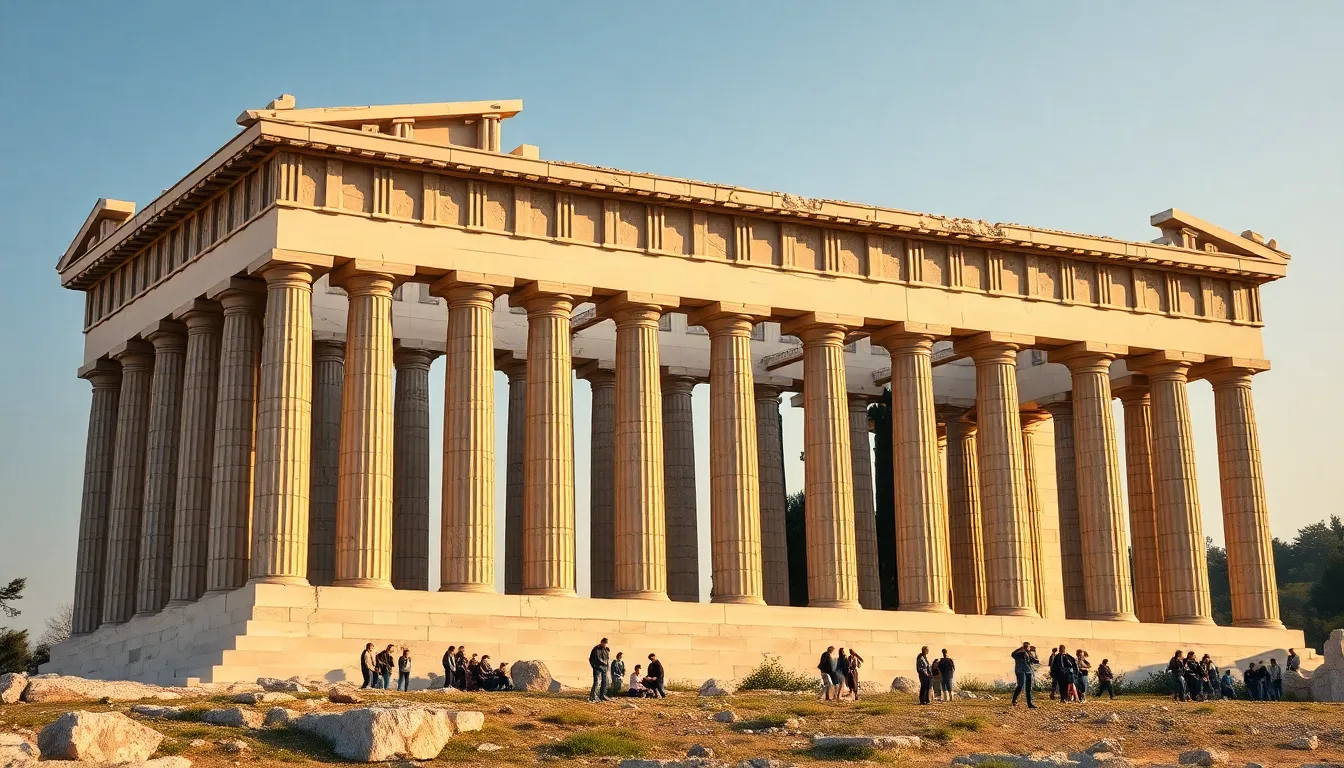
Most heritage groups come to Greece for Paul, not for the Parthenon, and then they get up onto the Acropolis and stop in their tracks. I understand it. The marble, the scale, the city spread out below, it is one of the most famous places on earth for a reason. But I always frame the Acropolis a particular way for a faith group, because it is not a detour from the spiritual story. It is the backdrop to it. This is the skyline Paul walked under. This is the temple-crowned rock he was looking at when he stood on Mars Hill, right below it, and spoke about the God who does not live in temples made by hands.
Seen that way, the Acropolis stops being a box to tick and becomes part of the teaching. Let me tell you what it is, how to read it for a heritage audience, and how to visit it well with a group.
What the Acropolis Actually Is
The word “acropolis” means the high city, the fortified high point that most ancient Greek cities were built around. Athens has the most famous one. It is a great rock rising in the center of the city, and on top of it sit the monuments of Athens at its height in the fifth century BC.
The crown of it is the Parthenon, the temple of Athena, the patron goddess of the city, built in the age of Pericles as the supreme statement of Athenian wealth, power, and devotion. Around it stand other masterpieces: the Erechtheion with its porch of maiden columns, the small temple of Athena Nike, and the great gateway, the Propylaea, that you climb through to enter. The whole rock is a UNESCO World Heritage Site and one of the founding monuments of Western civilization.
For a group, the first thing to grasp is what this place meant to the people Paul addressed. The Acropolis was the religious heart of the most intellectually proud city in the ancient world, dense with altars and dedicated to gods of human imagination. It is the visible form of exactly the religious world Paul stepped into.
The Athens Paul Saw
Here is where the heritage framing matters, and it is the reason I bring faith groups up here with intention.
Acts 17 tells us that while Paul waited in Athens, “his spirit was provoked within him as he saw that the city was full of idols.” He was not exaggerating. The Acropolis and the city below were packed with temples, statues, and altars, including, somewhere among them, the altar “to an unknown god” that he would use as his opening line on Mars Hill.
So when your group looks up at the Parthenon, they are seeing what stirred Paul. And when they look down from the Acropolis, they can see the Areopagus, the bare rock just below where he preached, and the ancient agora beyond it where he reasoned daily. The whole geography of Acts 17 is laid out in a single view. Paul stood in the shadow of this rock and told the philosophers that the God who made the world does not dwell in temples like the one towering over them all. You cannot teach that sermon better anywhere than from here.
That is why I never treat the Acropolis as separate from the spiritual itinerary. It is the stage set for one of the great encounters in the New Testament.
What Your Group Will See
A visit moves through the site in a natural order.
You climb up through the Propylaea, the monumental gateway, which immediately gives a sense of the grandeur the Athenians intended. To the right as you enter is the small, jewel-like temple of Athena Nike.
Then the Parthenon comes into full view. It is worth standing and simply looking, and pointing out to your group that the columns lean and curve very slightly by design, refinements the builders used to make the temple look perfectly straight to the eye. The Erechtheion, with its famous porch of caryatids, the maiden columns, stands across from it.
From the edges of the rock the views open up over Athens. You can pick out Mars Hill just below, the agora, the temple of Hephaestus, and on a clear day the sea. I always take a few minutes here to orient the group to the Acts 17 geography, because the view does the work.
Below the rock, the Acropolis Museum is one of the finest in the world and holds the original sculptures from the site. Many groups pair it with the climb, and it is a comfortable, accessible complement to the open-air ruins.
How to Structure the Visit for a Heritage Group
Here is the sequence I recommend.
Most groups do the Acropolis and Mars Hill together, in one Athens morning, because they sit side by side. Climb the Acropolis first while you are fresh, take in the monuments and the views, then come down to the Areopagus and read Acts 17 there with the temples Paul saw still in sight above you. That order tells the story in the right direction. We give the Areopagus its own full treatment in our guide to the Areopagus in Athens.
From there the ancient agora completes the picture, since that is where Paul was reasoning before he was brought up to Mars Hill. For where this Athens day fits in the wider journey, see our guide to following the Apostle Paul through Greece, and our overview of spiritual sites in Greece places it among them.
A short reflection works best down on Mars Hill rather than on the crowded Acropolis itself. Use the high rock for seeing and orienting, and the lower rock for the devotional. That division keeps the spiritual moment quiet and the logistics simple.
A Practical Word on Access
I am honest with leaders about the climb, because it shapes the day.
The Acropolis involves a real uphill walk on smooth, worn, often slippery marble and stone, with steps and uneven footing, and limited shade on top. It is more demanding than people expect. Wear shoes with good grip, bring water and a hat in the warmer months, and start early to beat both the heat and the largest crowds.
For travelers who cannot manage the main climb, there is an elevator on the north side that provides accessible access to the top, arranged in advance. Anyone not going up can spend the time in the excellent Acropolis Museum at the base, which is fully accessible, so no one is left out of the Athens experience. We set the pace and the route around the people you bring, and we make sure everyone shares in the moment that matters.
FAQ: Visiting the Acropolis
What is the Acropolis in Athens?
The Acropolis is the great fortified rock at the center of Athens, crowned by the monuments of the city’s golden age, above all the Parthenon, the temple of Athena. It was the religious and civic heart of ancient Athens and is a UNESCO World Heritage Site.
How is the Acropolis connected to the Bible?
The Acropolis is the temple-crowned skyline Paul saw when he came to Athens in Acts 17, where his spirit was stirred by a city full of idols. It rises directly above the Areopagus, where he preached, so it forms the backdrop and the meaning of his famous sermon about the God who does not dwell in temples made by hands.
Should a faith group visit the Acropolis or just Mars Hill?
Both, together. They sit side by side, and the Acropolis frames the Areopagus sermon. Groups usually climb the Acropolis first for the monuments and the orienting views, then descend to Mars Hill to read Acts 17 with the temples Paul saw still in sight.
How hard is the climb to the Acropolis?
It is a genuine uphill walk on smooth, often slippery marble with steps and uneven footing and little shade on top. Wear shoes with grip, bring water, and start early. An elevator on the north side offers accessible access for those who cannot manage the main climb.
How long should a group spend at the Acropolis?
Plan about two hours for the rock itself, including the climb, the monuments, and time to take in the views and orient to the Acts 17 geography. Add another hour or more if you include the Acropolis Museum at the base, which most groups do.
The Acropolis is more than a famous view for a heritage group. It is the very city Paul saw, and standing under it makes his Athens sermon land. If you are planning a Greece heritage journey for your congregation, I would be glad to help you build Athens in well. You can see how we structure these trips on our Greece heritage page or explore our group heritage tours.
Contact us whenever you are ready to start the conversation.