A pastor called me a few years ago, worried. He had a member in his congregation, a man in his seventies who used a wheelchair, who desperately wanted to come on the Greece trip. The pastor’s question was honest and a little anxious: “Can we actually bring him, or am I setting him up to be left in the bus while everyone else goes up?” That conversation is one I have often, and I want to answer it the way I answered him. The honest answer is yes, with planning, and no, not everywhere. Greece is a country of ancient sites built on hills and rock, and pretending every place is accessible would do you a disservice. But a thoughtfully planned trip can include almost everyone in almost everything that matters.
So let me give you the real picture, site by site, the way I wish someone had laid it out for me when I started. This is the information you need to plan honestly for the people in your group.
Start With the Honest Conversation
Before I talk about any specific site, the most important thing is this: know your group. “Limited mobility” covers a wide range, from someone who walks fine but tires on long days, to someone who needs a cane on uneven ground, to a full wheelchair user. Each of those people needs different planning, and lumping them together leads to bad decisions.
I ask group leaders to have a frank, private conversation with anyone who has mobility concerns before we finalize the itinerary. Not to exclude them, but to design around them. When I know exactly what each person can manage, I can build a trip where the wheelchair user has a meaningful experience at every stop, even the ones where they cannot reach the very top. Surprises on the ground are what hurt people. Planning ahead is what includes them.
The Acropolis: Better Than You Think
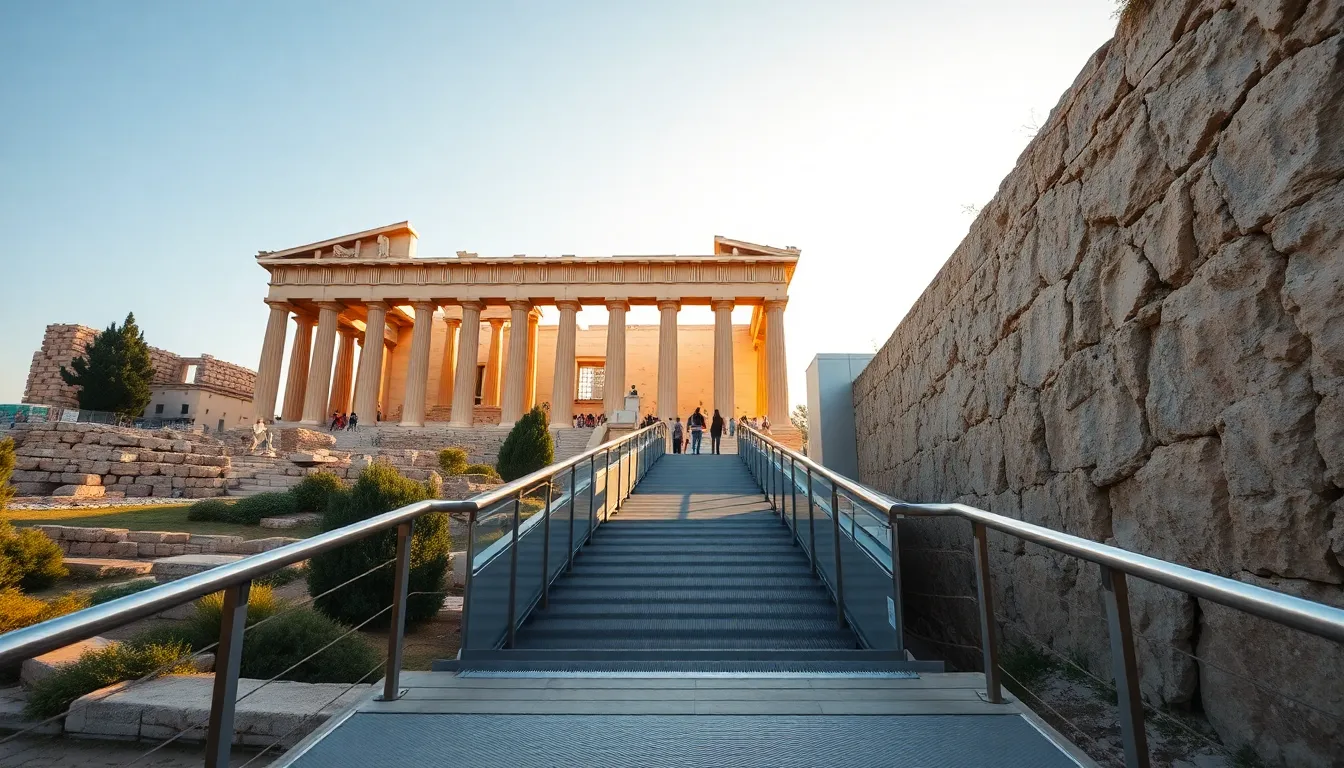
Let me start with good news, because the Acropolis surprises people. Athens has invested in accessibility here, and there is now a wheelchair lift on the north side of the rock that carries visitors up to the top, plus improved pathways across the summit. A wheelchair user can genuinely reach the Parthenon. The lift has had reliability issues over the years and occasionally closes, so it is worth confirming its status close to your travel dates, but the access is real and it works.
The surface on top is ancient marble and rock, uneven and slippery when worn smooth, so even ambulatory members with limited mobility should take it slow and use the smoother marked paths. The new Acropolis Museum nearby is fully modern and fully accessible, with lifts throughout, and it makes a wonderful paired visit for anyone who finds the rock itself too much.
Meteora: The Hard Truth and the Workaround
Now the hard one. Meteora is the site where I have to be most direct with group leaders, because the monasteries are, by their very nature, built on top of sheer rock pillars and reached by long flights of stone steps cut into the cliff. Some monasteries have well over a hundred steps. There is no avoiding this. A wheelchair user cannot enter the monasteries themselves, and even ambulatory members with knee or heart concerns will find the climbs genuinely demanding.
Here is the workaround, and it is a good one. The drama of Meteora is the landscape, those monasteries floating on their towers of rock, and you experience that from the road and the viewpoints, not from inside. There are several accessible viewpoints reachable by vehicle where the whole group, wheelchair users included, can take in the full breathtaking sweep of Meteora. I structure Meteora days so that the members who can climb visit one or two monasteries while the rest of the group enjoys the viewpoints, photographs, and a relaxed coffee with that astonishing view, and then everyone reunites. Nobody sits in the bus. Our guide to visiting Greek monasteries covers the dress code and stairs in more detail.
Ancient Corinth and the Pauline Sites
The archaeological site of ancient Corinth is relatively flat and manageable, which is a relief on a Pauline itinerary. The ground is uneven in places, packed earth and ancient paving, so a wheelchair needs a strong pusher and an ambulatory member benefits from a walking stick, but the core of the site, including the area of the bema where Paul stood, is reachable for most. The Acrocorinth fortress towering above is a separate, steep climb that is not accessible, but the main site below is the meaningful ground for a faith group.
Philippi, in the north, is also a largely open, walkable site with some uneven terrain. The full Pauline route is one of the more accessible heritage itineraries in Greece for exactly this reason, which I lay out in our guide to following the Apostle Paul in Greece.
Athens Beyond the Acropolis
The Areopagus, Mars Hill, is a watch-out. It is a bare rock outcrop reached by either smooth, slippery worn steps or a modern metal staircase, and the top is uneven natural rock with no railings in places. For wheelchair users it is not accessible, and for anyone unsteady on their feet I treat it with real caution. The good news is that you can see and discuss Mars Hill from the more stable ground at its base, which is where I often gather the group anyway to read Acts 17.
The ancient Agora is partly accessible with some effort, and modern Athens itself, the hotels, restaurants, and the Acropolis Museum, is broadly manageable. Greek cities are improving, though old-town areas with cobblestones and steps remain a challenge.
Practical Planning That Makes the Difference
Beyond individual sites, a few choices shape how accessible the whole trip feels:
- Transport. Standard tour coaches have steps. For groups with wheelchair users or several members with serious mobility limits, an accessible vehicle or a coach with a lift needs to be arranged in advance, not assumed.
- Hotels. Accessible rooms in Greece exist but vary widely in quality and are limited in number, especially in smaller towns. They must be booked early and confirmed specifically.
- Pace. The single biggest accessibility tool is a realistic pace. Fewer sites per day, built-in rest, and seated meals do more for an older group than any ramp.
- Companions. I encourage pairing members who need a hand with a willing companion in the group. It builds the fellowship and solves the logistics at the same time.
This is the kind of detail that a well-run group tour handles for you, and our broader heritage travel tips for Greece go deeper on pacing a mixed-age group.
Nobody Gets Left Behind
The principle I plan by is simple: every member should have a meaningful experience at every stop, even when they cannot reach the very top. A wheelchair user who takes in Meteora from a stunning viewpoint, reaches the Parthenon by lift, sits at the bema in Corinth, and gathers with the group at the base of Mars Hill has had a real and full Greece heritage journey. That is achievable. It just takes honest planning ahead of time.
One thing worth knowing as you build your group: with Heritage Tours, the group leader travels free when you bring fifteen or more participants. That threshold can give you the size to justify arranging the accessible transport and the unhurried pace that make a trip work for everyone.
FAQ: Accessibility on Greece Heritage Tours
Is the Acropolis wheelchair accessible?
Largely yes. There is a wheelchair lift on the north side of the rock that brings visitors to the top, along with improved pathways across the summit, so a wheelchair user can reach the Parthenon. The surface up top is uneven ancient marble, so take it slow. The lift has occasionally had reliability issues, so confirm its status near your travel dates. The nearby Acropolis Museum is fully modern and fully accessible.
Can a wheelchair user visit Meteora?
Not the monasteries themselves, which sit atop rock pillars reached by long flights of stone steps with no way around them. But the spectacle of Meteora is the landscape, and that is fully visible from accessible viewpoints reachable by vehicle. We structure Meteora days so climbing members visit a monastery or two while everyone, wheelchair users included, takes in the full sweep from the viewpoints, then the group reunites. Nobody is left in the bus.
Which Greece heritage sites are easiest for limited mobility?
The Pauline route is among the more accessible itineraries. Ancient Corinth is relatively flat, with the core of the site including the bema reachable for most. Philippi is largely open and walkable. Modern museums like the Acropolis Museum are fully accessible. The hardest sites are Meteora’s monasteries and the Areopagus rock, both of which have good workarounds from accessible ground nearby.
Do I need to arrange special transport for a group with wheelchair users?
Usually yes. Standard tour coaches have steps, so a group with wheelchair users or several members with serious mobility limits needs an accessible vehicle or a lift-equipped coach arranged in advance. This is not something to assume will be available on the day. We sort transport to match the group you bring.
How do I plan a Greece trip for a mixed-ability group?
Start with an honest, private conversation with each member who has mobility concerns, so you know exactly what each person can manage. Then design around it: a realistic pace with fewer sites per day, built-in rest, accessible transport and hotels booked early, and willing companions paired with those who need a hand. The goal is a meaningful experience for everyone at every stop, even where they cannot reach the very top.
Including everyone is one of the things I care about most in this work, and Greece, for all its hills and ancient steps, can absolutely be done well for a mixed-ability group. It just takes the honest planning to do it right. If you have members with mobility concerns and you want to bring them anyway, I would love to help you build a trip that leaves no one behind. See how we structure these journeys on our Greece heritage page or our group heritage tours page.
Contact us whenever you are ready to start planning.