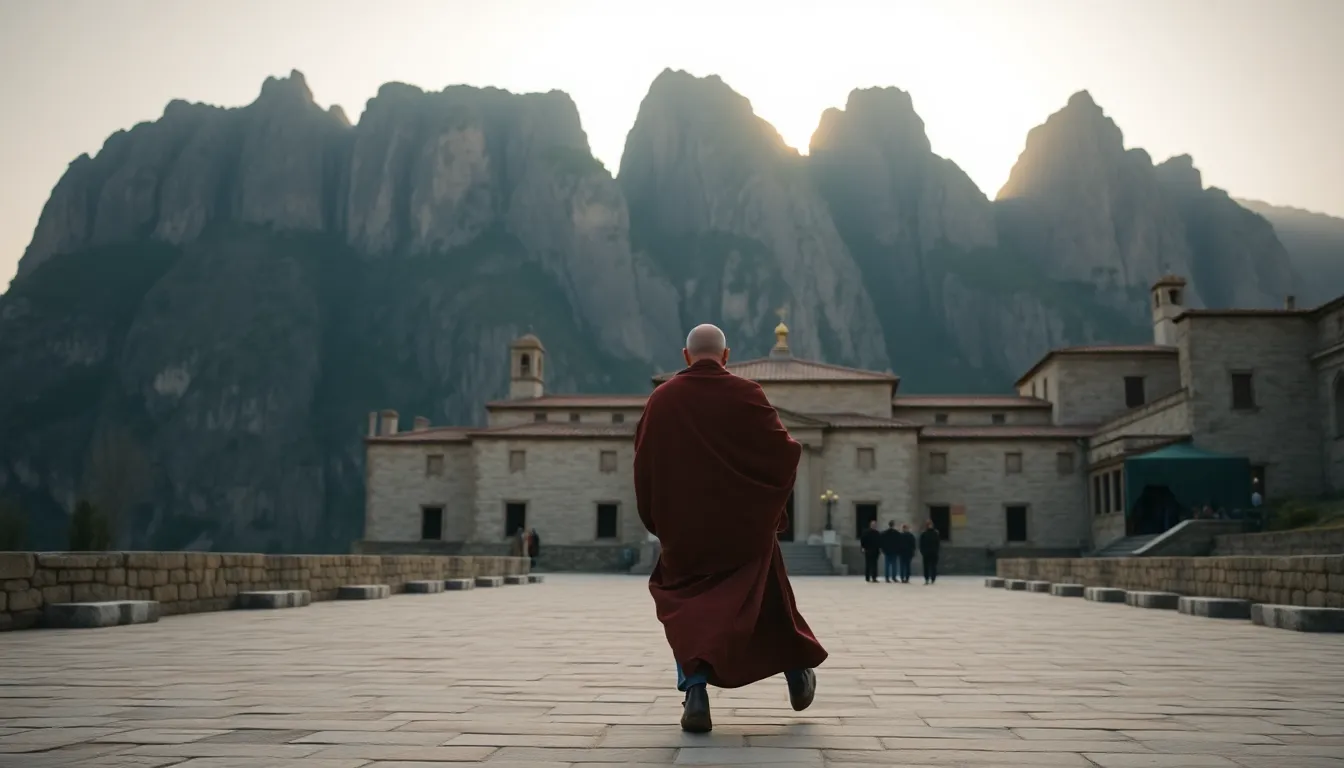
The first time I brought a group to Meteora, I made a rookie mistake. I had told everyone “modest dress, please,” and assumed that covered it. Then we got to the entrance of the first monastery, and three women in my group were turned back at the gate because their trousers were not skirts. They had worn long pants, perfectly modest by any normal standard, and the monastery did not allow women in trousers at all. We sorted it out, the monastery had wrap skirts to lend, but I learned my lesson. “Modest” is not specific enough. Your people need the actual rules before they pack.
So let me give you the actual rules. These are working monasteries, not museums, and the men and women living inside them have asked visitors to dress and behave a certain way. Honoring that is part of the trip, not an obstacle to it. When your group gets it right, the monks and nuns notice, and the welcome you receive is warmer for it.
Why the Dress Code Exists
It helps to explain this to your group before you arrive, because people accept rules better when they understand them. Greek Orthodox monasteries are houses of prayer where monks and nuns have withdrawn from the world to live a disciplined spiritual life. When you walk through the gate, you are a guest in their home and their church. The dress code is an expression of reverence, the same instinct that asks you to cover up or remove your hat in many houses of worship.
It is not about fashion or about judging anyone. It is about meeting the place on its own terms. I tell my groups that the few minutes of inconvenience at the gate buys you the right to stand inside a thousand-year-old chapel where prayer has not stopped. That is a good trade.
The Meteora Dress Code
Meteora is where most heritage groups encounter this, because the six monasteries perched on those sandstone pillars are on almost every Greece itinerary. Here is what your people need to know.
For Women
- Skirts, not trousers. Most Meteora monasteries require women to wear a skirt that covers the knees. Long trousers are often not accepted, even modest ones. This is the rule that surprises people most.
- Shoulders covered. No sleeveless tops, no tank tops, no bare shoulders. A short-sleeve top is fine. A scarf or shawl over the shoulders works if the top is sleeveless.
- The wrap skirt solution. Most Meteora monasteries keep a basket of wrap-around skirts at the entrance to lend visitors. They are not always clean, they are not always available, and they come in unpredictable sizes. I tell women in my groups to bring their own. A long skirt or a wrap they can pull on over leggings means they never have to gamble on the basket.
For Men
- Long trousers, not shorts. Men should wear long trousers. Shorts are generally not permitted, even in the summer heat, and Meteora in July is genuinely hot.
- Covered shoulders. No sleeveless shirts. A regular short-sleeve shirt is fine.
The Practical Move for Leaders
I ask everyone in my group, men and women, to wear or carry layers they can adjust. The simplest version: women wear or pack a knee-length-or-longer skirt and bring a light shawl; men wear long trousers and a sleeved shirt. If your itinerary has Meteora on a hot day, people can change into the modest layer at the bus before the climb and shed it after. Nobody melts, nobody gets turned away.
Mount Athos: A Different World Entirely
Mount Athos is not Meteora, and I want to be very clear about this because the confusion causes real heartbreak. Athos is a self-governing monastic peninsula in northern Greece, home to twenty monasteries and a continuous monastic tradition stretching back over a thousand years. It is one of the most significant sites in all of Orthodox Christianity. And it is closed to most of the people reading this.
Women Cannot Enter Mount Athos
This is the rule that catches groups off guard. Mount Athos has banned women from entering the peninsula for more than a thousand years, under a tradition called the avaton. This is not a dress-code matter you can work around with a longer skirt. Women, and even most female animals, are not permitted on the peninsula at all. For a mixed heritage group, this means Mount Athos itself is not a group destination. There is no version where the whole congregation goes ashore.
What Men Need to Visit Athos
Even for men, Athos is not a casual stop. Visiting requires a special permit called a diamonitirion, issued in limited numbers each day, and it must be arranged well in advance. Non-Orthodox visitors face tighter quotas than Orthodox pilgrims. It is an overnight pilgrimage, not a half-day excursion, and it involves staying in the monasteries themselves under their rhythm of prayer and meals.
How Groups Actually Experience Athos
So what do I do with groups who want to honor Athos? We see it from the water. Boat cruises run along the Athos coastline from the town of Ouranoupoli, and they let your whole group, women included, view the monasteries rising from the sea cliffs without setting foot on the restricted peninsula. It is genuinely moving, and it is the right answer for a mixed group. I cover the northern Greece route in more depth in our guide to heritage travel tips for Greece.
Etiquette Inside Any Monastery
Dress is only half of it. How your group behaves inside matters just as much, and a little coaching beforehand goes a long way.
Photography
Most monasteries allow photography in the courtyards and grounds but forbid it inside the churches, especially of the frescoes and icons, and almost never permit photographing the monks or nuns. Tell your group the rule before you enter: cameras and phones away inside the chapel unless a sign or a monk says otherwise. Flash photography damages centuries-old frescoes, which is one reason it is banned.
Quiet and Reverence
These are places of prayer. Keep voices low, especially inside the churches. If you arrive during a service, your group can often observe quietly from the back, but do not talk through it. I usually ask my groups to treat the whole visit the way they would treat their own sanctuary during a service.
Do Not Touch
The icons, the relics, and the church furnishings are sacred objects, not exhibits. Orthodox pilgrims venerate certain icons by kissing them, and your group is welcome to observe that. But do not handle anything unless you are invited to.
Opening Hours and Closures
Monasteries keep their own schedules and close for prayer, for siesta in the afternoon, and on certain feast days. At Meteora, each of the six monasteries has its own closed day during the week, and they rotate, so not all six are open on any given day. A good itinerary works around this. It is one of the reasons a well-planned group tour is worth far more than a do-it-yourself attempt at Meteora.
A Word on Heat and Footwear
Meteora involves stairs, sometimes a lot of them, cut into the rock. The modest dress requirement collides with summer heat, so plan visits for the morning when you can, carry water, and choose breathable fabrics that still meet the cover-up rules. Sturdy shoes matter more than fashion here. For mixed-age groups, I time the monastery climbs for the cooler part of the day and build in rest. Our seasonal breakdown in when to visit Greece helps you avoid the worst of the heat.
FAQ: Greek Monastery Dress Code and Etiquette
Can women wear trousers at Meteora monasteries?
Generally no. Most Meteora monasteries require women to wear a skirt covering the knees, and long trousers are often not accepted even when they are modest. The monasteries usually keep wrap-around skirts to lend at the entrance, but they are not always clean or available in the right size. I advise every woman in my groups to bring her own long skirt or wrap so she never has to rely on the basket.
Can women visit Mount Athos?
No. Mount Athos has prohibited women from entering the peninsula for over a thousand years under a tradition called the avaton, and that rule still stands. This is not something a dress code can solve. For mixed heritage groups, the way to honor Athos is a boat cruise along the coastline from Ouranoupoli, which lets everyone, women included, see the monasteries from the water.
What should men wear to visit Greek monasteries?
Men should wear long trousers, not shorts, and a shirt with sleeves rather than a tank top. This holds even in summer heat, when shorts are tempting but not permitted. A regular short-sleeve shirt and long trousers will get any man through the gate at Meteora.
Can you take photographs inside Greek monasteries?
Usually in the courtyards and grounds, but rarely inside the churches. Photographing frescoes, icons, and the monks or nuns is almost always forbidden, and flash photography damages the centuries-old artwork. Tell your group to put cameras away inside the chapels unless a sign or a monk clearly permits otherwise.
Are all the Meteora monasteries open every day?
No. Each of the six Meteora monasteries has its own weekly closed day, and they rotate, so not all are open on any given day. They also close for afternoon rest and certain feast days. A well-planned itinerary accounts for this so your group reaches the monasteries that are actually open, which is one of the practical advantages of traveling with a guide who knows the rotation.
Getting your group ready for the monasteries is one of those small things that makes a big difference on the ground. When everyone arrives dressed right and briefed on the etiquette, you skip the awkwardness at the gate and walk straight into the experience. If you are planning a Greece journey that includes Meteora or the Athos coast, I would love to help you build it well. See how we structure these trips on our Greece heritage page or our group heritage tours page.
Contact us whenever you are ready to start planning.