Not every group can take ten days. I learned this from the congregations who kept asking me a version of the same question: “We only have a long weekend. Is it even worth it?” My answer is always the same. Berlin alone, done well, is worth the trip. You will not see everything. But you will stand in the places where the twentieth century turned, where Jewish life was nearly erased and is being rebuilt, and where the long arc of German faith is written into the streets.
A weekend is not a compromised version of a real heritage trip. It is its own kind of trip, and it asks for a different discipline. You cannot wander. Every site has to earn its place. After years of building these short Berlin plans for groups flying in from across the Atlantic, I have learned to choose ruthlessly and go deep on a few things rather than skim a dozen. Berlin gives you Jewish heritage, Holocaust memory, and Reformation history all within one walkable city, and three full days is enough to meet all three honestly.
This is a focused 3-day plan for groups with a long weekend. If your congregation finds it can stretch to a fuller journey, our 10-day Germany heritage itinerary opens up the Rhine Valley and the Luther country. For groups with limited walkers, our accessible Germany itinerary adapts the pace. But if a weekend is what you have, here is how to spend it.
Day 1: Jewish Berlin, Then and Now
We start with Jewish life, because Berlin’s story cannot be understood any other way. The morning is the New Synagogue on Oranienburger Strasse, Berlin’s most visible symbol of Jewish life. Built in the 1860s as a statement of belonging, it was damaged on Kristallnacht, bombed in the war, and partially rebuilt as a museum and place of memory. Its golden dome over the rooftops is one of the most hopeful sights in the city, because it says Jewish Berlin is still here.
From there we walk the surrounding Scheunenviertel, the old Jewish quarter, where the Stolpersteine, the brass cobblestones set into the pavement, mark the homes of people deported and murdered. Reading the names underfoot, in front of the actual doorways, is a quiet and devastating way to make the history personal. I often ask the group to slow down and read a few aloud. A name, a birth year, a date of deportation, a place of death. It turns a number into a person, which is the whole point.
Nearby, the Neue Synagoge area still holds the rhythm of Jewish Berlin reviving itself, with kosher cafes, a Jewish bookshop, and the working community life that the city nearly lost entirely. I make a point of showing groups the living present, not only the memorial past, because Jewish Berlin did not end in 1945. The afternoon is the Jewish Museum Berlin, designed by Daniel Libeskind, one of the most powerful museum experiences in Europe. The building itself, with its voids and its Garden of Exile, teaches before you read a single panel. The permanent exhibition traces two thousand years of German Jewish life, not only its destruction, and that breadth is important for a weekend group, because it sends people home with the fullness of the story rather than only its darkest chapter. Plan at least three hours.
Day 2: Holocaust Memory at the Center of the City
The second day faces the hardest history directly. We begin at the Memorial to the Murdered Jews of Europe, a field of 2,711 concrete pillars near the Brandenburg Gate. There is no prescribed way to walk through it, and that openness is part of its power. The underground Information Center beneath the memorial holds the personal stories, the letters and the family histories, that turn the scale of the catastrophe into individual lives. For a group leader, this is a place to build in quiet time. Do not rush people out.
In the afternoon, the Topography of Terror, built on the site of the former Gestapo and SS headquarters, gives a clear, unflinching account of how state terror was organized. It is documentary rather than emotional, and it pairs well with the morning’s memorial, because it explains the machinery behind the loss. Standing where the orders were given, beside a surviving stretch of the Berlin Wall that runs along the same site, you feel two German catastrophes layered on one piece of ground. For a group leader, I suggest pacing this afternoon carefully. After a morning at the Holocaust Memorial, people are full. Give them a coffee break before the Topography of Terror so they arrive able to take it in.
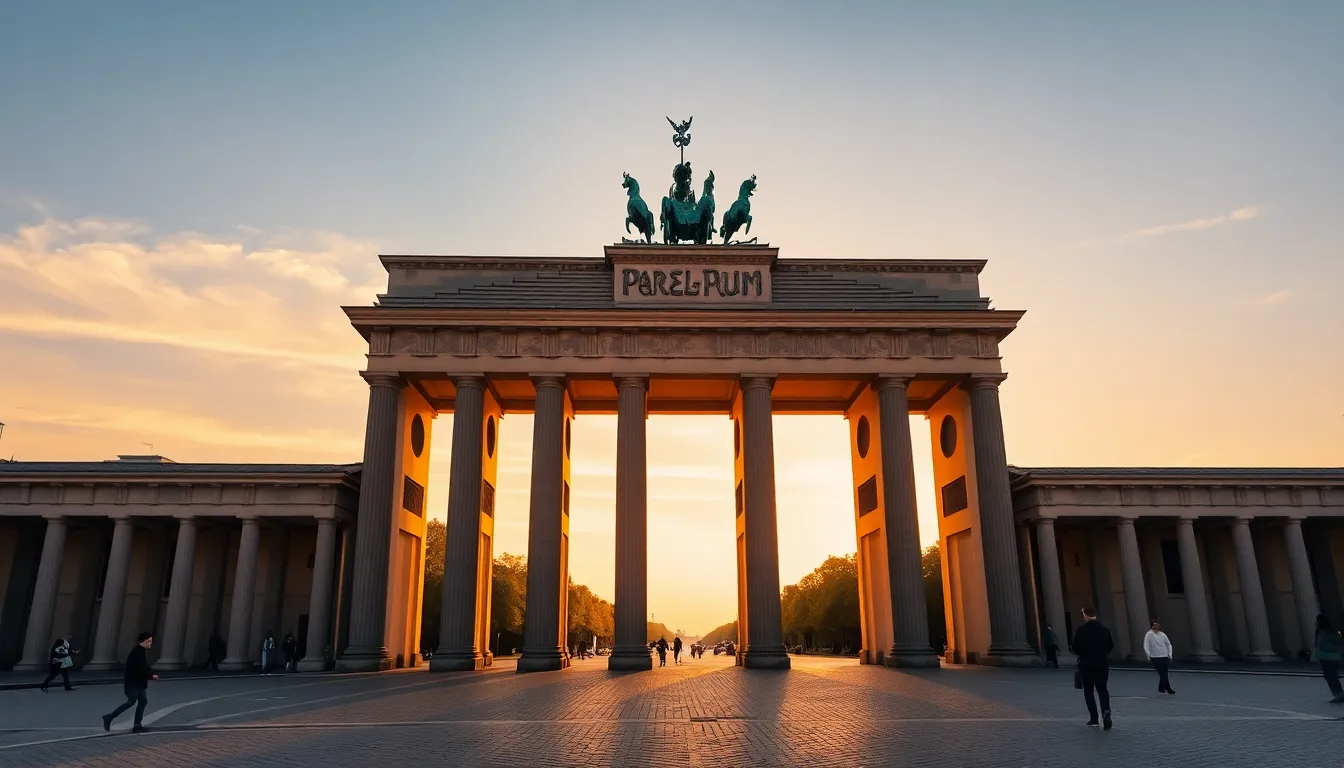
We end the day at the Brandenburg Gate and along the line of the former Berlin Wall, a reminder that this same city later became the front line of a divided world and then, remarkably, the place where that division ended peacefully. For a faith group, that ending matters. Berlin is not only a city of loss. It is also a city that shows what reconciliation and rebuilding can look like, and sending your congregation home with both halves of that truth is part of an honest trip.
Day 3: Reformation, Resistance, and Departure
The final day widens the lens to the longer story of German faith. Berlin’s Reformation heritage runs through the Nikolaikirche, the city’s oldest church, and the broader history of Protestantism in Prussia. For groups whose focus is the Reformation, this is a chance to connect Berlin to the Luther story that runs across the rest of the country. If your group wants to go deeper into that thread on a future trip, our Reformation anniversary itinerary follows it fully.
I also use this last morning for the German Resistance Memorial Center at the Bendlerblock, where the July 1944 plot against Hitler was planned and where its leaders were executed. It is a site about conscience and courage, and it gives a weekend group something hopeful to carry home: even in the darkest place, some people resisted. For Christian groups especially, the resistance story includes figures of faith, among them the pastor Dietrich Bonhoeffer, who paid with his life for opposing the regime. Standing at the Bendlerblock and speaking his name turns the abstract question, what would I have done, into something concrete and personal. It is a strong note to end a faith group’s weekend on.
For groups with a flight later in the day, this is a fitting and reflective close. If time remains, the Berlin Cathedral and Museum Island offer a gentler final hour before departure, and the cathedral’s interior gives a congregation a quiet place to gather one last time before the journey home. I often close a weekend trip with a few minutes there, letting people sit with everything they have seen across three intense days before we head to the airport.
FAQ: Planning a Weekend Berlin Heritage Trip
Is three days really enough for a Berlin heritage trip?
For Berlin specifically, yes. The city concentrates Jewish heritage, Holocaust memory, and Reformation history within a walkable center, so three full days lets a group meet all three honestly without rushing. What you give up is the rest of Germany, the Rhine Valley ShUM cities and the Luther country, which need more time. If a weekend is your window, Berlin alone rewards it. If you can stretch longer, our 10-day itinerary opens up the wider route.
Does a weekend trip work for both Jewish and Christian groups?
Yes, and Berlin is unusually good at holding both. The Jewish heritage of the Scheunenviertel and the Jewish Museum speaks directly to Jewish groups, while the Reformation and resistance history speaks to Christian congregations. The Holocaust memorials matter to every tradition. We can weight the three days toward your group’s focus, adding time at the Jewish sites or the Protestant ones depending on who you are leading.
How much walking does this itinerary involve?
A fair amount. Berlin is flat, which helps, but the memorial sites and the Jewish quarter involve real walking over cobblestones and standing for stretches at a time. For most groups this is manageable. For congregations with members who tire easily or use wheelchairs, we adapt with more transport between sites and seated rest points. Our accessible Germany itinerary describes how we handle mobility-conscious planning.
Should we add a day if we can?
If you can find a fourth day, I would add it to the Jewish heritage portion or use it for a day trip to Lutherstadt Wittenberg, which is reachable from Berlin and adds the Reformation’s founding site to a weekend base. A fourth day removes the only real pressure in this plan, which is the depth you can give the memorial sites. But the three-day version stands on its own.
Do you handle the bookings for a short trip?
Yes. Even on a weekend, every day includes hotel pickup and dropoff, and we handle the advance group registration the Jewish Museum Berlin and other sites benefit from. A short trip has less slack in the schedule, which makes smooth logistics more important, not less. We make sure the limited time is spent on the sites, not on coordination.
A long weekend in Berlin is a real heritage trip, not a consolation prize. For a congregation that cannot take ten days, it offers a genuine encounter with the history that shaped the modern world, all within one remarkable city.
You can see how we structure these journeys on our Germany heritage destination page, or read about the group leader experience. Group leaders travel free with fifteen or more participants, which makes even a short trip workable for a congregation.
When you are ready to plan your weekend in Berlin, contact us and we will shape it around your group.