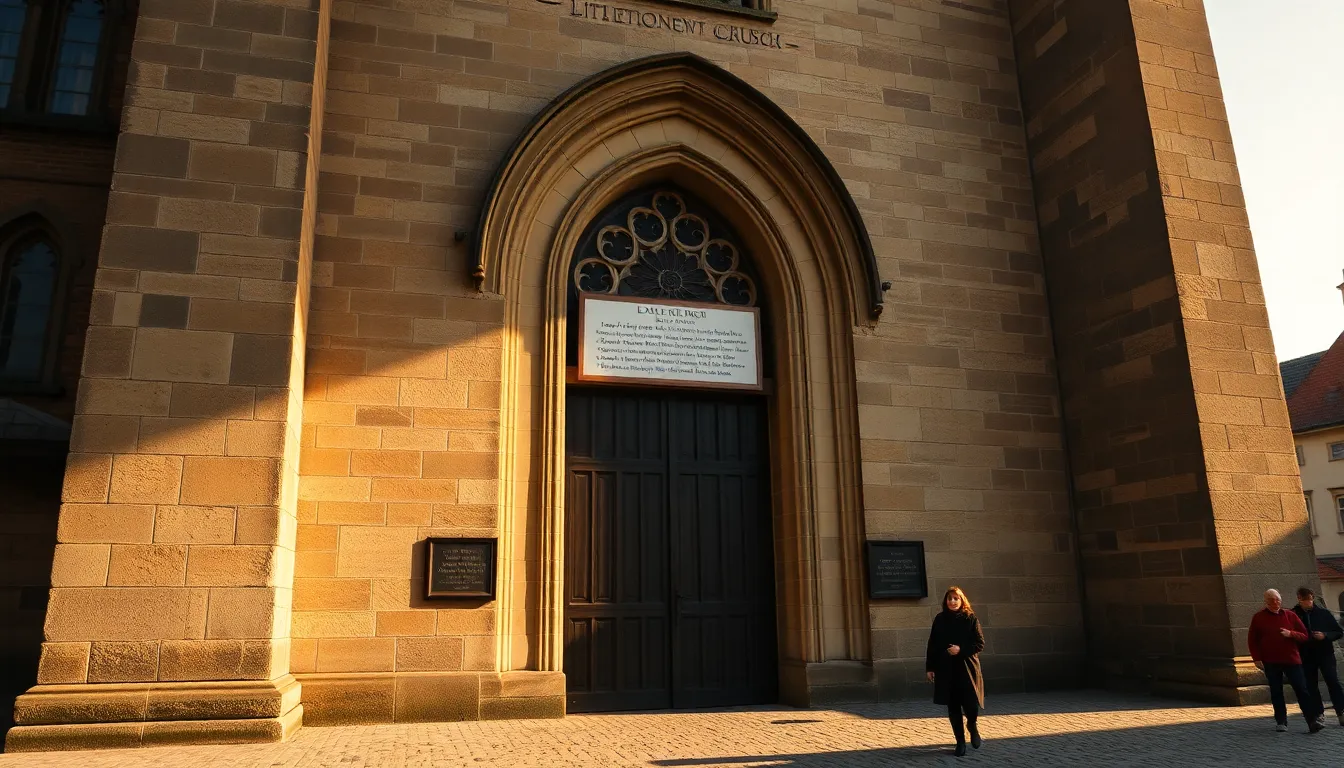
There is a difference between visiting Reformation sites and walking the Reformation. Most groups do the first. They stop at Wittenberg, see the famous door, take the photo, and move on. What I want to give you here is the second thing. A route that follows Martin Luther’s own life across the German landscape, from the town where he was born to the castle where he hid for his life, so your congregation does not just see the Reformation. They follow it.
I have led Reformation anniversary groups for many years, and the milestone trips are different from ordinary ones. A congregation marking 500 years of the Reformation, or marking its own anniversary against that backdrop, is not sightseeing. They are tracing the spiritual lineage they belong to. That changes how you build the trip. You slow down at the places where the story turned, you read the texts in the rooms where they were written, and you let the geography teach what no sermon can.
This itinerary is the Luther-decade route, built for Reformation milestone groups. It is more focused on the Protestant story than my general Germany plan, though it does not pretend the harder history away. If you want the broader Jewish and Christian heritage route, see our 10-day Germany itinerary. If your group’s heart is music as much as theology, our Bach and Reformation music itinerary is a companion to this one. This route is for the congregation that wants to walk where Luther walked.
Day 1: Arrival in Frankfurt
International flights land in Frankfurt, and the first day is gentle. A walk through the reconstructed Old Town, coffee at Romerberg Square, and an early dinner so the group can rest before the journey into Luther country begins. I do not schedule a Reformation site on arrival day. The route ahead is rich, and tired travelers miss the meaning of the first real stop.
Day 2: Eisleben, Where It Began and Ended
We begin the Luther story where Luther’s own began. Eisleben is the town where Martin Luther was born in 1483 and, remarkably, where he died in 1546. Both houses are preserved as museums, and standing in them gives your congregation the human frame of the whole story. This was a man, born in an ordinary town to a mining family, who changed the course of Christianity and then came home to die.
I like to open a milestone trip here precisely because it is humble. Before Wittenberg, before the grandeur, you meet Luther the person. For a group marking an anniversary, that grounding matters. The Reformation was not an abstraction. It came through one stubborn, brilliant, flawed human being, and Eisleben puts you face to face with that.
Day 3: Erfurt, the Monastery and the Crisis
Erfurt is where the young Luther became a monk. He entered the Augustinian monastery here in 1505 after a thunderstorm terrified him into a vow, and it was within these walls that his spiritual crisis took shape. The monastery still stands, and your group can walk the cloister and sit in the church where Luther wrestled with the question that would launch everything: how does a sinful person stand before a holy God?
This is one of the most important stops for an anniversary group, and most fast tours skip it entirely. The Reformation did not begin at the Wittenberg door. It began here, in the anguish of a young monk who could find no peace. Erfurt’s medieval old town, one of the best preserved in Germany, is also a pleasure to walk, and it gives the day a lighter close after the weight of the monastery.
Day 4: Wittenberg, the Heart of It
Lutherstadt Wittenberg is where it all became public. On October 31, 1517, Luther posted the 95 Theses on the door of the Castle Church, and the Reformation moved from one man’s conscience into history. For a milestone group, this is the center of the entire trip, and I give it a full, unhurried day.
The Castle Church door is the famous image, but the deeper experience is in the Lutherhaus, the former monastery where Luther lived with his wife Katharina von Bora and where the table talks happened that shaped Protestant thought. The Town Church, where Luther preached most of his sermons, is where I encourage groups to sit and read aloud from his writing. Standing where the words were first spoken changes how they sound.
I also raise the harder history here, because an honest anniversary trip must. The Judensau relief on the Town Church is a medieval antisemitic carving the city has chosen to keep, with an explanatory memorial at its base. Luther’s later antisemitic writings are part of his record, and a congregation marking 500 years does its faith no favors by hiding them. We help you frame this conversation with the seriousness it deserves.
Day 5: The Wartburg, Where Luther Hid and Translated
After the Diet of Worms in 1521, where Luther refused to recant and was declared an outlaw, his protectors hid him in the Wartburg castle above Eisenach. Disguised as a knight named Junker Jorg, he spent his months in hiding translating the New Testament into German, an act that put scripture into the hands of ordinary people and shaped the German language itself.
The Wartburg is dramatic, perched on a hill above the forest, and the climb to it is part of the experience. The room where Luther translated is preserved, and for an anniversary group it is one of the emotional peaks of the trip. This is where the Reformation became something every literate German could hold in their own hands. I schedule the Wartburg with plenty of time, because the setting alone invites reflection, and the views give older travelers a reason to rest while taking in the landscape Luther saw.
Day 6: Augsburg, the Confession
To complete the arc, we travel to Augsburg, where in 1530 the Lutheran princes presented the Augsburg Confession to the emperor, the foundational statement of Lutheran faith. This is where the Reformation became an organized confession of belief rather than a protest. For a milestone group, ending here makes theological sense: you have followed the story from one monk’s crisis to a confession that still defines Protestant churches today.
Augsburg is a handsome city, and the day is lighter than the heavy stops earlier in the trip. It is a fitting place to gather the group for a closing reflection on what 500 years of this story means for their own congregation.
Day 7: Berlin and Departure
We end in Berlin, both for the practical convenience of the airport and because the city holds the longer arc of German Christian history, including the church’s conduct during the Nazi era. A group that has spent a week tracing the Reformation’s glory should also sit, even briefly, with the question of how the German church later failed. The Topography of Terror, on the site of the former Gestapo headquarters, offers that reckoning. It is a sober and honest way to close a trip that celebrates the Reformation without pretending its descendants always lived up to it.
FAQ: Planning a Reformation Anniversary Heritage Trip
What sites make up the Luther-decade route?
The core sites are Eisleben, where Luther was born and died, Erfurt, where he became a monk, Wittenberg, where he posted the 95 Theses, the Wartburg above Eisenach, where he translated the New Testament, and Augsburg, where the Augsburg Confession was presented. Together they trace Luther’s life from birth to the formal confession of the faith he sparked. Most quick tours visit only Wittenberg, which gives a milestone group just one chapter of a much fuller story.
Should a Reformation trip address Luther’s antisemitism?
In my view, an honest anniversary trip must. Luther wrote vicious antisemitic tracts late in his life, and the Town Church in Wittenberg still bears the Judensau relief, a medieval antisemitic carving. A congregation marking 500 years honors the Reformation more fully by facing this, not by hiding it. We help leaders frame the conversation with care, and groups consistently tell us afterward that the honesty deepened the trip rather than diminishing it.
How is an anniversary trip different from a standard Germany tour?
The difference is focus and pace. A milestone group is tracing a lineage, not collecting sights, so we slow down at the places where the story turned and build in time to read the texts in the rooms where they were written. The route follows Luther’s biography rather than convenient geography, which means stops like Eisleben and the Wartburg that ordinary tours skip become central.
Can this itinerary include music heritage as well?
Yes, and many Reformation groups want it. Eisenach, below the Wartburg, is also Bach’s birthplace, and the hymn tradition is woven through the whole Protestant story. If music is central to your congregation, our Bach and Reformation music itinerary extends this route into Leipzig and the cantata heritage, and the two plans combine well.
How far in advance should we book a Reformation milestone trip?
For a group of fifteen or more, eight to twelve months of lead time is comfortable for most of the year. Around major anniversary dates, the Luther sites draw larger crowds, so I recommend starting earlier, closer to twelve months, to secure good hotel blocks in the smaller towns like Wittenberg and Eisleben, which have limited capacity. We handle all the group reservations as part of the planning.
A Reformation anniversary trip is a chance for your congregation to stand inside its own story, to walk from the house where Luther was born to the castle where he translated scripture under threat of death. For a church marking a milestone, there are few more meaningful things you can do together.
You can see how we structure these journeys on our Germany heritage destination page, or read about the group leader experience. Group leaders travel free with fifteen or more participants.
When you are ready to plan your anniversary journey, contact us and we will build the Luther-decade route around your congregation.