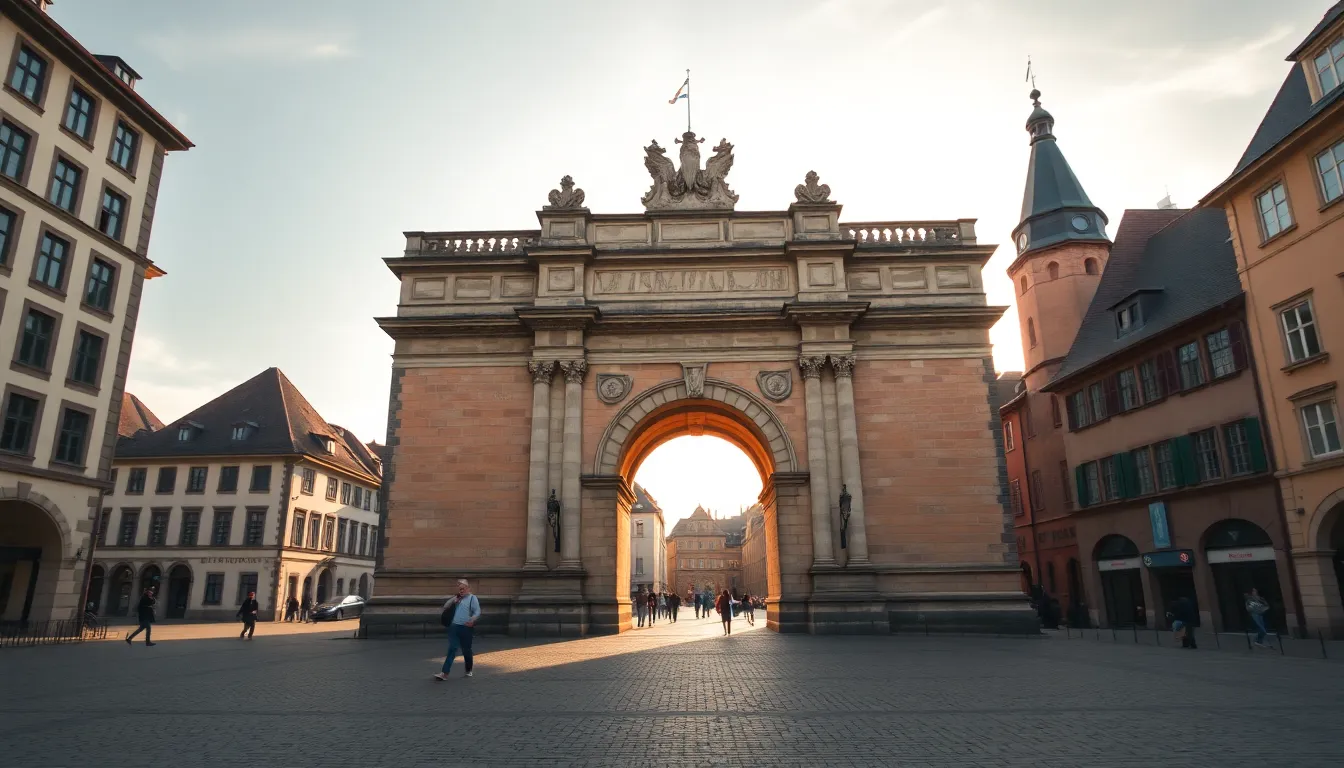
I tell every group the same thing when we arrive in Trier: you are now in the oldest city in Germany, and for a stretch of the late Roman Empire, this was one of the most important cities in the world. People do not expect that from a quiet town on the Moselle near the Luxembourg border. Then we walk up to the Porta Nigra, the great black Roman gate that has stood here for more than eighteen hundred years, and the expectations adjust quickly.
Trier is the closest thing in Germany to walking through the late Roman world, and that matters enormously for a Christian heritage group, because this is where the Roman state and the Christian church first came together. If you want your congregation to understand how Christianity went from a persecuted sect to the faith of an empire, there are few better places to stand. Let me orient you.
Why Trier Is Different from the Rest of Germany
Trier was founded by the Romans around 16 BC, which makes it Germany’s oldest city by a wide margin. In the late third and fourth centuries it became an imperial capital, a residence of Roman emperors, including Constantine, the emperor whose conversion changed the course of Christian history. That is the key fact for a heritage group. Trier is not a place where Roman ruins sit as a backdrop to a German town. Trier is a Roman city that a German town grew up inside of.
The result is a UNESCO-listed cluster of Roman monuments at a scale you simply do not see elsewhere in the country, alongside one of the oldest cathedrals north of the Alps. The center is compact, the sites are close, and a group can absorb it on foot.
The Roman City Your Group Can Walk Through
The Porta Nigra and the Imperial Scale
Start at the Porta Nigra, the black gate, the best-preserved Roman city gate north of the Alps. It has stood since around the second century, and it survived the Middle Ages because it was turned into a church for a time, which is its own piece of the story. Standing under it, your group gets the scale of imperial Trier in a single glance.
From there the Roman city unfolds. The imperial baths, the amphitheater where the city held its games, and the remains of the Roman bridge over the Moselle, parts of which still carry traffic today. I tell groups to keep one fact in mind as they walk: emperors lived here, governed here, and made decisions here that shaped the ancient world. This was a center of power, not a frontier outpost.
The Basilica of Constantine
The single most important Roman building for a faith group is the Constantine Basilica, the Aula Palatina. It was Constantine’s throne hall, a vast brick audience chamber built around 310. Step inside and the scale is staggering, a single enormous room with no columns breaking it up. This is the hall of the emperor who issued the Edict of Milan in 313, which ended the persecution of Christians and set Christianity on the path to becoming the empire’s faith.
I let groups sit in that room for a while. It is now a Protestant church, which is its own kind of full circle: the throne hall of the emperor who legalized Christianity is now a place of Christian worship. There are not many rooms where the whole arc of that story is present in the architecture itself.
The Cathedral and the Holy Robe
The Cathedral of Trier, the Trierer Dom, is the oldest cathedral in Germany, with foundations laid in the fourth century on the site of an imperial palace. Tradition holds that Constantine’s mother, Helena, gave part of her palace for the first church here. The building you walk into grew across the centuries, Roman, Romanesque, and later, layered on top of itself, and you can read those layers in the stone.
The cathedral’s most venerated possession is the Holy Robe, the Seamless Robe of Christ, which tradition says Helena brought to Trier. It is rarely displayed, shown only on special pilgrimage occasions years apart, so your group is unlikely to see it directly. But the tradition itself is part of why Trier was a major pilgrimage destination through the Middle Ages, and it is worth telling your group as you stand in the cathedral.
Next door, the Liebfrauenkirche, the Church of Our Lady, is one of the earliest Gothic churches in Germany, built in the thirteenth century. The two churches stand side by side, Romanesque and Gothic, and the contrast makes a clean teaching moment about how church architecture changed.
St Matthias: A Pilgrimage Site Worth the Walk
A short way south of the center sits the Abbey of St Matthias, the Benedictine monastery that holds what tradition venerates as the tomb of the Apostle Matthias, the disciple chosen to replace Judas. It is said to be the only tomb of an apostle north of the Alps. For centuries it drew pilgrims along the routes that crossed Europe, and it remains a working pilgrimage church today.
I like to bring groups here in the afternoon, after the dense Roman morning, because it shifts the register from imperial history to quiet devotion. The walk out and the calm of the abbey give a group room to slow down and reflect. For a Christian group tracing the apostolic roots of the church, standing at an apostle’s tomb is a strong note to end a Trier day on.
A Heritage Day in Trier
The shape I use: Porta Nigra first thing, then the cathedral and the Liebfrauenkirche, then the Constantine Basilica, which I save until the group already understands the Roman scale. Lunch in the market square. Afternoon at the imperial baths and the amphitheater for those with the energy, or straight out to St Matthias for a quieter close. Trier is compact enough that you are never far from the next site, which makes it forgiving for a group with mixed walking ability.
One full day covers Trier well. If you want to add the Moselle valley wine country just outside the city, or give the Roman sites unhurried time, a second half-day pays off.
Where Trier Fits in a Germany Itinerary
Trier sits in the west, near the Luxembourg border, which makes it a natural pairing with the Rhine corridor. From here a group can move toward Cologne to the north or toward the ShUM cities of Worms, Speyer, and Mainz. Our Cologne heritage guide covers the cathedral city and the oldest Jewish community in Germany, which complements Trier’s Roman and early-church focus. For the full national map and how the Christian, Jewish, and Reformation threads connect, see our Germany heritage travel guide.
You can see how we structure these journeys on our Germany destination page, and our group heritage tours page explains how leading a group with us works.
FAQ: Trier Heritage Travel
Why is Trier important for a Christian heritage group?
Trier was a late Roman imperial capital and a residence of Constantine, the emperor who ended the persecution of Christians. His throne hall still stands, his mother Helena is tied by tradition to the cathedral and the Holy Robe, and St Matthias holds what is venerated as an apostle’s tomb. Few places let a group stand so directly inside the moment Christianity moved from persecution to the faith of an empire.
What is the Constantine Basilica?
It is the Aula Palatina, Constantine’s vast brick throne hall built around the year 310, one of the largest single-room structures to survive from antiquity. Today it serves as a Protestant church, which gives it a striking full-circle quality: the audience hall of the emperor who legalized Christianity is now a Christian house of worship. It is the most important Roman site in Trier for a faith group.
Will my group see the Holy Robe at Trier Cathedral?
Almost certainly not, and that is normal. The Holy Robe, venerated as the seamless garment of Christ, is displayed only on rare pilgrimage occasions separated by many years. The value for your group is in the tradition and the cathedral itself, the oldest in Germany, rather than in seeing the relic. I explain the story as we stand in the cathedral so the group understands why Trier drew pilgrims for centuries.
What is St Matthias and is it worth the walk?
St Matthias is a Benedictine abbey just south of the center that holds what tradition venerates as the tomb of the Apostle Matthias, said to be the only apostle’s tomb north of the Alps. It is a working pilgrimage church and a quieter, more devotional close to a day heavy with Roman history. For a group tracing the apostolic roots of the church, it is worth the short walk out.
How long does a group need in Trier?
One full day covers the Roman monuments, the cathedral, and St Matthias comfortably, because the sites cluster within a compact center. If you want to add the Moselle wine country nearby or give the Roman baths and amphitheater unhurried time, plan for a day and a half. Trier rewards a steady pace rather than a rush.
If Trier is on your itinerary, or you are deciding how it fits with the Rhine cities to the north, I would be glad to help you shape the day. The Constantine story in particular can carry a whole afternoon if you frame it well.
Contact us whenever you are ready to start that conversation.