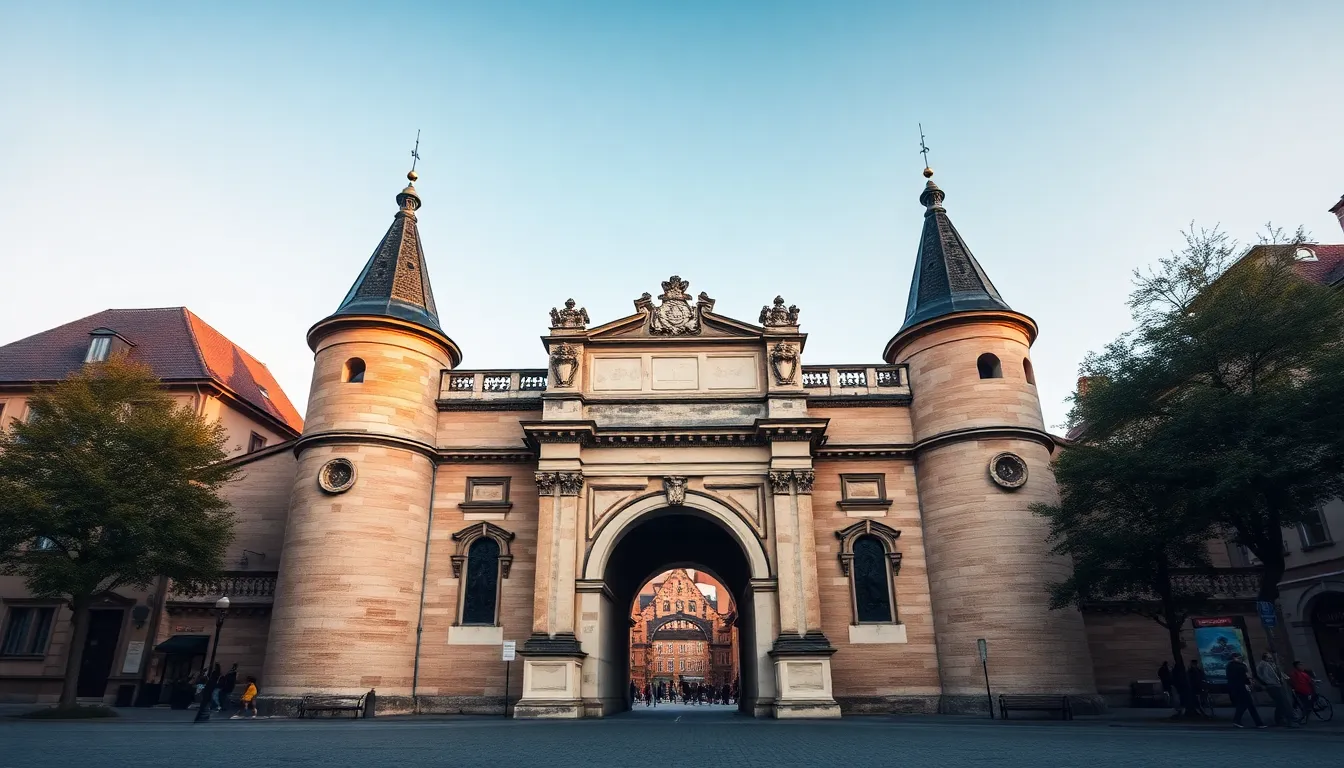
The first time I brought a group to Trier, one of the pastors traveling with me stopped in the middle of the cathedral courtyard and said, “I had no idea any of this was here.” That reaction is normal. Most American Christians have heard of Wittenberg and Cologne. Almost none of them have heard of Trier. And yet Trier is where the public Christian story in this part of Europe really begins.
I want to fix that gap, because for a faith group, Trier rewards you in a way few cities do. It is compact. You can walk the whole thing. And the layers sit right on top of each other, Roman, early Christian, medieval, all within a few hundred meters. After more than twenty years of leading heritage trips, I still think of Trier as one of the best teaching cities in Germany. Let me show you why.
A Roman City Older Than the Empire’s Conversion
Trier sits on the Moselle River in the far west of Germany, close to the Luxembourg border. It was founded under the Emperor Augustus around 16 BC, which makes it the oldest city in Germany by any reasonable measure. The Romans called it Augusta Treverorum, and by the time the empire was deciding what to do about Christianity, Trier had become one of its most important western capitals. Emperors lived here. The city held an imperial residence, an audience hall, baths, and the great gate that still dominates the skyline.
That gate is the Porta Nigra, the “black gate,” built around 170 AD. It is the largest surviving Roman city gate north of the Alps, and your group will walk through it within minutes of arriving. I always start a Trier visit here, because it sets the scale. This was not a frontier village. This was a seat of power. And when power and Christianity met in the fourth century, they met in places like this one.
Why a Pastor Should Care About Trier’s Roman Layer
Here is the point I make to Christian groups standing at the Porta Nigra. The early church did not grow up in a vacuum. It grew up inside the Roman world, under Roman law, in Roman cities. Trier lets you see that with your own eyes. The same streets the early Christians walked are still under your feet. The transition from a persecuted faith to a public one happened in cities exactly like this, and Trier happens to be one where you can still read the whole story off the stones.
Constantine and the Basilica
The single most important building in Trier for a Christian group is the Aula Palatina, usually called the Constantine Basilica. Constantine the Great built it around 310 AD as his throne room. Stand inside it and the proportions are staggering. The hall is 67 meters long and 33 meters high, a single vast brick rectangle with no columns breaking the space. It was designed to make a visitor feel small before the emperor.
What matters for your group is who built it. Constantine is the emperor who, in 313, issued the Edict of Milan and ended the official persecution of Christians across the empire. He is the figure who convened the Council of Nicaea in 325, where the church hammered out the Nicene Creed that Christians still recite. And he spent significant time in Trier. The basilica you are standing in belonged to the man who changed the legal status of the faith forever.
There is a beautiful irony here that I always point out. The Aula Palatina is today a Protestant church. The Evangelical congregation of Trier worships in Constantine’s throne room. A building raised to glorify imperial power now holds a Reformation congregation. For a Protestant group, that turn in the story tends to land hard.
The Cathedral of Trier, Germany’s Oldest
A short walk from the basilica brings you to the Trier Cathedral, the Hohe Domkirche St. Peter. This is the oldest cathedral in Germany, and its origins go straight back to Constantine’s era. Tradition holds that Constantine’s mother, Helena, gave part of her palace in Trier to the church, and the first great Christian basilica rose on that ground in the fourth century.
The building you see today is a layered thing. Roman foundations and walls, Romanesque construction from the eleventh and twelfth centuries, Gothic and Baroque additions on top. When I walk a group through the cathedral, I tell them to look for the seams. You can physically see where one century handed the work to the next. Few buildings in Europe let you read seventeen hundred years of continuous Christian worship in a single structure, and this is one of them.
Helena and the Tradition of the Relics
Helena is central to the Trier story. She was Constantine’s mother, she became a Christian, and tradition credits her with traveling to Jerusalem and recovering relics connected to the life of Christ. Trier claims several of these through her, and whatever a given group believes about the relics themselves, Helena’s role connects this western German city directly to the Holy Land and to the imperial family that legalized the faith. For groups who go on to travel to Israel, that thread is worth pulling on.
The Holy Robe
The cathedral’s most famous possession is the Holy Robe, the Heiliger Rock, which tradition holds to be the seamless garment of Christ described in the Gospel of John, the tunic the soldiers cast lots for rather than tear. According to the Trier tradition, Helena brought it to the city in the fourth century.
I want to be careful and honest with groups about this. The historical claim cannot be verified, and the church itself treats the robe as an object of devotion rather than a proven artifact. The robe is kept sealed and is shown to the public only rarely. The last public showing, called a pilgrimage or Wallfahrt, was in 2012, and these events draw hundreds of thousands of pilgrims when they happen. Most groups will not see the robe itself, but standing in the cathedral that has guarded it for sixteen centuries is its own kind of encounter.
What I tell Protestant and Catholic groups alike is this. You do not have to settle the question of the robe’s authenticity to be moved by what it represents. For sixteen hundred years, Christians have come to this spot drawn by the Gospel account of a seamless garment and the unity it symbolized. That continuity of devotion is real, whatever you conclude about the cloth.
How to Walk Trier With a Group
Trier is a gift for a group leader because almost everything sits within a tight historic core. A practical route looks like this. Start at the Porta Nigra to establish the Roman scale. Walk the main market square. Move to the cathedral and the adjoining Church of Our Lady, which is one of the earliest Gothic churches in Germany and connects directly to the cathedral. Finish at the Constantine Basilica. The whole circuit is well under two kilometers of walking.
Give it a full half day at minimum, a full day if your group likes to linger and you want to add the imperial baths and the Rheinisches Landesmuseum, which holds an outstanding collection of Roman material. For mixed-age groups, Trier is kind. The terrain is flat and the distances are short, which is not always true in German heritage cities.
One scheduling note. Trier pairs naturally with a wider Rhineland and Moselle itinerary, and it sits close to the ShUM cities and to Luxembourg, so it rarely needs to stand alone. I usually slot it as the western anchor of a trip that also reaches toward Cologne or the Reformation heartland.
If you want to see how Trier fits into a fuller Christian heritage route through Germany, our Germany spiritual sites guide lays out the major stops, and the Reformation site-by-site guide covers the Luther country you might pair it with. For the apostolic grave just outside the city center, see our piece on the Abbey of Saint Matthias.
You can learn more about how we build these journeys on our Germany destination page, and our group heritage tours page explains how the group leader experience works, including that group leaders travel free with fifteen or more participants.
FAQ: Trier Christian Heritage
Why is Trier important for Christian heritage travel?
Trier holds the oldest cathedral in Germany, a basilica built by Constantine the Great, and the Holy Robe tradition connected to Christ’s seamless garment. It is the city where you can physically trace the moment Christianity moved from a persecuted faith to a public, imperial one, all within a compact and walkable historic center.
What is the connection between Constantine and Trier?
Constantine the Great, the emperor who ended the persecution of Christians with the Edict of Milan in 313 and convened the Council of Nicaea in 325, spent significant time in Trier and built his throne room there. That hall, the Aula Palatina or Constantine Basilica, still stands and is today a Protestant church.
Can groups see the Holy Robe in Trier Cathedral?
Rarely. The Holy Robe is kept sealed and shown publicly only during special pilgrimage events, the last of which was in 2012. Most groups will not see the robe itself, but they can visit the cathedral that has guarded it for sixteen centuries and learn the tradition surrounding it.
How much time should a faith group spend in Trier?
A half day covers the essential Christian sites: the Porta Nigra, the cathedral, the Church of Our Lady, and the Constantine Basilica, all within walking distance. A full day lets you add the Roman imperial baths and the Rheinisches Landesmuseum. The flat, compact center makes Trier comfortable for mixed-age groups.
Is Trier suitable for older travelers?
Yes. Trier’s historic core is flat and the distances between major sites are short, often just a few hundred meters. This makes it one of the more accessible heritage cities in Germany for groups that include older members or anyone who finds long walks difficult.