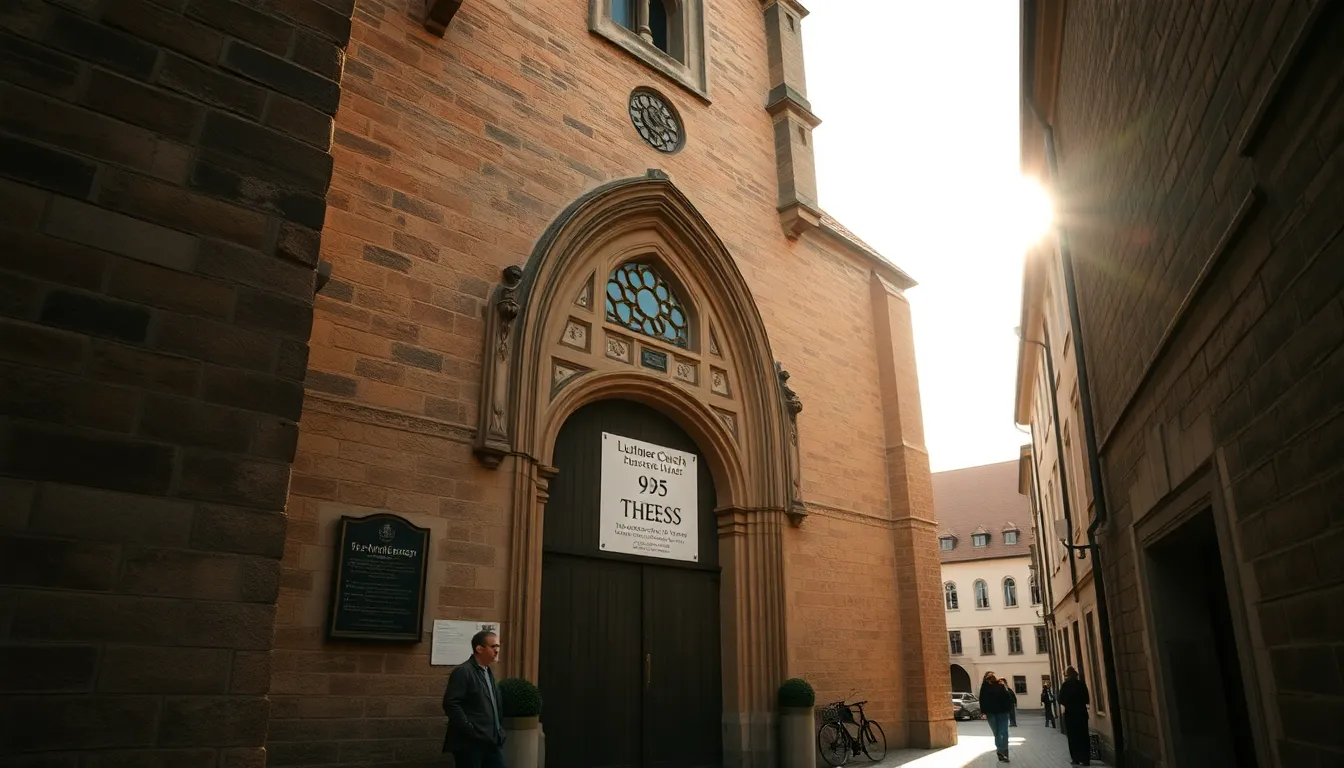
The first time I led a group down the Reformation Trail, I was a pastor who had read about Wittenberg for twenty years and never set foot in it. I had preached on the 95 Theses. I had taught the priesthood of all believers from a study Bible footnote. And I stood in front of the Castle Church door, with my own congregation behind me, realizing I had no idea what to say.
That moment taught me something I now tell every pastor planning their first Reformation trip: leading this journey is not about being an expert on Luther. It is about being present with your people while they encounter the place where their faith was reshaped. You do not need a seminary degree in church history. You need a plan, a posture, and a willingness to let the sites do some of the teaching for you.
If you are a pastor staring at a blank calendar and a vague sense that your congregation should walk this ground someday, this is the playbook I wish I had been handed.
Start With Why You Are Going, Not Where
Before you look at a single map, get clear on the spiritual aim of the trip. A Reformation journey can serve very different purposes, and the purpose shapes everything that follows.
Some pastors lead this trip as a discipleship intensive. The goal is to deepen the congregation’s grasp of grace, scripture, and the courage it took to recover them. Other pastors frame it as a leadership formation trip for elders, deacons, and ministry teams. Still others build it as an intergenerational pilgrimage, the kind of shared experience that bonds a church for a decade.
None of these is more correct than the others. But if you skip this step and jump straight to itinerary building, you end up with a sightseeing tour that happens to pass through Reformation sites. That is a missed opportunity. When you know your why, every stop has a reason, and your devotionals on the ground write themselves.
The Core Reformation Route Every First Trip Should Cover
There is a natural spine to a Reformation itinerary, and for a first trip I would not stray far from it.
Eisleben, Erfurt, and Wittenberg: The Luther Arc
Start where Luther started. Eisleben is the town where he was born and, by a strange symmetry, where he died. Erfurt is where the young law student became a monk after a lightning storm terrified him into a monastery. And Wittenberg is the center of gravity, the town where he preached, taught, posted the Theses, and is buried inside the Castle Church.
Walking this arc in order gives your group a narrative they can follow. Birth, crisis, conversion, public stand. It mirrors the shape of a testimony, and your congregation will feel that without you having to explain it.
Worms and the Diet of 1521
Add Worms if your schedule allows, and I strongly suggest it. This is where Luther stood before the emperor and refused to recant. The line attributed to him, “Here I stand, I can do no other,” is the emotional summit of the whole story. Standing in that city and reading his actual defense aloud to your group is the kind of moment people talk about for years.
Wartburg Castle
After Worms, Luther was spirited away to Wartburg Castle for his own safety, and there he translated the New Testament into German in eleven weeks. For a congregation that loves the Bible, this site lands hard. It is the place where scripture became available to ordinary people in their own tongue. Climb the hill, see the room, and let the weight of it settle.
If you can hold these five places loosely connected by good driving days, you have a complete first Reformation trip. You do not need to cram in more.
Building Your Days So People Can Breathe
The most common rookie mistake I see is over-scheduling. A pastor gets excited, fears missing anything, and packs the days so tight that the group is exhausted by day four. Tired people do not reflect. They just survive the trip.
Build in margin. One major site in the morning, one in the afternoon, and an evening with nothing scheduled but dinner and conversation. That evening space is where the trip actually happens. People process what they saw. Quiet members open up. The Spirit works in the gaps you leave open, not the ones you fill.
I also build a daily rhythm into every Reformation trip: a short morning devotional tied to the day’s theme, and a brief evening debrief where anyone can share what struck them. You do not need to prepare elaborate teaching. A single passage, a single question, and the willingness to let silence sit.
Logistics a First-Time Pastor Should Not Carry Alone
Here is the honest part. You are a pastor, not a travel agent. The number of moving pieces in a multi-city Germany trip is genuinely large: motor coach routing, hotel blocks, site entry timing, meals, a licensed guide who knows the Reformation sites specifically, and contingency plans for when a bus breaks down or a church is unexpectedly closed.
This is where a heritage tour operator earns its place. The right operator handles the machinery so you can stay in your actual role, which is shepherding people. When you partner with someone who has run these routes before, you walk into each site already briefed, already expected, already free to focus on your group instead of the schedule.
One detail worth knowing early in your planning: with Heritage Tours, the group leader travels free with 15 or more participants. For a pastor on a church salary, that matters. It means the person doing the work of organizing and leading does not also pay their own way. We treat that as standard, not a promotion, because the leader’s job is hard enough.
Preparing Your Congregation Before Departure
A Reformation trip is far richer when people arrive knowing the story. Send a simple reading packet a month out. A short biography of Luther, an overview of each city, and a one-paragraph explanation of why the Reformation still shapes how your church worships every Sunday.
Consider a few teaching sessions before you go. A Wednesday-night series on the five solas, or a short class on the 95 Theses, primes everyone to encounter the sites with understanding rather than confusion. The group that studies before it travels comes home transformed. The group that shows up cold comes home with nice photos.
Hold one logistics meeting too. Passports, packing, walking shoes, the reality that some sites involve stairs and hills. Set expectations honestly so nobody is surprised on the ground.
FAQ: Leading a First Reformation Trip to Germany
Do I need to be a church history expert to lead this trip?
No. You need to be a good shepherd and a prepared host. A licensed local guide handles the historical detail at each site. Your job is the spiritual framing, the morning devotional, and the pastoral presence. Many pastors find they learn the history alongside their congregation, and that shared discovery is part of what makes the trip meaningful.
How long should a first Reformation trip be?
Eight to ten days is the sweet spot for a first trip. That gives you enough time to cover the core Luther arc plus Worms and Wartburg without rushing, while leaving the evening margin that makes the experience deepen rather than just accumulate. Shorter trips work but force hard cuts.
How many people do I need for the leader to travel free?
With Heritage Tours, the group leader travels free with 15 or more participants. That threshold applies to the organizing pastor. Building your group to fifteen is usually very achievable in a congregation, especially when you start promoting the trip six to nine months ahead. If filling the roster feels daunting, our guide on how to recruit and fill your group walks through the exact steps.
How far in advance should I start planning?
Begin the conversation with an operator nine to twelve months before departure. That runway lets you secure good hotels, fill your group properly, and run the pre-trip teaching that makes the journey land. Peak season runs April through October, so popular dates fill earliest.
What if my congregation has never traveled internationally as a group?
That is completely normal for a first trip, and a good operator plans around it. Clear pre-trip communication, a manageable pace, and an experienced guide remove most of the friction. First-time international travelers often have the most powerful experience precisely because everything is new.
If you are a pastor sensing that your congregation is ready to walk where the Reformation began, I would be glad to talk it through with you. No pressure, just an honest conversation about what a first trip could look like for your church. You can start by exploring our Germany destination page, read the broader guide for pastors and rabbis, or work through the complete guide for group leaders to see how the leader experience works. When you are ready, contact us and we will begin.