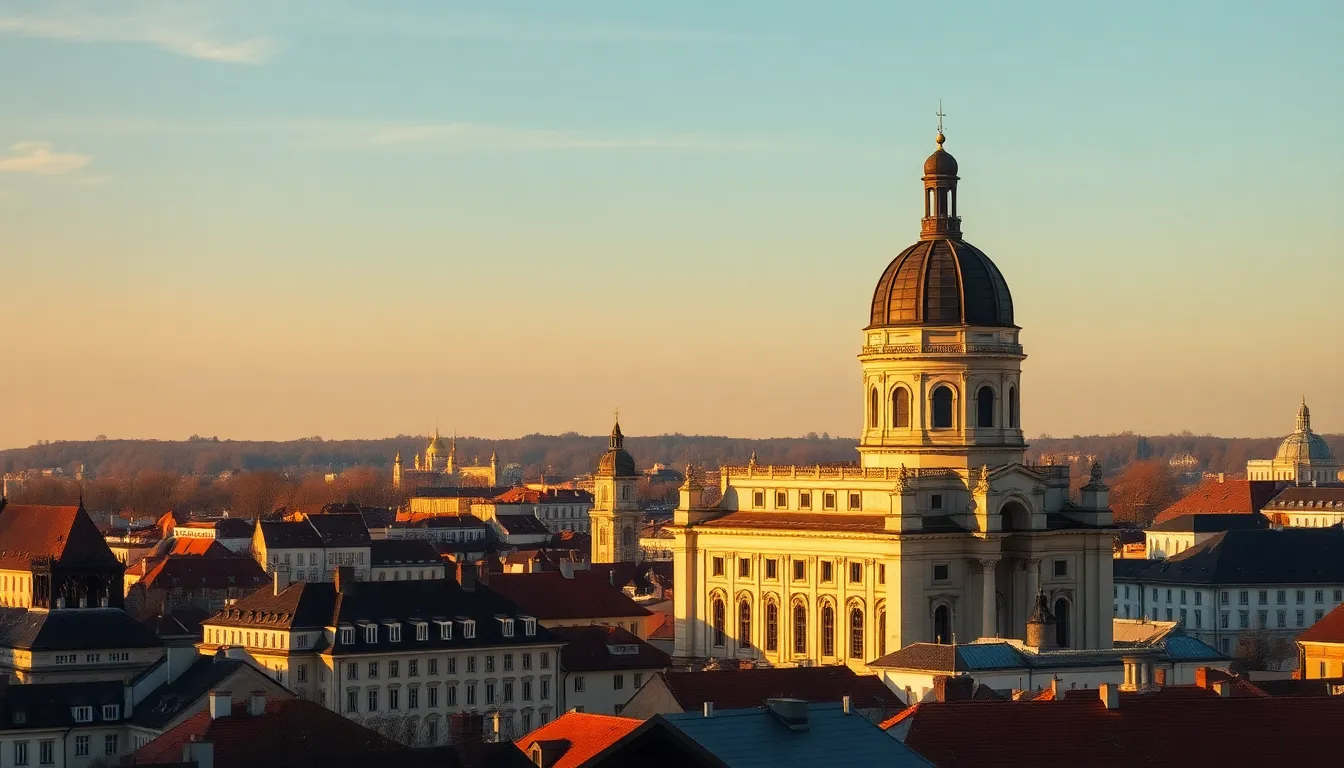
People come to Munich expecting beer halls and mountains. What I want my groups to see is harder and richer than that. This is the city where the Nazi movement was born, in those same beer halls, and it is also the city where a synagogue now stands in the very heart of the old town as a deliberate act of return. Munich holds its history without flinching, and a few miles up the road, Dachau asks every visitor to remember what that history cost.
I have led faith groups through Munich and the wider Bavaria for years, and I tell every pastor, rabbi, and educator the same thing: this region gives you the full range. Deep Catholic heritage, a living Jewish community, and one of the most important remembrance sites in Europe, all within reach of a single base. Here is how I read it, and how to plan a trip that honors all of it.
Why Munich and Bavaria Hold the Full Heritage Range
Bavaria is Germany’s Catholic heart, a land of baroque churches, monasteries, and pilgrimage. Munich is its capital, a city of onion-domed churches and royal squares. But Munich is also where the Nazi party held its first rallies, which makes the city’s confrontation with that past all the more striking. And just outside the city sits Dachau, the model on which the entire concentration camp system was built.
For a group, that combination is the gift and the challenge. You can stand in a baroque basilica in the morning, walk through the grounds of Dachau in the afternoon, and visit a thriving synagogue the next day. Holding those experiences together is what makes a Munich and Bavaria trip so powerful.
The Three Layers Your Group Will Move Through
I prepare every group for three layers here. The Bavarian Catholic layer, the churches, basilicas, and pilgrimage sites that shaped centuries of faith. The remembrance layer, anchored by Dachau, which I treat with the gravity it demands. And the Jewish layer, both the deep history and the bold modern return embodied by the synagogue on Sankt-Jakobs-Platz. A well-built itinerary moves through all three with room to breathe.
The Jewish Story in Munich: History and a Bold Return
The Ohel Jakob Synagogue on Sankt-Jakobs-Platz
Munich’s Jewish community was largely destroyed in the Holocaust, but its modern return is one of the most visible statements of Jewish revival in Germany. In 2006, the new main synagogue, Ohel Jakob, opened on Sankt-Jakobs-Platz, in the very center of the old town, alongside the Jewish Museum Munich and the community center. Placing it there, in the heart of the city rather than on the margins, was a deliberate choice, a declaration that Jewish life belongs at the center of Munich again. For a Jewish group especially, standing in that square is a quiet, strong experience of resilience.
The Jewish Museum and Remembrance in the City
The Jewish Museum Munich tells the story of the community across the centuries, the destruction and the rebuilding. Throughout the city you will also find Stolpersteine and memorial markers recording where Jewish residents lived before deportation. I always pair the museum with the synagogue square so the group holds both the history and the living present. For the medieval river-cities Jewish story, the Rhineland Heritage Trail guide is the companion piece, since Bavaria’s Jewish heritage runs a different course.
Dachau: Remembrance Done with Dignity
Dachau, just outside Munich, opened in 1933 as one of the first concentration camps, and it became the template for the entire system that followed. Today it is the Dachau Concentration Camp Memorial Site, a place of documentation, reflection, and mourning. The preserved gate with its cynical inscription, the reconstructed barracks, the museum, and the memorial chapels, Catholic, Protestant, Jewish, and Orthodox, built on the grounds all ask something of the visitor.
How you approach Dachau matters more than almost any other decision on a Bavaria itinerary. I never rush a group through it, and I never schedule anything light for the rest of that day. Brief your group beforehand. Build in time afterward for silence, for conversation, for prayer if that is your tradition. The memorial chapels on site offer a natural space for a group to gather and reflect. This is the discipline I write about in the wider Germany heritage travel guide: remembrance is not a stop on a schedule, it is the heart of why we come.
Bavarian Catholic Heritage: Churches, Basilicas, and Pilgrimage
Bavaria’s Catholic heritage runs deep, and Munich is full of it. The Frauenkirche, the Cathedral of Our Lady, with its two distinctive onion-domed towers, is the symbol of the city. The Asamkirche, a small baroque jewel built by the Asam brothers, overwhelms visitors with its ornate intensity. The Theatinerkirche and Saint Michael’s Church, a major Jesuit church and a center of the Counter-Reformation in Bavaria, round out the city’s sacred core.
Beyond Munich, Bavaria offers some of Germany’s great pilgrimage and monastic sites. The Wieskirche, a rococo pilgrimage church in the foothills of the Alps, is a UNESCO World Heritage site and a place of extraordinary beauty, built around a statue of the scourged Christ that drew pilgrims by the thousands. The Benedictine monastery at Andechs, perched on its holy hill above the Ammersee, and the great baroque churches of the region give Christian groups a rich pilgrimage thread. Further south, the passion play tradition of Oberammergau, performed once a decade since the seventeenth century, draws faith groups from around the world when it runs, and it is worth checking the calendar if your trip falls in a performance year. For a group tracing the Counter-Reformation, Munich and its Jesuit churches are among the best places in Germany to understand how the Catholic Church answered Luther.
Planning a Munich and Bavaria Heritage Trip: What Leaders Need to Know
Munich works well as a base for the whole region. The city’s heritage core is walkable, Dachau is a short trip out, and the Bavarian pilgrimage sites are day trips into the countryside. I usually plan three to four days using Munich as the hub: a day for the city’s sacred and Jewish sites, a full and unhurried day for Dachau, and a day or two for the Bavarian churches and pilgrimage sites depending on your group’s focus.
The emotional range of this region is wide, from the joy of a rococo pilgrimage church to the weight of Dachau, so sequencing matters. I place Dachau where the group has recovery time afterward, and I never follow it with a celebratory meal or a light activity.
This is where an operator who knows the territory earns its keep. Heritage Tours builds custom itineraries, so a Catholic or Christian group can weight the trip toward the basilicas, the Wieskirche, and the pilgrimage sites, while a Jewish group can center the synagogue square, the Jewish Museum, and Dachau remembrance. Mixed groups can experience the full sweep. Group leaders with 15 or more participants travel free, which makes building the group easier. Start at our Germany destination page or see how we run group heritage tours.
FAQ: Munich and Bavaria Heritage Travel
What are the must-see Jewish heritage sites in Munich?
The Ohel Jakob synagogue and the Jewish Museum Munich on Sankt-Jakobs-Platz are the heart of it, a powerful statement of return placed in the center of the old town. The Stolpersteine throughout the city and the Dachau Concentration Camp Memorial Site complete the picture of destruction and remembrance.
How should we approach a visit to Dachau with a group?
With care and time. Brief your group beforehand so they know what they are walking into. Allow several unhurried hours, and build in silence and reflection afterward. The memorial chapels on the grounds offer a natural place for a group to gather. Never schedule a light activity or celebratory meal for the rest of that day.
Is Bavaria good for a Catholic or Christian pilgrimage group?
It is one of the richest Catholic heritage regions in Germany. Munich’s baroque churches, the Wieskirche pilgrimage church, the Andechs monastery, and the Counter-Reformation sites give a Christian group a deep pilgrimage thread. We can weight the itinerary toward the churches and pilgrimage sites for a group with that focus.
How many days should we plan for Munich and Bavaria?
Plan three to four days using Munich as your base. A day for the city’s sacred and Jewish sites, a full unhurried day for Dachau, and a day or two for the Bavarian pilgrimage and monastic sites in the countryside. The exact balance depends on your group’s focus.
When is the best time to visit Munich and Bavaria?
Late spring through early autumn offers the mildest weather for the city and the countryside pilgrimage sites, with the Alpine foothills at their most beautiful in late spring and early fall. Summer is lovely but busier, and Oktoberfest in late September fills the city, so plan around it. Winter is cold but quiet, with a strong Advent and Christmas market tradition.
If Munich and Bavaria are on your heart for your community, I would welcome the conversation. Every group balances the joy and the gravity of this region differently, and the itinerary should reflect yours. Contact us whenever you are ready to begin.