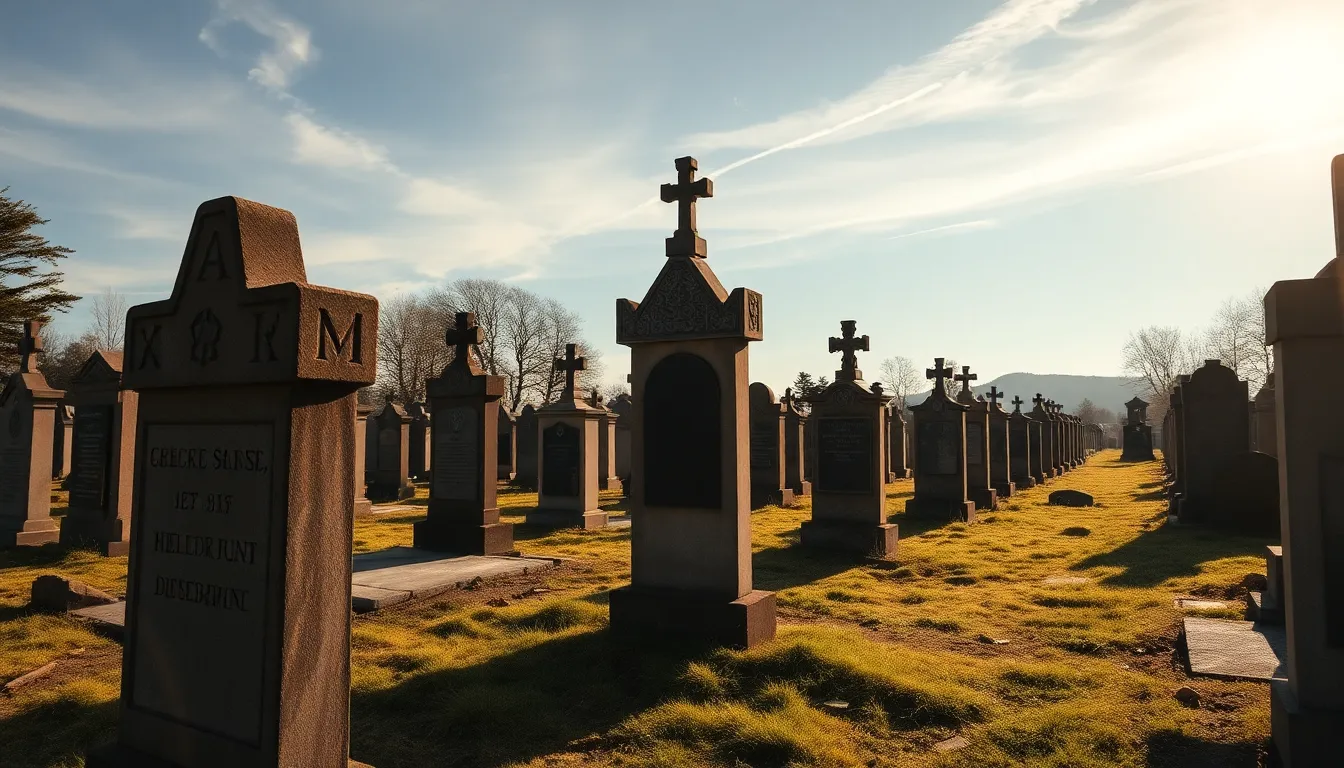
There is a moment at the Heiliger Sand that I try to prepare every group for, and I still find it impossible to fully describe in advance. You walk through the gate, the city falls away behind you, and you are standing among gravestones that have been here for nine hundred years. The Hebrew letters are worn but still legible. The people named on these stones lived Jewish lives, raised Jewish families, and studied Torah in this city long before most of the world your congregation knows existed.
The Holy Sand is the oldest surviving Jewish cemetery in Europe. It is not a tourist site, and I never describe it as one. It is a place of memory and reverence, and the way a group enters it shapes everything that follows. Let me help you understand what is here and how to bring your community to it with the dignity it asks for.
What the Heiliger Sand Is
The Heiliger Sand, the Holy Sand, sits in Worms, the city that holds the oldest documented Jewish community in Germany. The oldest legible tombstones here date to the eleventh century, and the cemetery remained in use for the better part of a thousand years. Roughly two thousand gravestones stand on the grounds, generation upon generation of a single continuous community.
This is sacred ground in the fullest Jewish sense. A Jewish cemetery is a beit chaim, a house of life, and a beit olam, a house of eternity. The Holy Sand is not a ruin or a relic. By Jewish understanding, the people resting here are still here. That frame changes how a group walks the grounds, and it is the first thing I share before we enter.
The Stones and the People They Name
Scholars Who Shaped Jewish Law
Among the graves are the resting places of some of the most significant scholars of medieval Ashkenaz. The Maharam of Rothenburg, Rabbi Meir ben Baruch, one of the towering halachic authorities of the thirteenth century, is buried here, alongside Alexander ben Salomon Wimpfen, the man who secured the Maharam’s body for proper burial. Their adjacent graves have drawn visitors in prayer for centuries.
For a learning congregation, these are not abstract names. These are the authorities whose rulings sit inside the halacha your community keeps. Standing at their graves is a form of encounter with the chain of transmission, the mesorah, that runs from these stones to your own beit midrash.
Ordinary Lives Remembered
But the Holy Sand is not only the famous. Most of the stones name ordinary people, parents and children, merchants and teachers, who lived and died as part of this community across the centuries. I always make a point of slowing a group down for these stones too. The remembrance owed here is owed to all of them, not only to the scholars whose names appear in our books.
The Legend of the Twelfth-Century Stones
Among the oldest markers, tradition points to graves said to date to the late eleventh and early twelfth centuries, including stones tied to the memory of those killed in the violence that swept the Rhineland communities during the Crusades. Whether every attribution is historically precise matters less than what the cemetery as a whole testifies to: that this community buried its dead here, generation after generation, through prosperity and through catastrophe, and never abandoned the ground.
I tell groups that the Holy Sand is, in its own quiet way, a record of Jewish endurance written in stone. The persecutions came. The community buried its dead and kept going. The stones from the worst years stand beside the stones from peaceful years, and the cemetery makes no distinction. All of them are remembered the same way.
Approaching the Cemetery With Reverence
This is the part I care about most, so I want to be direct. The Holy Sand is not a place to photograph quickly and move on. It is a place to enter with intention.
I prepare groups before we arrive. I explain whose graves we will pass. I ask that we move quietly. For many groups, it is fitting to recite Tehillim, to pause at the graves of the scholars, and to leave a small stone on a grave in the old custom, a sign that someone came, someone remembered. Men should have their heads covered. The whole visit is conducted in the register of a beit chaim, not a landmark.
Building unhurried time into the itinerary matters here. A cemetery rushed is a cemetery dishonored. I give the Holy Sand its own quiet stretch of the morning, with room for silence afterward, before the group moves on to anything else.
Leaving Time for What the Visit Stirs
One thing I have learned over many years of bringing groups here: the Holy Sand often surfaces feelings people did not expect. A congregant who held steady through a museum or a memorial will sometimes find the cemetery is where something breaks open. The reason, I think, is that this ground is so personal. These are individual graves, individual names, individual lives, not statistics or a single vast monument.
So I build room for that. After the cemetery, I do not schedule something that demands focus or energy right away. A walk, a quiet coffee, a stretch of unstructured time. Group leaders sometimes feel pressure to keep the itinerary moving, but the Holy Sand is one of the places where less momentum serves your people better. Let the visit settle before you ask anything more of them.
Where the Holy Sand Fits in a Worms Visit
The Heiliger Sand sits within easy reach of the rest of Jewish Worms, the Rashi Synagogue, the Rashi Chapel, and the Judengasse, all walkable in a single morning. Many groups treat the cemetery as the heart of the Worms day, the still point that the rest of the visit circles around.
It also belongs to the wider ShUM story. Worms was one of the three ShUM cities, alongside Speyer and Mainz, whose scholars shaped Ashkenazi law, and many of the people buried at the Holy Sand were part of that intellectual world. You can read more about Worms Jewish heritage and the Rashi Synagogue, about the ShUM cities as a connected trail, and about the full arc of Jewish heritage in Germany.
Bringing Your Congregation to the Holy Sand
Heritage Tours builds the Holy Sand visit with the care it requires: proper preparation before entry, unhurried time among the stones, room for prayer and silence, and a guide who can name the scholars and tell the story of the community that rests here. We never treat this ground as a quick stop on a checklist.
Group leaders travel free with fifteen or more participants, which makes a dedicated Rhineland heritage trip reachable for communities of nearly any size. You can see how we structure these journeys on our Germany destination page and our group heritage tours page.
FAQ: The Holy Sand Cemetery
Why is the Heiliger Sand called the oldest Jewish cemetery in Europe?
The Holy Sand in Worms holds the oldest legible Jewish tombstones still standing in Europe, dating to the eleventh century, and remained in use for roughly a thousand years. Around two thousand gravestones survive, making it the oldest continuously surviving Jewish burial ground on the continent.
Who is buried at the Holy Sand?
The cemetery holds the graves of major medieval scholars, including the Maharam of Rothenburg, Rabbi Meir ben Baruch, alongside thousands of ordinary members of the Worms Jewish community across the centuries. The graves of the scholars have drawn visitors in prayer for generations.
What is the proper way for a group to visit a Jewish cemetery like this?
Enter with intention and move quietly. Men should cover their heads. Many groups recite Tehillim, pause at the graves of the scholars, and leave a small stone on a grave in the old custom of remembrance. It is fitting to allow unhurried time and silence rather than treating the visit as a quick photo stop.
How long should we spend at the Holy Sand?
Give it its own quiet stretch of the morning, with room for prayer and silence. The cemetery is often the heart of a Worms visit, and rushing it works against the reverence the ground asks for.
Does the Holy Sand connect to other sites in Worms?
Yes. The cemetery sits within walking distance of the Rashi Synagogue, the Rashi Chapel, and the Judengasse, so a group can experience the full Jewish heritage of Worms in a single unhurried morning. Worms is also one of the three ShUM cities along the Rhine.
If you want your congregation to stand among these stones with the reverence and preparation they deserve, I would be glad to help you plan a visit that honors this ground properly. Contact us whenever you are ready to begin.