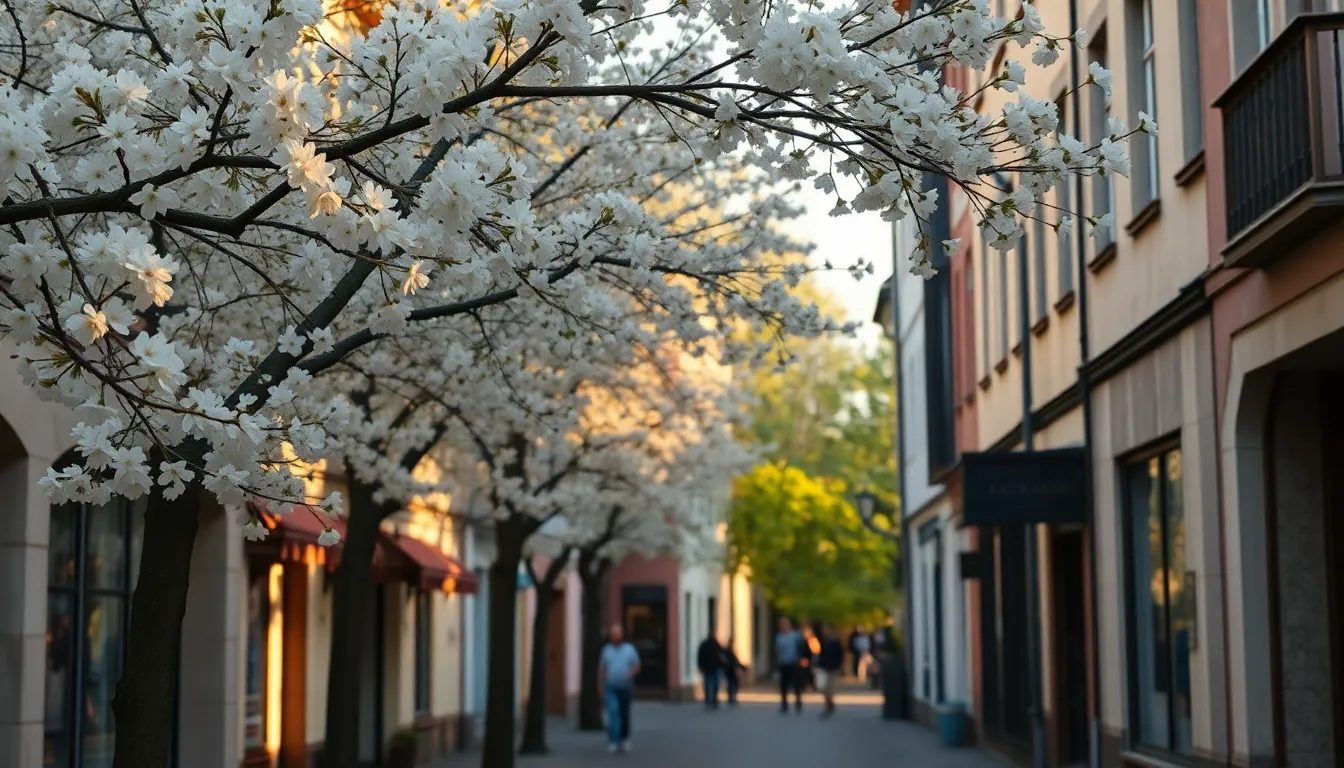
Ask me when to bring a heritage group to Germany and I will usually start with spring, then watch the leader’s face when I explain why it is not as simple as “nice weather.” Spring in Germany is three different trips depending on whether you come in March, April, or May. The cathedral squares of the Rhineland, the Luther towns of Saxony, the memorial sites near Berlin and Munich, each feels different across those twelve weeks. Here is the spring window as I actually experience it, leading groups year after year.
If you want the full-year picture first, our best time to visit Germany guide lays out every season. This one stays inside spring.
What Spring Weather Actually Looks Like
Germany’s spring is real spring, which means it is variable and it is wet. Do not picture a Mediterranean April. Picture a country waking up slowly, with bright mornings, sudden showers, and a chill that lingers into May in the higher and more northern regions.
Rough daytime temperatures across the country:
- March: 6 to 12 degrees Celsius. Cold mornings, bare trees turning, frequent rain. Coat weather.
- April: 10 to 17 degrees Celsius. The turn. Blossoms in the Rhineland and Bavaria, longer days, changeable skies. Layers and a rain shell.
- May: 14 to 21 degrees Celsius. The reward. Green countryside, long light, comfortable site visits. The best walking weather of the season.
Tell your group to pack for layers and rain regardless of the month. A spring day in Germany can hold all four seasons before dinner. Our Germany heritage travel tips hub covers practical packing and pacing.
March: Quiet, Cold, and Often Overlooked
The Trade-Off
March is the value month. Hotels and coaches cost less than peak season, and the major sites are at their quietest. You can stand in the Wittenberg Castle Church or the Cologne Cathedral square with room to breathe and a group that is not jostling other tour buses. For groups whose focus is reflection and study rather than sunshine, March has real appeal.
The trade-off is the weather and the daylight. It is cold, it can be grey, and some smaller museums or rural sites keep shorter off-season hours. Confirm opening times before you build a tight schedule.
When Holy Week Falls Early
In years when Easter lands in late March, March becomes meaningful for Christian groups. Holy Week in the Reformation towns, or in a city with a great cathedral, carries a weight that a random week in summer does not. If your trip is built around the church calendar, watch the date of Easter for your travel year and plan accordingly.
April: The Spiritual Heart of the Spring Window
Holy Week, Easter, and the Reformation Towns
April is when the church calendar and the German landscape line up most powerfully. For Christian groups, Holy Week and Easter in the Luther country, Wittenberg, Eisleben, Eisenach, the Wartburg, give the journey a liturgical frame that deepens every site. Standing where the Reformation began, during the week the church marks redemption, is the kind of resonance you cannot manufacture in July.
Passover and Jewish Heritage Travel
For Jewish groups, Passover usually falls in April, and it shapes the spring picture. Some communities prefer to travel in the weeks just before or just after the holiday rather than during it, because kashrut and travel logistics get complicated mid-festival. Either way, an April journey through the SHUM cities of the Rhineland, Speyer, Worms, and Mainz, or the Jewish quarters of Berlin and Frankfurt, carries the freshness of the season. If your group keeps kosher, build those arrangements in early using our kosher and Shabbat in Germany guide.
What April Crowds Look Like
Be honest with your group: April is busier than March, especially around Easter, when German families travel and popular sites fill. It is still far from the summer peak. With a licensed guide and reserved entries, the crowds are manageable, and the spiritual alignment is worth the extra company.
May: The Best Walking Weather of the Season
Long Days and Green Countryside
If your priority is comfort and ease for a mixed-age group, May is the spring month I would point you to. The weather settles, the days stretch long, and the countryside, the Rhine Valley, the Thuringian forest, the Bavarian hills, is at its greenest. For older travelers or anyone who finds cold mornings hard, May removes the physical difficulty and lets the focus stay on the heritage.
Pentecost and the Late-May Surge
One date to watch in late May is Pentecost, which in Germany brings a public holiday and a wave of domestic travel. Sites and roads get busier around that weekend, and some accommodation tightens. It is not a reason to avoid late May, but build your itinerary knowing it.
Matching the Spring Window to Your Group
A few simple guides after years of this:
- Reflection-focused, budget-conscious, smaller group? March rewards you with quiet and lower cost.
- Built around Holy Week, Easter, or Passover? April is your month, and the calendar date drives everything. Plan early.
- Mixed ages, comfort matters, want the easiest weather? May is the gentlest spring travel of all.
Whatever you choose, spring asks for layered clothing, a rain shell, and an itinerary that does not over-pack the days. You can see how we structure these journeys on our Germany destination page and our group heritage tours page.
FAQ: Germany Heritage Travel in Spring
What is the best spring month to visit Germany for a heritage tour?
It depends on your group. March is quiet and budget-friendly but cold and grey. April carries the most spiritual resonance, when Holy Week, Easter, and Passover align with the Luther towns and Jewish heritage sites, though it is busier. May offers the most comfortable weather and longest days, which suits mixed-age groups best. There is no single answer, only the right fit for your community.
What is the weather like in Germany in spring?
Variable and often wet. March runs roughly 6 to 12 degrees Celsius with frequent rain. April warms to 10 to 17 degrees with changeable skies. May settles into 14 to 21 degrees, the best walking weather of the season. Pack layers and a rain shell regardless of month, because a German spring day can hold all four seasons before dinner.
Is spring a good time for a Passover or Easter heritage trip?
Yes, April especially. For Christian groups, Holy Week and Easter in the Reformation towns give the journey a powerful liturgical frame. For Jewish groups, Passover usually falls in April, though many prefer to travel just before or just after the holiday for simpler logistics. Watch the calendar dates for your travel year, since they shift, and plan early because these windows book up.
How crowded is Germany in spring?
March is the quietest and least expensive part of the spring window. April grows busier, particularly around Easter when German families travel. Late May sees a surge around the Pentecost holiday. None of these reach the summer peak, and with a licensed guide and reserved entries, spring crowds stay manageable.
What should my group pack for spring in Germany?
Layers and a waterproof shell, no matter the month. Cold mornings warm into mild afternoons, and rain arrives without much warning. Comfortable waterproof walking shoes matter, since cobblestone old towns and memorial grounds involve a lot of time on your feet. Our Germany heritage travel tips hub covers packing in more detail.
If spring feels right for your community’s Germany journey, the exact month matters more than people expect, and the church or holiday calendar usually decides it. Tell me your focus and your flexible dates, and I will help you find the spring window that fits. Contact us when you are ready.