Germany Will Surprise Your Group, Often in Ways You Cannot Predict
After twenty-plus years of leading heritage groups through Germany, I have stopped being surprised by surprises. The retired teacher who barely spoke all week and then broke down at a small memorial in a town nobody has heard of. The teenager who said she did not want to come and then wrote a poem about Worms that made the whole bus cry. The pastor who planned every reflection in advance and then threw out his notes at Dachau because the place itself said everything.
Germany does not deliver the experience you planned. It delivers the one your group needs. Your job as a leader is to make space for whatever that turns out to be.
Here is what I have learned about doing that well.
The Emotional Realities Nobody Prepares You For
Memorial Fatigue Is Real, Here Is How to Manage It
Memorial fatigue is what happens when a group visits too many emotionally heavy sites in too short a time. It does not look like grief. It looks like numbness. Your group stops reacting. They move through sites mechanically. Some people get irritable. Others withdraw completely.
I have seen this happen to groups that scheduled Sachsenhausen, the Topography of Terror, and the Jewish Museum all in two days. Each of those sites deserves half a day and emotional breathing room. Stacking them back to back does not double the impact. It halves it.
The fix is simple but requires planning: after every heavy site, build in recovery time. A long lunch at a restaurant where your group can talk freely. A walk along the Spree River. An afternoon off. The lighter moments are not wasted time. They are what allow your group to absorb the heavier ones.
When I build itineraries for Germany, I never schedule two memorial sites on the same day. If the morning is Dachau, the afternoon is free. Always.
What to Do When Someone in Your Group Breaks Down
It will happen. Maybe at Dachau. Maybe at the Berlin memorial. Maybe at a site you did not expect, a small plaque on a quiet street marking where a Jewish family was taken.
When it happens, do not rush to fix it. Do not move the group along. Give the person space. If you are their rabbi or pastor, a hand on the shoulder and a quiet “take the time you need” is usually enough. Have a plan with your co-leader or tour guide so someone can stay with the person while the group continues if needed.
The groups that handle these moments best are the ones whose leaders talked about it before the trip. If your group knows in advance that strong reactions are normal and welcome, people are less likely to feel embarrassed and more likely to let the experience reach them.
Practical Things Most Tours Get Wrong
Kosher Food in Germany, the Honest Picture
I will be straightforward: kosher food in Germany is not easy outside of Berlin and Frankfurt. Berlin has a growing kosher restaurant scene, mostly in the Mitte district near the New Synagogue. Frankfurt has a few reliable options tied to its active Jewish community. Munich has limited kosher dining.
In smaller cities, Worms, Wittenberg, Nuremberg, kosher restaurants essentially do not exist. For observant groups, this means planning ahead. We arrange kosher catering in advance for every city on the itinerary. In some cases, that means packed lunches from a kosher kitchen in a larger city. It is not glamorous, but it works, and it means your group does not spend half the trip worrying about where to eat.
If your group has varying levels of observance, tell us in advance. We can arrange kosher options for those who need them and local restaurant bookings for those who do not.
Why You Need More Time at Small Sites Than You Think
Most tour itineraries allocate an hour for a small memorial or local museum and three hours for a major site like the Jewish Museum Berlin. In practice, it often works the other way around.
The Jewish Museum is well-organized and self-guided. Your group can move through it at their own pace, and the experience is structured by the museum itself. But a small Jewish cemetery in Worms, with headstones in Hebrew dating back centuries, sometimes asks more of your group than any major museum. People want to search for names. They want to read inscriptions. They want to stand quietly. That takes time.
Build your schedule around the emotional weight of a site, not its size or fame.
German Memorial Sites Are Not Theme Parks, What That Means for Group Behavior
This sounds obvious, but it matters in practice. German memorial sites are solemn places with specific behavioral expectations. Photography is usually permitted in outdoor areas but not always inside exhibitions. Conversation should be quiet. Group gatherings or prayers at certain locations may require advance permission.
At Dachau and Sachsenhausen, your group will be alongside other visitors, including school groups, international tourists, and sometimes survivors’ families. Brief your group in advance about respectful behavior. This is not about rules for the sake of rules. It is about honoring the people who were held and killed in these places.
The Best Hidden Thing About Germany That Most Tours Miss
Modern Jewish life in Germany is the story most heritage tours skip entirely, and it is one of the most compelling.
Berlin’s Jewish community has grown significantly since reunification. There are synagogues holding regular services, Jewish cultural centers, kosher restaurants, and a generation of young Jews, many of them immigrants from the former Soviet Union, building something new on ground that was nearly emptied eighty years ago.
If your group has time, a visit to one of Berlin’s active Jewish community centers or a conversation with a member of the local community adds a dimension that memorials alone cannot. It answers the question that every group eventually asks: is there Jewish life here now? The answer is yes, and it is worth seeing.
What to Tell Your Group Before They Land
Before your group boards the plane, share these things with them:
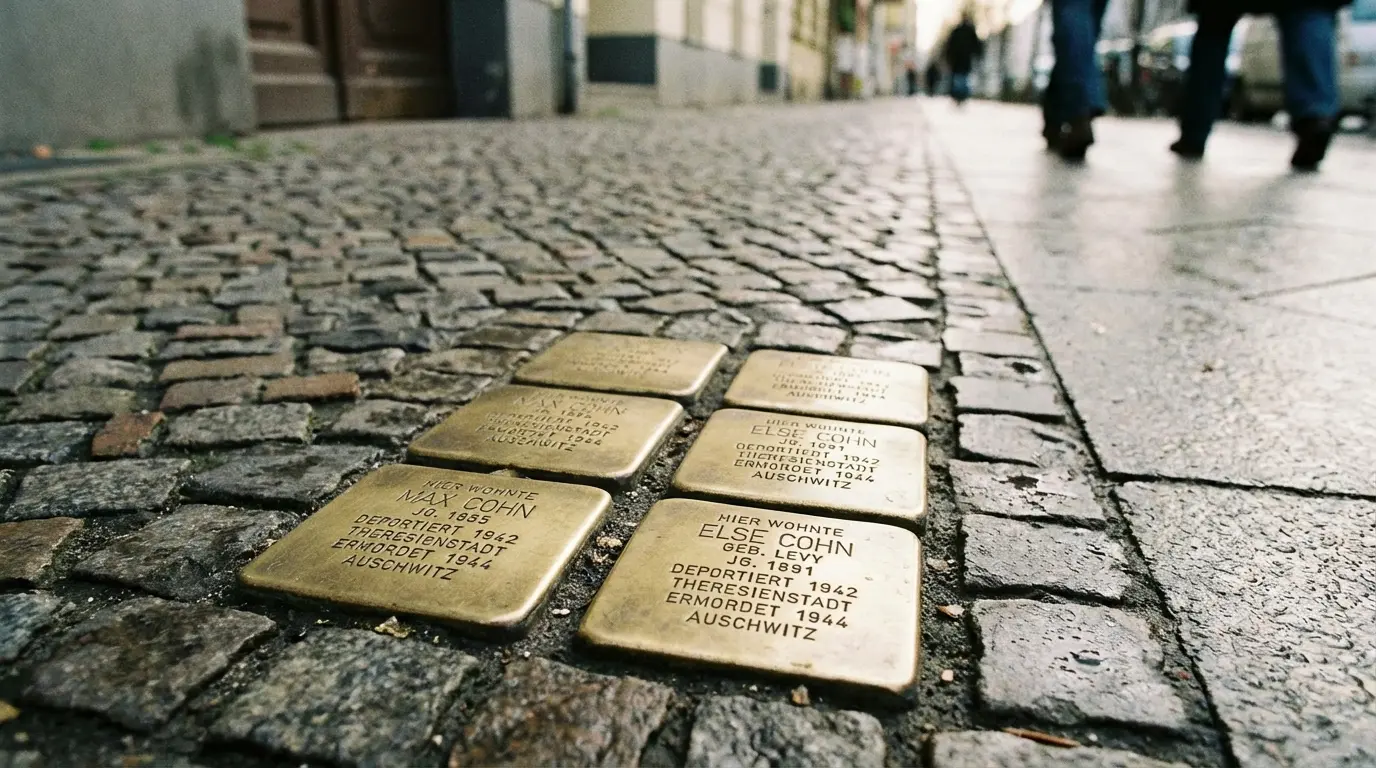
Germany takes its memorial culture seriously. Your group will encounter Stolpersteine, small brass plaques set into sidewalks marking the last freely chosen homes of Holocaust victims. They are everywhere. In some neighborhoods, you cannot walk a block without passing one. Knowing what they are before you encounter them changes the experience.
The pace will be slower than they expect. Heritage travel is not about covering ground. Some days your group will visit only one site. That is intentional.
Reactions will vary. Some people will be deeply moved at sites that others find less impactful, and the reverse. There is no correct emotional response. What matters is being present and being open to whatever comes.
And finally: Germany is a beautiful country. The Rhine Valley, the Bavarian countryside, the architecture of Berlin’s rebuilt neighborhoods. Give yourself permission to enjoy that beauty alongside the heavier moments. The beauty is not a distraction from the heritage. It is part of it. People built lives of meaning and beauty in this country for a thousand years. Seeing that is part of understanding what was lost and what is being rebuilt.
If you are in the final stages of planning a heritage trip to Germany, our Germany destination page has the practical details. And if you want to talk through any of what I have written here, I am always happy to have that conversation.
Frequently Asked Questions
How do you handle emotional responses to Holocaust memorial sites in a group setting?
Prepare your group in advance by acknowledging that strong reactions are normal and expected. Build recovery time into your schedule after every heavy site. Have a plan so that if someone needs to step away, a co-leader or guide can stay with them while the group continues. The most important thing is creating a culture where your group feels safe to react honestly.
Is kosher food easy to find in Germany?
In Berlin and Frankfurt, yes. Both cities have active Jewish communities with kosher restaurants and food shops. In smaller cities and towns, kosher options are extremely limited. For observant groups, advance catering arrangements are essential. Heritage Tours handles this as part of itinerary planning.
What is memorial fatigue and how do you prevent it on a group heritage tour?
Memorial fatigue is the emotional numbness that sets in when a group visits too many heavy sites in too short a time. You prevent it by spacing out memorial visits, building in lighter activities and free time between heavy sites, and never scheduling two major memorials on the same day. It is a scheduling problem with a scheduling solution.
What should I tell my group before they visit a concentration camp?
Tell them that the experience will be more intense than they expect, even if they have read extensively about the Holocaust. Tell them that all emotional responses are valid, from tears to silence to numbness. Tell them that photography is usually permitted in outdoor areas but that they should be mindful of other visitors. And tell them that the afternoon afterward will be lighter, because you planned it that way.
Which German cities have the best kosher food options?
Berlin has the widest selection, concentrated around the Mitte district. Frankfurt has several reliable kosher options connected to its established Jewish community. Munich has a few options but they are more limited. Outside of these three cities, kosher food in Germany requires advance planning and catering arrangements.