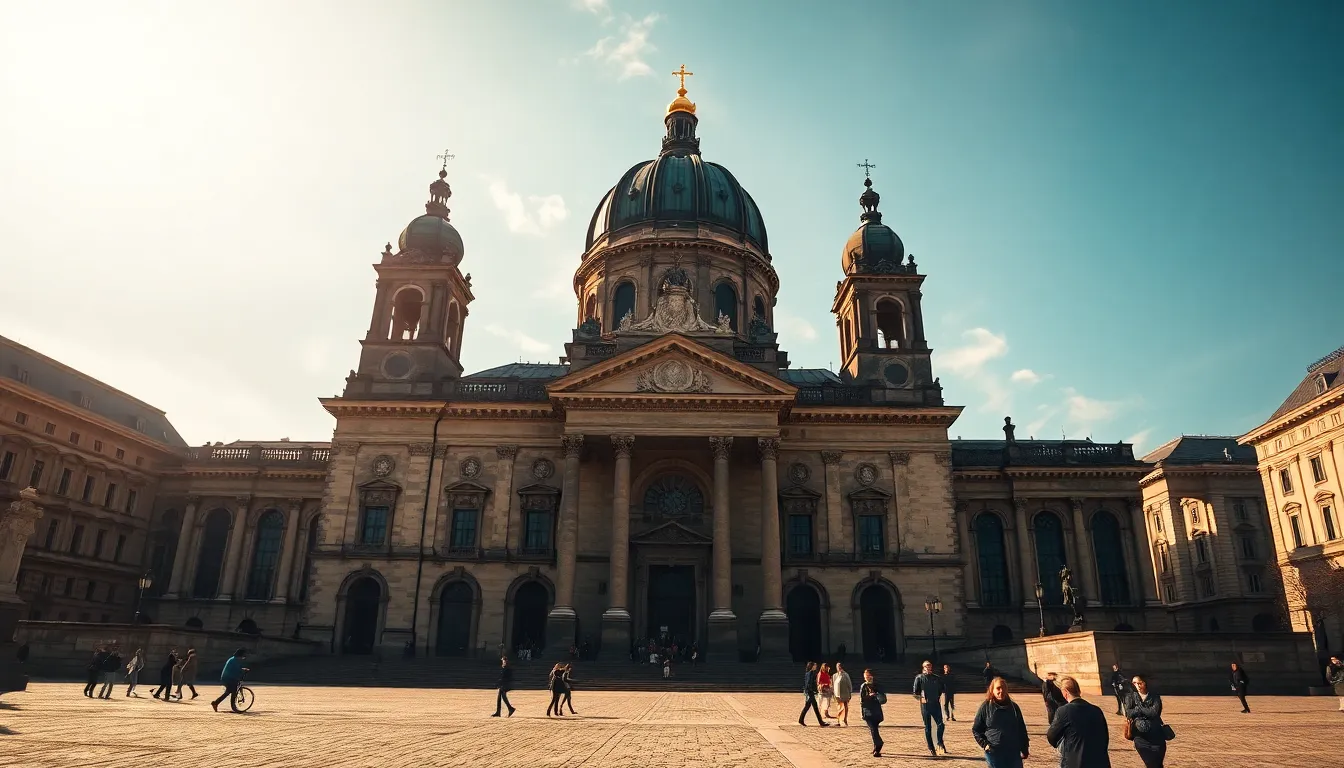
A Church That Came Back From Ruin
The first time you stand in the square before the Frauenkirche in Dresden, you would never guess that for half a century this spot held a mountain of blackened rubble. The church rises bright and whole, its great stone dome lifting above the old city. And then you notice them: dark stones scattered through the pale new facade, like old wounds left visible on purpose. Those darkened stones are original. They were pulled from the ruin and set back into the rebuilt church, so that the building would never hide what happened to it.
I bring a lot of Christian groups to this square, because few places I know tell the story of destruction and resurrection as plainly as this one does, in stone you can put your hand on. If you are a pastor or group leader planning a journey through Germany, this guide walks through the Frauenkirche’s history, its meaning as a symbol of reconciliation, and how to give your group the encounter it deserves.
The Church, the Bombing, and the Long Absence
The Frauenkirche, the Church of Our Lady, was completed in 1743, a masterwork of Baroque architecture with a vast bell-shaped stone dome that became the emblem of Dresden’s skyline. For two centuries it stood at the heart of a city famous for its art and beauty.
In February 1945, in the final months of the war, Allied bombing raids devastated Dresden in firestorms that killed many thousands of civilians and reduced much of the old city to ash. The Frauenkirche stood through the first day. Its stone dome, heated to extremes by the fires raging around and within it, finally gave way and the church collapsed into a heap of rubble. It is one of the more haunting facts of the city’s history that the building survived the bombs only to fall to the heat they left behind.
Half a Century of Rubble
What happened next is part of what makes this church’s story so unusual. Under the postwar East German government, the ruins were left standing. For nearly fifty years, the heap of broken stone remained in the square as a war memorial, a deliberate reminder of what had been lost. Generations of Dresdeners grew up with the ruin as a fixture of their city, a wound that was not allowed to heal and was not meant to.
A small movement of citizens kept candles and gatherings going at the ruin through the years of division, and after German reunification in 1990 the call to rebuild gathered force. The decision was made not simply to construct a new church but to resurrect the old one.
Resurrection in Stone
The rebuilding of the Frauenkirche, completed in 2005, is one of the most remarkable acts of architectural restoration anywhere. It was not a replica thrown up beside the rubble. The original stones were the starting point.
Archaeologists and builders cataloged the mountain of debris, recording the original position of thousands of stones. Wherever a salvaged stone could be returned to its place in the structure, it was. Around eight thousand original stones were reused, fitted back into the new facade according to careful records. Because the old stone had been darkened by fire and by decades of weathering, while the newly quarried stone is pale, the rebuilt church wears its history openly. The dark stones map where the old church survives within the new one. Over the coming decades the new stone will weather and the contrast will fade, but for now the church is, quite literally, a picture of a building risen from its own ruin.
The symbolism did not stop at the stones. The new golden cross and orb that crown the dome were made in London by a silversmith whose father had been one of the bomber crews over Dresden. They were a gift funded by donations from Britain, an act of reconciliation built into the very summit of the church. Inside, the restored sanctuary glows with light and color, and beneath the dome a fragment of the old altar, recovered scorched and broken from the rubble, stands restored.
A Symbol of Reconciliation
This is why the Frauenkirche means what it means. It would have been simpler, and cheaper, to clear the rubble and start clean. Instead the city and its many international partners chose to make the church itself a statement: that what is destroyed can be raised again, that former enemies can build together, and that a wound can be healed without being hidden.
For a Christian group, that message lands at a depth few buildings reach. Destruction and resurrection are not abstractions here. They are the literal biography of the stone overhead. Groups I have led often find that the Frauenkirche becomes the place where the heavier sites of a Germany journey, the camps, the memorials, the long reckoning with the past, resolve into something hopeful without ever becoming cheap or easy.
How to Make the Visit Meaningful for Your Group
The Frauenkirche sits in the rebuilt heart of Dresden’s old city, surrounded by other restored Baroque landmarks, and it is an active Lutheran church, not a museum. That matters for how a group approaches it.
Tell the Whole Arc
The church’s power comes from its full story, so tell your group all of it before you arrive: the Baroque masterwork, the firestorm of 1945, the collapse from the heat, the half-century of preserved ruin, and the resurrection completed in 2005. A group that knows the dark stones are original and knows why looks at the facade entirely differently. Point those stones out. Let people touch them. The history is written on the outside of the building.
Respect That It Is a Living Church
Because the Frauenkirche holds regular services and prayers, plan your visit around them and enter as worshippers would, with quiet and respect. Check service times before you go; sometimes the most meaningful thing a group can do is attend a service or a moment of prayer rather than simply tour the interior. Climbing to the dome viewing platform, where it is open, gives a group a wide view over the rebuilt city and a sense of how much was lost and restored.
Let It Be the Turning Point
If your itinerary includes the harder ground of Germany’s twentieth century, consider placing the Frauenkirche near the end. After days spent bearing witness to destruction, standing inside a church raised from its own ashes, crowned by a cross given by former enemies, gives a group somewhere for their hope to land. I have watched that sequence move people more than any single site on its own.
A practical note for leaders: group leaders bringing 15 or more participants travel without charge, which makes a dedicated journey through this region workable for congregations of many sizes.
Where the Frauenkirche Fits in a Germany Itinerary
Dresden sits in eastern Germany, within reach of the Reformation country and the wider arc of sites that tell the nation’s spiritual story. At Heritage Tours we build itineraries around that story, placing the Frauenkirche where it does the most good for a group, often as a note of resurrection after the harder chapters of the journey.
You can see how Dresden fits within a wider route on our Germany destination page, and our hidden heritage sites guide points to lesser-known stops worth weaving in along the way. Our spiritual sites guide sets the Frauenkirche within Germany’s broader sacred landscape, and groups following the Reformation trail often reach Dresden after time at the Wartburg, where Luther translated the New Testament.
FAQ: Visiting the Frauenkirche of Dresden With a Group
Why is the Frauenkirche a symbol of reconciliation?
The church was destroyed in the 1945 bombing of Dresden, its dome collapsing from the heat of the firestorm, and the ruins were left standing for nearly fifty years as a war memorial. When it was rebuilt by 2005, around eight thousand original stones were returned to their places, and the golden cross atop the dome was crafted in Britain and funded by British donations, made by the son of a bomber crew member. The rebuilt church embodies former enemies building together and a wound healed without being hidden.
Why are some of the stones dark?
The dark stones are original, salvaged from the rubble and darkened by the fire and decades of weathering, while the pale stones are newly quarried. Builders recorded the original position of thousands of stones and returned them to their places, so the dark stones map where the old church survives within the new one. Over time the new stone will weather and the contrast will fade, but today the facade openly shows its own history.
How should our group behave inside the church?
The Frauenkirche is an active Lutheran church, not a museum, so enter as worshippers would, with quiet and respect. Check service times before your visit, and consider attending a service or a moment of prayer rather than only touring the interior. Photography is generally allowed but should be discreet, especially during worship.
How do we prepare a group to appreciate the visit?
Tell the full arc before you arrive: the Baroque masterwork, the 1945 destruction, the collapse from heat, the half-century of preserved ruin, and the resurrection completed in 2005. Point out the original dark stones and let people touch them. A group that knows the story reads the building as a sermon in stone rather than just a handsome church.
Where should the Frauenkirche fall in our itinerary?
If your journey includes the harder ground of Germany’s twentieth century, consider placing the Frauenkirche near the end. After days of bearing witness to destruction, standing inside a church raised from its own ashes gives a group a place for hope to land. Many leaders find this sequence is what their people remember most.
A Sermon Written in Stone
I have stood under that great dome many times, and the thing that stays with me is how honest the building is. It does not pretend the firestorm never came. The dark stones are right there in the light, set into the new church on purpose, refusing to let anyone forget. And yet the church stands, whole and bright, crowned by a cross that former enemies gave. Destruction and resurrection, written in stone you can touch.
If you are planning a journey through Germany for your community and want a place where hope has the last word, the Frauenkirche belongs on your route. Reach out to us and we will help you shape a journey that carries your group from witness to renewal.