Why the Standard Germany Itinerary Misses So Much
Most heritage tours to Germany follow the same route. Berlin, Munich, Dachau. Maybe Nuremberg. These are important places and they deserve a visit. But they are also the places every group goes, and when your itinerary looks like everyone else’s, your congregation comes home with the same experience everyone else had.
Germany’s heritage story runs much deeper than that. There are sites in this country where Jewish life flourished for a thousand years, where entire communities left their mark in stone and prayer, and where almost no English-speaking tour groups ever set foot. If you are a group leader looking to give your community something they have never encountered before, these are the places worth knowing about.
The ShUM Cities: Worms, Speyer, and Mainz (UNESCO and Almost Unknown)
The ShUM cities earned UNESCO World Heritage status in 2021, and yet most heritage tour operators still do not include them. ShUM is a Hebrew acronym formed from the first letters of the cities’ medieval Hebrew names: Shpira (Speyer), Warmaisa (Worms), and Magenza (Mainz). Together, these three communities along the Rhine formed the spiritual and intellectual center of Ashkenazi Judaism for centuries.
Worms: Germany’s Oldest Jewish Community, Still Standing
Worms is where it all begins. The Jewish community here dates to at least the tenth century. The Rashi Synagogue, named for the great medieval commentator who studied here, was first built in 1034. It was destroyed during Kristallnacht and meticulously reconstructed after the war.
But what truly sets Worms apart is the Heiliger Sand, the Holy Sand cemetery. It is the oldest surviving Jewish cemetery in Europe, with tombstones dating to the eleventh century. Standing among those stones, reading names carved nine hundred years ago, your group will feel the weight of continuity in a way that no museum can replicate.
Speyer and Mainz: The Two Sites Most Groups Never Visit
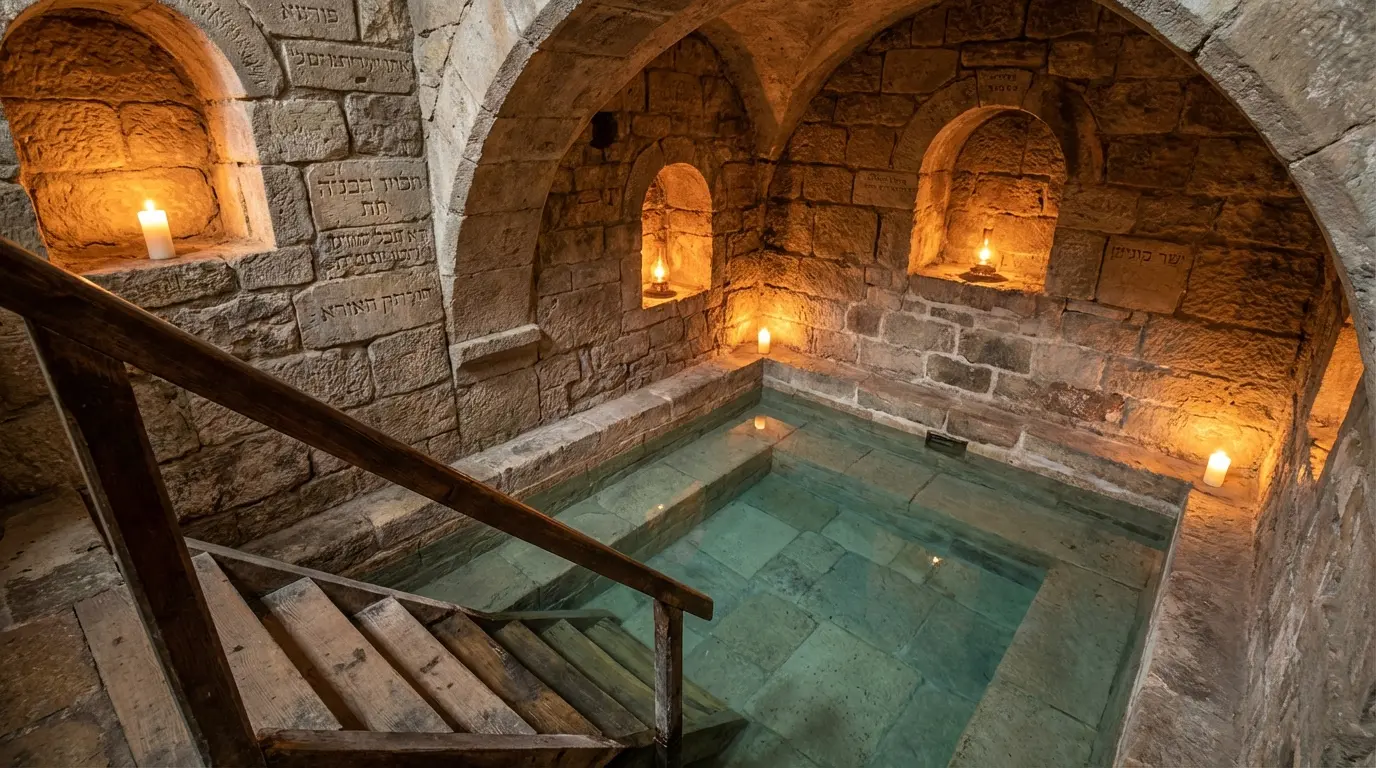
Speyer’s medieval mikveh (ritual bath) is one of the best-preserved in Europe, built around 1128. It sits underground, and descending into it is like stepping back into the daily rhythms of medieval Jewish life. The Mainz synagogue, rebuilt in a striking modern design, houses a museum dedicated to the city’s Jewish history that stretches across a millennium.
What makes these three cities so compelling as a group experience is the connection between them. They were not isolated communities. They shared rabbinical decisions, marriage contracts, and communal regulations. Visiting all three in sequence tells a story that no single site can tell on its own.
Frankfurt’s Judengasse: An Entire Jewish World Beneath the Pavement
In the heart of modern Frankfurt, beneath office buildings and busy streets, lies the Judengasse. From the fifteenth century until Napoleon dissolved it in 1811, this narrow lane was home to Frankfurt’s entire Jewish population. At its peak, over three thousand people lived in this confined space, building a community of remarkable resilience and cultural richness.
Today, the Museum Judengasse preserves the excavated foundations of several homes and the community’s ritual bath. The museum is small and easy to miss if you do not know it is there. But for a Jewish group, standing in the actual ruins of a medieval Jewish home, seeing the layout of rooms where families lived and prayed for generations, is profoundly moving.
This is also where the Rothschild family began. Mayer Amschel Rothschild grew up in the Judengasse before building one of the most influential banking dynasties in history. The connection between that cramped ghetto and the global impact of its residents is a story your group will carry with them.
The Topography of Terror: Berlin’s Most Overlooked Memorial Space
Everyone who visits Berlin goes to the Holocaust Memorial, the field of concrete stelae near the Brandenburg Gate. Far fewer visit the Topography of Terror, and that is a shame, because in many ways it is the more powerful experience.
Built on the site where the Gestapo and SS had their headquarters, the Topography of Terror is an outdoor and indoor exhibition that documents how the machinery of persecution was organized and administered. It does not focus on the victims alone. It focuses on the perpetrators, on the bureaucracy of evil, on the offices where orders were signed.
For a group, especially one that has already visited a concentration camp memorial, the Topography of Terror provides a different kind of understanding. It answers the question that many congregants carry quietly: how did this happen? How did ordinary institutions become instruments of murder? It is not a comfortable visit. But it is an essential one.
Lutherstadt Eisleben: Where the Reformation Actually Began
Most Christian heritage tours center on Wittenberg, and rightfully so. But Martin Luther was not born in Wittenberg. He was born in Eisleben in 1483, and he died there in 1546. The town preserves both his birth house and his death house as museums, and they offer something that Wittenberg, with its larger crowds and more polished presentation, sometimes lacks: intimacy.
Eisleben is a small town. Walking its streets, visiting the church where Luther was baptized, standing in the room where he took his last breath, your group encounters the Reformation not as a grand historical movement but as the story of one person’s life. For a pastor, that personal scale can be more meaningful than the grand gestures of Wittenberg.
How to Add These Sites to Your Group Itinerary
The reason most groups miss these sites is simple: standard tour packages do not include them. The ShUM cities require a dedicated day along the Rhine. Frankfurt’s Judengasse needs a stop that most bus-tour schedules do not allow. Eisleben is off the main highway.
This is where a custom itinerary changes everything. When your tour is built around your group’s interests rather than a fixed route, these sites become not just possible but natural. A Jewish group can spend two days in the Rhine Valley visiting Worms, Speyer, and Mainz before heading to Berlin. A Christian group can add Eisleben to the Reformation Trail without losing a day.
Heritage Tours builds every Germany itinerary from scratch, based on what matters to your specific group. If any of these sites speak to you, they can be part of your journey. Visit our Germany destination page to see what is possible, or reach out to start a conversation about your group’s trip.
Frequently Asked Questions
What are the ShUM cities and why do they matter for Jewish heritage travel?
ShUM stands for Shpira (Speyer), Warmaisa (Worms), and Magenza (Mainz), the Hebrew names of three Rhine Valley cities that formed the intellectual and spiritual heart of Ashkenazi Judaism from the tenth century onward. They earned UNESCO World Heritage status in 2021 and are among the most historically significant Jewish sites in Europe.
Is Worms worth visiting on a Germany heritage tour?
Yes. Worms is home to the oldest surviving Jewish cemetery in Europe and the site of the Rashi Synagogue, originally built in 1034. For any Jewish group, Worms provides a connection to medieval Jewish life that few other places in the world can match.
What is the Judengasse in Frankfurt?
The Judengasse was a narrow street in Frankfurt where the city’s entire Jewish population lived from the fifteenth century until 1811. Today, the Museum Judengasse preserves excavated foundations of homes and a ritual bath. It is where the Rothschild family originated.
How do I add lesser-known sites to a group tour itinerary?
Work with a tour operator that builds custom itineraries rather than running fixed-route packages. Heritage Tours designs every Germany trip based on the group’s specific interests, which makes it possible to include sites like the ShUM cities, the Judengasse, or Eisleben alongside the more well-known destinations.
Are these hidden sites accessible by bus for large groups?
Yes. All of the sites described here are accessible by motor coach. The ShUM cities along the Rhine are particularly well connected. Hotel pickup and dropoff service means your group does not need to navigate transit systems or train stations.