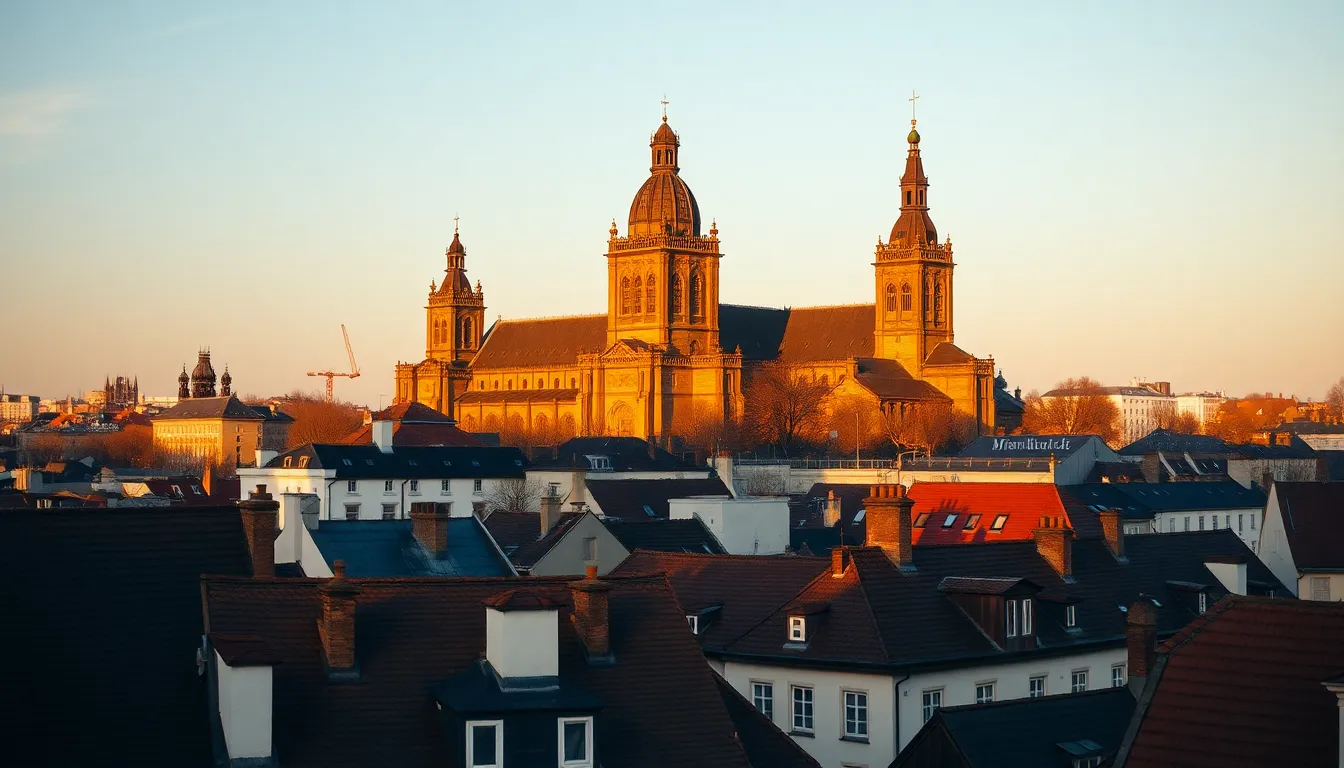
Most people land in Frankfurt and see only the airport and the bank towers. They pass through. I tell my groups: slow down, because under the glass and steel, this is one of the oldest and most layered heritage cities in Germany. The Jewish community here goes back nearly a thousand years. German emperors were crowned in its cathedral. And the first freely elected German parliament met in a church on its main square. Frankfurt packs more history per square mile than its skyline lets on.
I have brought faith groups through Frankfurt for years, often as the gateway to a wider Germany trip, and the ones who give it a full day always tell me they are glad they did. Let me show you why, and how to read this city layer by layer.
Why Frankfurt Rewards Groups Who Slow Down
Frankfurt’s reputation as a financial hub hides its depth. This was a free imperial city, a coronation city, a center of medieval Jewish life, and the birthplace of German democracy. The Old Town, the Altstadt, was flattened in the Second World War and carefully reconstructed, so what you see is part medieval and part faithful rebuild. That layering, ancient roots, wartime loss, postwar recovery, is the Frankfurt story in miniature.
For a heritage group, the city’s three great threads sit within easy walking distance. The Jewish quarter and its memorial, the Imperial Cathedral, and the Paulskirche where democracy was born. You can hold all three in a single thoughtful day.
The Three Threads That Make Frankfurt Worth the Stop
I prepare groups for three layers in Frankfurt. The Jewish layer, centered on the medieval Judengasse and the Holocaust memorial that now marks it. The Christian and imperial layer, anchored by the cathedral where Holy Roman Emperors were crowned. And the democratic layer, the Paulskirche, which speaks to faith communities about freedom and human dignity. Together they make a compact, meaningful day.
The Jewish Story: The Judengasse and the Memorial
The Judengasse, Europe’s First Jewish Ghetto
Frankfurt’s Jewish community was one of the most important in Europe. From 1462, the city confined its Jewish residents to the Judengasse, the “Jews’ Lane,” widely considered the first formal Jewish ghetto in Europe. Despite the cramped and restrictive conditions, the community became a center of scholarship, trade, and finance. The Rothschild banking family began here, in a narrow house on this very lane. Today the Museum Judengasse preserves excavated foundations of the medieval lane, letting your group see the actual outlines of that vanished world beneath the modern city.
The Börneplatz Memorial and Remembrance
Adjacent to the museum is the New Frankfurt Cemetery wall, lined with more than eleven thousand small steel blocks, the Stolpersteine-style memorial known as the Block of Names. Each block carries the name of a Frankfurt Jew murdered in the Holocaust. Groups often fall silent here. It is one of the most direct and personal Holocaust memorials in Germany, every name a person, a family, a story. I always build in time for this, with space afterward to reflect.
The broader Jewish Museum Frankfurt, in the restored Rothschild Palais, tells the fuller arc of the community, from medieval scholarship through emancipation to destruction and the small revival today. Frankfurt produced thinkers who shaped Jewish life far beyond Germany, and the city was home to one of the largest and most established Jewish communities in the country before 1933. Knowing that scale before you reach the memorial helps a group grasp what was lost. For the wider river-cities Jewish story, the Rhineland Heritage Trail guide is the natural companion, since Frankfurt sits at the edge of that medieval heartland.
The Christian and Imperial Heritage: The Cathedral
The Imperial Cathedral of Saint Bartholomew, the Kaiserdom, dominates the old town with its red sandstone tower. It was never the seat of a bishop, but it carried enormous weight: from 1356 it was where the prince-electors chose the Holy Roman Emperor, and from 1562 it was where emperors were crowned. For a Christian group, standing in the election chapel where the political and spiritual power of the Holy Roman Empire converged is a window into how church and crown were intertwined for centuries.
A short walk away, the Old Saint Nicholas Church on the Römerberg, the reconstructed medieval market square, offers a quieter sacred space. The Römerberg itself, with its half-timbered gabled houses rebuilt after the war, is where your group gets a feel for what medieval Frankfurt looked like. For groups tracing the Reformation more fully, Frankfurt pairs well with the heartland covered in the Wittenberg and Reformation Country guide.
The Birthplace of German Democracy: The Paulskirche
The Paulskirche, Saint Paul’s Church, is one of those sites that means more than it looks. In 1848, this round Protestant church hosted the first freely elected all-German national assembly, which drafted a constitution founded on basic rights and human dignity. The experiment failed within a year, but it planted the idea of German democracy. Today the building is a memorial to that founding moment.
For faith groups, the Paulskirche opens a conversation about the relationship between faith, freedom, and human dignity, themes that connect directly to both Jewish and Christian traditions. I have had pastors and educators use this stop as a moment to reflect on the moral foundations of a free society, and it consistently resonates. It also reframes the day. After the weight of the Judengasse memorial, the Paulskirche reminds a group that this same country produced an early vision of human rights and self-government, and that both stories are true at once. That tension, the depths and the aspirations side by side, is the honest version of German heritage, and educators in particular tend to seize on it.
Planning a Frankfurt Heritage Visit: What Group Leaders Need to Know
Frankfurt’s heritage core is compact and walkable, clustered around the Altstadt and the river. One full, focused day covers the Judengasse and memorial, the cathedral, the Paulskirche, and the Römerberg with room to breathe. Many groups use Frankfurt as the arrival or departure point for a larger Germany trip, given its central location and major airport, and tack on the heritage day at the front or back end.
Because the city blends the weight of the Holocaust memorial with lighter imperial and democratic history, the order of your day matters. I usually place the Block of Names memorial where the group has space to process afterward, rather than rushing on to a market square.
This is where an operator who knows the territory helps. Heritage Tours builds custom itineraries, so a Jewish group can weight the day toward the Judengasse, the memorial, and the Jewish Museum, while a Christian group can balance the cathedral and Paulskirche with the remembrance sites. Frankfurt also slots cleanly into a Rhineland or Reformation itinerary. Group leaders with 15 or more participants travel free, which eases the planning conversation with your congregation. Start at our Germany destination page or look at how we run group heritage tours.
FAQ: Frankfurt Heritage Travel
What are the main Jewish heritage sites in Frankfurt?
The Museum Judengasse, with its excavated medieval lane foundations, the Block of Names memorial honoring Frankfurt’s murdered Jews, and the Jewish Museum Frankfurt in the Rothschild Palais are the essentials. Together they tell the full arc from medieval scholarship through the Rothschild story to the Holocaust and the small revival today.
Is one day enough for Frankfurt?
For most groups, one full and focused day covers the heritage core, the Judengasse and memorial, the Imperial Cathedral, the Paulskirche, and the Römerberg, with time to reflect. Frankfurt works well as the arrival or departure city for a wider Germany trip, with the heritage day added at the front or back.
How should we handle the Holocaust memorial respectfully?
Brief your group before you reach the Block of Names so they understand what they are seeing. Build in quiet time afterward, and avoid scheduling a lighthearted activity immediately following. Placing the memorial where the group has space to process, rather than rushing on, makes a real difference.
Does Frankfurt work for a mixed Jewish and Christian group?
Yes. The Judengasse and memorial speak to the Jewish story, the Imperial Cathedral anchors the Christian and imperial heritage, and the Paulskirche opens shared themes of freedom and human dignity. The compact geography lets a mixed group experience all three threads in a single day.
When is the best time to visit Frankfurt?
Late spring and early autumn bring mild weather ideal for walking the old town and outdoor sites. Summer is pleasant but busier, and Frankfurt’s trade fairs can fill hotels at certain times, so booking ahead matters. Winter is cold but quieter, with the Christmas market on the Römerberg adding a festive layer in December.
If Frankfurt is part of your Germany journey, I would welcome the chance to help you make the most of it. Every group reads the city differently, and the day should fit yours. Contact us whenever you are ready to talk it through.