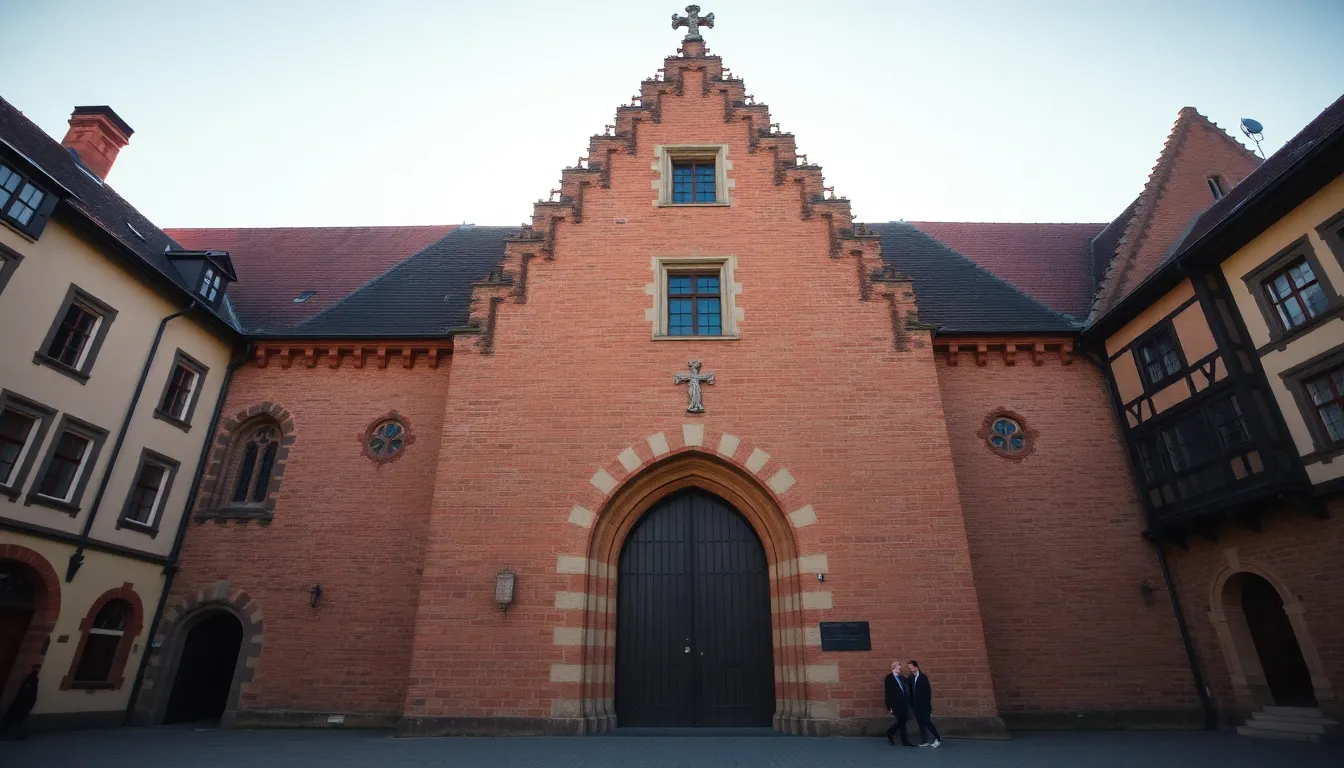
There is a moment I wait for on every Reformation trip. We are standing at the door of the Castle Church in Wittenberg, the bronze door cast with the Latin text of the 95 Theses, and a pastor in the group goes quiet. Then they say some version of the same thing every time: “This is where it started.” And it is. Right here, on a church door in a small Saxon town, in October 1517, a monk posted an academic argument and the Christian world cracked open.
I have led pastors, seminary classes, and church groups through this region for years, and I can tell you that no amount of reading about the Reformation prepares people for standing in the actual rooms where it happened. The heartland is compact. Wittenberg, Eisleben, and Torgau sit within easy reach of one another in Saxony-Anhalt and Saxony. You can trace Luther’s whole arc, birth to death to legacy, in a few unhurried days.
Here is how I plan it, and what your group should not miss.
Why the Reformation Heartland Belongs on Your Itinerary
For a Christian group, this region is not sightseeing. It is going to the source. The theology your congregation lives inside, justification by faith, scripture in the language of the people, the priesthood of all believers, was forged in these specific towns. Walking the ground gives those ideas a body.
What surprises most groups is how alive it still feels. These are not ruins behind glass. Wittenberg’s Town Church still holds services where Luther preached. The Luther House is the actual building where he lived, taught, and raised a family with Katharina von Bora. You are not looking at the Reformation. You are standing inside it.
The Compact Geography That Makes This Trip Work
The whole heartland fits in a tight triangle. Wittenberg is the anchor. Eisleben, where Luther was born and where he died, is about ninety minutes west. Torgau, the political heart of the Reformation and home to Katharina’s grave, is under an hour southeast of Wittenberg. Berlin and Leipzig both make good gateway cities. That tight geography means your group spends time in the sites, not on the bus.
Lutherstadt Wittenberg: Where It Began
The Castle Church and the 95 Theses
Wittenberg carries the official title “Lutherstadt,” Luther’s town, and it wears it well. The Castle Church, the Schlosskirche, is where Luther posted the 95 Theses on October 31, 1517. The original wooden door burned in the eighteenth century and was replaced with the bronze door you see today, inscribed with the theses. Luther is buried inside the church, beneath a simple bronze plaque near the pulpit. So is Philipp Melanchthon, his closest collaborator. For a group, standing at both graves inside the church where it all began is a powerful, quiet moment.
The Luther House and the Town Church
The Luther House, the Lutherhaus, was a former monastery that became Luther’s family home. Today it holds one of the great museums of the Reformation, including the famous “Luther Room” where he held the table talks that students recorded for posterity. Down the street, the Town Church of St. Mary, the Stadtkirche, is where Luther actually preached most of his sermons and where the first Protestant service in German was held. The Cranach altarpiece inside, painted by Lucas Cranach the Elder and his son, is a Reformation document in paint, depicting Luther, Melanchthon, and the townspeople gathered around the gospel.
Walk a few steps and you reach the Melanchthon House and the Cranach courtyards. Wittenberg is small enough that your group can see all of it on foot in a focused day, with time to breathe.
Eisleben: Where Luther Was Born and Died
There is something fitting about Eisleben holding both ends of Luther’s life. He was born here in November 1483 and died here in February 1546, while back in his hometown to mediate a dispute. Both houses, his birth house and his death house, are preserved as museums, together recognized along with the Wittenberg sites on the UNESCO World Heritage list.
I find Eisleben moving precisely because it is humbler than Wittenberg. The birth house grounds the whole story in an ordinary mining town, the world of copper miners and tradespeople that Luther came from and never forgot. The death house, where he spoke his last words in February 1546, closes the circle. The Saint Andrew’s Church in Eisleben, where Luther preached his final sermons days before he died, and the baptismal font in Saint Peter and Paul where he was christened, let a group stand at the literal beginning and end of his life within a short walk. For a group that has spent a day in the grandeur of Wittenberg, Eisleben restores the human scale. This is the rhythm I cover more broadly in the Germany heritage travel guide, holding the monumental and the personal together.
Torgau: The Political and Personal Reformation
Torgau is the heartland’s quiet third corner, and it tells two stories most groups have not heard. Politically, Torgau was where the Protestant princes organized, where the Schmalkaldic League took shape, and where Luther consecrated the chapel at Hartenfels Castle in 1544, considered the first church built specifically for Protestant worship. The chapel is a landmark of how the Reformation moved from theology into built space.
Personally, Torgau is where Katharina von Bora, Luther’s wife, died and is buried, in the Town Church of St. Mary. Katharina deserves more attention than most itineraries give her, a former nun who ran a large household, managed the family finances, and shaped the model of the Protestant parsonage. I always make time at her grave. For many in my groups, especially educators and women in ministry, her story lands as hard as Luther’s.
Planning a Reformation Country Tour: What Leaders Need to Know
The Reformation heartland pairs naturally with Berlin or Leipzig as a base, and many groups combine it with a wider Germany itinerary. I usually plan two to three days for the heartland itself: a full day in Wittenberg, a day that takes in Eisleben, and a half to full day for Torgau, with travel woven between.
Most sites involve walking on cobblestones and some stairs in the historic houses, so I pace the days for mixed-age groups and build in rest. The towns are small and the museums are well curated, which makes this one of the more comfortable heritage regions in Germany to lead.
This is where working with an operator who knows the territory pays off. Heritage Tours builds custom itineraries, so a seminary group can go deeper on the theology and the Cranach altarpieces, while a general church group can focus on the narrative arc of Luther’s life. We can pair the heartland with Berlin’s cathedrals and remembrance sites, or with the Rhineland, depending on what your congregation needs. Group leaders with 15 or more participants travel free, which makes building the group easier. Start at our Germany destination page or see how we run group heritage tours.
FAQ: Wittenberg and Reformation Country Travel
What are the essential Reformation sites to visit?
The Castle Church and Luther House in Wittenberg, Luther’s birth and death houses in Eisleben, and the Hartenfels Castle chapel and Katharina von Bora’s grave in Torgau form the core. The Town Church in Wittenberg, with its Cranach altarpiece, and the Melanchthon House complete the picture of where the Reformation took shape.
How many days do we need for the Reformation heartland?
Plan two to three days. A full day in Wittenberg, a day for Eisleben, and a half to full day for Torgau works well. If you are combining the heartland with Berlin or Leipzig, add travel days accordingly. The towns are compact, so the days are not exhausting.
Is this region good for a seminary or theology-focused group?
It is one of the best destinations in the world for that kind of group. The sites connect directly to the primary theology of the Reformation, and standing in the actual rooms where Luther taught, preached, and was buried gives the ideas a depth that lectures cannot. We can build extra time at the altarpieces and the academic sites for a group that wants to go deep.
Can we combine the Reformation Trail with other German heritage sites?
Yes, and most groups do. The heartland pairs naturally with Berlin to the northeast, with its cathedrals and remembrance sites, and can extend to the Rhineland or Bavaria for a fuller Germany itinerary. We build the combination around what your congregation most wants to see.
When is the best time to visit the Reformation heartland?
Late spring and early autumn offer the mildest weather for walking the cobblestone towns and outdoor sites. The Reformation anniversary around October 31 brings special services and events in Wittenberg, which can be meaningful for a group, though it also draws larger crowds. Summer is pleasant but busier.
If your congregation is ready to walk where the Reformation began, I would love to help you plan it. Every group brings a different focus, and the itinerary should fit yours. Contact us whenever you want to start the conversation.