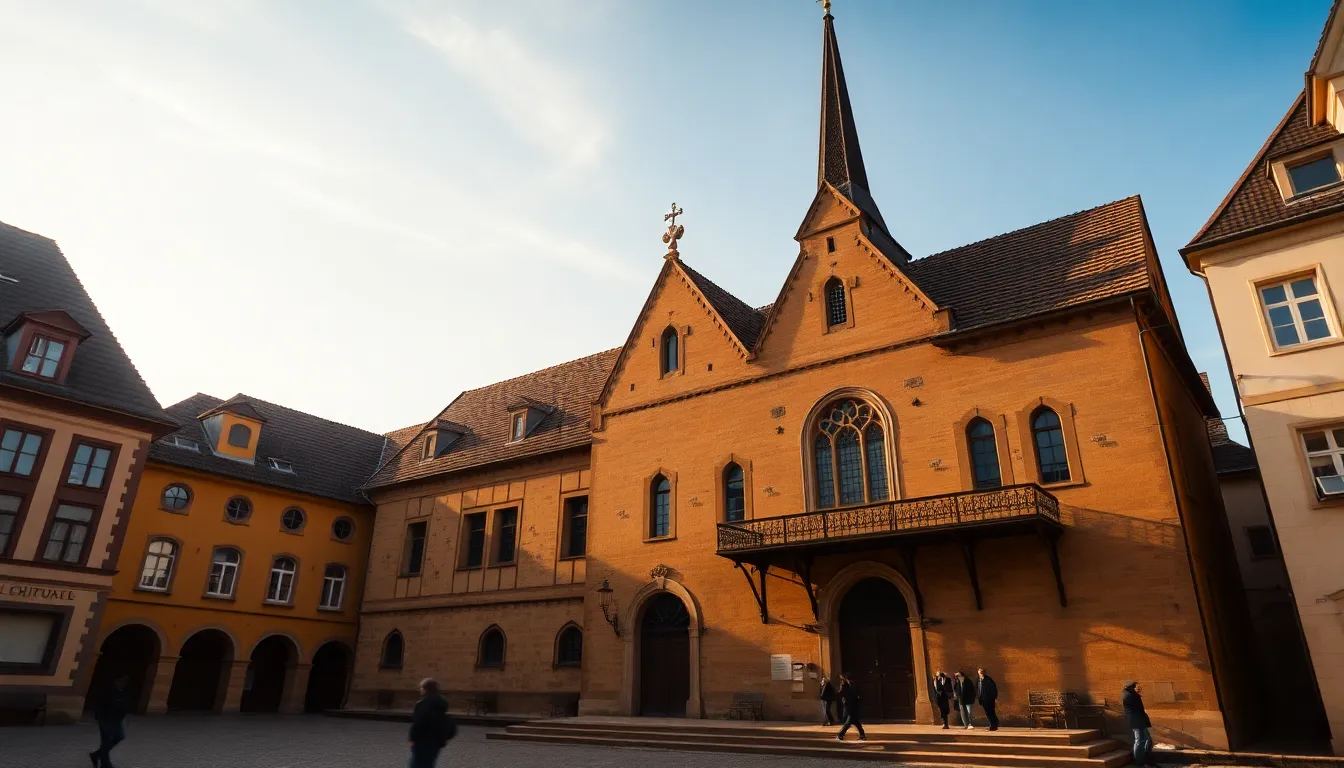
A Building That Hid in Plain Sight for 600 Years
I have stood with groups in front of a lot of synagogues that were destroyed and rebuilt. Erfurt is different. The walls a rabbi can touch here are the actual medieval walls, raised around 1100 and standing ever since. For most of those centuries nobody knew it. The building had been turned into a storehouse, then a restaurant with a dance hall, and the medieval synagogue was simply forgotten inside it.
When I bring a group into the Old Synagogue in Erfurt and explain that this is the oldest synagogue building still standing in Europe, there is usually a long silence. Then someone asks the same question every time. How did it survive? The answer is the whole story.
The Oldest Synagogue in Europe
The Old Synagogue of Erfurt was built in stages, with the earliest parts dating to around 1094 and the main structure completed by the early 1300s. Jews had lived in Erfurt since at least the 11th century, and by the high Middle Ages this was a sizable, prosperous community in a city that sat on major trade routes through central Germany.
That prosperity ended in horror. In 1349, as the Black Death swept Europe, the Christian population of Erfurt turned on its Jewish neighbors and murdered most of them in a pogrom. The community was destroyed. The synagogue, no longer needed as a house of prayer, was sold and converted to other uses. A warehouse wall went up against it. Over the centuries it was built into the surrounding cityscape so thoroughly that its origin was lost.
It was only in the late 20th century that historians confirmed what the building actually was. The medieval synagogue had survived precisely because it had been hidden, disguised by the very people who no longer saw it as a sacred space. After careful restoration, it opened as a museum in 2009.
In 2023, the Old Synagogue and the medieval Jewish heritage of Erfurt were inscribed as a UNESCO World Heritage Site, recognizing the synagogue, the nearby mikveh, and a surviving medieval Jewish house together as one of the most complete pictures of Jewish life in medieval Europe.
The Erfurt Treasure
Inside the synagogue today is something that makes the visit unforgettable. In 1998, during construction nearby, workers uncovered a hoard buried in a wall of the old Jewish quarter. It had been hidden in 1349, almost certainly by someone trying to protect it before the pogrom. That person never came back for it.
The Erfurt Treasure is roughly 30 kilograms of silver coins, ingots, and goldsmith work, including one object that stops people in their tracks: a Jewish wedding ring of gold, shaped like a tiny building with a peaked roof, inscribed with the Hebrew words mazal tov. Only a handful of medieval Jewish wedding rings like it survive anywhere in the world.
I tell groups to sit with what that ring means. It was made for a celebration, for the joy of two families joining. It was buried by someone in terror. And it was found 650 years later by people who had no idea what they were digging into. The treasure holds both the life and the catastrophe of this community in a single display case.
Handling This History With Dignity
I want to be direct with group leaders about how to lead here, because Erfurt asks something of you. This is not a site where the destruction came in the 20th century, which is the frame most of our groups arrive with. The murder here happened in 1349, at the hands of ordinary townspeople during a plague. It complicates the easy story.
For a rabbi, that depth is part of the value. Erfurt shows a Jewish community that was rooted, learned, and economically woven into a German city centuries before the catastrophes most people associate with this country. It also shows, plainly, how quickly neighbors became killers. Both truths belong in the room.
My practice is to give the group time and quiet. I do not narrate over the treasure. I let people find the wedding ring on their own and tell the story once everyone has seen it. If prayer or a moment of remembrance is part of your tradition, the museum is respectful of that, and the medieval prayer hall is the right place for it.
How Groups Visit and Practical Access
Erfurt is the capital of Thuringia, in central Germany, and it is well placed for a heritage itinerary. It sits roughly between Frankfurt and Leipzig, which means it slots cleanly into routes that touch the Reformation sites or the Bach trail to the east. Groups studying Jewish heritage along with German history rarely have to go far out of their way to include it.
The Old Synagogue is in the medieval old town, near the Merchants’ Bridge, one of the most intact medieval streets in Europe. Coaches drop off at the edge of the pedestrian zone and the walk in is short and flat. Plan about ninety minutes inside the synagogue and treasury. The medieval mikveh, a short walk away by the river, is shown on scheduled guided visits and is worth adding for groups that want the fuller UNESCO picture.
For groups of fifteen or more, the museum asks that visits be booked in advance, and a guided session is the better way to experience it given the depth of the material. Heritage Tours arranges those bookings and pairs the visit with a guide who knows how to hold the weight of the place. Hotel pickup and dropoff by motor coach means your group steps off near the old town without navigating trains.
FAQ: The Erfurt Old Synagogue
Is the Erfurt Old Synagogue really the oldest in Europe?
Yes. Its oldest walls date to around 1094, with the main structure finished in the early 1300s, making it the oldest synagogue building still standing in Europe. It survived because it was hidden inside later buildings for centuries after the 1349 pogrom.
What is the Erfurt Treasure?
It is a hoard of about 30 kilograms of medieval silver, ingots, and goldsmith work, buried in 1349 and rediscovered in 1998. Its most famous piece is a gold Jewish wedding ring inscribed with mazal tov, one of very few medieval examples in the world. It is displayed inside the Old Synagogue.
Why does Erfurt have UNESCO World Heritage status?
In 2023, UNESCO inscribed the medieval Jewish heritage of Erfurt, the Old Synagogue, the mikveh, and a surviving medieval Jewish house, as a single site. Together they offer one of the most complete surviving pictures of Jewish life in medieval Europe.
How should a group leader prepare for the difficult history here?
The destruction at Erfurt came in 1349, during a plague, at the hands of local townspeople, not in the 20th century. I prepare groups for that frame in advance, give people quiet time with the treasure, and make space for remembrance in the medieval prayer hall. A knowledgeable guide makes a real difference.
How does Erfurt fit into a Germany itinerary?
Erfurt sits in central Germany between Frankfurt and Leipzig, so it pairs well with the Reformation sites and the Bach trail to the east. Jewish heritage groups can combine it with the ShUM cities of the Rhine for a fuller medieval picture.
Erfurt is one of the most important Jewish heritage sites in Europe, and one of the least visited by English-speaking groups. If you want to include it, explore our Germany destination page, read about the hidden heritage sites most tours miss and the broader spiritual sites of Germany, see how our group tours are built, and contact us to start planning.