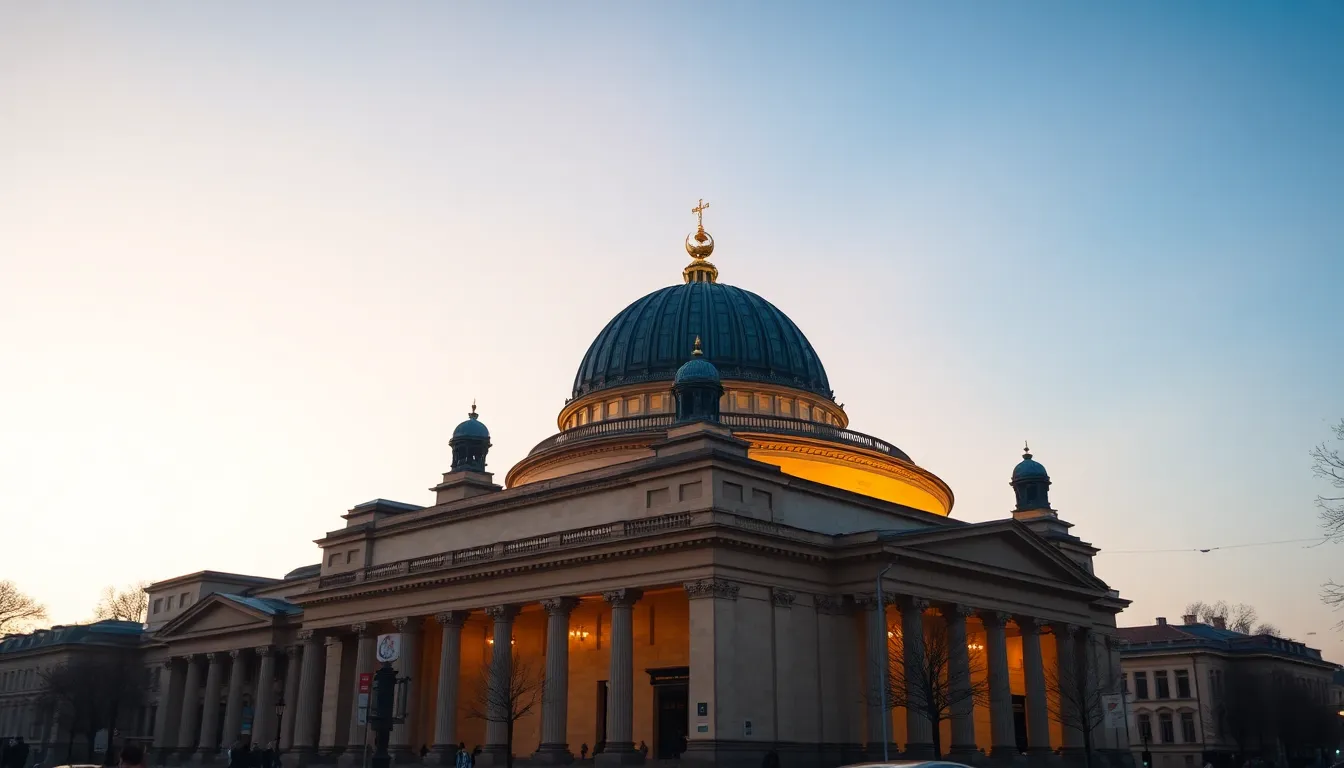
The first time I brought a group to Berlin, we walked from the Brandenburg Gate to the Memorial to the Murdered Jews of Europe in about four minutes. Four minutes. That short walk taught me more about this city than any guidebook ever did. Berlin holds its history close to the surface, side by side, all at once. The triumph and the catastrophe and the recovery are not in separate museums. They are on the same street.
I have led heritage groups here for years, and I tell every pastor, rabbi, and educator the same thing before we go: Berlin is not a city you visit. It is a city you read. If you come ready to read it slowly, it will give your congregation something they will carry home for the rest of their lives.
Let me walk you through how I think about this city, layer by layer, so you can plan a trip that does it justice.
Why Berlin Is the Hinge of the Whole German Heritage Story
Most German heritage destinations tell one story well. Wittenberg is the Reformation. Worms is medieval Jewish scholarship. Dachau is remembrance. Berlin is the only place where all three threads come together and then keep going into the present day.
This is the city where the Wannsee Conference planned the destruction of European Jewry, and it is also the city where the fastest-growing Jewish community in Europe is rebuilding right now. It is the city the Wall split in two, and the city that reunited. For a group, that range is the gift. You do not have to choose between grief and hope. Berlin makes you hold both.
The Three Layers Your Group Will Move Through
I prepare every group to expect three distinct layers in Berlin. The Jewish layer, ancient and modern and including the weight of remembrance. The Christian and Reformation-adjacent layer, the cathedrals and churches that shaped Prussian and German faith life. And the divided-city layer, the Wall and the Cold War, which is its own kind of heritage about freedom and separation. A good itinerary moves through all three without rushing any of them.
The Jewish Story in Berlin: Destruction and Revival on the Same Streets
The New Synagogue and the Old Jewish Quarter
Start in the Scheunenviertel, the old Jewish quarter in Mitte. The New Synagogue on Oranienburger Strasse is where I usually begin. Built in 1866 with its gilded Moorish dome, it was one of the grandest synagogues in Europe. It was damaged on Kristallnacht in November 1938, and a local police officer named Wilhelm Krützfeld famously stood his ground to stop the SA from burning it. It was later gutted by Allied bombing. What stands today is partly reconstructed, and the dome shines over the rooftops again.
Walk these streets and you find the Stolpersteine, the brass “stumbling stones” set into the pavement in front of homes where Jewish residents lived before they were deported and murdered. Each one carries a name, a birth year, and a fate. Tell your group to look down. These are the most personal memorials in the city.
The Holocaust Memorial and the Topography of Terror
The Memorial to the Murdered Jews of Europe, near the Brandenburg Gate, is 2,711 concrete slabs of varying heights that you walk into and through. There is no single correct way to feel inside it. The information center underneath holds the names and the family stories, and that is where the abstraction becomes human again. Give your group at least two hours.
A short distance away, the Topography of Terror sits on the ground where the Gestapo and SS headquarters once stood. It is an unflinching documentation of how the machinery of persecution was built by ordinary administrators. I have learned to let groups move through it quietly and regroup afterward to talk. Do not schedule anything light for the rest of that day.
The Jewish Museum and the Living Community
The Jewish Museum Berlin, with Daniel Libeskind’s jagged architecture, tells two thousand years of German Jewish life, not only the destruction. That balance matters. And then, on the same trip, I take groups to a working synagogue, a kosher cafe, a community that is alive and young and growing, much of it built by Israeli and former Soviet families who chose Berlin. Walking from a memorial to a living community in a single afternoon is the thing groups remember most. For a fuller picture of the medieval Jewish story along the river, the Rhineland Heritage Trail guide is the companion to this one.
The Christian and Reformation Heritage Layer
Berlin is not Wittenberg, but it carries real Christian heritage worth building into your days. The Berlin Cathedral, the Berliner Dom, on Museum Island is a vast Protestant church, the dynastic church of the Hohenzollern family, with a dome you can climb for one of the best views in the city. It speaks to the Prussian Protestant tradition that grew out of Luther’s Reformation two centuries earlier.
For groups tracing the Reformation properly, Berlin works best as a gateway. Wittenberg, Eisleben, and Torgau sit just to the southwest, an easy add to a Berlin-based itinerary. I cover that heartland in detail in the Wittenberg and Reformation Country guide. The French Cathedral and German Cathedral on Gendarmenmarkt round out the Protestant story, and the French one tells the lesser-known history of the Huguenot refugees Berlin welcomed in the seventeenth century, a story of faith under persecution that resonates with many of my Christian groups.
The Divided City: Wall, Freedom, and Memory
You cannot understand modern Berlin without the Wall. The East Side Gallery, a long preserved stretch covered in murals, and the Berlin Wall Memorial on Bernauer Strasse, where a section is preserved with the death strip intact, tell the story of a city and families split for twenty-eight years. Checkpoint Charlie has become touristy, so I usually steer groups to Bernauer Strasse instead, where the memorial is honest and moving.
For faith groups, the Wall opens a natural conversation about freedom, division, reconciliation, and the cost of separation. I have had pastors lead a short reflection at the Bernauer Strasse memorial that became the spiritual high point of the whole trip.
Planning a Berlin Heritage Trip: What Group Leaders Need to Know
Berlin is large and flat, with an excellent public transport system. Most heritage sites cluster in Mitte and the surrounding districts, which keeps walking days reasonable. I plan three to four full days for Berlin alone, more if you are pairing it with the Reformation Trail or with Sachsenhausen, the concentration camp memorial just north of the city, which deserves its own day.
Pace is everything here. The emotional weight of Berlin’s memorials is real, and a schedule that races from one to the next does your group a disservice. Build in unstructured time, a quiet meal, a walk along the Spree. Let people process.
This is where an operator who knows the city earns its place. Heritage Tours builds custom itineraries, so a Jewish group can weight the trip toward the Scheunenviertel, the memorials, and the living community, while a Christian group can balance the cathedrals and the Reformation gateway with the remembrance sites. Mixed groups can experience the full sweep. And group leaders with 15 or more participants travel free, which makes the math easier when you are presenting the trip to your congregation. You can start at our Germany destination page or look at how we run group heritage tours.
FAQ: Berlin Heritage Travel
What are the must-see Jewish heritage sites in Berlin?
The New Synagogue on Oranienburger Strasse, the Memorial to the Murdered Jews of Europe, the Jewish Museum Berlin, and the Stolpersteine throughout the old Jewish quarter are essential. I also always include a visit to the living Jewish community, a working synagogue or kosher establishment, so the trip holds both the loss and the revival.
How many days should we spend in Berlin?
Plan three to four full days for Berlin itself. Add a day if you want to visit Sachsenhausen concentration camp memorial north of the city, and more if you are extending to the Reformation sites in Wittenberg and the surrounding region. Rushing Berlin in two days means skipping the reflection time these sites require.
How do we handle the Holocaust memorials respectfully with a group?
Brief your group before each visit so they know what they are walking into. Build in silence and time to process afterward, and never schedule a lighthearted activity right after a memorial or the Topography of Terror. The best itineraries treat these sites with gravity and give people room to feel what they feel.
Is Berlin suitable for a mixed Jewish and Christian group?
Yes, and it is one of the better German cities for a mixed group. The Jewish heritage, the Protestant cathedrals, the Reformation gateway, and the shared themes of freedom and reconciliation at the Wall give a mixed-faith group plenty of common ground. The itinerary can be balanced to honor both traditions.
When is the best time of year to visit Berlin?
Late spring (May and June) and early autumn (September and October) offer mild weather and comfortable conditions for the walking these heritage sites involve. Summer is pleasant but busier. Winter is cold and gray, though it brings a quieter, more reflective atmosphere, particularly around the November 9th Kristallnacht anniversary.
If Berlin is on your heart for your community, I would welcome the conversation. Every group reads this city a little differently, and the itinerary should reflect yours. Contact us whenever you are ready to start.