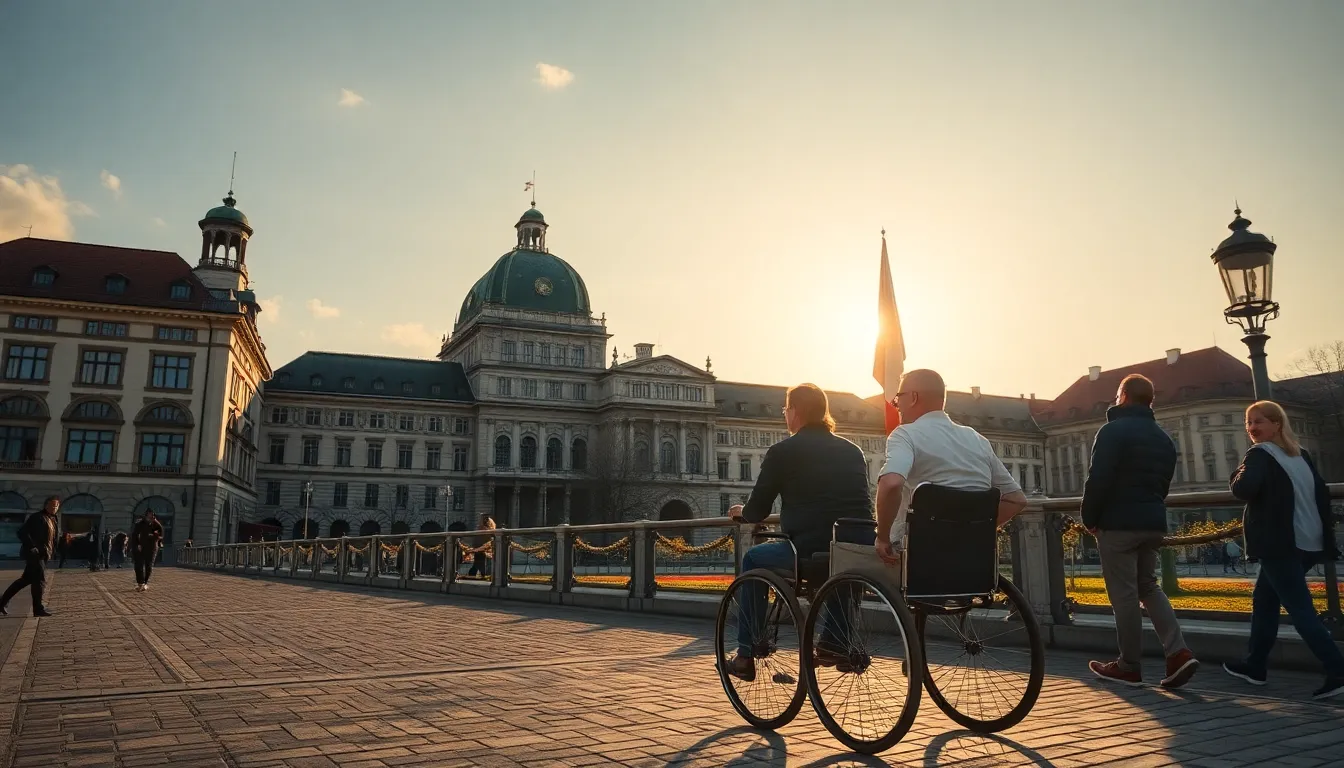
The Member You Do Not Want to Leave on the Bus
There is a particular kind of failure I have watched happen on other people’s tours, and it stays with me. A member with a mobility limitation, often one of the oldest people in the group, the one who waited longest to make this trip, gets left sitting on the coach while everyone else walks into a site. Not out of cruelty. Out of poor planning. Nobody checked the access ahead of time, the path turned out to be stairs and gravel, and there was no plan, so the person who most wanted to be there stayed behind.
I build my itineraries specifically so that does not happen. Accessibility on a Germany heritage tour is not a separate concern for a few members. It is core planning, because heritage groups skew older and the question of who can get where shapes the entire trip. Let me give you the honest, site-by-site picture, because the reality varies enormously from one place to the next.
The Two Things That Make Germany Hard, and the Things That Make It Manageable
Two features of German heritage sites create most of the mobility challenge. The first is cobblestones. The historic centers of Worms, Speyer, Wittenberg, and the old quarters everywhere are paved in uneven cobble that has been there for centuries. Charming to look at, genuinely difficult to walk on with a cane, a walker, or unsteady balance, and slick when wet. The second is age. Medieval cathedrals, old synagogues, and historic cemeteries were built long before anyone thought about ramps, and many cannot be fully retrofitted.
What makes it manageable is that modern Germany takes accessibility seriously where it can. New memorials and museums are generally well-equipped, with ramps, elevators, accessible restrooms, and level paths. The challenge is almost always the old sites, not the new ones, and knowing which is which lets you plan around it.
Site by Site: What to Actually Expect
Concentration Camp Memorials
Dachau, Sachsenhausen, and Bergen-Belsen are the camp memorials most heritage groups visit, and the good news is that as modern memorial institutions they are among the more accessible sites. The main paths are generally level and firm, the visitor centers and exhibitions tend to have ramps and elevators, and accessible restrooms are available. A wheelchair user or someone with a walker can usually experience the core of these sites.
The honest caveat is that these are large grounds, and seeing the full site involves significant distance over surfaces that include gravel and packed earth. The reflective walk across the open grounds, which is part of what makes a camp visit land, is long. For members who can walk but tire, plan rest stops and accept that they may see the central memorial and exhibition rather than every far corner. That is a complete experience, not a lesser one.
Cathedrals
Cologne Cathedral, Speyer Cathedral, and the other great churches are a mixed picture. Ground-floor access to the main nave is usually possible, sometimes via a side entrance with a ramp rather than the grand front steps. The soaring interior, which is the point, is generally reachable. What is not accessible is the towers and the crypts, which mean stairs, often many of them and often spiral. A member who cannot manage stairs can experience the cathedral itself but not the climb to the tower view. Plan for the group to split there: those who want the climb go up, the others stay in the nave with a guide and the quiet.
Historic Jewish Cemeteries
This is the hardest category, and I want to be straight about it. The Heiliger Sand cemetery in Worms, the oldest Jewish cemetery in Europe still in use, is a field of ancient headstones set into uneven, sloping, sometimes grassy and sometimes stony ground. There are no paved paths through much of it. For a member using a wheelchair or struggling with balance, large portions are genuinely difficult or impossible to traverse.
I do not pretend otherwise, and I plan for it. Often a member can reach the entrance area and the nearer graves where the ground is more even, and experience the place from there, which is still deeply moving. Sometimes a strong companion and a sturdy arm get someone further than they expected. What I never do is spring it on someone. We talk about it before, so the member decides how they want to engage, rather than discovering the limit in the moment.
Synagogues and the ShUM Medieval Sites
The medieval Jewish sites of the ShUM cities, including the reconstructed synagogue and the famous mikveh in Speyer, present specific challenges. The Speyer mikveh, a ritual bath, is reached by descending a long flight of medieval stone stairs into the earth, with no elevator. It is one of the most powerful sites in the Rhineland and it is simply not accessible to anyone who cannot manage a significant descent and climb. Modern synagogues are usually well-equipped, but the medieval ones often are not. Know in advance which sites involve stairs into the ground, because the mikveh in particular catches groups off guard.
Modern Memorials and Museums
The Berlin Holocaust Memorial, the Topography of Terror, and the Jewish Museum Berlin are modern and generally accessible, with level access, elevators, and accessible facilities. The Holocaust Memorial’s field of concrete stelae has uneven ground between the blocks by design, which a wheelchair can navigate on the perimeter and main lanes though not every interior row. These newer sites are where your members with mobility needs will have the easiest, fullest experience.
How I Plan an Inclusive Itinerary
Ask the Real Questions Before the Trip
I send every group a frank mobility questionnaire. Not just “any mobility issues” but specifics: can the member walk a quarter mile, manage a flight of stairs, stand for twenty minutes, handle uneven ground, do they use a cane, walker, or wheelchair, and how does a long day affect them. Vague answers lead to bad days. Specific answers let me build a real plan.
Pace for the Whole Group
A heritage group moves at the pace of its slowest member, and on these trips that is correct, not a compromise. I keep daily distances reasonable, build in frequent rest stops and benches, and never stack two physically demanding sites in one day. This protects everyone, not only the members with stated mobility needs, because heritage travel tires people in ways they do not expect.
Have a Plan for Every Hard Site
For each site where access is partial, I decide in advance how the group splits and who stays with whom. At the cathedral, a guide stays in the nave with those who cannot climb. At the Worms cemetery, we identify the reachable section ahead of time. Nobody is improvised into being left behind.
Rent the Right Equipment
A sturdy travel wheelchair, even for a member who normally walks but cannot manage long distances, transforms what is possible. I arrange rentals in advance. A companion pushing across the level grounds of Dachau means a member sees the whole memorial rather than the first hundred meters.
The transport piece matters here too, since a private coach delivers people to the gate and removes the platform-and-station obstacles that trains add. Our transport guide covers that in detail, and our travel insurance guide covers the medical coverage that matters for older members.
For the full on-the-ground picture, our Germany heritage travel guide is the place to start, the Germany destination page lays out the sites, and our group tour page explains how we build inclusive trips for congregations of fifteen and up.
FAQ: Accessibility on Germany Heritage Tours
Are concentration camp memorials in Germany wheelchair accessible?
Mostly yes for the core experience. Dachau, Sachsenhausen, and Bergen-Belsen have level main paths, ramps and elevators in their visitor centers and exhibitions, and accessible restrooms. The grounds are large, though, with significant distances over gravel and packed earth, so a member with limited stamina may experience the central memorial and exhibition rather than every far corner. A rented travel wheelchair and a companion extend what is possible considerably.
Can someone with limited mobility visit the Worms Jewish cemetery?
Partially. The Heiliger Sand cemetery is a field of ancient headstones on uneven, sloping ground with no paved paths through much of it, which makes large portions difficult or impossible for a wheelchair user. Most members can reach the entrance area and the nearer, more even graves and experience the place from there, which remains deeply moving. We identify the reachable section in advance so no one is caught off guard.
Which German heritage sites are the hardest for mobility-limited travelers?
The medieval Jewish sites and the old cemeteries. The Speyer mikveh is reached by a long flight of stone stairs descending into the earth with no elevator, and the Worms cemetery has no full paved path. Cathedral towers and crypts also mean stairs. The modern memorials and museums, by contrast, are generally well-equipped, so the difficulty is concentrated in the oldest sites.
How do you keep a member with mobility needs from being left out?
By planning every hard site in advance. Before the trip I collect specific mobility details from each member, then for each site with partial access I decide how the group splits and who stays with whom, so a guide is always with those who cannot do the stairs or the long walk. Renting the right equipment, pacing the whole group to its slowest member, and never springing a limit on someone in the moment are the core of it.
Should our group rent wheelchairs or mobility equipment in Germany?
Often yes, even for members who normally walk. A sturdy travel wheelchair for someone who cannot manage long distances turns a partial visit into a full one at the larger sites like Dachau and the Berlin memorials. We arrange rentals in advance as part of itinerary planning, matched to what each member actually needs.
If you have members with mobility needs and want a trip built so everyone is included, reach out and let us plan it carefully with you.