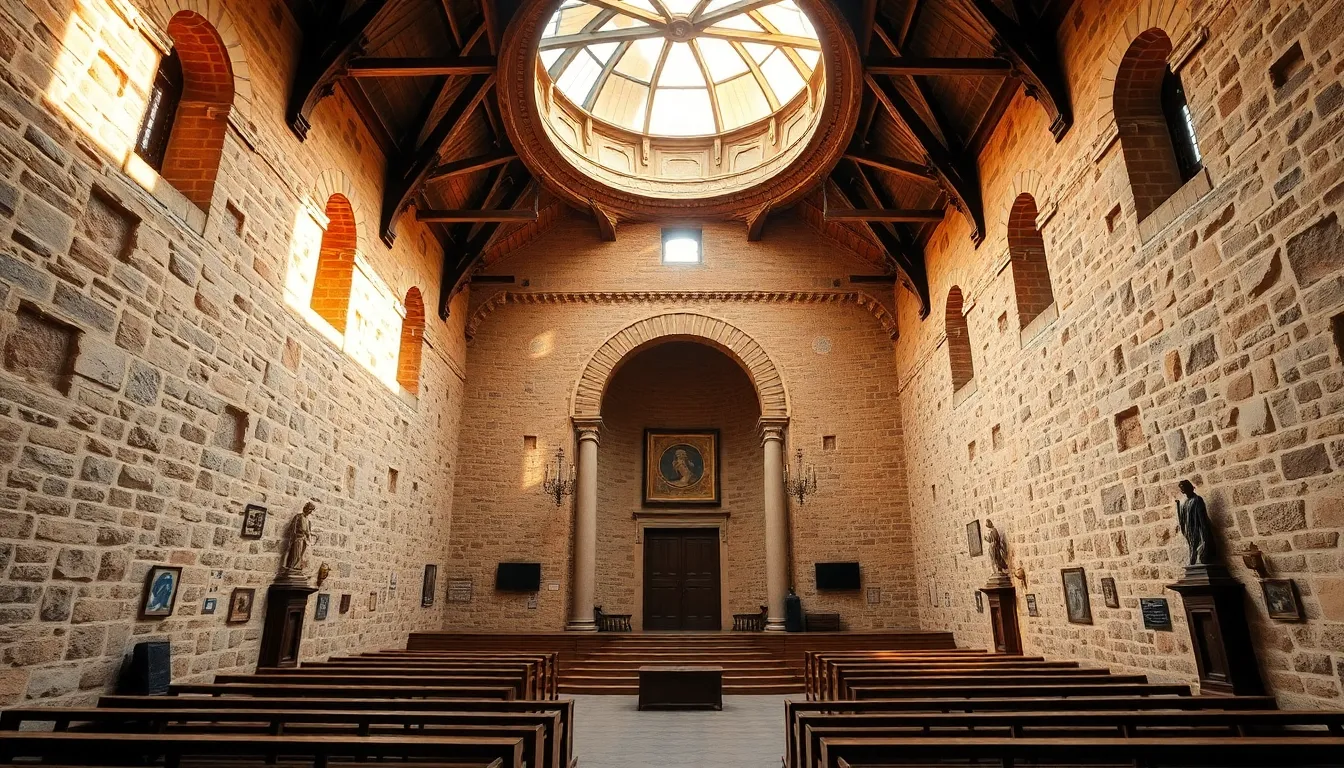
When a rabbi calls me about Germany, the first thing I hear is usually a question that is also a worry: can a Jewish group go to Germany and have it feel like more than mourning? My answer, after twenty years of leading these trips, is yes. German Jewish history is a thousand years long, and only the last chapter is the one everyone fears. This itinerary holds the whole arc, the flourishing and the loss together, because your group deserves both.
Seven days gives you the three centers that tell the Jewish story of Germany: Berlin, where the modern community lived and was destroyed and is rebuilding; the ShUM cities of the Rhine, where Ashkenazi Judaism was born; and Frankfurt, where one of Europe’s oldest ghettos stood. This is a more focused route than our full 10-day Germany itinerary, which also weaves in the Reformation story.
Every transfer includes hotel pickup and dropoff. Moving a group of twenty through German train stations with luggage is exactly the kind of stress that pulls a leader out of the role their people need. We carry that part.
Day 1: Arrival in Berlin
Most international flights land in Berlin or Frankfurt. For this route we begin in Berlin. The first day is gentle on purpose: settle into the hotel, let the time change ease, and gather in the evening.
I like to open with a simple framing for the group. We are not starting at the end. We are walking a thousand-year story, and the first days in Berlin will show both how rich Jewish Berlin was and how deliberately it was unmade. Setting that expectation early helps your people brace for what is coming without bracing so hard they miss the life in the story.
Day 2: Jewish Berlin, the New Synagogue and the Scheunenviertel
The New Synagogue on Oranienburger Strasse is where we begin the heritage work. Its gilded dome was once the most visible symbol of Jewish confidence in Berlin. It was damaged on Kristallnacht, bombed in the war, and partially rebuilt. Today it holds a museum and an active community presence, and it tells the whole arc in one building.
From there we walk the Scheunenviertel, the old Jewish quarter, where the Stolpersteine, the brass “stumbling stones” set into the pavement, name individual people deported from individual addresses. For an educator, these stones are one of the most powerful teaching tools in Berlin, because they make the number into names.
The afternoon is for the Jewish Museum Berlin, designed by Daniel Libeskind. The building itself, with its voids and its Garden of Exile, is part of the lesson. Plan at least three hours.
Day 3: Berlin Memorials and the Wannsee House
Today carries weight, so we pace it carefully. The Memorial to the Murdered Jews of Europe, the field of 2,711 concrete pillars near the Brandenburg Gate, has no prescribed path through it, which is part of its power. The Information Center beneath it holds personal stories and family records that will stay with your group.
In the afternoon we drive to the House of the Wannsee Conference, the lakeside villa where the bureaucratic plan for the murder of European Jewry was coordinated in 1942. The contrast between the beauty of the setting and the horror of what was decided there is something a rabbi can hold up for the group in a way nobody else can.
I never schedule a fourth heavy site on this day. Build in a quiet evening. Your people will need it, and so will you.
Day 4: Travel to the Rhine, the Birthplace of Ashkenaz
Today the group travels southwest to the Rhine Valley, and the mood of the trip shifts. We are leaving the chapter of destruction and entering the chapter of origins. The ShUM cities, Speyer, Worms, and Mainz, are recognized by UNESCO as the cradle of Ashkenazi Jewish life. The acronym ShUM comes from the Hebrew initials of the three cities.
We usually base in or near Worms for this stretch. The drive itself, along the Rhine, gives the group time to breathe and reset for what is genuinely a more hopeful part of the story.
Day 5: Worms and Speyer, the Medieval Heart
Worms deserves the full morning. The synagogue, originally built in the 11th century and faithfully reconstructed after the war, is where the medieval community prayed. The Rashi Chapel beside it honors the great commentator who studied in Worms. The old Jewish cemetery, the Heiliger Sand, is the oldest surviving Jewish cemetery in Europe, with gravestones going back nearly a thousand years. Standing among them, your group is in the literal ground from which Ashkenazi Judaism grew.
In the afternoon we go to Speyer, where the medieval mikveh is one of the oldest and best-preserved ritual baths in Europe. Descending those stone steps toward the water is the kind of moment that quiets a whole group. For rabbis and educators, the ShUM cities are where the trip’s center of gravity moves from grief to inheritance. If your community wants more time here, our dedicated ShUM cities itinerary goes deeper on all three.
Day 6: Mainz, Then on to Frankfurt
The morning belongs to Mainz, the third ShUM city and the seat of Gershom ben Judah, the “Light of the Exile,” whose rulings shaped Ashkenazi practice for centuries. The new synagogue in Mainz, built on the foundations of the destroyed one, is a striking modern statement of return.
In the afternoon we move to Frankfurt. The Judengasse Museum sits on the site of one of Europe’s oldest Jewish ghettos, where families lived in a single narrow lane from the 1460s until Napoleon opened the gates. The nearby memorial wall names the Frankfurt Jews murdered in the Shoah. Frankfurt ties the trip together, because it holds both the medieval ghetto and the modern loss in one place.
Day 7: Departure from Frankfurt
Frankfurt has Germany’s largest international airport, which makes it the natural exit. We handle the morning transfer so your final hours are spent with the group, not with logistics.
Before the group scatters, I always encourage leaders to gather everyone one last time. A trip that holds both the birth and the near-erasure of German Jewry needs a closing word, and that word belongs to you.
Holding the Whole Arc for Your Community
The hardest part of leading a Jewish group through Germany is not logistical. It is emotional, and it is the work of keeping the trip from collapsing into grief alone. Berlin and its memorials come first in this route on purpose, but the journey does not end there. It moves to the Rhine, to the cradle of Ashkenaz, because a community that visits only the sites of destruction comes home carrying only loss.
A few things I share with every rabbi and educator who leads this route. Frame the trip from the first evening as a thousand-year story, not a single chapter. When the group reaches the Heiliger Sand cemetery in Worms, with stones going back nearly a millennium, the point is not only mourning. It is inheritance. These were not victims first. They were a civilization, with learning and law and prayer that still shape Jewish life today. Standing in that ground, your group meets ancestors, not only martyrs.
I also encourage leaders to mark the transitions. The drive from Berlin to the Rhine is the moment the trip turns from destruction to origins, and naming that shift out loud helps the group make it with you. By the time you reach Speyer’s mikveh and Mainz’s heritage, the center of gravity has moved from grief to continuity, and that movement is the gift this itinerary is built to give. We pace the days, and especially the heavier ones in Berlin, so the leader always has room to do this work.
FAQ: A 7-Day Jewish Heritage Itinerary for Germany
Is it emotionally appropriate to take a Jewish group to Germany?
This is the question I am asked most, and I take it seriously. Many rabbis and groups find that visiting Germany is not only appropriate but meaningful, precisely because it reclaims a thousand-year story that is too easily reduced to its final chapter. The ShUM cities are where Ashkenazi Judaism began. Standing there is an act of memory and continuity. We never frame these trips as tourism, and we build in the space your group needs.
What are the ShUM cities and why do they matter?
ShUM is the Hebrew acronym for Speyer, Worms, and Mainz, three Rhine Valley cities that formed the heartland of Ashkenazi Jewish life in the medieval period. UNESCO recognizes them as a World Heritage Site. The synagogues, the cemetery in Worms, and the mikveh in Speyer are among the oldest surviving Jewish sites in Europe. For a Jewish heritage trip, they are essential.
Should we include Holocaust memorial sites on the same trip?
That is your decision, and we shape it around your community. This itinerary includes Berlin’s central memorials and the Wannsee House but deliberately does not include a concentration camp visit, which we treat as a separate and graver journey. Some groups want to add Sachsenhausen near Berlin. We can discuss that with you and pace the trip with the care it requires.
How much time should we spend in the Rhine Valley?
For a Jewish heritage focus, I recommend a minimum of two days for the ShUM cities, and groups with a strong connection to medieval Jewish history often want three. Worms alone can fill most of a day between the synagogue, the Rashi Chapel, and the cemetery. Rushing this section is the one regret groups mention most.
Do the synagogues and Jewish sites require advance group booking?
Yes, several do. Guided access to the Worms synagogue and cemetery, the Speyer mikveh, and the Jewish Museum Berlin all benefit from advance group registration, especially in the warmer months. We handle every reservation as part of your itinerary planning.
If you are a rabbi or educator weighing a Germany journey for your community, I would be glad to talk it through. These are not ordinary trips, and they deserve a planning conversation that takes the weight seriously. Group leaders travel free with fifteen or more participants, which often makes the difference in whether a community can say yes.
Look at our Germany heritage destination page and how we run group heritage tours, then contact us when you are ready to begin.