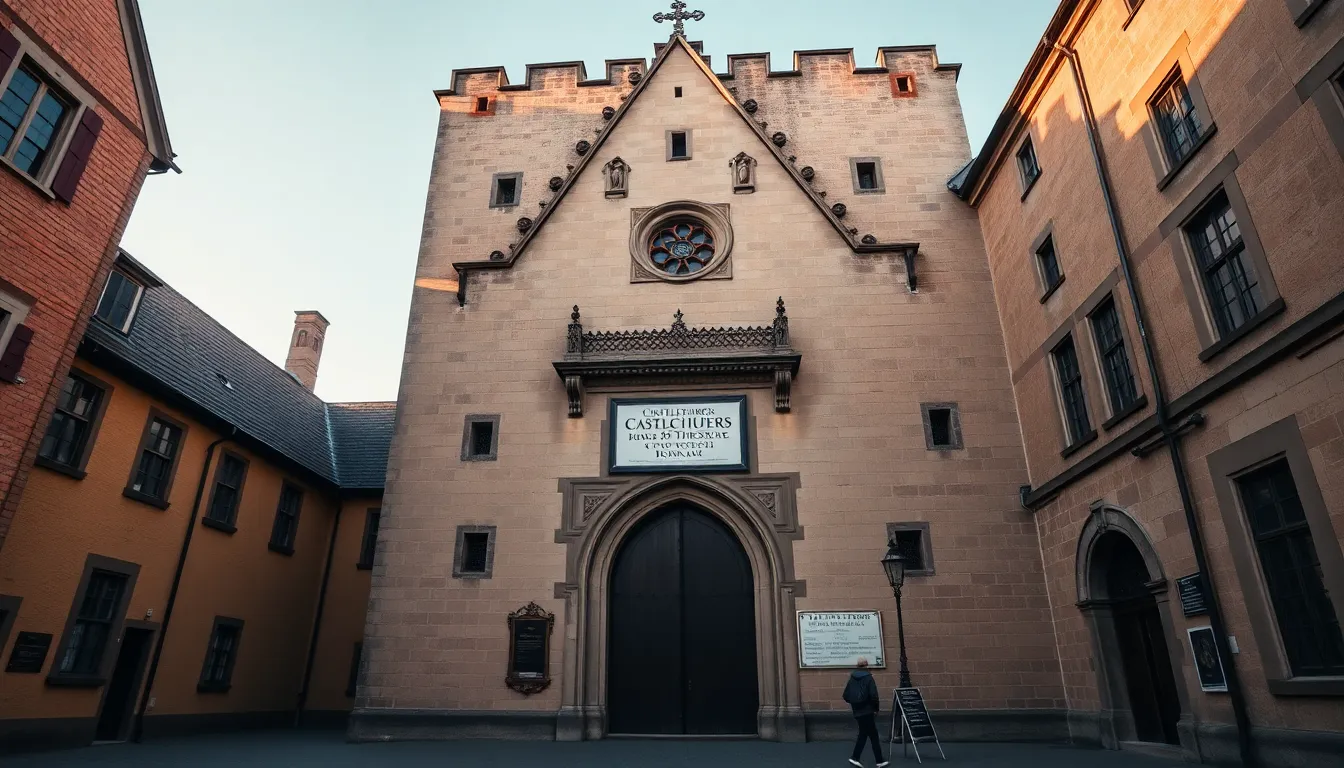
I have lost count of how many pastors have told me the same thing after a Reformation trip: “I preached on Luther for thirty years, and I never understood him until I stood where he stood.” That is what this itinerary is built to do. Not to tick off castles, but to put your congregation inside the geography of 1517.
Seven days is the right length for a Reformation-focused group. It gives you the four towns that carry the story (Wittenberg, Eisenach, Erfurt, Worms) without the rush that ruins reflection. This is a tighter trip than our full 10-day Germany route, which folds in Jewish heritage and the Holocaust memorials. Here the lens stays on the Reformation from the first morning to the last.
Every transfer below includes hotel pickup and dropoff. You will not be herding twenty people through a train station with their luggage. We move the group so you can stay in the role your people need you in.
Day 1: Arrival in Berlin or Leipzig, Then Settle
Most groups fly into Berlin or Leipzig, both of which put you within easy reach of Wittenberg. The first day is deliberately gentle. Get the group to the hotel, let the jet lag settle, and gather in the evening for a short orientation.
I always use that first evening to read the 95 Theses aloud, or at least the first handful of them. It frames the week. Your people are about to walk through the towns where each of those sentences had a price, and starting with the actual words sets the tone better than any guidebook can.
Day 2: Lutherstadt Wittenberg, Where It Began
Wittenberg is the heart of the trip, so we give it a full day. The Castle Church door, where Luther posted the 95 Theses in 1517, is the obvious anchor. The current bronze door carries the Latin text of the theses, cast after the wooden original burned. Standing there, your group is at the exact hinge of Western Christian history.
But do not stop at the door. The Lutherhaus, once the Augustinian monastery where Luther lived as a monk and later raised a family with Katharina von Bora, is the largest Reformation museum in the world. The Town Church of St. Mary is where Luther actually preached most Sundays and where the first Mass in German was held. The Melanchthon House rounds out the picture, because the Reformation was never a one-man story.
For a pastor leading a Protestant congregation, plan time at the Luther Garden for reflection before you leave. Wittenberg is small enough to walk comfortably, which means your group can move at the pace of their own thoughts.
Day 3: Erfurt, the Monastery Years
Erfurt is where Luther became Luther before anyone knew his name. He entered the Augustinian monastery here in 1505 after the famous thunderstorm, and he spent years in this cloister wrestling with the question of how a person stands right before God. The Augustinian Monastery still stands, and you can see the cell area where that struggle happened.
Erfurt itself is one of the best-preserved medieval cities in Germany. The Merchants’ Bridge, lined with inhabited shops, and the cathedral complex give your group a real sense of the world Luther moved through. For Christian groups, I find Erfurt lands emotionally because it is the human chapter. This is where the doubt lived, before the defiance.
The drive from Wittenberg to Erfurt is comfortable, and we time it so the group arrives with the afternoon still open.
Day 4: Eisenach and the Wartburg Castle
Eisenach gives you two of the great Reformation sites in one town. The Wartburg Castle, perched above the city, is where Luther hid in 1521 after he was declared an outlaw at Worms. Disguised as “Junker Jorg,” he translated the New Testament into German here in about eleven weeks. That translation shaped the German language itself. You can stand in the Luther Room where the work was done.
Down in the town is the Luther House, where the young Luther lodged as a schoolboy. Bach was also born in Eisenach, and for groups with a musical streak, the Bach House makes a beautiful complement, because Bach’s sacred music is the Reformation set to sound.
The Wartburg involves a walk up to the castle. For groups with members who find that hard, we arrange the shuttle option in advance, so nobody is left behind.
Day 5: Travel to Worms and the Imperial Story
Today the group travels west to Worms, and the drive itself is part of the trip. Worms is where Luther stood before the Diet in 1521 and refused to recant. “Here I stand, I can do no other,” whether or not he said those exact words, is the moment the Reformation became unstoppable.
The Luther Monument in Worms is the largest Reformation memorial in the world, a stone tableau of the reformers who came before and after him. Your group will recognize names they have only read until now.
Worms is also a ShUM city, one of the great medieval centers of Jewish life, with an 11th-century synagogue and the oldest Jewish cemetery in Europe. Even on a Reformation-focused trip, I encourage groups to walk through the Jewish quarter. Understanding the Jewish world that Christianity grew alongside deepens the Reformation story rather than distracting from it. If your group wants to go deeper on that thread, our ShUM cities itinerary is built for exactly that.
Day 6: Worms to Frankfurt, and a Day to Process
The final full day moves the group toward Frankfurt for the flight home, with time to breathe. Frankfurt’s reconstructed Old Town and the Romerberg Square make for a gentle last afternoon.
I always build this day in on purpose. A Reformation trip carries weight, and groups need a stretch where nothing is scheduled too tightly. Some of the best conversations I have ever had with pastors happened on this kind of unhurried final day, when the week had time to settle into words.
Day 7: Departure from Frankfurt
Frankfurt has the largest international airport in Germany, which makes it the natural exit point. Morning departures are easy from the city, and we handle the transfer so your last memory of the trip is the group, not the logistics.
Adapting the Reformation Route for Your Congregation
No two church groups want the same Reformation trip, and that is the part I enjoy most about planning them. A group steeped in Reformation history wants long mornings in Wittenberg and Worms and will read the 95 Theses standing at the door. A group newer to the story wants more context and more time to talk. Both are right, and the route bends to either.
A few ways I commonly adjust this itinerary. For groups with a strong musical or liturgical bent, we lean into Eisenach and add the Bach connection, because Bach’s sacred music is the Reformation set to sound, and a short concert or organ visit can become the emotional high point of the week. For groups that want the imperial drama, we give Worms a fuller treatment and walk the story of the Diet in detail. For groups that want to understand what the Reformation cost, we hold an honest conversation about Luther’s later writings against the Jews, especially when standing in Worms, which is both the site of his stand and an ancient center of Jewish life.
I also tell pastors to build teaching into the towns themselves. A devotion at the Castle Church door, a reading at the Wartburg where the New Testament was translated, a reflection at the Luther Monument in Worms. When the preaching and the place line up, the trip becomes something your congregation will reference from the pulpit for years. That is the difference between visiting Reformation sites and walking the Reformation.
FAQ: A 7-Day Reformation Itinerary for Germany
Is seven days enough for a Reformation tour of Germany?
Yes, if you keep the focus on the core four towns. Wittenberg, Erfurt, Eisenach, and Worms hold the spine of the Reformation story, and seven days lets you give each one real time without rushing. If your group wants to add Augsburg or a deeper Berlin segment, you move into nine or ten days. For a focused Luther-and-Reformation trip, seven is a strong, complete length.
What is the most important single site on a Reformation itinerary?
For most groups it is the Castle Church door in Wittenberg, where the 95 Theses were posted. But I would argue the Wartburg in Eisenach is just as significant, because that is where Luther translated the New Testament into German, an act that changed the language and put scripture in ordinary hands. Many pastors tell me the Wartburg moved them more than they expected.
Can a Reformation trip work for an interfaith or mixed group?
It can. The Reformation story touches Jewish history at several points, especially in Worms, which is both the site of Luther’s stand and an ancient center of Jewish life. We can build in the Jewish quarter of Worms and frame the harder parts of Luther’s later writings honestly. Groups that want to hold both stories together are often the ones that come away thinking most deeply.
Do we need advance reservations for these Reformation sites?
The Lutherhaus in Wittenberg and the Wartburg Castle both benefit from advance group booking, especially in the busy May-to-September window and around Reformation Day on October 31. We handle every reservation as part of your itinerary, so your group leader never chases a booking form.
When is the best time of year for a Reformation tour?
Late spring and early fall are ideal for comfortable weather and manageable crowds. Some groups specifically time their trip around Reformation Day, October 31, when Wittenberg holds commemorations. If that anniversary matters to your congregation, tell us early, because that window books up.
If you are a pastor thinking about walking your congregation through the towns where the Reformation happened, I would love to help you shape it. Every group brings a different congregation and a different focus, and the route should fit yours, not the other way around. Group leaders travel free with fifteen or more participants, which makes the planning conversation easier than most people expect.
Start by looking at our Germany heritage destination page and how we run group heritage tours, then contact us whenever you are ready to talk it through.