Most Germany itineraries give the ShUM cities a day and a half and call it covered. After twenty years of leading Jewish heritage groups, I think that is a mistake. Speyer, Worms, and Mainz are not a stop on the way to somewhere else. They are the somewhere else. This is where Ashkenazi Judaism was born, where Rashi studied, where Rabbeinu Gershom ruled. A community that comes all this way deserves to slow down and stay.
Five days lets you live inside the three cities rather than rush past them. This is a deeper version of the Rhine Valley segment in our 7-day Jewish heritage itinerary, and a far more focused trip than the full 10-day Germany route. Here the lens stays on the cradle of Ashkenaz from the first morning.
Every transfer includes hotel pickup and dropoff. The three cities sit close together along the Rhine, which means short, easy drives and more time on the ground where it matters.
Day 1: Arrival in Frankfurt, Then on to the Rhine
Most international groups fly into Frankfurt, which puts you about an hour from the ShUM region. The first day is gentle. We transfer the group to a base near Worms, settle everyone in, and gather in the evening.
I use that first evening to set the frame, because it changes how the whole trip lands. The acronym ShUM comes from the Hebrew initials of Shpira (Speyer), Vermaisa (Worms), and Magenza (Mainz). These three cities formed a single rabbinic and communal world in the medieval period, recognized today by UNESCO as a World Heritage Site. Your group is not visiting three separate towns. They are visiting one civilization, spread across three riverside cities.
Day 2: Worms, the Synagogue and the Rashi Chapel
Worms gets a full day, and it earns it. The synagogue, first built in 1034 and faithfully reconstructed after its destruction in the Shoah, is the spiritual center of the medieval ShUM world. The women’s section, the Frauenschul, reflects how the community organized its life. Beside the synagogue stands the Rashi Chapel, named for the towering commentator who studied in Worms as a young man before returning to France.
The Raschi House museum next door holds the community archive and tells the long story of Worms Jewry. For a rabbi or educator, this is the day the trip’s purpose becomes physical. Your group can read a page of Rashi at home for years. Standing where he learned it changes the reading.
I keep the afternoon in Worms unhurried. The point of this itinerary is to not rush, and Worms is the place to prove it.
Day 3: The Heiliger Sand, Europe’s Oldest Jewish Cemetery
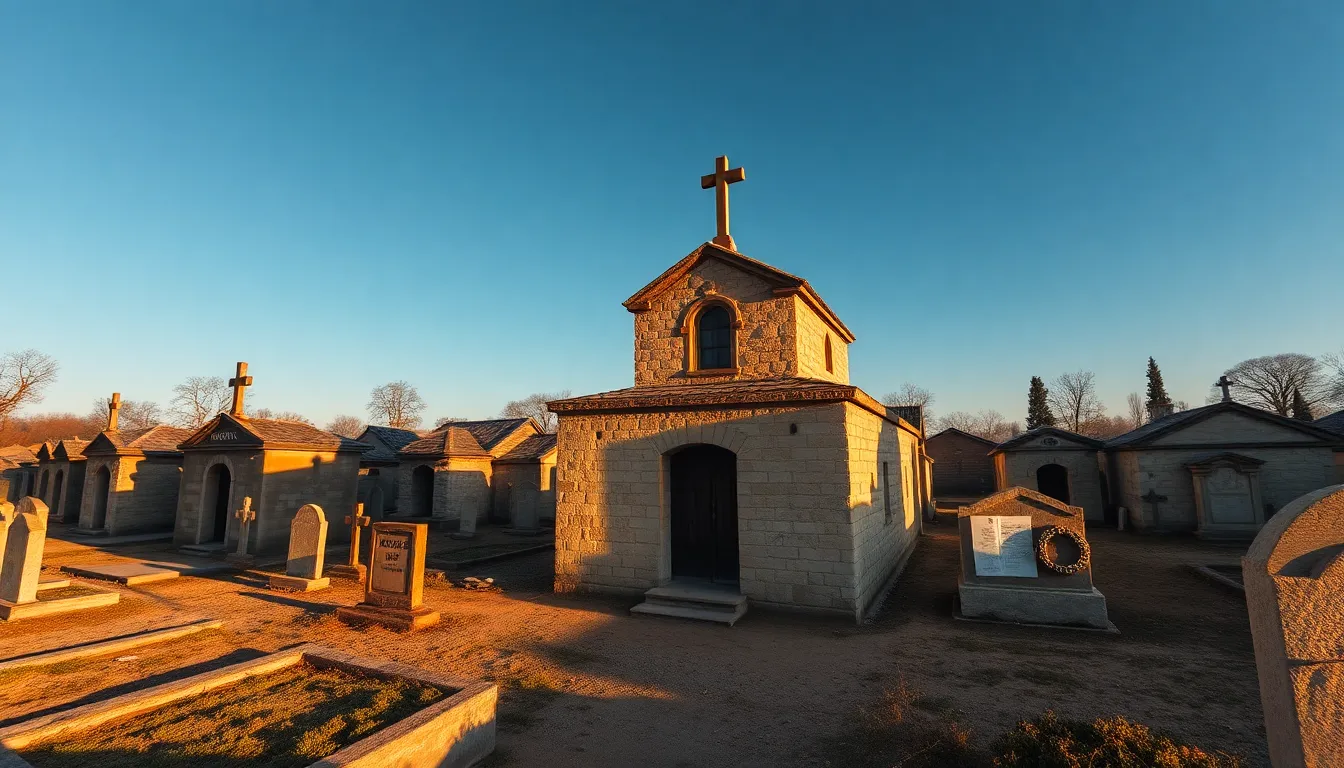
We stay in Worms for the morning to walk the Heiliger Sand, the “Holy Sand,” the oldest surviving Jewish cemetery in Europe. Some of its stones date to the 11th century. Among them are the graves of revered sages, and the tradition of leaving notes and stones continues today.
A cemetery this old asks for time, not commentary. I usually let the group move through it quietly, and I encourage leaders to let silence do the teaching. For many groups, the Heiliger Sand becomes the emotional center of the whole trip, because it is the literal ground from which a thousand years of Ashkenazi life grew.
The afternoon stays open for reflection or a return to the synagogue. Two unhurried days in Worms is a luxury most itineraries cannot offer, and it is the heart of why this trip exists.
Day 4: Speyer, the Medieval Mikveh and Synagogue Courtyard
Today we drive a short distance to Speyer, where the Jewish community received its founding charter from the bishop in 1084. The crown jewel here is the mikveh, the ritual bath, one of the oldest and best-preserved in Europe. Descending the worn stone steps toward the groundwater, your group enters a space the medieval community used for the same purpose, in the same way, nearly a thousand years ago.
The synagogue courtyard, with the remains of the medieval synagogue and the Judenhof, completes the picture. The modern ShUM museum in Speyer ties the three cities together and is worth the time.
Speyer is compact, which means the group can absorb it without fatigue. I find the mikveh quiets people the way few sites do. There is something about descending toward living water in a space that old that needs no narration.
Day 5: Mainz, Then Departure from Frankfurt
The final day belongs to Mainz, the third ShUM city and the seat of Rabbeinu Gershom ben Judah, the “Light of the Exile,” whose rulings, including the ban on polygamy for Ashkenazi Jews, shaped practice for centuries. The medieval Jewish cemetery here, with reset gravestones rescued over the centuries, carries the memory of the community.
The new synagogue in Mainz, a striking modern building shaped like Hebrew letters, stands as a statement of return and continuity. It is a fitting place to close, because it shows the ShUM story did not end in the medieval period. It continues.
From Mainz we transfer to Frankfurt for departing flights, with time to spare. Before the group leaves the Rhine, I encourage leaders to gather everyone for a closing word. After five days in the cradle of Ashkenaz, the group will have something to carry home, and naming it together makes it stick.
How to Get the Most From the ShUM Cities
The mistake I see groups make is treating the ShUM cities like a checklist of three towns. They are not three towns. They were one rabbinic world, governed by shared ordinances, the Takkanot ShUM, that bound the communities together on questions of law and life. When you frame the trip that way for your group, the synagogue in Worms and the mikveh in Speyer stop being separate stops and become rooms in a single house.
A few things I tell every leader. Read primary texts on the ground. A page of Rashi at the Rashi Chapel, a responsum of Rabbeinu Gershom in Mainz, a passage about ritual purity at the Speyer mikveh. The texts these communities produced still shape Jewish practice today, and reading them where they were written collapses a thousand years into a single afternoon. Few teaching moments are more powerful.
I also encourage leaders to leave the Heiliger Sand cemetery unhurried and unnarrated. Some groups recite Psalms there. Some leave stones. Some simply walk in silence. After two days in Worms, the cemetery often becomes the place where the weight of the whole journey settles, and it deserves room to do that without a schedule pressing on it.
One more practical note. The three cities sit close together, so the driving is short and the days are flexible. That flexibility is the gift of this itinerary. If your group wants a second slow morning in Worms, or a longer stay at the Speyer mikveh, we can shape the days around what moves your community most.
I also encourage leaders to think about the trip as a pilgrimage rather than a tour, because that is what it becomes for most groups who slow down for it. The ShUM region drew Jewish travelers for centuries who came to pray at the graves of the sages and to stand where the great academies taught. When your group walks in that tradition, with intention rather than haste, the journey changes character. The synagogue in Worms is not a museum piece. It is a house of prayer that held a community for a thousand years and was rebuilt so it could hold one again. Treating it that way, and giving your people the time to feel it, is what turns five days in three small Rhine cities into a journey they carry for the rest of their lives.
FAQ: A 5-Day ShUM Cities Heritage Itinerary
What does ShUM stand for?
ShUM is a Hebrew acronym formed from the initials of the three cities: Shpira (Speyer), Vermaisa (Worms), and Magenza (Mainz). Together these Rhine Valley communities formed the heartland of Ashkenazi Jewish life in the medieval period. The word also means “garlic” in Hebrew, which is why you sometimes see a garlic symbol associated with the region.
Why dedicate five whole days to just three cities?
Because the ShUM cities are the origin point of Ashkenazi Judaism, and most itineraries rush them. Five days lets you give Worms two unhurried days, including its ancient cemetery, and full attention to Speyer’s mikveh and Mainz’s heritage. Groups that have a strong connection to medieval Jewish history almost always tell me they wished they had more time, not less. This itinerary answers that.
Are the ShUM cities a UNESCO World Heritage Site?
Yes. The ShUM Sites of Speyer, Worms, and Mainz were inscribed as a UNESCO World Heritage Site in 2021, recognizing the synagogue and courtyard in Speyer, the synagogue and the Heiliger Sand cemetery in Worms, and the cemetery in Mainz as outstanding witnesses to medieval Ashkenazi Jewish life.
Is this trip only for Jewish groups?
It is built for Jewish heritage groups led by rabbis and educators, but Christian groups studying the roots of European religious history also find it meaningful, especially those who want to understand the Jewish world that medieval Christianity grew alongside. We shape the framing to fit your community.
Do the ShUM synagogues and cemeteries require advance booking?
Yes. Guided access to the Worms synagogue and the Heiliger Sand, the Speyer mikveh and courtyard, and the Mainz cemetery all benefit from advance group registration, especially in the warmer months. We handle every reservation as part of your itinerary planning so your group leader never chases a form.
If your community wants to do the ShUM cities properly, not as a stop but as the destination, I would be glad to help you build it. These three cities reward the groups that slow down for them. Group leaders travel free with fifteen or more participants, which often makes the trip possible for a congregation.
Look at our Germany heritage destination page and how we run group heritage tours, then contact us when you are ready to begin.