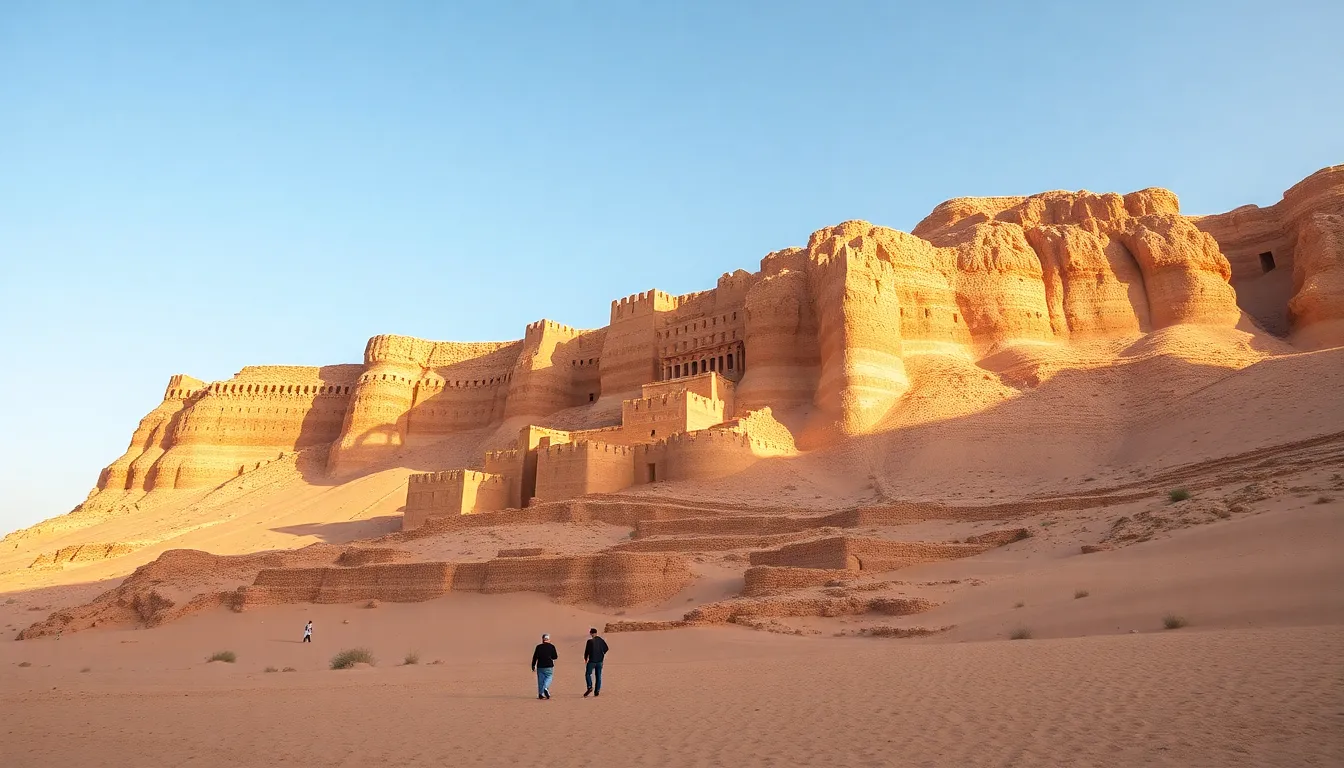
The drive out is part of it. You leave Cairo behind, the traffic thins, the green of the Delta gives way to flat desert, and then, rising out of the emptiness, you see the high mud-brick walls of a monastery. The first time I brought a group of pastors here, one of them looked out at that landscape and said, almost to himself, “This is where it all started.” He was right. Christian monasticism, the whole tradition of monks and convents and the contemplative life, began in this desert. And it is still here, still lived, still going.
Wadi Natrun is a shallow desert depression about two hours northwest of Cairo, on the road toward Alexandria. Tucked into it are four ancient Coptic monasteries, fully inhabited and active, where monks follow the same rule of life as the men who founded them seventeen centuries ago. For a Christian group with any interest in church history or the contemplative tradition, this is one of the most quietly powerful stops in all of Egypt. This is my guide to what is here.
Where Monasticism Began
To understand why Wadi Natrun matters, you have to go back to the third and fourth centuries. As the age of the Roman persecutions faded, Christians who wanted to give their whole lives to God began withdrawing into the Egyptian desert to pray, fast, and wrestle with their own souls. These were the Desert Fathers and Mothers. Antony the Great went into the wilderness and became the model of the solitary hermit. Pachomius gathered monks into the first organized communities. And Macarius the Great settled in this very valley, Wadi Natrun, drawing disciples around him.
From these Egyptian deserts, the monastic movement spread to the whole Christian world. The monasteries of Europe, the rules of Benedict, the entire contemplative tradition of both East and West, all of it traces back to what these men began in the sands of Egypt. When I tell a group that the silence they are standing in is the source of every monastery they have ever heard of, it reframes the whole visit.
The Four Surviving Monasteries
At its height, Wadi Natrun held dozens of monasteries and hundreds of monks. Four survive today, all active, each with its own character.
The Monastery of Saint Macarius (Deir Abu Maqar)
Founded around the spot where Macarius himself settled, this is perhaps the most historically significant of the four. It has been a center of Coptic spiritual life for sixteen centuries and the burial place of many Coptic popes. In the twentieth century it underwent a remarkable revival and remains a serious, working monastic community.
The Monastery of the Syrians (Deir al-Surian)
Named for the Syrian monks who once lived here, this monastery is treasured for its ancient church, its wall paintings, and its old library. The art preserved here is some of the most beautiful in the Coptic world, and the sense of layered history, Egyptian and Syrian, Coptic and broader, is strong.
The Monastery of Saint Bishoy (Deir Anba Bishoy)
Founded by Saint Bishoy, a disciple in this desert who is one of the most beloved saints of the Coptic church, this monastery draws many pilgrims. Its grounds are welcoming, and it is often the easiest of the four for groups to visit and move through.
The Monastery of the Romans (Deir al-Baramus)
Considered by tradition the oldest of the four, Baramus carries a story connecting it to two Roman sons who came to the desert seeking the monastic life. It sits a little apart from the others and has a particularly remote, ancient feel.
What Groups Actually Experience
I want to be honest about what this stop is and is not, because it is a different kind of visit from the temples and tombs most people associate with Egypt.
There are no dramatic ruins here. No spectacular views. What there is instead: silence, extreme antiquity, and a continuity with early Christian practice that simply cannot be replicated anywhere else. The monks living in these monasteries today rise for prayer in the dark, fast, work with their hands, and keep the same rhythm of life their predecessors kept seventeen hundred years ago. You can feel it the moment you step inside the walls.
Groups who come in a spirit of reverence are genuinely welcomed. The monks are often glad to receive visitors, and at some monasteries a monk will speak with a group, explain the life, and answer questions. I have watched these conversations become the moment a trip turns from sightseeing into something deeper. Pastors who arrived curious leave thoughtful, sometimes shaken, often refreshed in a way they did not expect.
This is a stop that pairs naturally with the wider story of Egypt’s Christian heritage, from Coptic Cairo to the great desert monastery of Saint Catherine’s at Mount Sinai, and it belongs in the broader arc of the spiritual sites of Egypt.
Practical Things to Know
A few honest notes so a group arrives ready.
Wadi Natrun is roughly a two-hour drive from Cairo, easily reached on the desert road toward Alexandria, which makes it a comfortable day trip or a stop on the way between the two cities. I allow at least half a day. You cannot rush this place and get anything from it.
Modest dress is essential, more so than at most sites: shoulders, knees, and arms covered, and women may want a scarf. The monasteries keep their own visiting hours and may restrict access during fasts, feasts, or periods of retreat, so timing must be coordinated in advance. Some areas are open to visitors and others are reserved for the monastic community, and we always follow the lead of the monks. Photography may be limited inside churches.
This is not a stop for every itinerary, and I say that plainly to group leaders. But for a group whose heart is drawn to church history, early Christianity, or the contemplative life, Wadi Natrun belongs on the journey, and it tends to be the stop people talk about long after they are home. You can see how it fits the full destination on our Egypt heritage destination page, and how the group leader experience works on our group heritage tours page.
FAQ: The Monasteries of Wadi Natrun
What is Wadi Natrun known for?
It is one of the birthplaces of Christian monasticism. In the fourth century, the Desert Fathers, including Saint Macarius, settled in this valley to live lives of prayer and asceticism, and from here the monastic movement spread to the whole Christian world. Today four ancient Coptic monasteries survive there, all still active and inhabited by monks who follow the same way of life.
How many monasteries are at Wadi Natrun and can you visit them?
Four monasteries survive and remain active: Saint Macarius, the Syrians, Saint Bishoy, and the Romans (Baramus). Several are open to respectful visitors during their visiting hours. Groups typically visit one or two in a half day rather than trying to see all four. We coordinate access in advance, since hours can change around fasts and feasts.
How far is Wadi Natrun from Cairo?
About two hours by road, on the desert highway between Cairo and Alexandria. That makes it a comfortable day trip from Cairo or a meaningful stop on the way to or from Alexandria. We usually allow at least half a day so the group has time to slow down, which is the whole point of going.
What should our group wear and know before visiting?
Modest dress is important, with shoulders, knees, and arms covered, and a scarf is useful for women. These are active monastic communities, so some areas are reserved for the monks and we always follow their lead. Visiting hours can be limited during fasts and feasts, and photography may be restricted inside churches. We brief every group fully before the visit.
Is Wadi Natrun worth it for a heritage group?
For a group drawn to church history, early Christianity, or the contemplative tradition, very much so. It is a quiet stop without dramatic ruins or grand views, so it is not right for every itinerary. But for the right group it is often the most moving stop of the whole trip, the place where you stand at the actual source of the monastic life and find it still being lived.
Wadi Natrun is the stop I recommend most carefully and the one travelers thank me for most often afterward. It asks a group to slow down and be quiet, and in return it shows them the living root of a tradition they thought they only knew from books. I would be glad to help you decide whether it belongs in your group’s journey. When you are ready, reach out to our team and we will start with your community’s story.