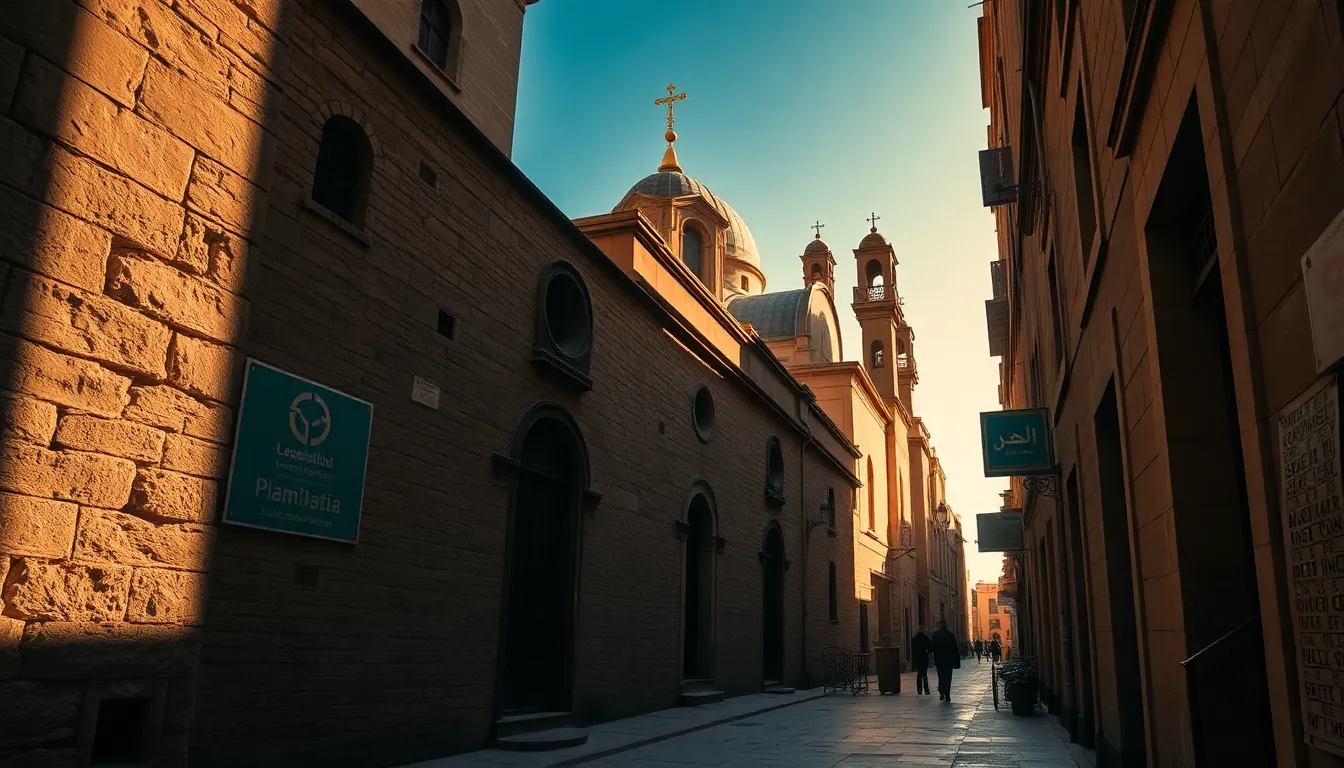
There is a moment I wait for every time I bring a group into Coptic Cairo. We come down off the busy modern street, through a gate, and within a few steps the noise of the city drops away. The lanes narrow. The walls are old stone. And someone in the group always stops, looks around, and says some version of: “I had no idea this was here.” That is the thing about Coptic Cairo. Most Christians have never heard of it, and once they walk into it, they cannot believe they hadn’t.
This small quarter holds one of the densest concentrations of early Christian heritage anywhere on earth. The Coptic Christian community has lived here without interruption since the first century. Not as a museum exhibit. As a living church, worshiping in buildings their ancestors built, in a tradition that traces itself to Saint Mark the Evangelist. For a pastor or priest bringing a group to Egypt, this is one of the most important few hours you will spend.
This is my guide to what is here, what it means, and how a group actually experiences it.
What Coptic Cairo Is and Why It Matters
The word Coptic simply comes from the Greek word for Egypt. The Copts are the native Egyptian Christians, and their church is one of the oldest in the world. Tradition holds that Saint Mark brought the faith to Alexandria around the middle of the first century, and from there it spread up the Nile. By the time of the great church councils, Egypt was a center of Christian thought, monasticism, and martyrdom.
The quarter known today as Coptic Cairo, or Old Cairo, grew up around and inside the walls of a Roman fortress called Babylon. You can still see the round Roman towers as you enter. Layered into and on top of that fortress are churches, a synagogue, and a cemetery that together span nearly two thousand years of religious history in a few hundred square meters. When I tell groups they are standing inside a Roman fort that early Christians repurposed for worship, you can watch the timeline rearrange itself in their heads.
The Hanging Church: Suspended Over the Roman Gate
The most famous building in the quarter is the Hanging Church, called Al-Muallaqa in Arabic, which means “the suspended.” It earned the name because its nave was built across the top of a gatehouse of the old Roman fortress, leaving it hanging above the passage below. Parts of the structure go back to at least the third century, making it one of the oldest churches in Egypt.
Inside, the wooden ceiling is shaped like Noah’s ark. Ancient screens of inlaid cedar and ivory separate the sanctuary. A marble pulpit rests on thirteen slender columns, representing Christ and the twelve apostles, and the faithful will tell you that one darker column stands for Judas. Coptic icons cover the walls. And it is still a working church, with regular services.
I give the Hanging Church its own dedicated time, and where it is possible, I arrange for groups to be present during a Coptic service or to hold a short devotional in the nave. Because it deserves a full treatment of its own, I have written a separate guide to the Hanging Church of Cairo for leaders who want the detail.
Abu Serga: The Cave of the Holy Family
A few minutes’ walk away stands the Church of Abu Serga, dedicated to Saints Sergius and Bacchus, two soldier-martyrs of the early church. The building itself dates to around the fourth or fifth century and is one of the oldest in Cairo. But what draws groups is what lies beneath it.
Coptic tradition holds that the cave below the church sheltered Mary, Joseph, and the infant Jesus during their time in Egypt, on the journey we trace along the Holy Family flight trail. You descend a short flight of stairs into the crypt, and the space is small, cool, dark, and silent. People stop talking on their own. They sit. Sometimes they pray, sometimes they just stay still.
I never push a particular interpretation here. Whether your group holds this as literal holy ground or as a place where Christians have prayed for sixteen centuries, the experience is the same kind of profound. The antiquity of the Christian presence in Egypt is not a fact in a book when you are sitting in that cave.
The Church of Saint Barbara and the Older Layers
Close to Abu Serga sits the Church of Saint Barbara, named for the early martyr whose relics tradition says are kept here. Its architecture echoes Abu Serga, with a beautiful old wooden screen and a long basilica plan that reflects how the earliest Egyptian churches were laid out. Groups often pass through it quickly, but I like to slow them down. The shape of these basilicas, the position of the sanctuary, the way light falls, all of it shows you what Christian worship space looked like before cathedrals, before stained glass, before most of what we now associate with church buildings.
Ben Ezra Synagogue: A Shared Heritage Layer
It surprises some Christian groups to find a synagogue in the heart of the Christian quarter, but it belongs to the story. The Ben Ezra Synagogue stands on a site that, by one tradition, marks where the infant Moses was drawn from the water, and where a church once stood before the building became a synagogue. It has been a center of Jewish life in Egypt for over a thousand years.
Its storeroom, the Cairo Geniza, held hundreds of thousands of documents discovered in the nineteenth century that transformed what historians know about medieval Jewish and broader Near Eastern life. For Christian groups, I point out something I find moving: this single quarter holds the shared roots of Jewish and Christian faith side by side, the same way Egypt itself holds the Exodus story for both traditions. It is part of why I cover the wider spiritual sites of Egypt as one connected landscape rather than separate trips.
The Coptic Museum
Before you leave the quarter, the Coptic Museum gathers under one roof what the churches show you in fragments. It holds the richest collection of Coptic art in the world: carved stone, textiles, icons, manuscripts, and some of the earliest Christian artifacts ever recovered, including material connected to the Nag Hammadi find. For a group with any interest in church history, an hour here ties the whole quarter together. I find it works best at the end, after the group has stood in the churches, so the objects have context.
How a Group Actually Moves Through Coptic Cairo
Here is the practical picture. The whole quarter is walkable. The sites sit within a few minutes of each other along stone lanes, mostly closed to traffic, which makes it one of the calmest places in Cairo to move a group. Half a day does it justice. A full morning lets you slow down.
A few things I always prepare groups for. Modest dress is expected in the churches, shoulders and knees covered. The lanes can be uneven, so steady shoes help, especially for older travelers. The crypts and older churches can be dim, which is part of their power but worth knowing in advance. And the quarter is genuinely sacred space for a living community, so we move quietly and we follow the lead of the clergy who care for these places.
I usually build Coptic Cairo as a single unhurried morning, anchored by a devotional in either the Hanging Church or the cave below Abu Serga, then time in the Coptic Museum to draw it together. From there it connects easily to the broader Holy Family sites and the rest of an Egypt itinerary. You can see how it fits the full picture on our Egypt heritage destination page, and how we structure the group experience on our group heritage tours page.
FAQ: Visiting Coptic Cairo
What is the difference between Coptic Cairo and Old Cairo?
They overlap and the names are often used interchangeably. Old Cairo is the broader historic district built around the Roman fortress of Babylon. Coptic Cairo refers specifically to the cluster of ancient Christian sites within it, including the Hanging Church, Abu Serga, Saint Barbara, the Coptic Museum, and the Ben Ezra Synagogue. For a heritage group, the Coptic quarter is the heart of what you have come to see.
How long do groups need in Coptic Cairo?
Half a day covers the main churches and the museum at a reasonable pace. A full morning lets a group slow down, hold a devotional, and sit in the crypts without rushing. I recommend giving it the unhurried version. This is the kind of place that rewards stillness, and pushing through it quickly misses the point.
Are the churches in Coptic Cairo still used for worship?
Yes. These are active churches serving a living Coptic Orthodox community, not museums. The Hanging Church and Abu Serga both hold regular services. We can often arrange for groups to attend a service or to hold their own short devotional outside of service hours, depending on the church and the group’s tradition.
What should our group wear to visit Coptic Cairo?
Modest dress is expected in all the churches. Shoulders and knees should be covered for both men and women, and women may wish to bring a light scarf. Comfortable, steady shoes help on the uneven stone lanes, particularly for older members of the group. We brief every group on this before arrival so no one is caught off guard.
Is it appropriate for Christian groups to visit the Ben Ezra Synagogue?
Yes, and I encourage it. The synagogue is part of the shared religious heritage of the quarter and a remarkable site in its own right. Visiting it as a Christian group is a way of honoring the deep roots that Judaism and Christianity share, roots that Egypt holds with unusual clarity. We approach it with the same reverence we bring to the churches.
Coptic Cairo is one of those places that changes how a congregation understands its own history. They arrive thinking the church began somewhere in Europe, and they leave knowing it was already old and deep here in Egypt while Europe was still pagan. I would be glad to help you build a morning in the quarter that fits your group. When you are ready, reach out to our team and we will start with what your community most wants to encounter.