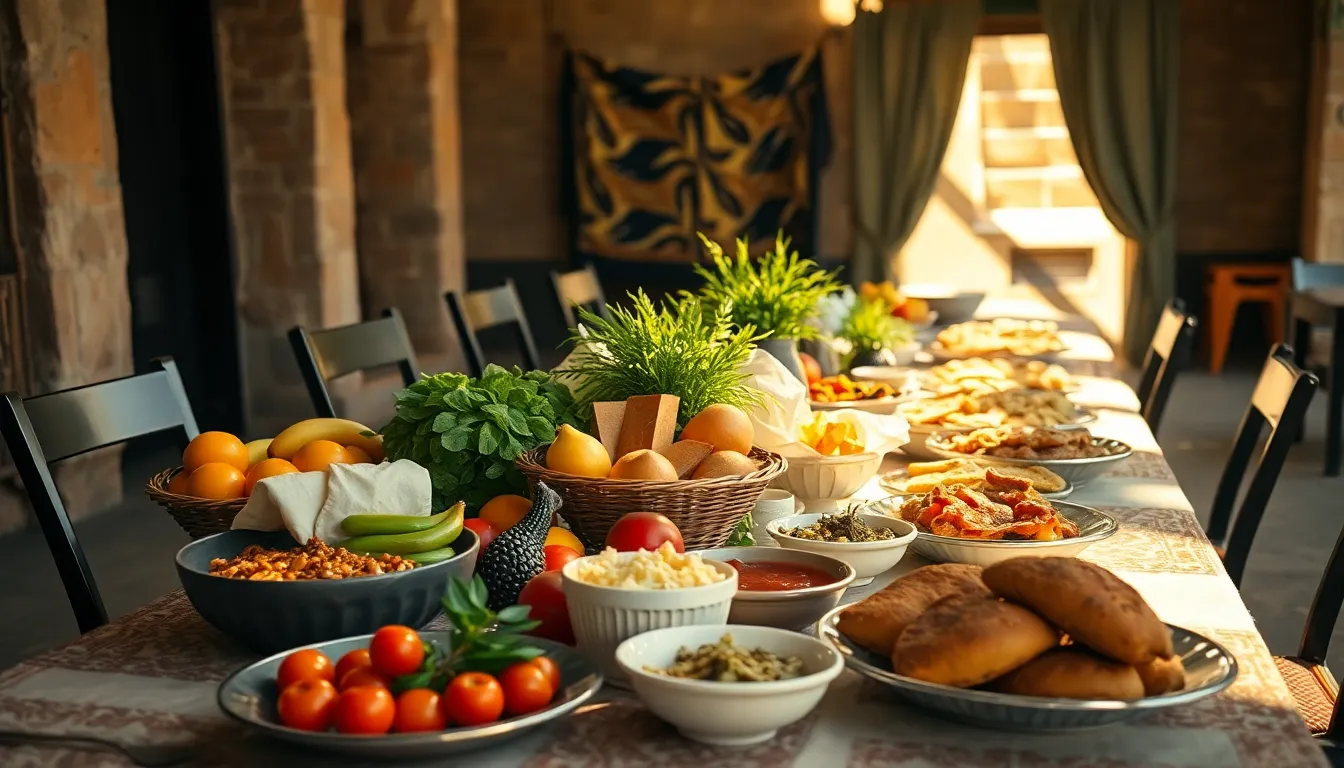
A rabbi called me a few years ago, very serious, and said, “Dina, I want to bring my community to Egypt, but I need to know one thing before I bring it to my board. Can we eat?” It was the right question, and it is the one I hear most often once a group decides Egypt is on the table. People can imagine the synagogues and the desert and the Exodus. What they cannot imagine, and what genuinely worries them, is the practical reality of keeping kosher in a country with almost no kosher infrastructure.
So let me answer it plainly, the way I wish someone had answered it for me the first time. Keeping kosher in Egypt is absolutely workable. It does not happen by accident, and it is not something you should try to figure out on the ground. It happens because it is planned, carefully, in advance, by people who have done it many times. After more than twenty years of bringing observant groups through Egypt, this is one of the things we have gotten very good at, precisely because it is the thing that worries people most.
The Honest Starting Point: Egypt Has No Kosher Industry
I am not going to oversell this. Egypt does not have a functioning kosher food industry the way Israel, New York, or even some European cities do. The Jewish community in Egypt today numbers fewer than a dozen people, almost all elderly, and there is no commercial kosher supply chain to speak of. You cannot assume you will walk into a restaurant and find a hechsher on the wall. You will not.
What this means is simple: kashrut on an Egypt heritage tour is a logistics problem, not a luck problem. It is solved before the trip begins, through a combination of imported supervised food, careful menu construction from naturally kosher ingredients, sealed and supervised meals where needed, and a team that understands exactly what your group requires. The groups who struggle are the ones who treated it casually. The groups who eat well, and eat with confidence, are the ones who planned it properly.
How Kosher Food Actually Reaches Your Group
There are a few standard approaches, and the right mix depends on your group’s level of observance, which we establish in detail before anything is booked.
Imported and Supervised Provisions
For groups with strict requirements, we arrange supervised kosher food brought in for the trip, often from Israel given the proximity. This can include sealed meals, supervised meat, and packaged staples that travel well. For some itineraries, particularly Passover trips, this is the backbone of the food plan. It is more involved logistically, but it gives a high level of certainty, and certainty is exactly what an observant group needs to relax and focus on the experience.
Naturally Kosher Ingredients, Prepared Properly
Egyptian cuisine is rich in foods that are naturally kosher when sourced and prepared correctly: fresh vegetables, fruits, legumes, grains, herbs, eggs in many cases, and a whole world of bean and vegetable dishes. Egyptian markets are full of produce. With proper supervision over preparation, equipment, and sourcing, a great deal can be done with fresh local ingredients. We work with kitchens that follow specific protocols we set, rather than hoping a hotel chef happens to understand kashrut, which they will not.
Sealed Meals and Group Catering
For travel days, site visits, and situations where a supervised kitchen is not available, sealed prepared meals keep the group fed reliably. It is not glamorous, but it works, and we plan the rhythm so that the more substantial supervised meals land at the right points in the day. The goal is that nobody is ever stuck, hungry, and improvising, because improvising is exactly where kashrut goes wrong.
Kosher on the Move: Hotels, Cruises, and Site Days
Where you are matters as much as what you eat. Here is how it works across the typical components of an Egypt itinerary.
Cairo and Hotel Stays
In Cairo, the larger hotels are used to special dietary requirements and accommodating group needs, even if kosher is not something they handle on their own. We set the arrangements with the hotel in advance: what the group can use, what comes in supervised, how breakfast works, and where meals are taken. A reliable breakfast of fresh fruit, vegetables, eggs prepared under the right conditions, and supervised staples is very achievable, and it sets the tone for the day.
The Nile Cruise
A Nile cruise between Luxor and Aswan is one of the highlights of many Egypt itineraries, and it is also where people worry most about food, because you are on a boat for several days. This is exactly why it has to be arranged ahead. For observant groups, we coordinate the food plan with the cruise operation before departure, building in supervised and sealed provisions for the duration. A cruise is not a reason to avoid the trip. It is a reason to plan the food carefully, which we do.
Site Visit Days and the Desert
On long site days, in Luxor, in the desert, on the road to the Delta, you cannot count on finding anything suitable, so we carry what the group needs. Packed supervised meals, plenty of water, fruit, and staples travel with the group. This is one of those areas where experience matters: knowing how much to carry, how to keep it properly, and how to time meals around a demanding day of touring so that the food supports the experience instead of disrupting it.
Levels of Observance: We Build Around Yours
There is no single kosher standard, and a good plan starts by understanding exactly where your group sits. Some communities need full glatt supervision with imported supervised meat and sealed everything. Others keep kosher-style, avoiding non-kosher meat and shellfish and mixing of meat and dairy, and are comfortable with carefully sourced fresh and vegetarian food. Many groups land somewhere in between.
The mistake is assuming one plan fits everyone. Before we finalize anything, we have a detailed conversation with the rabbi or group leader about the group’s actual requirements, including how strict the supervision needs to be, whether the group will go fully vegetarian for parts of the trip to simplify things, and what the non-negotiables are. Then we build the food plan to match. This conversation is not a formality. It is the single most important thing in getting the food right, and we take it seriously.
Passover: The Special Case
If your group is traveling around Passover, kashrut becomes its own significant undertaking, and I will not minimize it. Passover in Egypt, the very land of the Exodus, is profoundly meaningful, and we have many groups who want exactly that. But Passover kashrut layered onto a country with no kosher infrastructure requires the most planning of any scenario we handle.
For Passover trips we typically rely heavily on imported supervised provisions, build the entire menu around Passover-appropriate foods, and plan well in advance, often a year or more ahead. Many groups choose to travel in the weeks just before or just after the holiday for exactly this reason, keeping the spiritual resonance while simplifying the food logistics. We help groups think through which approach fits them. You can read more in our guide to a Passover heritage trip to Egypt and our piece on observing Shabbat during an Egypt journey.
Why This Is Worth the Effort
I will be direct: keeping kosher in Egypt takes work, and it takes a partner who has done it before. But I have never had a group come back and tell me it was not worth it. There is something about eating a properly arranged kosher meal in Cairo, after a day standing where the Exodus story unfolded, that brings the whole trip together. You are doing exactly what the tradition asks, in the land the tradition came out of. That is not a hardship. It is part of the point.
The work, frankly, is ours, not yours. A well-run kosher Egypt trip should feel seamless to the traveler. You should arrive at meals and find them handled. You should never be the one calling a hotel kitchen or inspecting a supply chain. That is what you are hiring us for. For the broader picture of how we structure these journeys, see our guide to Jewish heritage in Egypt, our Egypt heritage destination page, and our group heritage tours.
FAQ: Keeping Kosher on an Egypt Heritage Tour
Can you actually keep strictly kosher in Egypt?
Yes, with proper planning. Egypt has no commercial kosher food industry and almost no remaining Jewish community, so kashrut is handled through advance logistics rather than local supply. This typically means imported supervised provisions, often from Israel, combined with naturally kosher fresh ingredients prepared under set protocols, and sealed meals for travel days. Strictly observant groups, including glatt-kosher groups, travel through Egypt successfully every year. The key is that it is planned thoroughly in advance, not improvised on the ground.
What do kosher meals on an Egypt trip look like?
It varies by the group’s level of observance. Many meals are built around the abundant naturally kosher produce, legumes, grains, and herbs of Egyptian cuisine, prepared under proper supervision. Supervised meat and sealed prepared meals fill in where a supervised kitchen is not available, such as on travel days, in the desert, or on the Nile cruise. Breakfasts of fresh fruit, vegetables, and supervised staples are reliable in Cairo hotels. The aim is that the food supports the experience and you never go hungry or have to improvise.
How is kosher food handled on a Nile cruise?
The food plan for a Nile cruise is coordinated with the cruise operation before departure. For observant groups, this means building in supervised and sealed provisions for the full duration of the cruise, since you cannot rely on finding suitable food on board otherwise. A cruise is a wonderful part of an Egypt itinerary and is entirely compatible with keeping kosher, provided the arrangements are made ahead of time. We handle that coordination as part of planning the trip.
Is keeping kosher during Passover in Egypt possible?
Yes, and it is deeply meaningful to many groups, but it requires the most planning of any scenario. Passover kashrut in a country with no kosher infrastructure relies heavily on imported supervised provisions and a menu built entirely around Passover-appropriate foods, planned often a year or more ahead. Some groups choose to travel in the weeks just before or just after Passover to keep the spiritual resonance while simplifying the food logistics. We help each group decide which approach fits them best.
Do we need to tell you our exact level of observance?
Yes, and the more detail the better. The single most important step in getting the food right is a thorough conversation up front about your group’s actual requirements: how strict the supervision needs to be, whether parts of the trip will go vegetarian to simplify matters, and what the non-negotiables are. There is no single kosher standard, and we build the food plan around your group’s specific needs rather than a one-size-fits-all assumption. This conversation happens before anything is booked.
If keeping kosher is the question standing between your community and an Egypt journey, let’s take it off the table together. Tell me about your group and your standard, and I will walk you through exactly how we would handle the food, start to finish. Get in touch whenever you’re ready.