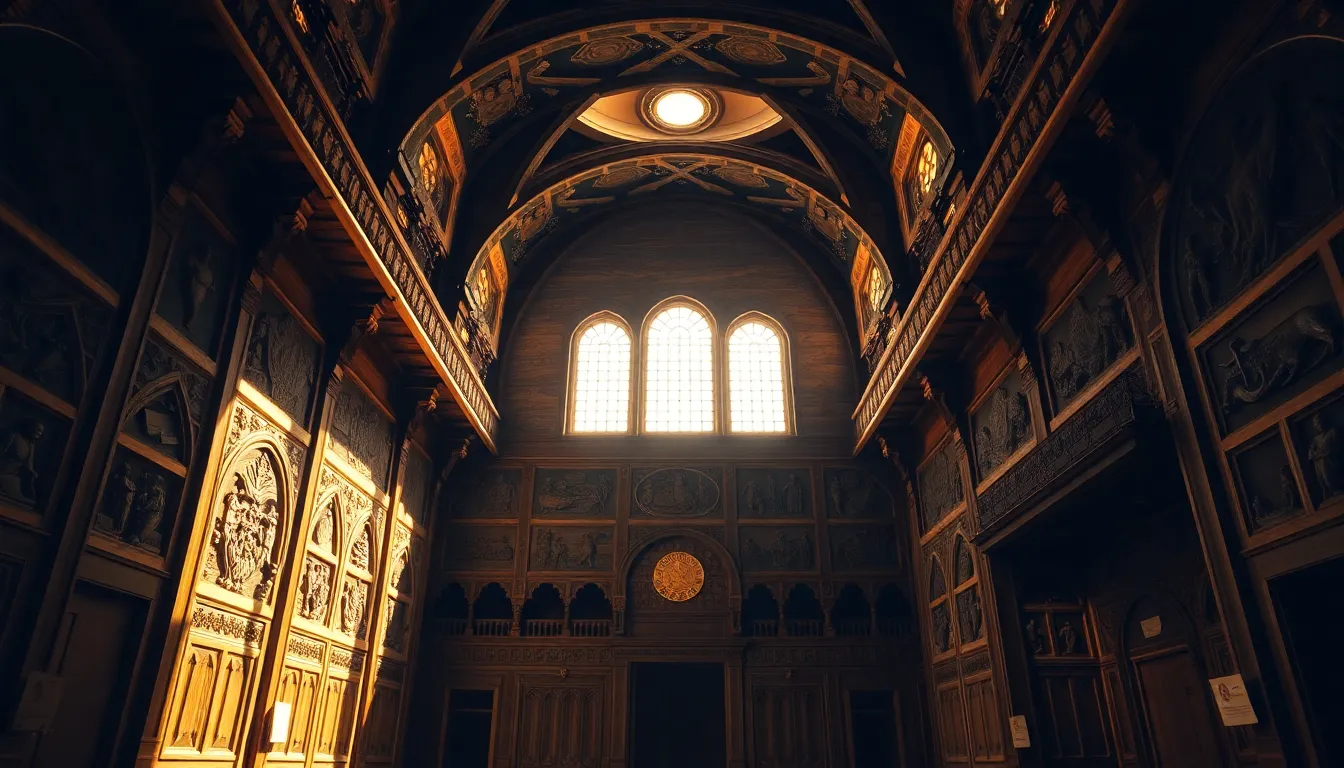
The first time I walked a group into the courtyard of Ben Ezra Synagogue, an older woman in the back stopped at the gate and would not come in for a moment. I waited with her. She finally said, “I just want to stand here first.” She had grown up hearing about this place from a grandmother who left Cairo in the 1950s, and she had never thought she would actually stand on the stones. When she walked in, she was crying. Nobody told her to. Nobody told the rest of us to go quiet, either. We just did.
I have brought Jewish groups to Ben Ezra many times over more than twenty years, and it never lands the same way twice. Some people come for the history. Some come for the Geniza. Some come because a name on a family tree once lived a few streets from here. This guide is for rabbis, synagogue leaders, and Jewish heritage travelers who want to understand what Ben Ezra actually is, why it matters so much, and what your group will feel when they finally walk through that gate.
Where Ben Ezra Stands and Why That Matters
Ben Ezra Synagogue sits in the Coptic Quarter of Old Cairo, a dense and ancient neighborhood that holds some of the oldest Christian churches on earth alongside the ruins of a Roman fortress. Within a few short blocks you have the Hanging Church, the Church of Saint Sergius, the fortress of Babylon, and this synagogue. It is one of the most layered religious sites anywhere in the world, and the fact that a synagogue stands in the middle of it tells you something true about how interwoven Jewish, Christian, and Egyptian life once was here.
The building you visit today is not large. That surprises some people. After hearing about its importance for years, they expect something grand and towering. Ben Ezra is intimate. The power of the place is not in its size. It is in its age, its continuity, and the weight of what happened inside it.
A Thousand Years of Jewish Prayer
The synagogue’s documented origins trace to the ninth century CE, though the site itself may have held Jewish prayer even earlier. Local tradition holds that this is the spot where the infant Moses was drawn from the bulrushes, though the Nile has shifted its course considerably over the centuries and that part belongs more to memory than to map. What is not tradition, but documented fact, is that Jews gathered to pray in this place for over a thousand years without interruption until the community that sustained it nearly vanished in the twentieth century.
Think about what that span means. While empires rose and fell in Cairo, while the Fatimids built the city and the Mamluks ruled it and the Ottomans absorbed it, this small building kept its lamps lit and its Torah read. Few sacred spaces on earth carry that kind of unbroken thread. When you stand inside, you are standing where Maimonides himself once walked, in the city where he served as physician and community leader in the twelfth century.
The Architecture and Its Layers
Ben Ezra was rebuilt and restored several times across its long life, most significantly in the nineteenth century and again in a careful restoration completed in the 1980s and 1990s. The basilica plan, the carved woodwork, the bimah set in the center, the ark along the eastern wall facing Jerusalem: these reward slow attention. I tell groups not to rush the room. Sit in it. Let your eyes move across the inlaid patterns and the worn stone. The building has absorbed a thousand years of prayer and it gives some of that back if you let it.
The Cairo Geniza: What Was Hidden in the Walls
You cannot understand Ben Ezra without understanding the Geniza, because the Geniza is the reason this synagogue is known to scholars across the world.
A geniza is a storage room where a Jewish community deposits worn sacred texts rather than destroying them, because Jewish law forbids the destruction of any document that bears the name of God. Most genizas are eventually emptied and their contents buried. The geniza at Ben Ezra was different. For roughly a thousand years, the community here kept depositing documents into a chamber above the synagogue and almost never cleared it out. The dry Cairo climate preserved what would have rotted anywhere else.
In 1896, a Scottish-born scholar named Solomon Schechter, working at Cambridge, came to Ben Ezra and recognized what was sitting in that chamber. Close to 300,000 manuscript fragments had accumulated there over the centuries. He arranged for the bulk of the collection to be brought to Cambridge University Library, where it forms the heart of Geniza scholarship to this day.
Why the Geniza Changed Everything
What was in those fragments? Almost everything a community produces. Letters between merchants trading across the medieval Mediterranean and as far as India. Marriage contracts and divorce records. Court testimony. Children’s writing exercises. Medical prescriptions. Shopping lists. Personal letters full of grief and money troubles and ordinary love. Religious texts, including the lost Hebrew original of the book of Ben Sira, which had survived only in Greek for centuries.
The scholar S.D. Goitein spent decades reconstructing the world inside these documents, and his five-volume work, “A Mediterranean Society,” overturned an old assumption. Medieval Jews were not, as the old picture had it, sealed off in poverty and persecution. The Geniza shows a community that was cosmopolitan, literate, commercially sophisticated, and woven deeply into the wider world. We have covered the full story of this archive in our guide to the Cairo Geniza, and it is worth reading before your group arrives, because it changes how the room feels when you stand in it.
What a Faith Group Actually Experiences There
People always ask me what it is like to be there, and I try not to oversell it, because the place does its own work. Here is what I see happen.
Groups go quiet on their own. The Geniza story gives the room a charge, because everyone understands that the ordinary scraps of a thousand years of Jewish life passed through this exact building. People reach out and touch the walls. They look for the chamber. They stand at the ark and many of them, without planning to, begin to say a few words of prayer.
For groups that wish to hold a short service or recite psalms together, that is possible with advance coordination, and it is often the emotional center of the whole Egypt trip. There is something about saying Shema in the oldest continuously used Jewish space in Cairo that lands differently than saying it anywhere else.
Holding the Loss With Dignity
I always make space for the harder feeling that comes up here, because it is real. Ben Ezra is beautiful, but it is also quiet in a way it was never meant to be. This synagogue was the heart of a living community that has nearly disappeared. Egypt’s Jewish population numbered close to 80,000 in the early twentieth century and today fewer than ten Jews remain in the entire country, almost all elderly. The benches that should be full are empty. We do not skip past that. We let groups sit with it, because bearing witness to what was lost is part of why this journey matters.
Visiting Ben Ezra: Practical Guidance
Ben Ezra is open to visitors and is a regular stop on Coptic Quarter visits. For a Jewish group that wants to do more than walk through, that wants to gather, recite prayers, or hold a brief ceremony, advance coordination with the custodial authorities is required. This is where working with people who know the ground matters.
Heritage Tours handles that coordination for every group: proper notice to the authorities who maintain the site, arrangements for a minyan where appropriate, and the timing so your group is not arriving in the middle of a large tour crowd. We also pair the visit with the surrounding Coptic sites, since the neighborhood itself is part of the story, and we provide guides who actually know the Geniza and can explain what your group is looking at rather than reciting dates.
If you want to understand how Ben Ezra fits into the wider picture of Jewish Egypt, start with our main Jewish heritage guide to Egypt, then read about the surrounding Jewish quarter of Old Cairo that once sustained this synagogue. You can also see how a full visit comes together on our Egypt heritage destination page.
FAQ: Visiting Ben Ezra Synagogue
How old is the Ben Ezra Synagogue?
The documented origins of Ben Ezra Synagogue date to the ninth century CE, making it one of the oldest synagogues in the world still standing. The site may have held Jewish prayer even earlier. The building has been restored several times, most recently in a careful restoration completed in the 1990s, but Jews prayed continuously in this place for more than a thousand years.
Where is Ben Ezra Synagogue located?
Ben Ezra sits in the Coptic Quarter of Old Cairo, surrounded by some of the oldest Christian churches in the world and the ruins of the Roman fortress of Babylon. It is a short distance from the Hanging Church and the Church of Saint Sergius, which makes it a natural part of a layered Old Cairo visit covering several faiths in a small area.
Can a Jewish group pray or hold a service at Ben Ezra?
Yes, with advance coordination. The synagogue is open to visitors, and groups that wish to recite psalms, hold a short service, or gather a minyan can do so when arrangements are made ahead of time with the custodial authorities. Heritage Tours handles all of this coordination so your group can focus on the experience rather than the logistics.
What is the connection between Ben Ezra and the Cairo Geniza?
The Cairo Geniza is the collection of nearly 300,000 Jewish manuscript fragments that accumulated for roughly a thousand years in a storage chamber at Ben Ezra Synagogue. Discovered in 1896 by scholar Solomon Schechter, the collection transformed scholarly understanding of medieval Jewish life and is now held mainly at Cambridge University Library. The Geniza is the main reason Ben Ezra is famous among historians worldwide.
Is it safe for a Jewish group to visit Ben Ezra today?
Yes. Jewish heritage travelers, including synagogue groups and rabbis, visit Ben Ezra regularly and have meaningful experiences there. The key is proper preparation and working with people who know the ground. Heritage Tours arranges access, timing, and context for every group, and Egyptian hospitality toward visitors is genuine and warm.
If you are a rabbi or community leader thinking about bringing your people to Ben Ezra, I would be glad to talk it through with you. Not to sell you a trip, but to help you understand what standing in that courtyard can mean for your group. Remember that with Heritage Tours, the group leader travels free with fifteen or more participants, which makes building a trip like this far more reachable than people expect. Reach out through our contact page whenever you are ready to start the conversation.