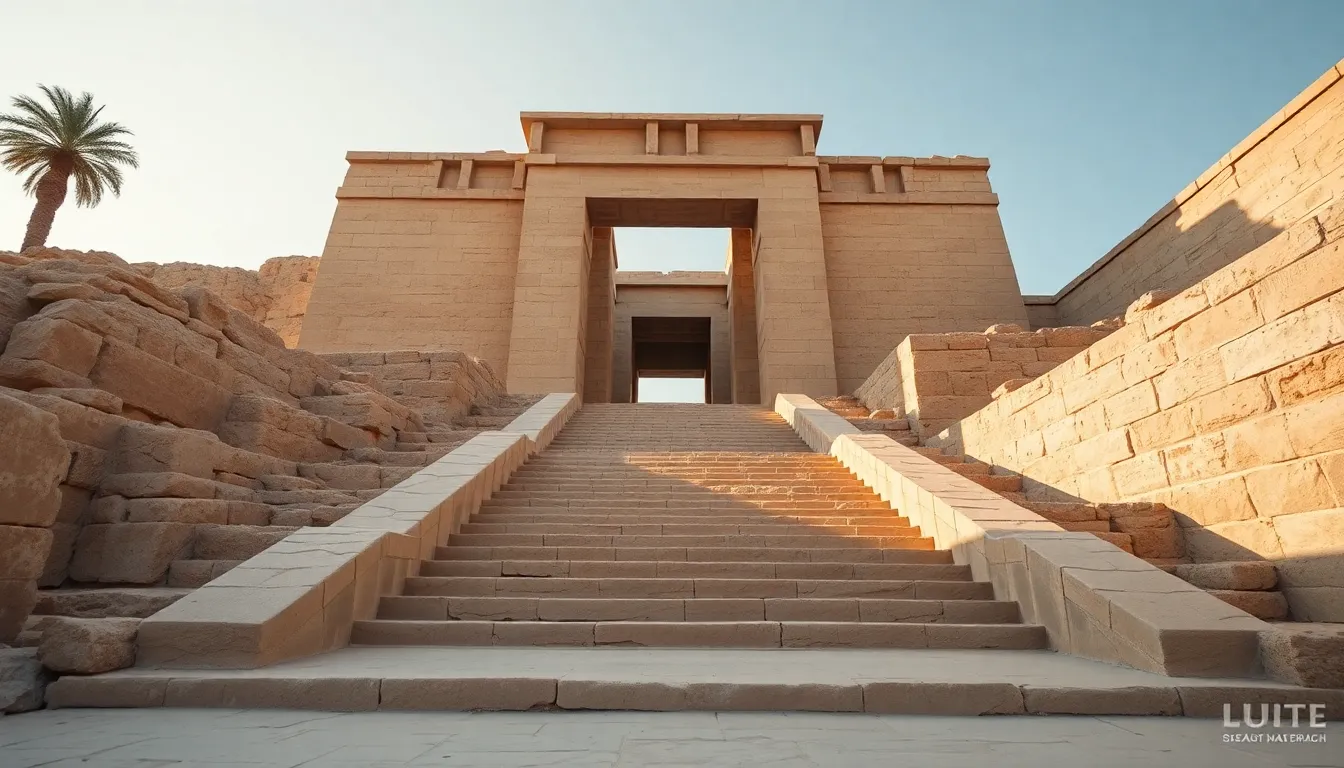
The question I get most often after “when should we go” is some version of “can my mother do this?” A daughter is bringing her 78-year-old mom. A pastor has three congregants who use canes and one who uses a wheelchair part of the time. A rabbi wants to know if the man who had knee surgery last year can manage the Pyramids. After more than twenty years of leading these groups, I’ve learned that the honest answer is never a simple yes or no. It’s site by site.
Egypt was not built for accessibility. Most of these places are three or four thousand years old, carved into rock and stacked in stone, with uneven ground and steps that predate any building code. I’m not going to pretend otherwise. What I can do is tell you exactly what each major site asks of the body, so you can plan for every member of your congregation instead of finding out the hard way.
The Honest Starting Point
There is no version of an Egypt heritage trip that’s fully wheelchair-accessible in the way a modern museum at home might be. Curb cuts are rare. Many ancient sites have steps with no railing and surfaces that shift underfoot. That’s the reality.
But “not fully accessible” is very different from “not possible.” I’ve brought travelers with significant mobility limitations to Egypt and given them deeply meaningful trips. The trick is matching each person to the parts of each site they can do, planning rest and shade, and being honest in advance about what someone will watch rather than enter. For broader practical preparation beyond mobility, our Egypt heritage travel tips cover the on-the-ground realities of the whole journey.
How We Reduce the Physical Load Everywhere
Before the site-by-site rundown, two things shape every trip and lighten the load across the board.
First, we drive your group door to door, every day. Cairo is not a city you navigate independently with twenty people, and the walking-between-things that exhausts independent travelers mostly disappears when a vehicle drops you at each site. For older travelers, that alone changes the trip.
Second, we plan pace and rest into the itinerary rather than treating them as afterthoughts. Shade breaks, seating, and a realistic number of sites per day matter enormously for a mixed-age group. When the schedule isn’t a forced march, far more of your people can do far more of the trip.
Site by Site: What Each Place Actually Asks
The Pyramids and Sphinx (Giza)
The plateau itself is broad and mostly flat, with firm but uneven ground. Getting close to the Pyramids and the Sphinx and taking in their scale is manageable for most travelers, including many who use a cane or move slowly, especially since we drive between the viewpoints rather than asking people to walk the whole plateau.
Going inside a pyramid is a different matter. The interior passages are low, steep, and cramped, reached by a bent-over climb up a narrow ramp with no real option to rest mid-way. I’d steer anyone with significant knee, back, breathing, or claustrophobia concerns away from the interior. The good news: the inside is optional, and the outside is where the awe lives anyway.
The Egyptian Museum (Cairo)
Among the more manageable major sites. It’s a large building with broad halls, and much of the collection is viewable on the main level. There are stairs to upper floors and the experience involves a lot of standing and slow walking, which tires older travelers, so we build in seating and pacing. For someone who fatigues quickly, this is a site where a portable folding stool or planned rest stops make a real difference.
Valley of the Kings (Luxor)
This one asks more than people expect. The tombs are reached along open, sloping paths under the sun, and entering a tomb means walking down a long descending corridor and then back up. Each tomb is a meaningful in-and-out climb. The number of tombs a person attempts should match their stamina, not the group’s. Several tombs have ramps rather than steps in the descent, which helps, but the cumulative up-and-down across a hot morning is the real challenge. We plan which tombs and how many per person.
Karnak and Luxor Temples
Large, open, mostly flat sites with long walking distances between sections. The ground is uneven ancient stone in places. The distances are the main issue rather than steps, so these are doable for many slower walkers if you accept covering part of the site rather than all of it. Heat compounds it, which is one more reason the cooler months matter for a group with older members. Our fall and winter season guides explain why temperature is itself an accessibility factor.
Coptic Cairo and Ben Ezra Synagogue
The Coptic quarter has narrow lanes, some steps, and uneven cobbles, but distances are short and there’s shade. Ben Ezra Synagogue itself is small and intimate, reached through the quarter’s lanes, with a few steps to negotiate. For most travelers who can walk short distances with care, this is one of the more manageable heritage stops, and one of the most moving.
The Mount Sinai Ascent
This is the hardest physical challenge on any Egypt heritage itinerary, and I’m direct with every leader about it. The climb to the summit of Jebel Musa begins around midnight, covers roughly 7 kilometers of steady ascent on the Camel Path, and finishes with more than 750 stone steps near the top. For a healthy adult in reasonable shape, it’s long and dark but not technical. For travelers in their 60s and 70s or with mobility limits, the picture changes.
The Camel Path portion can be ridden by camel, rented on-site, for most of the distance. That’s a legitimate option, not a compromise. But the final steps cannot be done by camel. They require walking, slowly, with care, and they are steep. Anyone with serious knee, heart, or balance concerns should weigh this honestly.
Here’s what I want every leader to hear: not everyone in your congregation needs to summit. Some of the most profound experiences I’ve witnessed belonged to people who stayed at the base in the moonlight with tea and silence while the others climbed. That is also Mount Sinai. For the full reality of the climb and the cold at the top, see our heritage travel tips.
Planning Around Individual Needs
The work that makes an accessible trip succeed happens before you leave. I ask leaders to have honest, specific conversations with members about their real mobility, not their optimistic mobility. Knees, hearts, breathing, balance, stamina in heat. The more I know in advance, the better I can match each person to the right parts of each site and arrange support where it helps.
We also think through the small things that add up: where seating exists, where shade is, which sites have restrooms within reach, where a wheelchair can be used on flat ground and where it can’t. None of this is glamorous, but it’s the difference between a trip that includes everyone and one that quietly leaves someone behind in the hotel.
For families bringing an older parent, this is also why timing matters. The cooler months remove heat stress, which is itself an accessibility issue for older bodies.
FAQ: Accessibility on Egypt Heritage Tours
Can someone in a wheelchair join an Egypt heritage trip?
In many cases, yes, with honest planning about which parts of which sites they’ll experience. Egypt’s ancient sites are not wheelchair-accessible in the modern sense, with rare ramps and frequent uneven ground and steps. But the Pyramids plateau, parts of the temple complexes, and the Egyptian Museum’s main level can be experienced from a wheelchair on flat stretches, and we drive door to door to remove most walking between sites. The Mount Sinai summit and pyramid interiors are not feasible. We plan the realistic itinerary in advance.
Is the Mount Sinai climb possible for older travelers?
For many, with adjustments. The main Camel Path can be ridden by camel for most of its 7 kilometers, which is a legitimate option, but the final 750-plus stone steps must be walked and are steep. Travelers with serious knee, heart, or balance concerns should weigh it carefully. And nobody is required to summit. Waiting at the base during the climb is a genuine, meaningful part of the experience for those who choose it.
Which Egypt sites are easiest for someone with limited mobility?
The Egyptian Museum (main level), the Pyramids and Sphinx viewing areas, and Coptic Cairo including Ben Ezra Synagogue are generally the most manageable, because distances are shorter and much of the experience happens on relatively flat ground. The Valley of the Kings and the Sinai climb are the most demanding. Karnak and Luxor temples are doable for slower walkers if you cover part of the site rather than all of it.
Does the time of year affect accessibility?
Yes, more than people expect. Heat is an accessibility factor for older travelers and anyone with health considerations. The cooler months, roughly October through March, remove much of the heat stress that makes the open sites harder in spring and summer, so a fall or winter trip is meaningfully easier on a mixed-age group.
How do I make sure no one in my group gets left behind?
Tell me the real picture before the trip. Honest, specific conversations with your members about knees, hearts, breathing, balance, and stamina let us match each person to the right parts of each site and arrange camels, seating, rest, and support where they help. The planning we do in advance is what lets a trip include everyone rather than quietly leaving someone in the hotel.
If you’re bringing a congregation with a real range of ages and abilities, that’s exactly the kind of group I plan best for. Tell me about your people, and I’ll tell you honestly what’s possible and how we’d structure it so everyone has a meaningful journey.
Contact us and let’s talk through your group’s specific needs.