There are things you’ll read in every Egypt travel guide, and there are things you only learn after you’ve taken a hundred groups through this country. This post is the second kind.
I’m not going to tell you to “stay hydrated” or “respect local customs.” You know that. What I want to tell you is what actually catches faith groups off guard. What surprises group leaders who’ve done Jordan or Israel but are doing Egypt for the first time. What the kosher food situation actually looks like. What nobody says about the Sinai climb until your group is standing at the base of that mountain at midnight, in the dark, wondering what they signed up for.
Twenty years of this work has given me a very specific list. Here it is.
Cairo Is Bigger and More Intense Than You’re Imagining
I say this to every first-time group leader and they always smile politely, as if to say “yes yes, big city, I’ve been to big cities.” And then they land in Cairo.
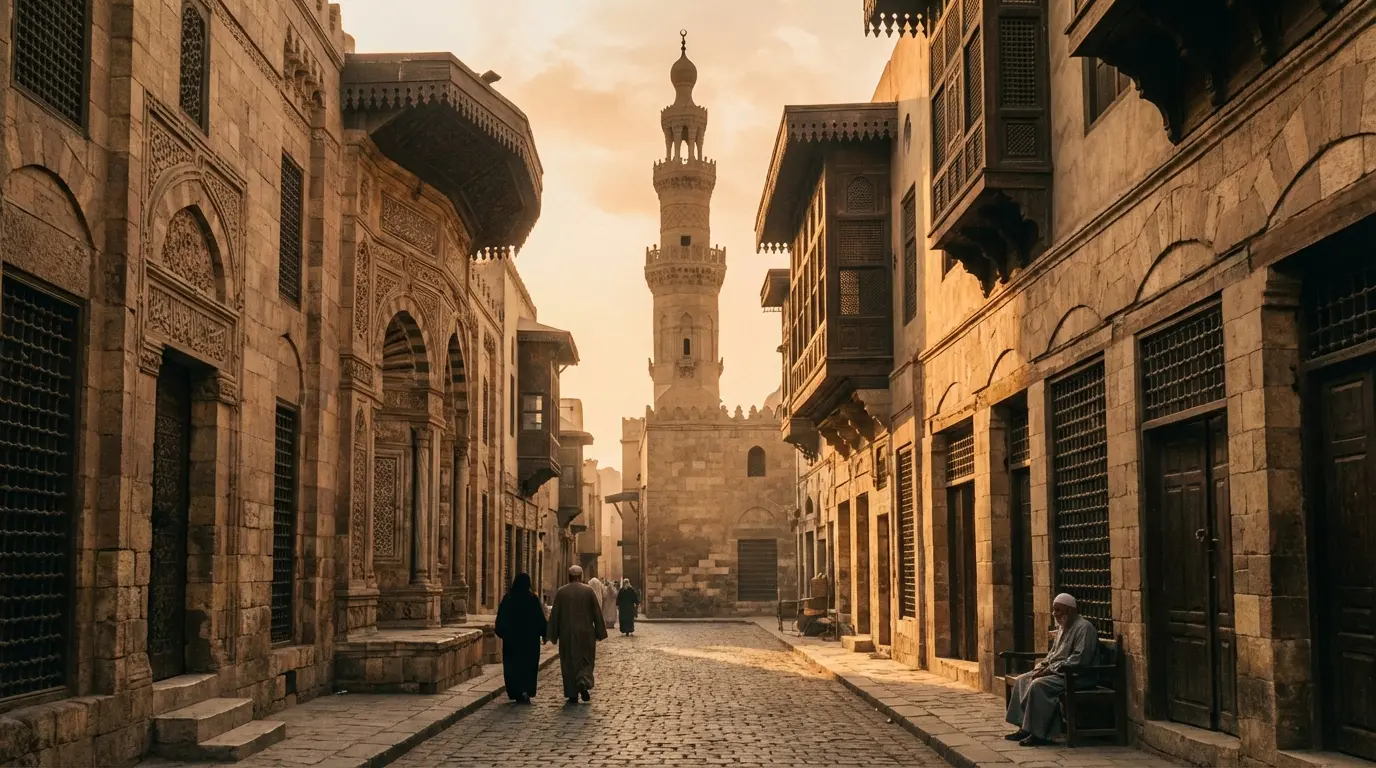
Cairo is not big like New York is big or London is big. Cairo is big like nothing you’ve encountered if you grew up in the West. The population of greater Cairo is somewhere between 20 and 22 million people depending on how you count, and you feel every single one of them the moment you leave the airport. The traffic. The honking (constant, rhythmic, not angry, just communicative). The density of buildings. The scale of it. Your group will feel it physically in the chest.
This is not a problem. It is just the truth, and groups who are prepared for it adjust immediately. Groups who expected something more like Amman or Jerusalem spend the first day slightly disoriented.
Traffic, Crowds, and How Heritage Tours Handles Both
We drive your group. Every day, door to door. Cairo is not a city you navigate independently with 20 people. The traffic patterns shift dramatically by time of day, and the difference between leaving the hotel at 7am versus 9am can be the difference between arriving at the Egyptian Museum in 20 minutes or 75 minutes. We know those windows. We build itineraries around them.
What this means for you practically: trust the schedule. When our team says departure is at 6:45am, it’s because 6:45am matters. Not 7:05.
What Group Leaders Need to Prepare Their Community For
Tell your group two things before they arrive. First, Cairo is intense. It is extraordinary, it is ancient, it is alive in a way that few cities on earth are alive, but it is intense. Second, they will be taken care of. They don’t need to figure anything out on the street. Their job is to show up and be present.
The group that walks into Cairo mentally prepared for stimulation has a completely different experience than the group that walks in expecting something manageable and quiet. Set expectations accurately and the city will give back enormously.
Kosher Food in Egypt: The Honest Picture
I’m going to be direct here because Jewish travelers deserve honest preparation, not false reassurance.
What’s Available and What Isn’t
Egypt is not Jordan. In Jordan, particularly in Aqaba and in Petra, there are kosher-certified options that have developed specifically to serve the large number of Israeli and Jewish travelers who come through. In Egypt, the infrastructure is different.
There is no certified kosher restaurant scene in Cairo. There is no kosher-certified catering company operating out of Luxor. The Ben Ezra Synagogue neighborhood in Old Cairo has some history of Jewish communal food culture, but that community is functionally gone, and the neighborhood does not have kosher options today.
What does exist: Egypt has abundant fresh fruit and vegetables. Sealed products with recognized kosher certification can be brought in (within customs limits). Fish, particularly in Red Sea coastal areas, is available fresh and can be prepared simply. Eggs. Hummus and salads at the kosher-observant end of manageable, depending on your standard.
For groups keeping strictly kosher, Egypt requires planning and compromise. That’s the honest picture.
How to Prepare Before You Arrive
If kosher observance is important to your group, this conversation needs to happen before the itinerary is finalized, not after. We coordinate in advance whatever is possible, including meals at hotels with certified kosher options where they exist, sealed packaged foods for travel days, and fresh produce and simple proteins at sites where catering options are limited.
Jewish travelers who have done Israel and Jordan on previous trips should know: Egypt requires more adjustment. Some groups bring a significant portion of their food from Israel for the Egypt leg of a combined trip. We plan for this.
What I can promise you: your group will not go hungry and will not be surprised mid-trip. But the kosher situation in Egypt requires honest conversation upfront, not assumptions.
Ben Ezra Synagogue: Don’t Just Show Up
Ben Ezra Synagogue in the Coptic quarter of Old Cairo is one of the most significant Jewish heritage sites in the world. It is where, according to tradition, Moses was found in the bulrushes. It is where the Cairo Geniza was discovered, a collection of nearly 300,000 Jewish manuscript fragments that transformed the study of medieval Jewish life and thought. Maimonides prayed here.
And if you just show up without coordinating in advance, there is a real chance you will find it closed.
Access Hours, Booking Requirements, and What to Know
Ben Ezra is not a functioning synagogue. It is maintained as a heritage site under the authority of the Egyptian government’s antiquities administration. The hours are posted, but the reality of access is more nuanced than the posted hours suggest. Restoration work happens. Staff schedules shift. Holiday closures are not always announced in advance.
Heritage Tours coordinates access to Ben Ezra in advance for every group. This is not bureaucracy for its own sake. It is the difference between your group having a meaningful hour inside one of the oldest synagogues in the world, and arriving at a locked gate with a small sign and no explanation.
Photography inside the main hall is generally not permitted. Ask before raising your camera. The guards are not hostile, but they take this seriously.
What the Experience Is Actually Like
Ben Ezra is small. That surprises people. Given its significance, people expect something vast and imposing. It is intimate. The wood is old. The light comes through in particular ways at particular times of day. The silence inside it is different from the noise of Cairo immediately outside.
Groups that have spent time with the history of the Cairo Geniza before arriving, who understand what was found here and why it matters, have a completely different experience than groups for whom it’s “the old synagogue.” If you’re leading a Jewish group here, prepare them. Read a little about Solomon Schechter and the discovery of the Geniza. The site earns it.
The Sinai Climb at Night: What Nobody Prepares You For
This is the part of the post I’ve been building toward, because the Mount Sinai night climb is unlike anything else in heritage travel. And most people are underprepared for it in specific ways.
Physical Preparation for Mixed-Age Groups
The climb to the summit of Jebel Musa (the Mountain of Moses) begins in the middle of the night. You leave St. Catherine’s Monastery at around midnight or 1am. The main route, the Camel Path, is approximately 7 kilometers with a gradual ascent for most of the way and a final steep section of over 750 stone steps near the summit. The total ascent takes two to three hours at a moderate group pace.
For a healthy adult in reasonable shape, this is not a difficult climb. It is long, it is dark, and the final steps are steep, but it is not technical.
For a group with members in their 60s and 70s, or with mobility limitations, the picture changes. The camel path section can be covered by camel (rented on-site) for most of the distance, which is a legitimate option and not a compromise. The final steps cannot be done by camel. They require walking, slowly, with care.
Group leaders need to have honest conversations with their members before the trip about whether the climb is appropriate for them individually. Not everyone in your congregation needs to summit. Some people have profound experiences waiting at the base in the moonlight with tea and silence. That is also Mount Sinai.
The Cold at the Summit (Yes, Really)
I cannot stress this enough. The temperature at the Sinai summit at 3am in what you think of as “warm weather” can be below freezing. We’re talking 2 to 5 degrees Celsius at the summit even in months when the valley below is comfortable. Wind chill makes it feel worse.
Groups from North America consistently arrive underprepared for this cold. They’ve packed for Egypt, which means light clothing and sun protection. They’ve thought about heat, not about sitting on a rocky mountaintop at altitude in the dark for an hour waiting for the sun.
Bring a real jacket. Bring a hat. Bring gloves. This is not an exaggeration. I have watched grown adults, well-traveled people, arrive at the summit shivering uncontrollably because they brought a light fleece from their hotel closet and nothing more. Blankets are available to rent at the summit, but they are thin and they are shared and they are not a substitute for your own layers.
What the Moment Feels Like When the Sun Rises
I’ve watched this sunrise more times than I can count. I watch different things every time. Usually, I watch the people.
There is something that happens when the light starts to touch the peaks. The color shifts from black to deep purple, then violet, then suddenly a line of orange-pink on the far ridgeline, and then the sun itself. And the people around me, who have been cold and tired and quiet for an hour, suddenly straighten. Some of them reach for their neighbor’s hand. Some of them start to cry. Some of them begin to pray, out loud or silently, in Hebrew or in English or in the language their grandparents spoke.
A pastor I brought here years ago, a man who had been leading congregations for thirty years, told me afterward that it was the moment he understood, in his body, what it felt like to stand where God spoke. Not as a theological proposition. As a physical experience.
The cold and the dark and the tired legs are the price of admission. They are worth it. They are part of it. The sunrise at Mount Sinai is not a travel experience. It is a faith experience. Honor the difficulty and let it do its work.
Photography Rules at Religious Sites: What Gets People Into Trouble
The rules vary by site and are not consistently posted. Here is what you actually need to know.
Valley of the Kings (Luxor): No photography of any kind inside the tombs. This is strictly enforced. Cameras and phones must be stowed before entering. Violators have had devices confiscated.
Ben Ezra Synagogue: No photography inside the main sanctuary. Ask before raising your phone anywhere on the property.
Mosques: Varies. Major tourist mosques like the Muhammad Ali Mosque at the Citadel generally allow photography in the main hall when services are not in progress. During prayer times, photography is not appropriate anywhere. In neighborhood mosques, photography is generally not welcome and you should not enter at all during prayer times.
Coptic Churches: Usually permitted for respectful photography in the nave and exterior. Flash photography that disrupts other worshippers is not acceptable.
Pyramids and Sphinx: Outdoor photography is freely permitted. Inside the burial chambers, some allow a paid photography permit, some do not. Our team will tell you what applies each day.
General rule: When in doubt, ask. Guards at Egyptian heritage sites respond very well to genuine respect and a polite question. They respond poorly to people who assume permission.
Money, Tipping, and the Persistent Hustle of Tourist Egypt
Egypt’s economy runs in part on tips, and the culture of tipping at tourist sites is deeply established. Guards who let you into a closed area, attendants at bathrooms, vendors who pose for a photo, locals who help carry something. The expectation of a small gratuity is present nearly everywhere in tourist Egypt.
The amounts are small. Five to ten Egyptian pounds (the equivalent of pennies in US dollars) is appropriate for most informal interactions. US dollars are also widely accepted as tips, and small bills (ones and fives) are useful to carry.
The persistent sales approach at tourist sites, particularly the Pyramids, the Khan el-Khalili bazaar, and Luxor temple entrances, can exhaust groups who aren’t prepared for it. “La shukran” means “no thank you” in Arabic. Said with a smile and no hesitation, it is generally sufficient. Engaging, even briefly, is understood as an invitation to continue. If you don’t want to buy a small stone Sphinx, do not pick it up to look at it.
Ramadan: What Changes for Your Group
If your trip overlaps with Ramadan (which shifts each year based on the lunar calendar), several things change.
Restaurants and food vendors may not be open during daylight hours, particularly outside of major tourist hotels. Our team adjusts menus and meal timing accordingly.
The atmosphere of Cairo and other cities during Ramadan evenings is extraordinary. After iftar, the breaking of the fast at sunset, the streets fill. Families walk. Music plays. Markets run late. For a faith group, experiencing Ramadan Cairo is a gift, not an inconvenience.
Ramadan is not a reason to avoid Egypt. It is a reason to adjust expectations and lean into what’s different.
The Heat That Shuts Down Mid-Day Itineraries
Egypt in July or August is not Egypt in October or March. Temperatures in Luxor in July can reach 42 to 45 degrees Celsius (over 110 Fahrenheit). At that temperature, outdoor site visits in the middle of the day are not just uncomfortable. They are unsafe for older travelers and children.
Our summer itineraries are built around early morning and late afternoon site visits, with a forced mid-day break. This is not laziness. This is survival, and it’s also how Egyptians have lived in this climate for thousands of years.
Groups visiting in the shoulder seasons (October through March) have much more flexibility and generally better experiences. If you have any choice in the matter, avoid July and August for Egypt, or be fully prepared for what those months mean.
The Emotional Weight Nobody Warns You About at Sinai
There is a particular thing that happens to people when they visit Egypt on a heritage journey, and it is not the same thing that happens in Israel or Jordan.
Egypt confronts you with scale. The Pyramids are so old and so enormous that they produce a specific kind of vertigo. Not fear. Something more like humility. You stand in front of something built four and a half thousand years ago, still standing, still perfect, and you feel your own smallness in a way that is, for most people, strangely comforting.
And then at Sinai something else happens. The sites of the Exodus, St. Catherine’s, the mountain, the desert that stretches in every direction without a building or a road, produce a different feeling. They produce something closer to recognition. Like the landscape itself is confirming something you already believed.
I have watched secular Jews weep at this mountain. I have watched evangelical pastors go silent in a way I’ve only seen at Yad Vashem. I have watched a rabbi from Brooklyn say, very quietly, “I didn’t know it would feel like this.”
Prepare your congregation for the possibility that Egypt will move them. Not in a packaged way. Not because of anything Heritage Tours does. Because these are real places where real things happened, and the land holds that. You don’t have to believe everything to feel it.
FAQ: Practical Egypt Heritage Travel Tips
Is kosher food available in Egypt?
Not with the same infrastructure as Jordan or Israel. Certified kosher restaurants do not exist in Cairo or Luxor. What is available: fresh produce, eggs, fish, and sealed packaged products you can bring in. Jewish groups keeping strictly kosher need to plan ahead, and some bring food for the Egypt leg from Israel. We coordinate whatever options exist, but the honest answer is that Egypt requires more adjustment than other destinations on a combined heritage itinerary.
What do you need to know before visiting Ben Ezra Synagogue?
Access must be coordinated in advance. The site is maintained by Egyptian antiquities authorities and access is not as simple as walking in during posted hours. Photography inside the main sanctuary is generally not permitted. The site is small and intimate, nothing like what the historical significance might lead you to expect visually. Groups that have read about the Cairo Geniza before arriving have a significantly richer experience. Heritage Tours pre-arranges every Ben Ezra visit so that there are no surprises on arrival.
How hard is the Mount Sinai night climb for a faith group?
Moderately demanding. The camel path is approximately 7 kilometers with a steady ascent, followed by 750-plus stone steps to the summit. For healthy adults, it takes two to three hours at a moderate pace. For older travelers, camel transport is available for the main path section, with the final steps requiring walking. The physical challenge is real but manageable for most people. The bigger surprise is the cold at the summit (near or below freezing, even in warmer months). Pack real layers, not just a light fleece.
What should I pack for a heritage trip to Egypt?
Modest clothing for religious site visits (women should have a head covering and a scarf for mosques). Comfortable walking shoes with closed toes. Sunscreen and a hat for outdoor sites. A real winter jacket for the Sinai climb, plus a hat and gloves. A refillable water bottle. Small denomination US dollar bills or Egyptian pounds for tips. Any certified kosher sealed foods you plan to rely on if keeping kosher. A power adapter (Egypt uses Type C/F outlets, same as Europe).
What surprises faith groups most about traveling in Egypt?
Almost universally: the emotional weight of it. People expect the monuments and the history. They do not expect to feel what they feel at Sinai. They do not expect the intimacy of Ben Ezra Synagogue. They do not expect the dawn light over the desert from a mountain peak to undo them. Egypt is an intellectual destination that people assume will stay intellectual. It rarely does.
Every group I bring to Egypt comes back different. Not dramatically. Quietly. Something settles in them that was unsettled before. The scale of the history, the depth of the faith, the realness of the places. Egypt does that.
If you’re planning a heritage trip for your community, explore our full Egypt heritage destination to understand how we structure the journey from Cairo to Sinai.
And if you want to talk through whether Egypt is right for your group, we’re here. No pitch. Just a conversation.
Reach out here and we’ll take it from there.