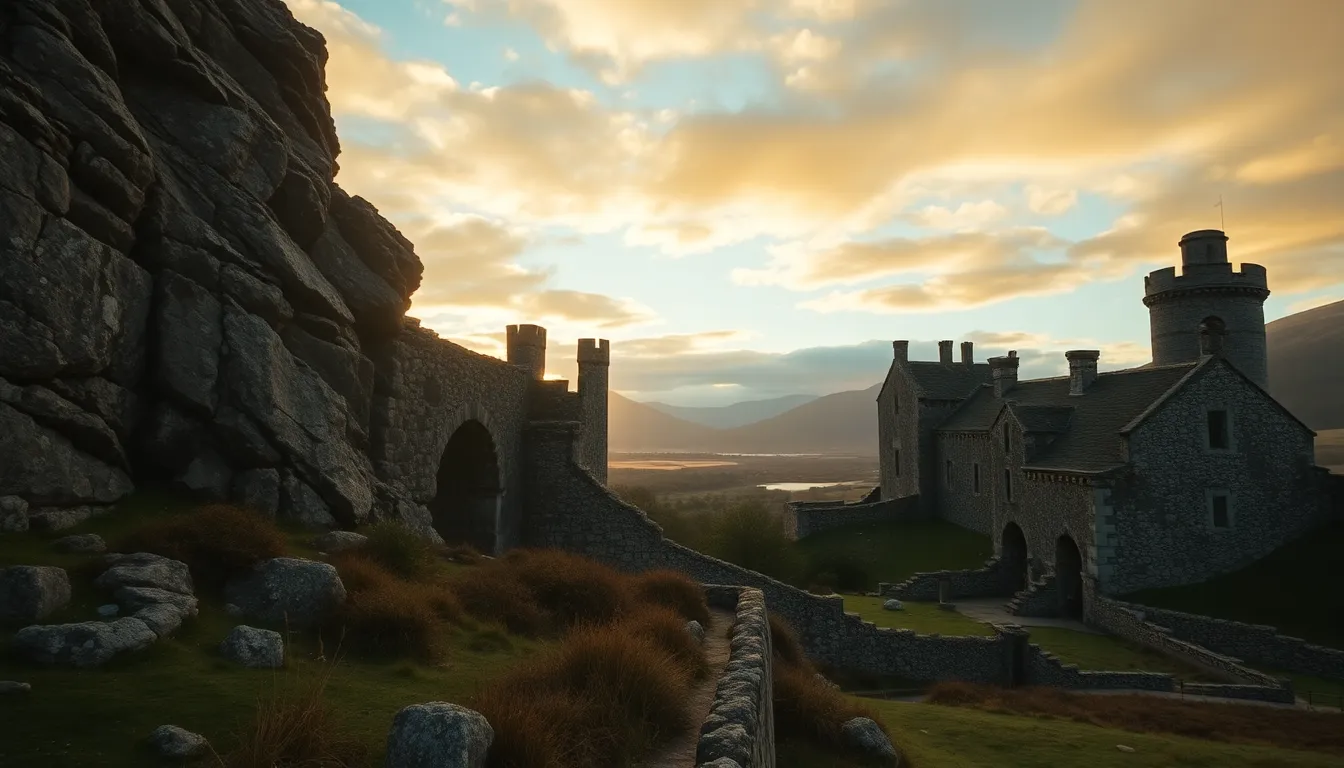
The Places the Coach Tours Skip
Some of the most moving moments I have shared with groups did not happen at the famous sites. They happened in a small stone chapel down a single-track lane, or in a quiet cemetery on the edge of a former mining town, or on a hillside where a martyr’s grave sits alone against the wind. These are the hidden heritage sites of Scotland, Wales, and Northern Ireland, the places the standard coach tours skip because they cannot fit a tour bus down the lane.
For a group leader willing to go a little deeper, these places offer something the headline sites cannot. There are no crowds. There is room to stand quietly. And there is a sense of discovery that turns a participant from a tourist into a pilgrim. After more than twenty years of leading groups here, I have come to believe that the hidden sites are often where the journey actually happens. This guide gathers some of my favorites across the three nations.
Hidden Sites in Scotland
The Lonely Graves of the Covenanters
Everyone who follows the Covenanter story visits the well-known memorials. Fewer make it to the solitary graves scattered across the moors and hillsides of southwest Scotland, where individual martyrs were buried where they fell during the Killing Time of the 1680s. These graves, often tended for centuries by local hands, carry a power that the larger monuments cannot match. To reach one, you walk out across open country to a single stone, and the silence does the rest. Our Covenanters heritage trail includes several of these lesser-known graves.
Whithorn: Scotland’s Cradle of Christianity
Long before Iona, there was Whithorn. In the early fifth century, Saint Ninian established a church here in Galloway, traditionally regarded as the first Christian site in Scotland. Today Whithorn is quiet, off the main tourist routes, with a priory ruin, an archaeological dig, and a museum of early Christian carved stones. For a group that wants the true beginning of the Scottish Christian story, Whithorn rewards the detour, and you will likely have it almost to yourselves.
Edinburgh’s Jewish Old Town
Most visitors to Edinburgh never learn that the city held a small but remarkable Jewish community, present from the late eighteenth century. The traces are easy to walk past, the sites of early synagogues, the homes of families who produced doctors and scholars, the connection to the university that welcomed Jewish students when much of Europe would not. Walking this quiet layer of the Old Town with a knowledgeable guide reveals a history hidden in plain sight. Our guide to Jewish heritage in Edinburgh traces it in full.
Hidden Sites in Wales
The Forgotten Chapels of the Revival
The 1904 Welsh Revival is remembered through a handful of well-known chapels, but the awakening swept through hundreds of small chapels across the valleys, many now closed, repurposed, or quietly standing in villages the tour buses never reach. Visiting one of these forgotten chapels, sometimes still in use by a tiny congregation, brings the revival down from the realm of history into a real and human place. Our Welsh Revival trail points toward several of the quieter sites alongside the famous ones.
The Jewish Cemeteries of the Valleys
As the coal and iron industries boomed, small Jewish communities formed in valley towns like Merthyr Tydfil, Tredegar, and Pontypridd. Most have long since vanished, but their cemeteries remain, often on a hillside above the town, the Hebrew inscriptions weathering quietly. These are tender places, and I handle them with the dignity they deserve. They tell the story of families who lived far from any large Jewish center and built a life among the mining communities of Wales. It is a chapter most visitors never hear.
Pennant Melangell: A Hidden Shrine
Deep in a remote Welsh valley sits the tiny church of Pennant Melangell, one of the oldest surviving shrines in Britain, associated with a sixth-century woman who founded a sanctuary here. The setting alone, reached by a long single-track road into the hills, makes it feel like stepping out of time. For a group seeking the contemplative, ancient strand of Welsh Christianity, few places match it.
Hidden Sites in Northern Ireland
The Holy Wells and Early Sites Around Armagh
Most groups visit Armagh’s two cathedrals and move on. Fewer take time for the early Christian sites scattered through the surrounding countryside, the holy wells, ancient church ruins, and standing crosses that mark where the faith first took root after Patrick. These quiet places give a group the texture of early Irish Christianity that the cathedrals, grand as they are, cannot fully convey. Our guide to Saint Patrick and Armagh sets the wider context.
Belfast’s Jewish Heritage Beyond the Synagogue
Belfast’s Jewish story is itself a hidden one, and within it lie quieter sites still. Beyond the working synagogue, there is the Jewish cemetery, the former locations of the community’s school and institutions, and the streets of north Belfast where families clustered. The connection to Chaim Herzog, born here in 1918 and later the sixth President of Israel, gives this small community an outsized place in the wider Jewish story. Standing in these ordinary streets, knowing what they produced, is its own kind of revelation.
Devenish Island and the Round Towers
In the lakes of County Fermanagh sits Devenish Island, home to a remarkably preserved monastic site founded in the sixth century, complete with a round tower standing nearly thirty meters tall. Reached by a short boat trip, Devenish gives a group the experience of an early Irish monastery in a setting almost untouched by the modern world. It is the kind of place that makes the ancient faith feel suddenly close.
Saint Mochta and the Smaller Monastic Ruins
Beyond Devenish, the landscape of Northern Ireland and the borderlands is dotted with smaller monastic ruins, round towers, and early church sites that rarely make a printed itinerary. Places like these, often a field or a churchyard with a weathered high cross or the stump of a round tower, give a group an unhurried encounter with the age when Ireland was a land of saints and scholars sending missionaries back across Europe. They cost nothing to visit and reward those willing to seek them out.
Why the Hidden Sites Move People
I have thought a lot, over the years, about why the quiet sites so often land harder than the famous ones. Part of it is the absence of crowds. At a busy cathedral, even a moving one, the group is one of many. At a lonely Covenanter grave or a forgotten valley chapel, the group has the place to itself, and silence becomes possible in a way it rarely is at a headline site.
Part of it is the effort. You do not stumble onto these places. You drive the lane, walk the path, take the boat. That effort changes the spirit in which a group arrives. They come not as sightseers ticking a box, but as people who have sought something out, and the arriving feels like a small pilgrimage in itself.
And part of it is the human scale. A vast cathedral can overwhelm. A small stone chapel where a handful of believers still gather, or a single grave on a hillside, brings the faith down to a human size that people can hold. They see themselves in it. That, more than grandeur, is what tends to stay with a group long after they fly home.
How to Build Hidden Sites Into a Group Trip
A word of practical counsel. Hidden sites are rewarding precisely because they are hard to reach, and that creates real logistical challenges for a group. Single-track roads, limited parking, sites with no facilities, and unpredictable opening hours all need careful handling. This is exactly the kind of planning where a heritage operator earns its place. We know which lanes a coach can manage, which sites need a smaller vehicle, and how to secure access where it is not simply a matter of turning up.
My advice is never to build a whole trip from hidden sites alone. The headline places, Iona, St Davids, Armagh, give a group its spiritual anchors. The hidden sites are the moments of discovery woven in between, the lonely Covenanter grave after the famous memorial, the forgotten chapel after the well-known one. Together they create a rhythm of the grand and the intimate that stays with people long after they return home.
If you want a trip that reaches beyond the obvious, I would love to help you shape it. Heritage Tours builds every itinerary around your community, and with 15 or more participants, the group leader travels free. Explore our United Kingdom heritage destination and our group heritage tours to begin.
FAQ: Hidden Heritage Sites of Scotland, Wales, and Northern Ireland
What is the most overlooked Christian site in Scotland?
Whithorn in Galloway has a strong claim. Saint Ninian founded a church here in the early fifth century, traditionally regarded as the first Christian site in Scotland, predating Iona. It is quiet, off the main routes, and home to a priory ruin and a collection of early Christian carved stones. For groups who want the true beginning of the Scottish Christian story, it rewards the detour.
Are there really Jewish heritage sites hidden in the Welsh valleys?
Yes. Small Jewish communities formed in valley towns such as Merthyr Tydfil, Tredegar, and Pontypridd during the industrial boom. Most have vanished, but their cemeteries remain, often on hillsides above the towns. These are quiet, tender places that tell the story of families who built Jewish life far from any large center. They are handled with care and dignity on a group visit.
Why visit hidden sites when the famous ones are easier?
Because the hidden sites often carry the deepest moments of the journey. There are no crowds, there is room for silence, and there is a sense of discovery that turns a tourist into a pilgrim. I advise weaving them between the headline sites rather than building a whole trip from them, so the group enjoys both grand anchors and intimate discoveries.
Are these sites accessible for a mixed-age group?
Some are, and some require careful planning. Many hidden sites sit down single-track lanes, lack facilities, or keep limited hours, and a few involve walking or a short boat trip. This is exactly where an experienced operator matters. We know which sites a group can manage comfortably and arrange the right transport and access so older members can share fully.
Can hidden sites be combined with a standard heritage itinerary?
Absolutely, and that is how I recommend using them. The famous sites such as Iona, St Davids, and Armagh provide the spiritual anchors, while hidden gems are woven in between for moments of discovery. We build itineraries that balance the grand and the intimate, with honest travel time so nothing feels rushed.