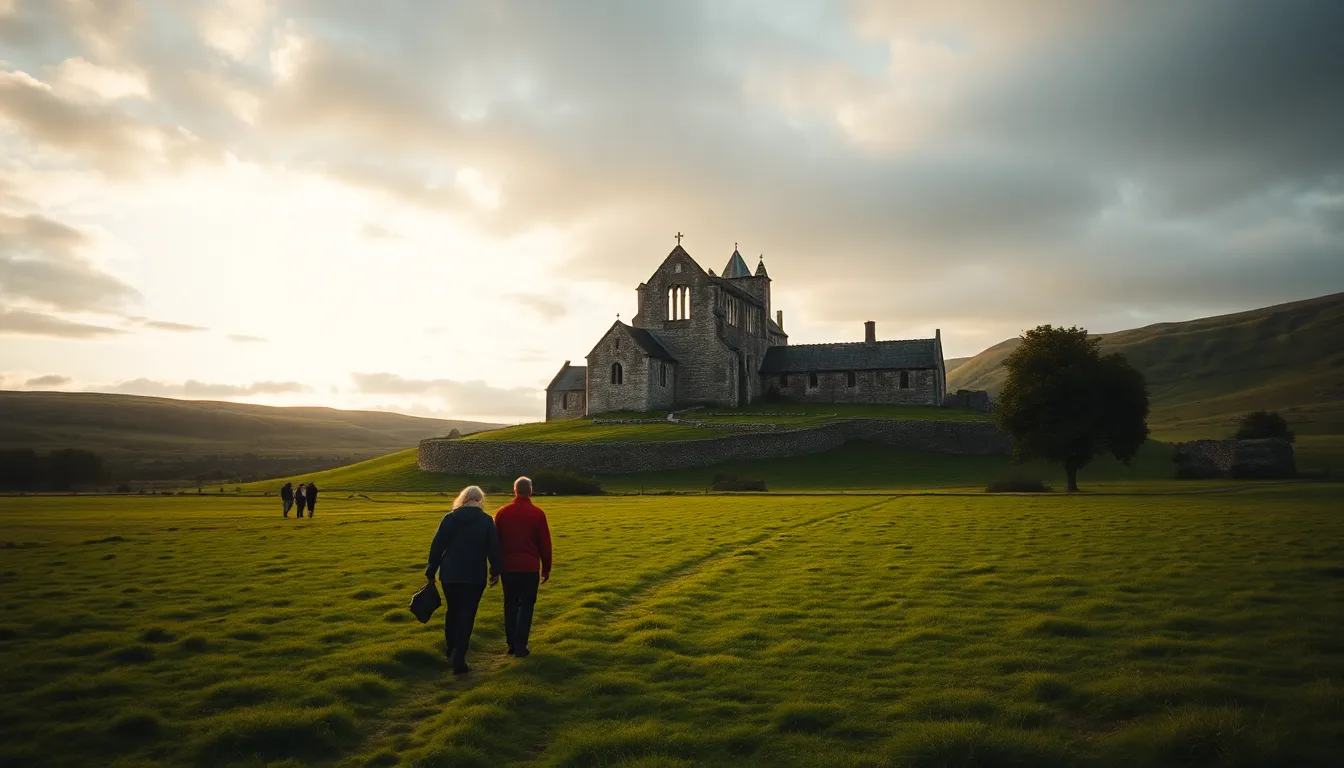
I have spent more than twenty years organizing heritage journeys, and a good portion of those have been through Scotland, Wales, and Northern Ireland. When a pastor or a rabbi calls me about bringing their community to these three nations, the first thing I want them to understand is that this is not a complicated trip to run well. It just has to be run thoughtfully, by people who know the islands, the glens, and the deep Christian story that runs through this corner of the world.
So this guide is the conversation I have with every group leader at our first planning call. Whether you are a pastor organizing for your congregation or a rabbi planning for your synagogue, here is how a group heritage tour of Britain’s Celtic nations actually comes together.
Why These Three Nations Reward a Group Trip
Scotland, Wales, and Northern Ireland hold a particular kind of heritage that almost demands to be experienced in community rather than alone. This is the cradle of Celtic Christianity, the land of Patrick and Columba and the early saints who carried the faith across the sea. It is the home of the Welsh Revival, the Reformation under John Knox, and the Covenanters who held to their faith at the cost of their lives.
These are not museum stories. They are stories about communities of faith standing together, and they land differently when your own community stands together to receive them. When a congregation sits in Iona Abbey, or walks a Welsh revival chapel trail, or stands on the hill at Armagh where Patrick built his church, something happens between the people that does not happen to a lone traveler with a guidebook.
If you want to see the full range of what these nations hold, our United Kingdom destination page lays out the regions and the heritage threads side by side.
Start With Your Community’s Story, Not the Famous Sites
The biggest mistake I see group leaders make is starting with a checklist of well-known sites and trying to cram them all in. These nations are spread out, the roads are slow, and the most meaningful places sit at the ends of single-track lanes and short ferry crossings. A trip that races to see everything ends up being a trip about the inside of a coach.
Instead, start with a question: what does my community need to encounter? The answer shapes everything.
If your church is drawn to the roots of Celtic Christianity, the journey centers on Iona and the story of Columba, with the island at the heart of the trip. If your community connects with revival and the power of the Spirit moving through ordinary people, the Welsh Revival of 1904 gives you a trail through the chapels and valleys where it began. If your group is drawn to Patrick and the arrival of Christianity in Ireland, Armagh and the Patrick story anchor the Northern Irish leg. And if your congregation cares about standing firm under persecution, the Covenanters heritage trail tells a story of faith that refused to bend.
Once you have a focus, the itinerary builds itself. One or two nations, a handful of key sites, and enough room for your group to absorb what they are seeing. That is the formula that works.
The Practical Details Every Group Leader Should Understand
Let me walk through the things that matter most when you are planning for a group of twenty to forty people across these nations.
Transportation and the islands. Heritage Tours handles all ground transport with an experienced local coach driver. This matters more here than almost anywhere. The roads are narrow, much of the best heritage sits beyond single-track lanes and ferry crossings, and driving is on the left. Your group should be looking out the window, not white-knuckling a rental car on a Highland road. We coordinate the ferry timetables to Iona and the other islands so the crossings line up with the schedule rather than derailing it.
Accommodation near the heritage. Whenever we can, we place groups in hotels and guesthouses near the historic quarters, so your people can step out in the evening and walk the same streets and churchyards on their own. The supply of larger accommodation near remote sites is genuinely limited, which is the single strongest reason to book a group trip well ahead.
Local guides who know the faith story. A good local guide transforms a heritage tour. We work with guides who understand the spiritual and historical weight of these sites, not just their architecture. The difference between a guide who says “this abbey dates to the medieval period” and one who can explain what Columba’s community lived and prayed for here is the difference between a tour and an encounter.
Pace for a mixed-age group. Most faith groups span a wide age range. The terrain here, abbey ruins, cobbles, coastal paths, some stairs, rewards a thoughtful pace. We build in rest, avoid stacking demanding days, and offer accessible alternatives where the ground is difficult, so nobody is left behind.
Dietary needs. If your community keeps kosher, observes halal, or has serious allergies, that has to be planned from the start, not raised on arrival. Dedicated provision is limited outside the larger cities and almost absent on the islands. We solve it with local providers, but it takes lead time.
How the Group Leader Free Travel Benefit Works
This is straightforward, and I want it to be clear, because it is one of the most important planning details for faith communities working within a budget.
When your group includes 15 or more participants, the group leader travels free. That means your full trip, flights, accommodations, ground transportation, ferry crossings, site entries, and the meals included in the itinerary, is covered at no cost to you.
This benefit exists because we understand what group leaders actually do. You are not a tour guide. You are a spiritual leader who has taken on the work of organizing a meaningful experience for your people. That is months of planning, communication, and trust-building. The free travel benefit is our way of honoring that work and making it financially possible for you to be there leading your group.
There is no catch. Bring 15 people and you travel free. If your group grows well beyond that, additional leaders may qualify too. Ask about it when we talk. For a fuller picture of how trip costs break down, see our guide to UK heritage tour costs.
A Realistic Picture of How the Trip Flows
A typical group heritage tour of these nations runs eight to eleven days. A Scotland-focused trip might base in Edinburgh or Glasgow, run a Reformation and Covenanters day, then move west to Mull and across to Iona for the heart of the journey. A combined Wales and Northern Ireland trip might pair the revival chapels of the south Welsh valleys with a flight or ferry across to the Patrick story in Armagh and the Antrim coast.
The rhythm I aim for is one significant site encounter per day, with travel time honestly accounted for, and unhurried evenings where your group can process together. Some of the most meaningful moments on these trips do not happen at the sites at all. They happen at dinner, when your congregation talks about what they felt at the abbey that afternoon.
What to Ask Before You Book Any UK Heritage Tour
Not all operators run a heritage tour the same way, and a faith heritage tour is fundamentally different from a standard sightseeing trip. These are the questions I would ask any operator.
Do you customize the itinerary, or is it a fixed package? Your trip should be built around your community’s story, not handed to you as Package A or B.
Do your guides understand the religious history? General guides describe architecture. Heritage guides can explain what Columba’s monks believed, why the Covenanters refused to yield, and what the 1904 Revival meant to the people swept up in it.
How do you handle the islands and ferries? Island access is the part most likely to go wrong if the operator does not know the timetables and the weather. Ask directly how they manage it.
Do you handle dietary needs proactively? If kosher, halal, or allergy provision matters, it should be in the first planning conversation, not dealt with on arrival.
What is the total cost, including everything? Ask for a fully transparent quote: flights, accommodations, ground transport, ferries, site entries, guides, and included meals. No surprises after you have committed your community.
FAQ: Group Heritage Tours of the Celtic Nations
How many people do I need for a group heritage tour of Scotland, Wales, and Northern Ireland?
Heritage Tours group trips typically start around 10 participants, with the group leader free travel benefit beginning at 15 or more. Most of our groups to these nations range from 15 to 40 people. Larger groups work well too, and we can split them into smaller parties for the most atmospheric sites, like Iona, so the experience stays personal rather than crowded.
Do group leaders really travel free?
Yes. When your group includes 15 or more participants, the group leader’s full trip is covered at no cost, including flights, accommodations, ground transport, ferry crossings, site entries, and included meals. This applies to all Heritage Tours group itineraries across Scotland, Wales, and Northern Ireland. The person doing the most work to organize the trip pays nothing to take it.
Can we combine more than one nation in a single trip?
Yes, and many of our groups do. A common pairing is Wales for the revival story and Northern Ireland for the Patrick story, or a Scotland-only trip that goes deep on Iona and the Covenanters. The key is not trying to do all three nations in one short trip. The roads and ferries are slow, and a focused itinerary across one or two nations is far more meaningful than a rushed sweep of all three.
How far in advance should we book?
For spring and autumn travel, eight to twelve months is comfortable. For summer, start around twelve months out, because accommodation near the heritage sites and the island ferries fill early in peak season. Booking early also gives you time to present the trip to your congregation properly, answer their questions, and build the participant numbers that make the group economics work.
What makes a heritage tour different from a regular group tour of Britain?
A heritage tour is built around spiritual and historical significance rather than tourist highlights. The guides specialize in faith history, the itinerary is shaped around your community’s story, and the pace allows for reflection and group prayer or discussion rather than rushed photo stops. A regular tour shows your group the sights. A heritage tour helps your community understand why these places shaped the faith they carry.
If you are in the planning stage and want to talk through what a heritage tour of Scotland, Wales, or Northern Ireland could look like for your community, I would be glad to help. No pressure, just a conversation about what matters to your group and how we build the trip around it.
Start the conversation here, or take a closer look at how we run our group heritage tours.