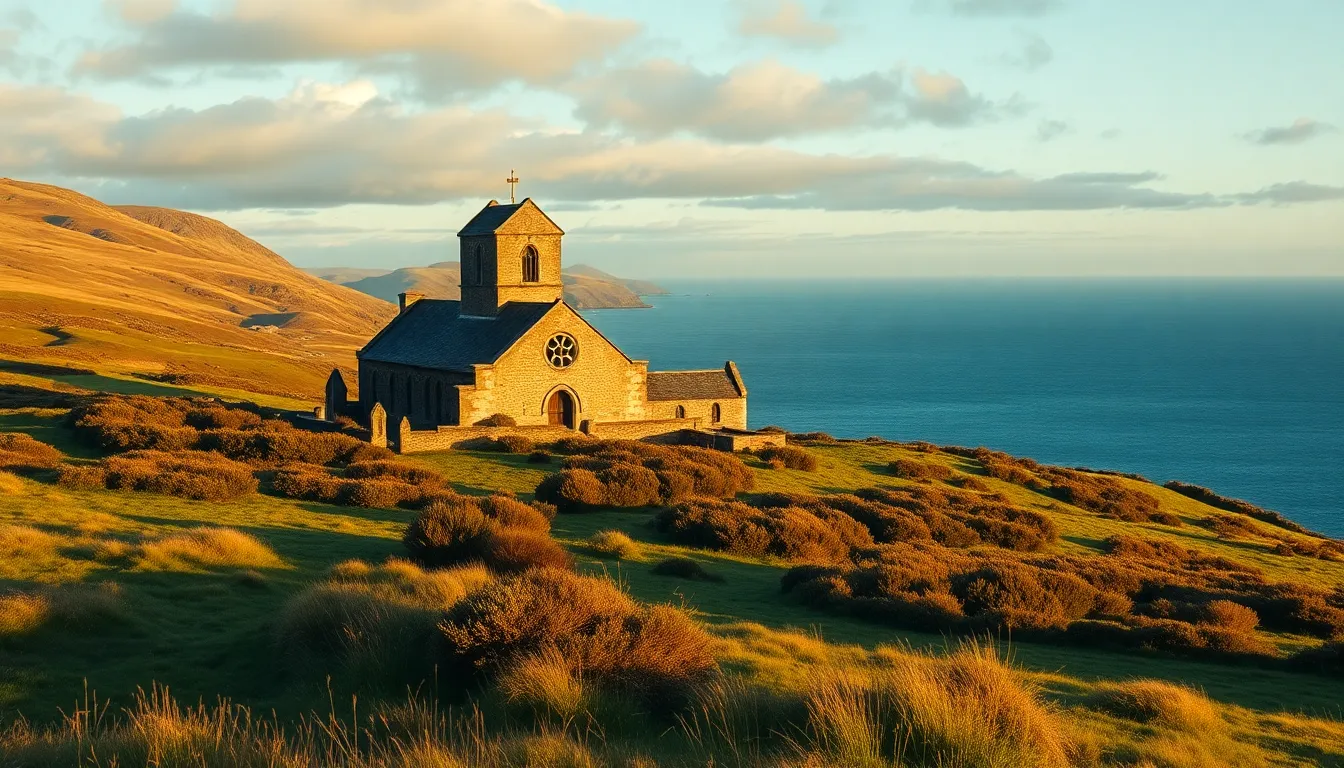
One Nation, Three Movements of God
When a pastor tells me his congregation wants Scotland, I ask what they hope to carry home. The answer is almost always the same: the sense that God has worked in real places, among ordinary people, in ways that still matter. Scotland gives you that in concentrated form. In one week you can stand where Columba landed, where John Knox preached the Reformation into a nation, and where the Covenanters died on the moors rather than let the state dictate their worship.
I have led this route many times, and I have built it to do one thing well. It tells the story of Christian Scotland from the Celtic dawn through the Reformation to the Covenanter witness, without racing past the moments that ask the group to stop and pray. Seven days is enough to do this with purpose. Treat the frame below as a strong starting point. We shape every detail around your people, your pace, and your tradition.
Day 1: Arrival in Glasgow
Most groups fly into Glasgow, so that is where we begin. I keep the first afternoon gentle. A short walk through the city center shakes off the flight and gets people oriented before the real work of the week starts. In the evening we share a meal and I lay out what is coming, the arc of the story and the rhythm of the days. Setting the spiritual tone early matters. It tells the group this is a pilgrimage, not a sightseeing run.
Day 2: Iona, Where It Began
Day two is the emotional heart of the week, and it asks the most of the group, so I build it as a full and well-supported day. We travel west from Glasgow to the coast, take the ferry to Mull, cross the island, and take a second short ferry to Iona itself.
Iona is tiny, remote, and almost impossibly quiet. This is where Columba landed in 563 and founded the monastery that became the spiritual heart of Scottish Christianity. Standing in the restored abbey, with the sound of the sea never far off, the group understands why pilgrims have come here for nearly fifteen centuries. I always leave time for a short act of worship in the abbey. It is the kind of moment that turns a tour into a pilgrimage. Our deeper account of Iona and Celtic Christianity covers the abbey, the ancient crosses, and the logistics.
Because the journey out is long, we overnight near the coast rather than rushing back. The group needs the rest, and the slower evening lets the day settle.
Day 3: St Andrews and the Reformation
Day three turns the page to the sixteenth century. We make our way east to St Andrews, the town where the Scottish Reformation found its voice and its martyrs. Patrick Hamilton was burned here in 1528, and his initials are still set into the cobbles where he died. George Wishart followed him to the stake, and it was Wishart’s death that helped harden the young John Knox into the reformer Scotland remembers.
We walk the ruins of the great cathedral, once the largest church in the country, and the castle where the early reformers were besieged and where Knox himself was taken to serve as a galley slave before he ever became Scotland’s reformer. St Andrews makes the Reformation tangible in a way that a textbook never can. The stones carry the cost of it. I leave room here for the group to talk about what conviction under pressure actually looks like, because that is the question these sites keep asking. For groups who want the Reformation as the spine of the whole trip, our Reformation itinerary across Scotland follows the thread far deeper.
Day 4: Edinburgh and John Knox
Day four belongs to Edinburgh, where the Reformation became a national reality. We walk the Royal Mile to St Giles’ Cathedral, the church from which Knox thundered against the crown and shaped a Presbyterian nation. Knox’s house still stands nearby, and his grave lies under what is now a car park behind St Giles, a detail that always makes a group smile and then go quiet.
The afternoon gives us time in the Old Town, where the closes and wynds still hold the shape of Reformation Edinburgh. For groups with a wider interest, the city also carries a small but remarkable Jewish heritage, covered in our guide to Jewish heritage in Edinburgh. We overnight in the city.
Day 5: The Covenanter Trail
Day five carries us into the southern uplands to trace the Covenanters, the seventeenth-century Presbyterians who held to their faith through the Killing Time. When the crown tried to force bishops and a prayer book on the Scottish church, they refused, signing the National Covenant in 1638 and paying for it across the next fifty years. They worshipped in secret on the moors, were hunted down, and many were executed without trial.
The monuments and lonely graves scattered across this landscape make their witness real. These were not bishops or scholars but farmers, weavers, and young women who chose death over a compromised conscience, some of them shot where they stood and buried where they fell. Standing at a martyr’s stone on an empty hillside, the group feels the weight of what these people would not surrender. Our Covenanters heritage trail maps the key sites. I always leave space here for reflection. It is hard ground to stand on, and it should be.
Day 6: Glasgow and the Wider Story
Day six brings us back toward Glasgow for a gentler day that widens the lens. The city tells the story of faith in motion, from the medieval cathedral of St Mungo to the immigrant communities that reshaped it in the nineteenth and twentieth centuries. For groups who want it, this is also a window into the Jewish heritage of Scotland, covered in our companion guide. The pace eases here on purpose. After Iona and the Covenanter moors, the group is ready to slow down, talk, and begin gathering the week into something they can carry home.
Day 7: Departure
The last morning is for closing well. Before we leave, I gather the group for a final reflection, drawing the threads together, Columba, Knox, the Covenanters, three movements of God in one small nation. Then we depart from Glasgow, carrying home a week that touched the long arc of Christian Scotland.
A Note on Pacing
This seven-day frame moves with intent, and I want to be honest that the Iona day is long. For groups with older members, I sometimes add a rest day after Iona or trade one Reformation site for more time in Edinburgh. What I never trim is the room for worship. A heritage tour that races between sites is just sightseeing. The prayer in Iona Abbey, the silence at a Covenanter grave, the pause in St Giles, those moments need space to breathe.
If this journey speaks to your community, I would love to help you shape it into the trip that fits your people. Heritage Tours builds every itinerary around your group, and with 15 or more participants, the group leader travels free. Explore our United Kingdom heritage destination and our group heritage tours to see how it works.
FAQ: A Scottish Christian Heritage Itinerary
Is seven days enough to cover Christian Scotland?
It is enough to follow the main arc, Celtic, Reformation, and Covenanter, with room for worship at the key sites. You will not see every church in Scotland, and you should not try. This frame is built to move with purpose while leaving space to stop where it matters. For groups who want a slower pace, I often add a rest day or focus more tightly on the Reformation towns.
How demanding is the Iona day?
It is the longest day of the week, with two ferries and a road crossing of Mull. The reward is worth the effort, but I plan it carefully with comfortable transport and an overnight near the coast so the group is not rushing back in the dark. For groups with mobility concerns, we talk through the day in detail and adapt where we can.
Can this itinerary work for a Reformation-focused group?
Yes. The frame already gives strong weight to St Andrews, Edinburgh, and the Covenanters. For a group that wants the Reformation as its central theme, we can deepen those days and add Stirling and the Knox sites, drawing on our companion Reformation itinerary. We tailor the balance to your tradition and your interest.
What is the best time of year to run this trip?
May through September offers the long daylight and milder weather that make this route comfortable, with June and September giving lighter crowds. Ferry schedules to Iona are fuller in summer, which matters for the Iona day. We help groups choose dates that work around their own church calendars.
Do group leaders travel free on this itinerary?
Yes. When your group includes 15 or more participants, the group leader travels free on all Heritage Tours group itineraries, including this one. It is our way of honoring the work pastors and educators put into bringing their communities together for a journey like this.
If this is the Scotland your congregation has been picturing, let’s talk it through. Contact us whenever you are ready to start.