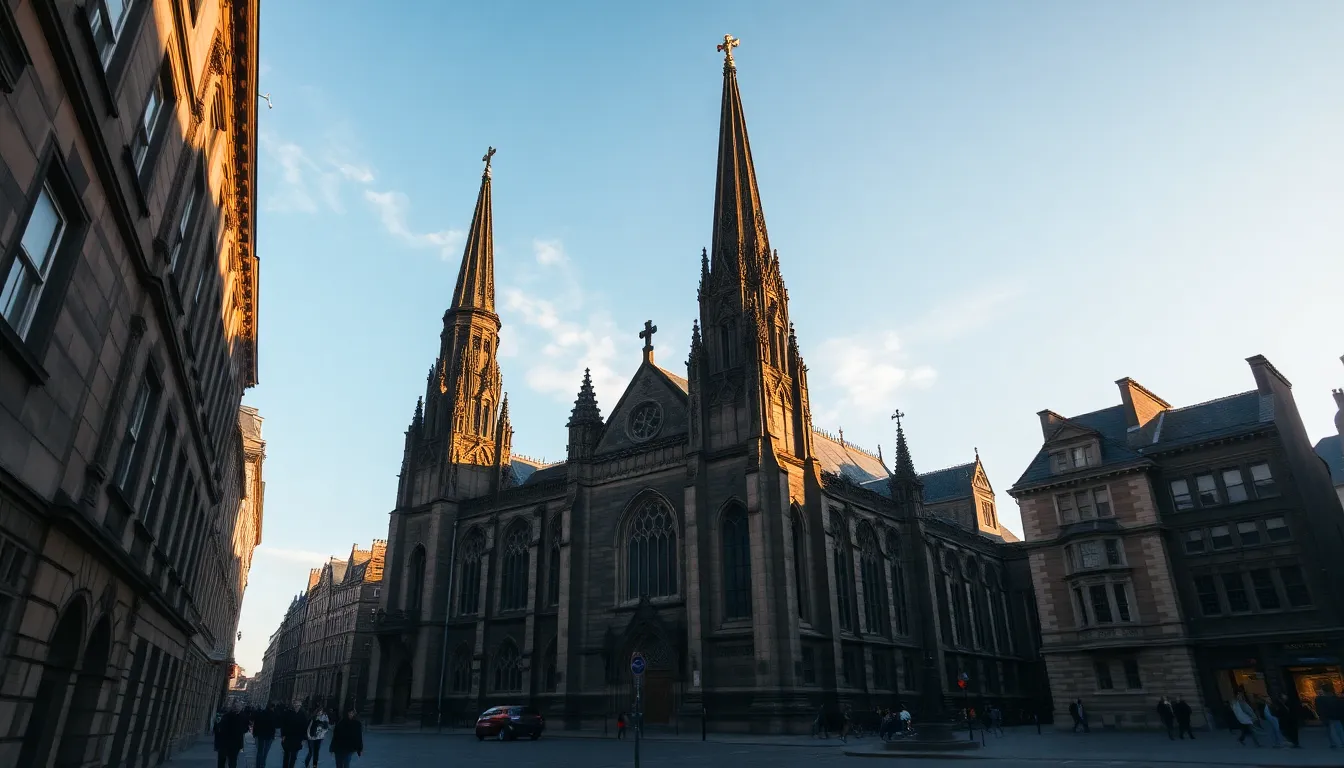
Where a Nation Was Reformed in a Generation
Reformation history can feel abstract until you stand in Scotland. Here it is set into the cobbles, the initials of a martyr burned on the spot where he died, the pulpit a fugitive preacher thundered from, the moor where Covenanters were shot for refusing a prayer book. Scotland reformed faster and more completely than almost anywhere in Europe, and it did so at a cost that the landscape still remembers. For a pastor or educator who teaches the Reformation, walking it here changes how you teach it forever.
I built this eight-day itinerary for groups who want the Scottish Reformation as the heart of the trip, not a side chapter. It follows the story from the early martyrs at St Andrews, through John Knox and the reforming of the nation, to the Covenanters who paid for that freedom across the next century. It is paced for a mixed-age group, with room for worship and reflection at the sites that ask for it. The frame below is a strong starting point. We shape the real journey around your community and tradition.
Day 1: Arrival in Edinburgh
Most Reformation groups fly into Edinburgh, the natural hub for this story, so that is where we begin. I keep the first afternoon gentle, a walk through the Old Town to settle people after travel. In the evening we share a meal, and I lay out the arc of the Scottish Reformation, the martyrs, Knox, the Covenanters, so the group carries the shape of it into every site. Setting that frame early matters. It tells the group this is a journey through one of the most consequential religious revolutions in history.
Day 2: Edinburgh and John Knox
Day two belongs to Edinburgh, where the Reformation became a national reality. We walk the Royal Mile to St Giles’ Cathedral, the High Kirk from which Knox preached against the crown and shaped a Presbyterian nation. We see Knox’s house, still standing on the Mile, and his grave beneath what is now a car park behind St Giles, a detail that makes every group smile and then go quiet.
We trace the events of 1559 and 1560, when the Scottish Parliament broke with Rome and adopted a Reformed confession, an astonishingly fast transformation for a whole kingdom. The Old Town still holds the shape of that Edinburgh in its closes and wynds. I leave room here to talk about what it took to reform a nation in a single generation, because Edinburgh is where the scale of it lands. We overnight in the city.
Day 3: St Andrews and the Martyrs
Day three reaches back to the cost. We travel to St Andrews, the town where the Scottish Reformation found its first martyrs. Patrick Hamilton was burned here in 1528, so slowly that his death stirred the town, and his initials are still set into the cobbles where he died. George Wishart followed him to the stake in 1546, and it was Wishart’s death that helped harden the young John Knox into a reformer.
We walk the ruins of the great cathedral, once the largest church in Scotland, and the castle where the early reformers were besieged and where Knox was taken as a galley slave. St Andrews makes the Reformation tangible in a way no textbook can. The stones carry the cost. I leave room for the group to sit with what conviction under pressure actually demanded of these men. We overnight in the area or return toward the center.
Day 4: Stirling and the Reforming Crown
Day four turns to Stirling, where the Reformation tangled with the crown. It was here, at the Church of the Holy Rude, that the infant James VI was crowned in 1567, with John Knox preaching the coronation sermon, one of the few churches in the world still in use where a monarch was crowned. We visit the church and the great castle above it that dominated Scottish royal history.
Stirling tells the political side of the Reformation, the struggle between a reforming church and a contested throne, the question of who would govern the soul of a nation. It is a useful counterweight to the martyr sites, showing the Reformation not only as suffering but as the reshaping of a whole society. I leave time to draw out that tension with the group. We move toward the west for the night.
Day 5: Glasgow and the Wider Reformation
Day five brings us to Glasgow to widen the story. We visit the medieval cathedral of St Mungo, one of the few Scottish cathedrals to survive the Reformation largely intact, a reminder that the reformers preserved as well as swept away. The city also tells the story of how Reformed faith shaped Scottish education and public life in the centuries that followed, the parish schools, the universities, the Presbyterian discipline that ordered communities. The pace eases here, a gentler day that lets the group gather the first half of the journey before we turn to the Covenanters.
Day 6: The Covenanter Trail
Day six carries us into the southern uplands to trace the Covenanters, the seventeenth-century Presbyterians who defended the Reformation settlement with their lives. When the crown tried to force bishops and a prayer book on the Scottish church, they refused, signing the National Covenant in 1638 and paying for it through the decades of persecution known as the Killing Time.
They worshipped in secret on the moors, were hunted down, and many were executed without trial. The monuments and lonely graves scattered across this landscape make their witness real. Standing at a martyr’s stone on an empty hillside, the group feels what these people would not surrender. Our Covenanters heritage trail maps the key sites. I always leave space here for reflection. It is hard ground, and it should be. We overnight in the southwest.
Day 7: Dumfries and the Killing Time
Day seven deepens the Covenanter story in the southwest, the region where the persecution fell hardest. Around Dumfries and Galloway we trace the martyrs of the 1680s, including the Wigtown Martyrs, two women tied to stakes in the tidal flats and drowned by the incoming sea for refusing to renounce the Covenant. Their memorial still stands above the bay.
This day is the emotional weight of the whole itinerary. These were ordinary believers, farmers and servants and young women, who chose death over a compromised conscience. For a pastor teaching on faithfulness under pressure, there is no more sobering ground in Britain. I give the group generous room to pray and reflect here. We move back toward Edinburgh or Glasgow for the final night.
Day 8: Departure
The last morning is for closing well. Before we leave, I gather the group for a final reflection, drawing the threads together, the martyrs of St Andrews, Knox and the reforming of the nation, the crown at Stirling, the Covenanters on the moors. The Scottish Reformation is a single story of conviction and cost, and standing inside it for a week leaves a mark. Then we depart from Edinburgh or Glasgow, carrying home a journey through one of the great religious revolutions of history.
A Note on Pacing
This eight-day frame is focused and steady. The Covenanter days in particular carry real emotional weight, and I build in the rest the group needs to absorb them. For groups who want a wider lens, this itinerary pairs naturally with the Celtic story or a broader Scotland tour, and our Scotland Christian itinerary offers a shorter frame that adds Iona. What I never trim is the room for worship and reflection at the martyr sites. A Reformation tour that races past the Wigtown Martyrs has missed the heart of the story.
If this journey speaks to your community, I would love to help you shape it into the trip that fits your people. Heritage Tours builds every itinerary around your group, and with 15 or more participants, the group leader travels free. Explore our United Kingdom heritage destination and our group heritage tours to see how it works.
FAQ: A Reformation Heritage Itinerary Across Scotland
Why is Scotland such a strong destination for Reformation heritage?
Because Scotland reformed faster and more completely than almost anywhere in Europe, and the story is set into the landscape. You can stand on the spot where Patrick Hamilton was burned, in the kirk where Knox preached, and on the moors where the Covenanters died. The Reformation here is not abstract. It is cobbles, pulpits, and martyr’s stones you can touch.
Who were the Covenanters and why do they get two days?
The Covenanters were seventeenth-century Presbyterians who refused to let the crown dictate the worship of the Scottish church, signing the National Covenant in 1638. Through the persecution known as the Killing Time, many were hunted and executed for their faith. They get two days because their witness is the emotional heart of the story and the sites, especially in the southwest, are spread across the landscape and deserve room to reflect.
Can this itinerary include Iona or the Celtic story?
Yes. While this frame stays focused on the Reformation, we can add Iona and the Celtic sites for groups who want the wider sweep of Scottish faith. Our shorter Scotland Christian itinerary already blends the two, and we can build a longer version that gives both their due. We tailor the balance to your group’s interest.
What is the best time of year to run this trip?
May through September offers the long daylight and milder weather that make the moorland Covenanter sites comfortable, with June and September giving lighter crowds. The southwest can be wet, so we plan with flexibility. We help groups choose dates that fit their own church calendars.
Do group leaders travel free on this itinerary?
Yes. When your group includes 15 or more participants, the group leader travels free on all Heritage Tours group itineraries, including this one. It is our way of honoring the work pastors and educators put into bringing their communities together for a journey like this.
If the Scottish Reformation is the story your group wants to walk, let’s talk it through. Contact us whenever you are ready to start.