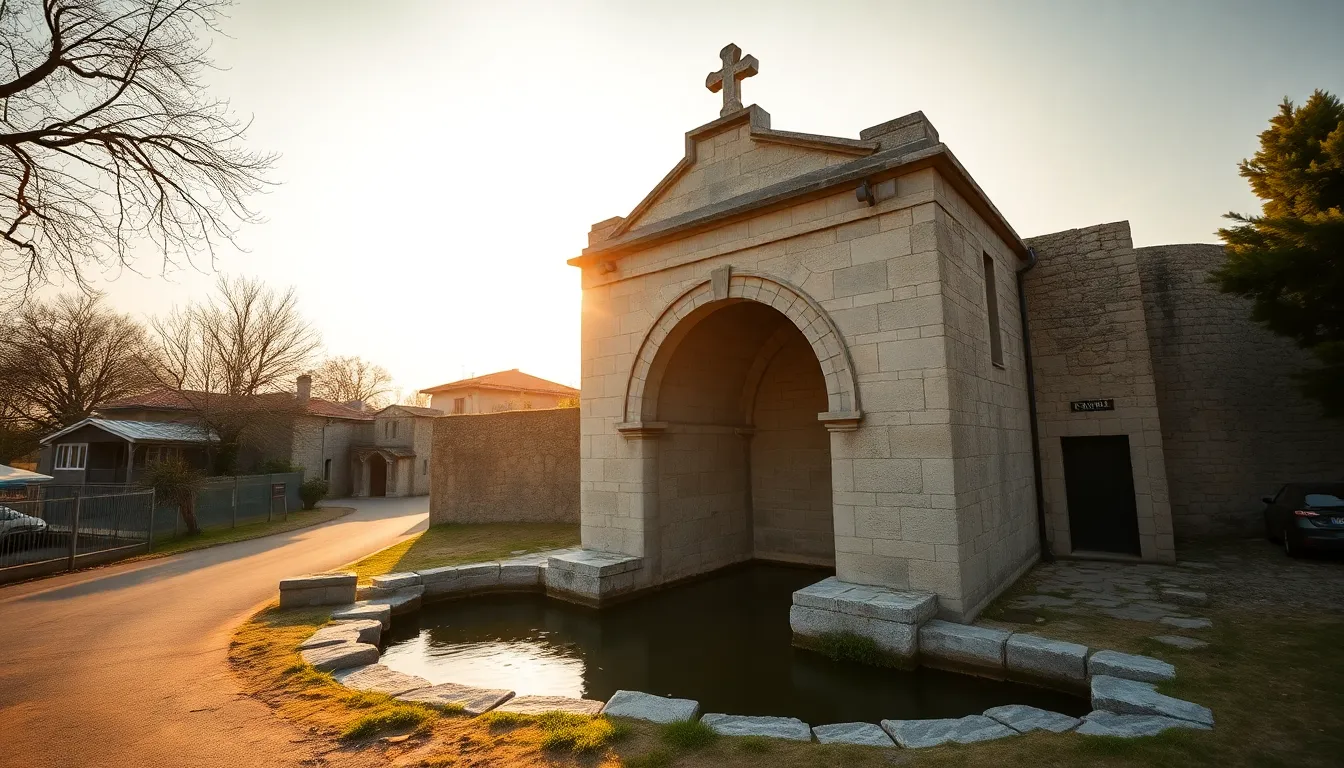
There is a line Paul says in Acts that I always come back to when I bring a group to Tarsus. Standing before a Roman commander, he describes himself as “a Jew, from Tarsus in Cilicia, a citizen of no ordinary city.” You can feel the pride in it. And when your group is standing in that same city, by the well that bears his name, drawing up water that people believe his family drank, that line lands in a way it never does from a pew. This is where the apostle came from. Everything he became started here.
Tarsus and the neighboring city of Adana sit on the Cilician plain in southern Turkey, between the Taurus Mountains and the Mediterranean. It is a fertile, ancient, working region, not a polished tourist circuit, and that is part of its honesty. For a group tracing Paul, this is the beginning of the man before the missionary journeys. Let me walk you through it.
Tarsus: The City That Made Paul
Tarsus was no backwater. In Paul’s day it was a major center of trade and learning, a city whose schools of philosophy rivaled Athens and Alexandria. It sat on the road that connected Anatolia to Syria and the East, and it held Roman citizenship status that mattered. When Paul says he was a citizen of no ordinary city, he is telling the truth.
This matters for understanding Paul himself. He grew up at the crossroads of Jewish faith, Greek learning, and Roman law, fluent in all three worlds. That formation is why he could quote Greek poets on Mars Hill, claim Roman citizenship to protect himself, and reason from the Hebrew scriptures in any synagogue. Tarsus made the man who could carry the gospel across the whole Mediterranean world. I spend real time with groups on this point, because you cannot understand Paul’s reach without understanding where he was formed.
St. Paul’s Well and Church
The two anchor sites in Tarsus are St. Paul’s Well and St. Paul’s Church. The well is a deep ancient well in the area traditionally identified with the apostle’s family home. Visitors look down through a glass cover at the water far below, and many draw a cup to drink. Is it certainly his family’s well? No one can prove that. But it stands in the old quarter of the city, and it gives your group a concrete place to gather and read.
A short distance away is St. Paul’s Church, a nineteenth-century stone church on the site of older Christian worship, now preserved as a monument. Groups can sometimes arrange to gather here, and it makes a fitting place for a reading or a brief service centered on Paul’s origins.
I also take groups to the Roman road, the ancient stone-paved street uncovered in the city center, and to the old gate known as Cleopatra’s Gate. Walking that Roman pavement, you are on the actual surface of the city Paul knew.
Adana: The Working Heart of the Plain
About thirty minutes east of Tarsus is Adana, the large modern city that anchors the Cilician plain. Adana is not primarily a biblical site, and I am honest with groups about that. But it is where you will likely base yourself, because it has the airport, the hotels, and the infrastructure that Tarsus lacks.
Adana has its own heritage worth a stop. The Sabanci Central Mosque is one of the largest in Turkey and a striking piece of modern Ottoman-style architecture. The Stone Bridge, the Tas Kopru, is a Roman bridge over the Seyhan River that has carried traffic for nearly two thousand years, another reminder of how deep the Roman layer runs across this whole region. The regional museum holds finds from across Cilicia that help your group picture the ancient world Paul came from.
For a group, Adana is the practical base and a useful supporting stop. I treat Tarsus as the spiritual heart and Adana as the gateway that makes the visit possible.
The Cilician Plain and the Wider Region
The Cilician plain itself is part of the story. This fertile coastal lowland, ringed by mountains, was a Roman province with its own character. Paul knew these roads. After his conversion he spent time in this region, in Tarsus and the surrounding country, before Barnabas brought him to Antioch to help lead the young church there.
That connection to Antioch matters. Antioch, the modern Antakya, lies further east and is where followers of Jesus were first called Christians. Many groups link Tarsus and Adana with Antioch in a single southern Turkey itinerary, tracing Paul’s early years from his birthplace to the church that launched his missionary journeys. The geography holds together, and the story flows in order.
The Hidden Years
There is a stretch of Paul’s life that scripture passes over quickly, the years between his conversion and the start of his missionary journeys. Acts tells us that after the believers in Jerusalem grew wary of him, they sent him off to Tarsus, and he stayed in the region of Cilicia and Syria for a number of years before Barnabas came looking for him. I spend time on this with groups, because it is easy to picture Paul as moving straight from the Damascus road to the great journeys. He did not. He came home to Tarsus and waited, learned, and prepared, sometimes called the silent years. Standing in the city where Paul spent those hidden years gives a quieter, more human picture of the apostle, and many travelers find that picture stays with them.
Practical Orientation for Group Leaders
Here is how I plan this region for a group.
Getting There
Adana has an international airport with regular domestic flights from Istanbul and Ankara, and it serves as the gateway for the whole plain. Tarsus is a short drive west of Adana, so groups base in Adana and visit Tarsus as a half day or full day trip.
How Much Time
For the core Tarsus sites, half a day to a full day is enough, covering the well, the church, the Roman road, and the gate. Add a few hours for Adana’s mosque, bridge, and museum. If you are extending to Antioch, plan another full day and an overnight closer to that city.
Sequencing With Other Sites
This region connects naturally inland to Konya and the cities of Paul’s missionary journeys, and it can anchor the southern end of a route that includes the Abraham country around Sanliurfa further east. For the full national picture, our Turkey heritage travel guide shows how the regions fit together.
Setting Expectations
Tarsus today is a working town, not a manicured archaeological park. I prepare groups for that. The power of the visit is in the connection to Paul, not in grand ruins. When people arrive expecting presence rather than spectacle, they leave moved.
FAQ: Heritage Travel to Tarsus and Adana
Is Tarsus really the birthplace of the Apostle Paul?
Yes. Scripture is clear that Paul was from Tarsus in Cilicia, a fact he states himself in the book of Acts. The specific sites, like St. Paul’s Well, rest on long tradition rather than proof, but the city itself is securely his birthplace, and standing there gives groups a real connection to where the apostle was formed.
What is there to see in Tarsus?
The main sites are St. Paul’s Well, traditionally linked to his family home, and St. Paul’s Church, a preserved nineteenth-century church on older Christian ground. Groups also visit the uncovered Roman road and Cleopatra’s Gate. Together these give a concrete place to read the Acts passages about Paul’s origins.
Why include Adana if it is not a biblical site?
Adana is the practical base for the region, with the airport, hotels, and infrastructure Tarsus lacks. It also has worthwhile stops of its own, including a Roman bridge nearly two thousand years old and a regional museum that helps your group picture ancient Cilicia. We treat Adana as the gateway and Tarsus as the spiritual heart.
Can we combine Tarsus with Antioch?
Yes, and many groups do. Antioch, the modern Antakya, is where followers of Jesus were first called Christians, and it connects directly to Paul’s early years after his conversion. Linking Tarsus, Adana, and Antioch traces the apostle from his birthplace to the church that sent him out. We build this sequence for groups tracing Paul.
Do group leaders travel free to this region with Heritage Tours?
Yes. With 15 or more participants, the group leader travels free on all Heritage Tours itineraries in Turkey, including custom southern Turkey programs that combine Tarsus, Adana, and beyond. This is our standard practice, so the spiritual leader can focus on the group.
If your journey is about Paul, it should begin where Paul began. Tarsus gives your group the man before the mission, and the Cilician plain holds the early chapters of a story that changed the world. You can see how we shape these trips on our Turkey heritage page or learn how the group experience works on our group heritage tours page.
Contact us whenever you are ready to start planning.