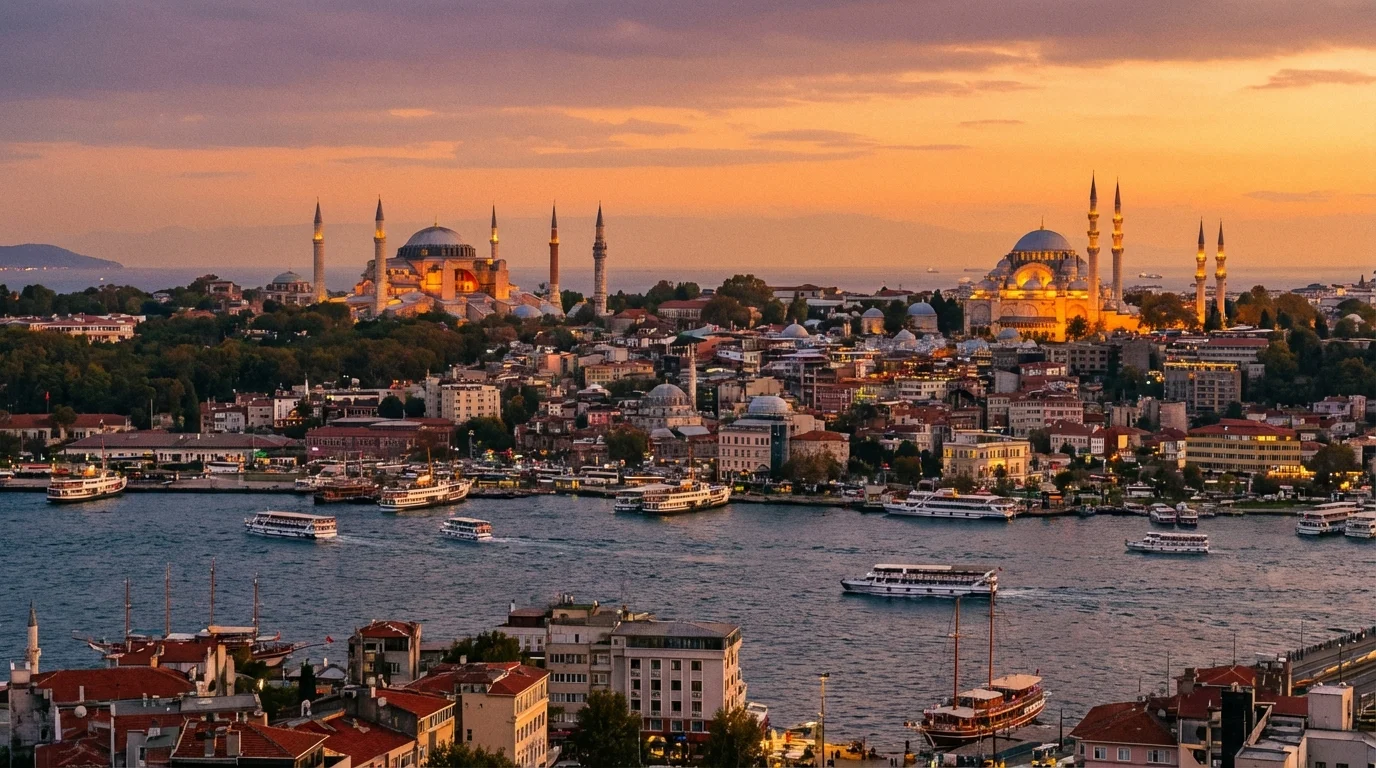
Why Turkey Is One of the World’s Great Heritage Destinations
I have been walking the streets of Istanbul for over twenty years, and every time I return, I notice something I missed before. A Hebrew inscription above a doorway in Balat. A Byzantine mosaic revealed by restoration work near the old city walls. A call to prayer echoing off the same stones where early Christians gathered in secret.
Turkey holds something that very few countries on earth can offer: the living, layered presence of Jewish, Christian, and Islamic history, often within the same neighborhood, sometimes within the same building. For a rabbi leading a congregation through five centuries of Sephardic survival, or a pastor standing where Paul preached to the Ephesians, this is not a destination you visit. It is a destination that reads you back.
If you are considering Turkey for your community’s next heritage journey, this guide is for you. Not the highlights reel. The real picture.
Jewish Heritage in Turkey: The Ottoman Welcome and What Remains
In 1492, the same year Columbus set sail, Spain expelled its entire Jewish population. Families who had lived on the Iberian Peninsula for over a thousand years were given months to leave or convert. It was one of history’s great ruptures.
What happened next is less well known, and it matters. Sultan Bayezid II of the Ottoman Empire sent ships to bring Spain’s Jews to safety. He is reported to have said that Spain’s king was impoverishing his own country by driving out such capable people. Whether those exact words are historical or legendary, the policy was real. Tens of thousands of Sephardic Jews settled in Istanbul, Izmir, Thessaloniki, and across the Ottoman Empire.
For five centuries, those communities held. In Istanbul, Sephardic families continued speaking Ladino, a form of medieval Spanish that carried the sounds of the country they had lost. They built synagogues, established printing presses, and became central figures in Ottoman trade and diplomacy.
Today, a smaller but present Jewish community still lives in Istanbul. The synagogues are still standing. The history is still readable in the streets of Balat, in the ark of Neve Shalom, in the gravestones of centuries. For a rabbi bringing a congregation to Turkey, this is not ancient history. It is a family story that most of the world never learned.
Christian Heritage: From Ephesus to Cappadocia
Turkey’s Christian heritage runs even deeper in time, though it is less visible to the casual visitor. This is the land where Paul traveled, where the early churches took root, and where some of Christianity’s most important theological debates were settled.
Ephesus is the anchor. Walking through its marble streets, past the Library of Celsus and the remains of the Temple of Artemis, you are standing where Paul wrote his letter to the Ephesians. The Church of Mary, believed to be the site of the Third Ecumenical Council in 431 AD, is here. So is the traditional house of the Virgin Mary on the hill above the ruins, a pilgrimage site for both Christians and Muslims.
Then there is Cappadocia. The rock-cut churches of Goreme, carved into volcanic stone by early Christians seeking refuge, still hold frescoes from the 10th and 11th centuries. The underground cities of Derinkuyu and Kaymakli could shelter thousands. For a pastor, walking through these spaces is not tourism. It is standing inside the physical evidence of faith under pressure.
And Antioch, modern-day Antakya in southeastern Turkey, is where followers of Jesus were first called Christians. The Cave Church of St. Peter, carved into the mountainside, may be one of the oldest Christian houses of worship in the world.
Istanbul’s Layered History: One City, Three Faiths
There is a stretch of Istanbul, maybe a mile and a half, where you can walk from the Hagia Sophia (built as a cathedral, converted to a mosque, turned into a museum, now a mosque again) past the Blue Mosque, down through the old Jewish quarter of Balat, and end at the Neve Shalom Synagogue. Three faiths, fourteen centuries, one afternoon.
This is what makes Istanbul different from almost any city in the world for heritage travel. The layers are not separated into districts you have to drive between. They sit on top of each other, sometimes literally. A Byzantine cistern beneath an Ottoman market. A synagogue on a street named for a sultan.
For group leaders, this density is a gift. It means that a single day in Istanbul can hold more historical and spiritual weight than a week in many other cities. But it also means you need someone who knows what to prioritize. Not every site needs an hour. Some need five minutes of silence.
Planning Your Group’s Turkey Heritage Journey
Turkey is more logistically complex than some heritage destinations because its key sites are spread across distinct regions. Istanbul, Cappadocia, and the Aegean coast (where Ephesus sits) are separated by significant distances. A well-planned itinerary accounts for this and sequences the experience so your group moves through the story, not just the geography.
Most heritage groups spend three to four days in Istanbul, two days in Cappadocia, and one to two days on the Aegean coast. Internal flights between Istanbul and Cappadocia are common and keep the pace manageable.
At Heritage Tours, we build each Turkey itinerary around the specific community traveling. A Jewish congregation exploring Sephardic history will spend more time in Balat and Edirne. A church group tracing early Christianity will anchor in Ephesus and Cappadocia. A mixed group can do both, and that is one of the things that makes Turkey remarkable.
With 15 or more participants, the group leader travels free. That is not a promotional line. It is how we have always worked, because we believe the spiritual leader should be focused on the experience, not the expense.
If Turkey is on your mind for your community, I would welcome the chance to talk it through. You can reach us at Heritage Tours and we will start with your story, not ours.
FAQ: Heritage Travel to Turkey
What are the most important Jewish heritage sites in Turkey? Istanbul’s Neve Shalom Synagogue, the Balat Jewish quarter, and the recently restored Great Synagogue of Edirne are the most significant. Izmir also holds deep Sephardic history, with synagogues and a Jewish quarter that shaped the city’s commercial culture for centuries.
Is Turkey a good destination for Christian pilgrimage groups? Yes. Ephesus, where Paul preached and wrote his letter to the Ephesians, is one of the most important early Christian sites in the world. Cappadocia’s rock-cut churches, the Cave Church of St. Peter in Antioch, and Tarsus (Paul’s birthplace) make Turkey essential for any group studying the early church.
What is the significance of Istanbul for Jewish history? When Spain expelled its Jews in 1492, the Ottoman Sultan welcomed them to Istanbul. Sephardic families lived in the city for five centuries, maintaining their language (Ladino), building synagogues, and contributing to Ottoman civic life. A Jewish community remains in Istanbul today.
How far in advance should a group leader book a Turkey heritage tour? Six to nine months is ideal, especially for spring departures. Turkey’s most popular heritage sites can be crowded during peak season, and advance planning allows for access arrangements at synagogues and churches that require coordination with local communities.
Do group leaders travel free on Heritage Tours Turkey trips? Yes. With 15 or more participants, the group leader travels free. This applies to all Heritage Tours group itineraries in Turkey, including custom programs that combine Istanbul, Cappadocia, and the Aegean coast.