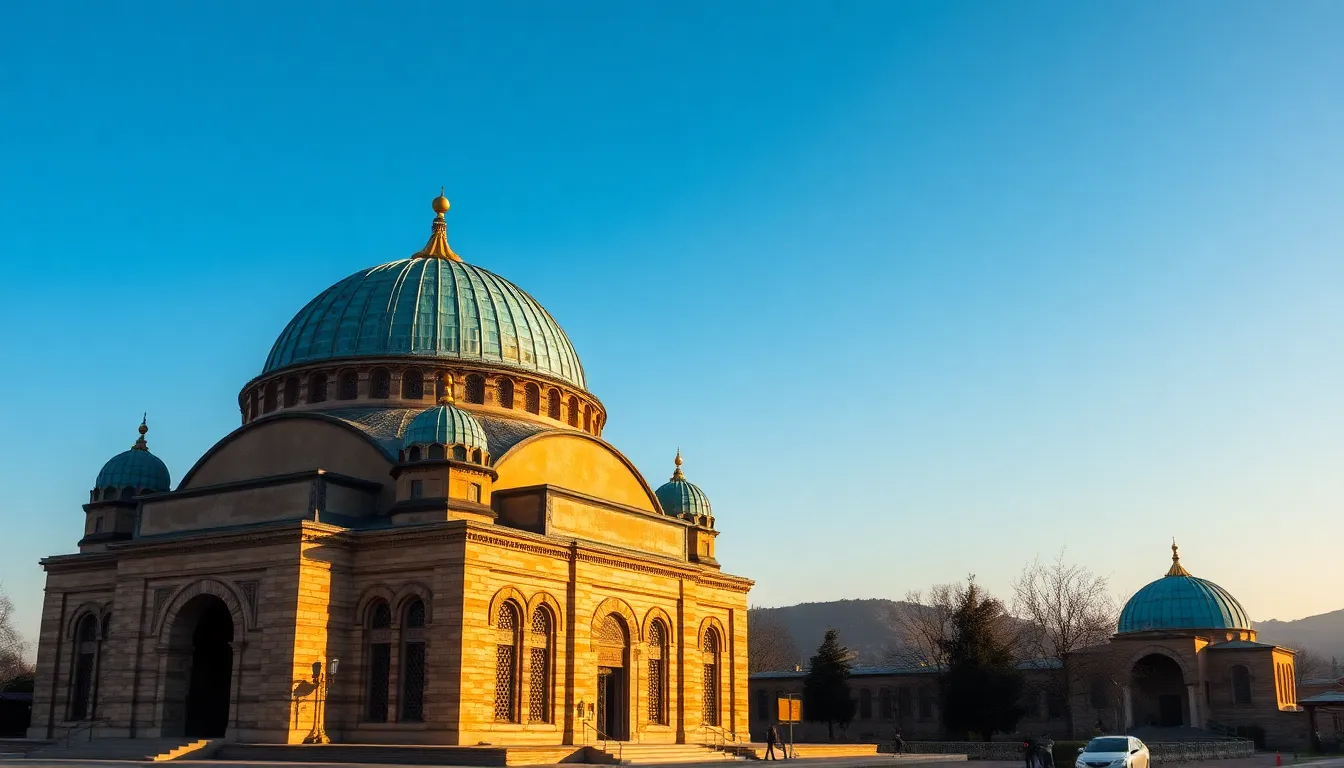
I remember a pastor in one of my groups reading Acts 14 aloud in the middle of Konya, on a busy modern street with traffic going by, and stopping at the line where Paul and Barnabas “spoke so effectively that a great number of Jews and Greeks believed.” He looked up and said, “Right here. This was Iconium.” That is the thing about Konya. It does not look like a biblical site at first glance. It is a large, prosperous Anatolian city. But under the surface, the layers run deep, and Paul walked these streets.
Konya gets overlooked on a lot of Turkey itineraries because it sits inland, away from Ephesus and the coast. I think that is a missed opportunity, especially for groups tracing Paul’s first missionary journey. Konya, the ancient Iconium, is where Paul preached, where he was nearly stoned, and where he kept returning. Add to that one of the most significant spiritual sites in the Islamic world, and you have a city that holds more than most travelers expect. Let me show you what is here.
Iconium: Paul’s First Missionary Journey
In the New Testament, Iconium is one of the cities Paul and Barnabas visited on their first missionary journey, recorded in Acts 13 and 14. They came here after Antioch in Pisidia, preached in the synagogue, and saw many believe, both Jews and Greeks. But opposition grew, a plot formed to stone them, and they fled to Lystra and Derbe nearby. Paul returned to Iconium afterward to strengthen the disciples, which tells you a church took root here.
For a group, Konya is the chance to stand in a city that appears by name in the book of Acts and to read the account where it happened. The ancient city lies beneath the modern one, so this is not a ruins walk like Ephesus. It is more about presence and imagination. I prepare my groups for that. We read the Acts passages together, we visit the mound and museum holdings that connect to the ancient city, and we let the geography do its work. Konya sits on the old road network that Paul traveled, and feeling those distances on the ground helps people understand the cost of the mission.
The Tradition of Thecla
Konya is also tied to the early Christian tradition of Saint Thecla, a young woman of Iconium who, according to early church writings, was so moved by Paul’s preaching that she devoted her life to the faith despite great danger. The account of Thecla is not in the New Testament, but it was widely read in the early church and shows how powerfully the gospel landed in this city. For groups interested in the role of women in the early church, Thecla’s story gives Konya a particular resonance.
Reading the Geography of the First Journey
One thing I do with every group in Konya is open a map of the first missionary journey and trace it together. From Antioch in Pisidia to Iconium, then on to Lystra and Derbe, and back again. The cities sit within reach of one another on the old Roman roads, and Konya is the most accessible of them today. When your people see how Paul doubled back through Iconium to strengthen the young churches, rather than simply pushing forward, they understand something about how he worked. He planted, then he returned to tend. That pattern of care, visible right here in the geography, often speaks to pastors more than any single ruin could.
The Mevlana Shrine: Konya’s Living Heart
You cannot understand Konya without the Mevlana. This is the resting place of Jalal ad-Din Rumi, the thirteenth-century poet and mystic known across the world simply as Rumi, and it is one of the most visited spiritual sites in Turkey. The turquoise dome over his tomb is the symbol of the city.
Rumi founded the spiritual tradition that gave rise to the whirling dervishes, the Mevlevi order, whose turning dance is a form of prayer. The shrine complex, now a museum, holds his tomb, the dervish lodge, and centuries of devotion. Pilgrims come from all over the world.
I bring my groups here with intention. For a Christian or Jewish group, this is a window into the mystical heart of Islam, and into a figure whose poetry about love and the divine has crossed every religious boundary. I have watched rabbis and pastors stand quietly at the tomb, moved by the same longing for God that Rumi spent his life describing. It is a powerful counterpoint to the biblical sites, and it makes Konya a place where the three-faith story of Turkey becomes personal. As at any active shrine, modest dress and quiet are essential.
The Seljuk Layer: Konya as a Capital
There is another layer here that travelers often miss. In the twelfth and thirteenth centuries, Konya was the capital of the Seljuk Sultanate of Rum, and it was a center of art, architecture, and learning. The Seljuks left behind some of the finest medieval Islamic buildings in Anatolia.
The Karatay Madrasa, now a museum of tile and ceramic art, has an interior dome of dark blue and turquoise tilework that stops people in their tracks. The Ince Minare Madrasa has a carved stone doorway that is one of the masterpieces of Seljuk art. For a group, these sites add a dimension of beauty and craft that balances the spiritual stops. They show Konya as a city that has been important for nearly a thousand years, not just in antiquity.
Practical Orientation for Group Leaders
Here is what you need to know to plan Konya well.
Getting There
Konya is well connected. The high-speed train links it to Ankara and Istanbul, and the city has its own airport. Many groups reach Konya by road as part of a central Anatolia route, since it sits between Cappadocia and the Mediterranean coast. That central position is one of Konya’s practical advantages.
How Much Time
One full day works for most groups, covering the Mevlana shrine, the Seljuk madrasas, and the Iconium connections, with time to read the Acts passages. If you want to add a whirling dervish ceremony, which is held on certain evenings, plan an overnight so you can experience it properly rather than rushing.
Fitting Konya Into a Route
Konya’s best use is as a bridge. It connects beautifully between Cappadocia to the northeast and the Mediterranean coast to the south, which makes it natural to link with a Paul itinerary heading toward Tarsus and Adana on the Cilician plain. For the wider picture of how Turkey’s regions fit together, see our Turkey heritage travel guide.
Pace and Atmosphere
Konya is more traditional and observant than the coastal cities, and that gives it a calm, dignified feel. I tell groups to slow down here. This is not a city you rush through. It is a city you sit in, read in, and reflect in.
FAQ: Heritage Travel to Konya
Is Konya the same as the biblical Iconium?
Yes. Konya is the modern city built on and around ancient Iconium, one of the cities Paul and Barnabas visited on the first missionary journey in Acts 13 and 14. The ancient city lies largely beneath the modern one, so a visit is more about presence and reading the Acts account on location than walking extensive ruins.
What is the Mevlana shrine and should a Christian or Jewish group visit?
The Mevlana is the tomb of Rumi, the thirteenth-century mystic and poet, and one of the most revered spiritual sites in Turkey. I encourage faith groups to visit. It offers a respectful window into the mystical side of Islam and into a poet whose words about divine love speak across every tradition. Modest dress and quiet are expected.
How long should we spend in Konya?
One full day covers the main sites comfortably. If you want to see a whirling dervish ceremony, which happens on select evenings, add an overnight so you can experience it without rushing the rest of the city.
How does Konya fit into a Turkey itinerary?
Konya sits between Cappadocia and the Mediterranean coast, which makes it a natural bridge in a central Anatolia route. For groups tracing Paul, it connects the inland mission cities to the Cilician plain and Tarsus. We build the sequencing around your group’s focus.
Do group leaders travel free to Konya with Heritage Tours?
Yes. With 15 or more participants, the group leader travels free on all Heritage Tours itineraries in Turkey, including custom programs that include Konya. This lets the spiritual leader focus on guiding the group rather than managing the cost.
If you are building a journey around Paul’s missionary travels, or you want a stop that holds both the early church and the mystical heart of Islam, Konya earns its place. The layers here reward a group that slows down to read them. You can see how we shape these trips on our Turkey heritage page or learn how the group experience works on our group heritage tours page.
Contact us whenever you are ready to start planning.