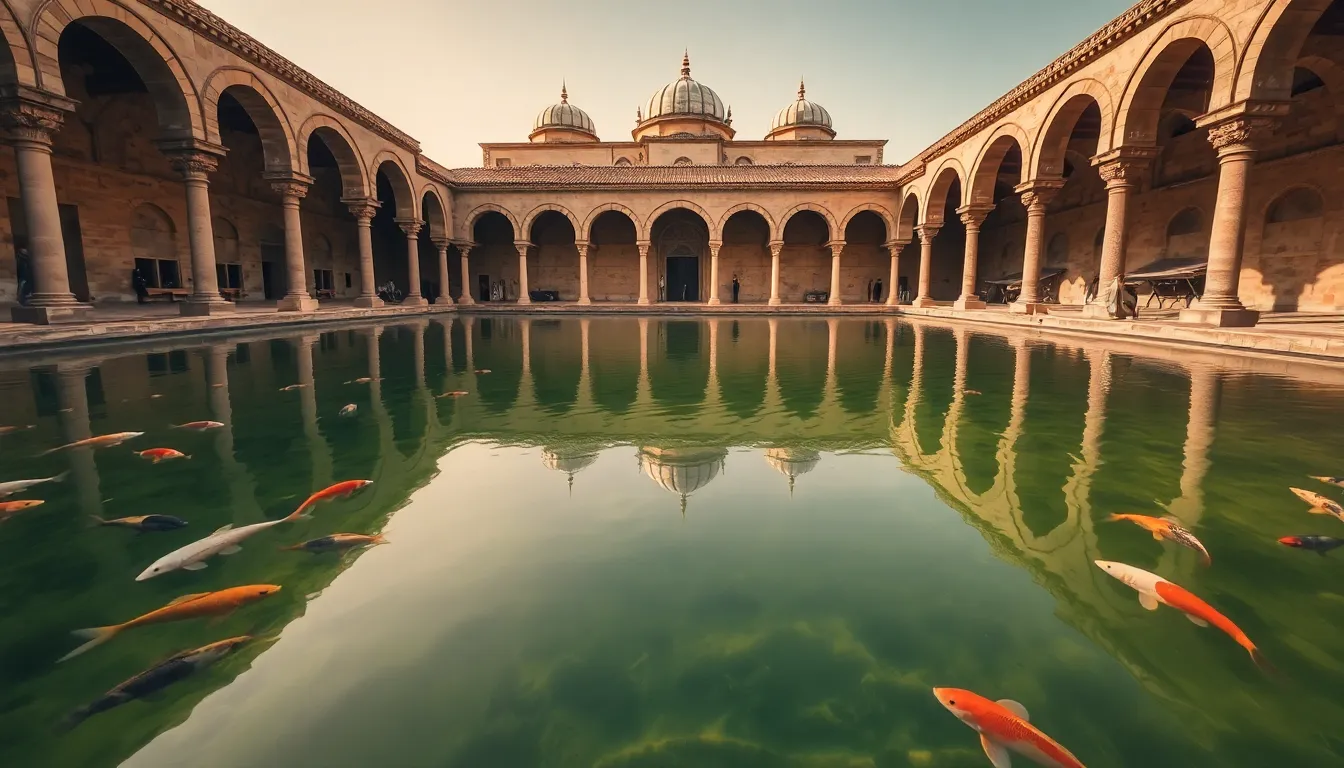
The first time I brought a group to Sanliurfa, an older pastor stood at the edge of the carp pools, looked across the water at the Ottoman arcades, and said quietly, “So this is where it starts.” He meant Abraham. He meant the whole long story that runs from this dusty city in southeastern Turkey straight through the faith of three religions. I have never forgotten the way he said it, because he was right. For a group tracing the roots of biblical faith, very few places carry the weight that Sanliurfa does.
Most heritage travelers go to Istanbul and the Aegean coast and stop there. I understand why. Sanliurfa sits far to the southeast, closer to Syria than to the tourist trail, and it asks a little more of you to reach it. But for a rabbi or a pastor building a journey around the patriarch Abraham, this city is the anchor. Let me walk you through what is here and why it matters.
Why Sanliurfa Holds the Abraham Tradition
Sanliurfa, often shortened to Urfa, is known in Turkey as the city of prophets. The strongest tradition here is that this is the birthplace of Abraham. Scripture places Abraham’s origins in Ur of the Chaldees, and there is a long debate about where Ur actually was. Many scholars point to southern Iraq. But a deep and ancient local tradition, carried for centuries by Jewish, Christian, and Muslim communities alike, holds that Abraham was born in Urfa and lived here before his journey to Canaan.
I am careful with my groups about this. I do not tell them the tradition is settled history, because it is not. What I tell them is that they are standing in a place where people have honored Abraham as their father for a very long time, and that the reverence itself is part of the story. When you watch a Muslim family, a Christian pilgrim, and a Jewish visitor all pause at the same cave, you understand something about Abraham that no textbook delivers.
The Cave of Abraham
The cave where tradition says Abraham was born sits within the Mevlid-i Halil mosque complex, at the foot of the citadel hill. It is a small space, and you reach it through separate entrances for men and women, as is the local custom. Inside, water collects in a spring, and people come to pray and to drink.
For a group leader, this is a moment to prepare your people before you arrive. The cave is an active site of devotion, mostly for Muslim pilgrims, and your group will be guests in a living place of prayer. I always ask my travelers to keep their voices low and to dress modestly, women with heads covered. When a group enters with that kind of respect, the local worshippers notice, and the exchange of quiet nods across faiths is one of the things people remember most.
Standing at the cave, I usually read from Genesis 12, the call of Abram to leave his country and his father’s house. It does not matter whether this exact cave saw his birth. What matters is that your group is at the doorway of the journey that shaped everything that followed.
The Pools of Urfa: Balikligol
A short walk from the cave brings you to Balikligol, the pool of the sacred fish, and this is the image most people carry home from Sanliurfa. Two long rectangular pools, fed by spring water, full of carp that no one will eat because they are considered sacred. Ottoman arcades and a mosque frame the water. In spring the gardens around the pools are full of families and roses.
The legend attached to the pools is vivid. The story goes that the tyrant Nimrod ordered Abraham thrown into a fire for rejecting idol worship, and that God turned the fire into water and the burning coals into fish. It is a folk tradition, not scripture, but it is woven so tightly into the city that you cannot understand Sanliurfa without it. The pools are where the Abraham story becomes visible, public, and shared.
I let groups linger here. Buy a handful of fish food from a vendor, sit on the stone edge, and watch the water churn with carp. It is one of the few places on a heritage itinerary where the spiritual weight and simple human pleasure sit side by side. Your people will talk to local families. Children will point at the fish. The barrier between traveler and place thins out.
Gobekli Tepe: The Deeper Layer
About twenty minutes outside the city is Gobekli Tepe, and no honest Sanliurfa guide leaves it out. This is the oldest known monumental temple complex in the world, carved roughly eleven and a half thousand years ago, thousands of years before Stonehenge or the pyramids. T-shaped stone pillars carved with animals rise from the hillside, built by people who had not yet invented writing or the wheel.
Gobekli Tepe is not a biblical site, and I am clear with groups about that. But it changes how you think about this region. Long before Abraham, this corner of the world was already a place where human beings gathered to reach toward something beyond themselves. For a thoughtful group, standing at Gobekli Tepe and then driving back to the city of Abraham creates a sense of depth that is hard to describe and easy to feel. The ground here has been sacred to people for a very long time.
Practical Orientation for Group Leaders
Sanliurfa rewards planning. Here is what I tell leaders before they commit.
Getting There
The city has its own airport with regular domestic flights from Istanbul and Ankara. Most heritage groups fly in rather than drive, because the overland distances in this region are long. Plan a full day to reach Sanliurfa and a full day to leave it, and build the city visits in between.
How Much Time
Two nights is the right amount for most groups. That gives you a full day for the cave, the pools, the bazaar, and the citadel, and a half day for Gobekli Tepe and the regional museum, which holds the extraordinary finds from the dig. Rushing Sanliurfa into a single day means skipping either Abraham or Gobekli Tepe, and both deserve their place.
Culture and Comfort
Sanliurfa is a conservative, traditional city, more so than Istanbul or the coast. This is part of its character, not a problem to solve. I prepare groups to dress modestly, to expect separate prayer spaces by gender at religious sites, and to embrace the famous Urfa hospitality, which is genuine and warm. The local food, especially the kebabs and the breakfast spreads, is some of the best in Turkey.
Combining With Other Sites
Many groups pair Sanliurfa with a wider southeastern Turkey itinerary or fold it into a fuller Turkey program. If you are tracing Paul as well as Abraham, you can connect this region to Tarsus and Adana further west. For the full national picture, our Turkey heritage travel guide lays out how the regions fit together.
FAQ: Heritage Travel to Sanliurfa
Is Sanliurfa really the birthplace of Abraham?
There is a strong and ancient local tradition that Abraham was born and lived in Urfa, honored by Jewish, Christian, and Muslim communities for centuries. Scholars debate whether the biblical Ur was here or in southern Iraq, so I present it to groups as a revered tradition rather than settled fact. The reverence itself, shared across three faiths, is a meaningful part of the experience.
Is Sanliurfa safe for a faith group to visit?
Sanliurfa is a welcoming city with a long tradition of pilgrim hospitality, and heritage groups visit regularly. As with any travel near a border region, we monitor current conditions and advise accordingly when we plan your itinerary. The city itself is calm, and the famous Urfa hospitality means visitors are treated as honored guests.
What should my group wear at the religious sites?
Modest dress is important here, more than in Istanbul or on the coast. Women should bring a scarf to cover their heads at the Cave of Abraham and the mosques, and everyone should cover shoulders and knees. Sanliurfa is a traditional city, and arriving dressed with respect changes how local worshippers receive your group.
Should we include Gobekli Tepe in a faith itinerary?
Yes, even though it is not a biblical site. Gobekli Tepe is the oldest monumental temple in the world, and visiting it deepens the sense that this region has been sacred ground for humanity across thousands of years. Pairing it with the Abraham sites gives thoughtful groups a remarkable sense of historical depth.
Do group leaders travel free to Sanliurfa with Heritage Tours?
Yes. With 15 or more participants, the group leader travels free on all Heritage Tours itineraries, including custom programs that bring Sanliurfa together with other regions of Turkey. This is how we have always worked, so the spiritual leader can focus on the group rather than the cost.
If Abraham is at the center of the journey you want to give your community, Sanliurfa belongs on your map. The cave, the pools, and the long memory of this city make it one of the most moving stops in all of Turkey. You can see how we shape these trips on our Turkey heritage page or learn how the group experience works on our group heritage tours page.
Contact us whenever you are ready to start planning.