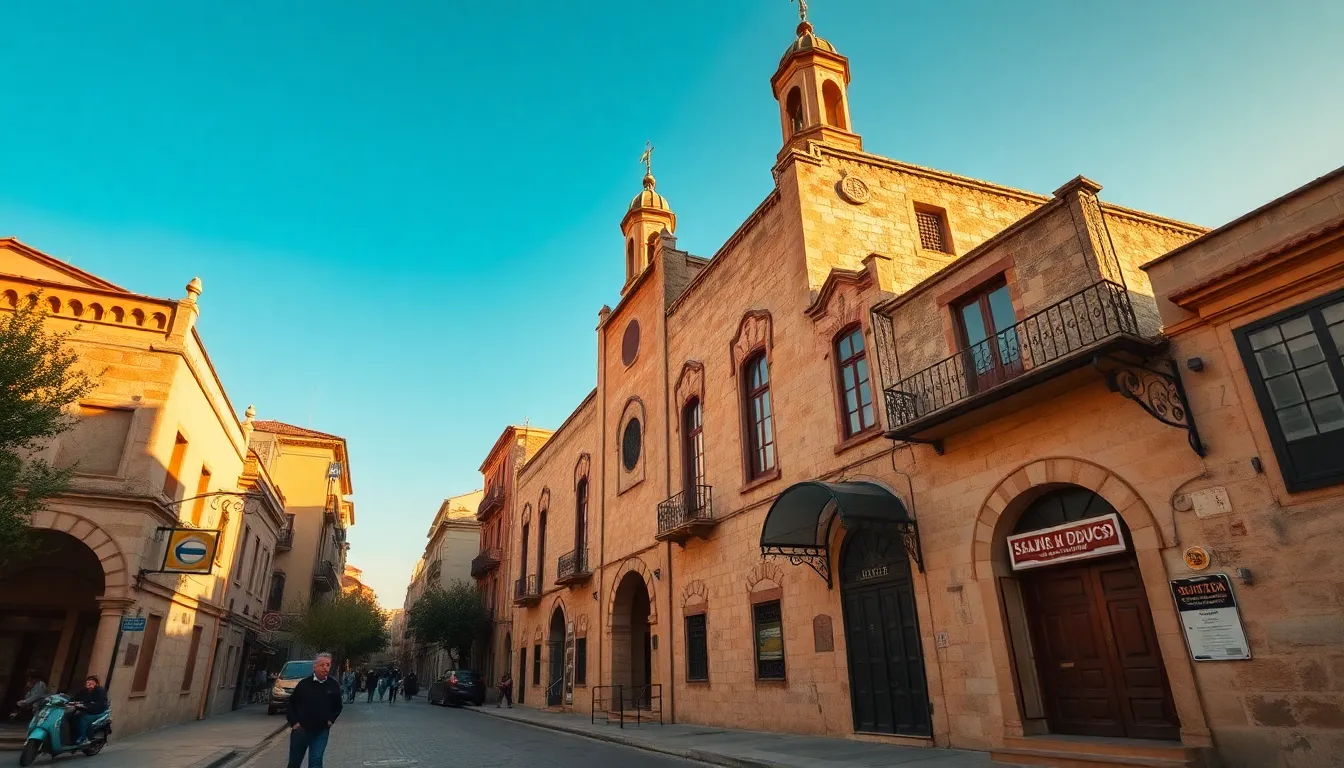
There is a moment on every Izmir visit when a group leader has to decide how to tell a difficult story. We are standing in the old Jewish quarter, near where Sabbatai Zevi was born in 1626, and someone asks the obvious question: what actually happened here? It is not a simple answer, and it is not a comfortable one. Sabbatai Zevi was the most famous false messiah in Jewish history, a man who convinced much of the Jewish world that redemption had arrived, and then converted to Islam under threat. The story is painful. It is also one of the most important things that ever happened in this city, and a thoughtful group deserves to hear it told honestly.
I have learned to handle this story with care, because it touches real grief and real questions of faith. But I do not skip it. Izmir without Sabbatai Zevi is Izmir with the most consequential chapter torn out. If you have read our overview of Jewish heritage in Turkey, this is the dramatic, troubling heart of the Izmir part of that story.
Who Sabbatai Zevi Was
Sabbatai Zevi was born in Izmir in 1626, into the Sephardic community that had taken root there after the expulsion from Spain. The city was a thriving center of Jewish life and learning, and as a young man Zevi was known as a brilliant, unusual student of Jewish mysticism, the Kabbalah. He was also, by most accounts, given to extreme swings of mood and behavior, periods of soaring exaltation followed by deep withdrawal.
In his twenties he began to claim, openly, that he was the messiah. The Izmir community did not embrace this. They found it disturbing, and eventually they expelled him. For years he wandered the Jewish centers of the Ottoman world, from Salonica to Cairo to Jerusalem, gathering some followers and being driven out of more than one community.
The Movement That Swept the Jewish World
What turned a wandering mystic into a world-shaking figure was his meeting with Nathan of Gaza around 1665. Nathan was a gifted and persuasive young scholar who declared that Zevi was indeed the messiah and became the movement’s theologian and publicist. With Nathan giving the claim a framework, the message spread with astonishing speed.
This was a moment when the Jewish world was raw with longing. The communities of Europe had endured the catastrophe of the Chmielnicki massacres in 1648 and 1649. The hope for redemption was intense, and the news that the messiah had come reached communities from Yemen to Amsterdam to Poland. People sold their possessions. They prepared to leave for the Land of Israel. Whole communities were swept up. For a brief, dizzying period, a large part of the Jewish world believed that the end of exile had arrived, and the man at the center of it had been born in Izmir.
The Conversion and the Wound It Left
In 1666 Zevi traveled toward Constantinople, where he was arrested by Ottoman authorities who saw the movement as a threat. Brought before the Sultan and given a stark choice, Zevi converted to Islam. The messiah, the man on whom so much hope had been hung, put on a turban and took a Muslim name.
The shock is hard to overstate. Communities that had sold everything and prepared for redemption were left with the wreckage of a betrayed faith. Most followers abandoned the movement in despair and returned, often quietly, to ordinary Jewish life. Rabbinic authorities moved to suppress the memory of the whole episode, and for generations Sabbateanism was a wound the community did not want to reopen.
A minority, however, followed Zevi into a strange in-between existence. Known later as the Donme, they outwardly practiced Islam while secretly maintaining Sabbatean beliefs and a distinct identity. The Donme persisted for centuries, particularly in Salonica and later in Turkey, an unusual community born from the collapse of a messianic dream.
Why This Story Still Matters
I tell groups that the Sabbatai Zevi episode is not just a curiosity. It is a window into something real about faith itself: the power of longing, the danger of certainty, and the difference between hope and the manipulation of hope. For a rabbi standing with a congregation in the city where it began, those are not abstract questions. They are the questions communities have always wrestled with.
The story also says something about the resilience of the Izmir community. It survived the disaster. It absorbed the shock, rebuilt its life, and continued for centuries afterward. The synagogues of Kemeralti, which you can read about in our guide to the synagogues of Izmir’s Kemeralti quarter, were the home of a community that had lived through one of the great upheavals of Jewish history and held together.
Telling It Well on a Group Visit
This is a story that rewards honesty and care in equal measure. I do not sensationalize it, and I do not flatten it into a cautionary tale. The people who believed were not foolish. They were grieving and hopeful, and they reached for a redemption they had every reason to long for. Treating them with dignity is part of telling the story right.
In Izmir, the relevant ground is the old Jewish quarter near Kemeralti, where Zevi was born and raised and where the community that both produced and rejected him lived. There is no single shrine to visit, which I think is appropriate. What there is, is the neighborhood itself, the synagogues, and the streets that held a community through its highest hope and its hardest fall. A good guide can stand your group in that setting and let the history breathe.
For groups continuing to Istanbul, the broader story of the community is laid out at the Quincentennial Foundation Museum of Turkish Jews, which gives the full five-century arc that the Sabbatai Zevi chapter belongs to.
One practical note as you plan: with Heritage Tours, the group leader travels free when you bring fifteen or more participants. For a rabbi or educator shaping a congregational journey through this history, that is worth factoring in early.
FAQ: Sabbatai Zevi and Izmir
Who was Sabbatai Zevi? Sabbatai Zevi was a Jewish mystic born in Izmir in 1626 who declared himself the messiah and, with the help of Nathan of Gaza, sparked a messianic movement that swept the Jewish world in 1665 and 1666. He is remembered as the most famous false messiah in Jewish history, because in 1666 he converted to Islam under Ottoman pressure rather than face execution.
Why did so many people believe him? The Jewish world of the mid-1600s was raw with grief and longing after the Chmielnicki massacres of 1648 and 1649, and the hope for redemption was intense. Nathan of Gaza gave Zevi’s claim a persuasive theological framework, and the message spread rapidly to communities from Yemen to Amsterdam. Many sold their possessions and prepared to leave for the Land of Israel.
What happened after his conversion? Most followers abandoned the movement in despair and returned to ordinary Jewish life, while rabbinic authorities worked to suppress the memory of the episode. A minority followed Zevi into Islam outwardly while keeping Sabbatean beliefs in secret. This group, known as the Donme, persisted for centuries, especially in Salonica and later in Turkey.
Is there a specific site to visit in Izmir? There is no single shrine. The relevant ground is the old Jewish quarter near Kemeralti, where Zevi was born and where the community that produced and rejected him lived. A guide can place a group in that setting, among the historic synagogues and streets, and tell the story where it happened.
How should a group leader handle such a painful story? With honesty and dignity. The story touches real grief and serious questions of faith, and it deserves to be told without sensationalizing it or reducing it to a simple lesson. The people who believed were grieving and hopeful, not foolish, and treating them with respect is part of telling the story well.
If a Jewish heritage journey through Izmir and its history speaks to your congregation, I would be glad to help you shape it. You can see how we structure these trips on our Turkey heritage page or learn how the group experience works on our group heritage tours page.
Contact us whenever you are ready to start planning.