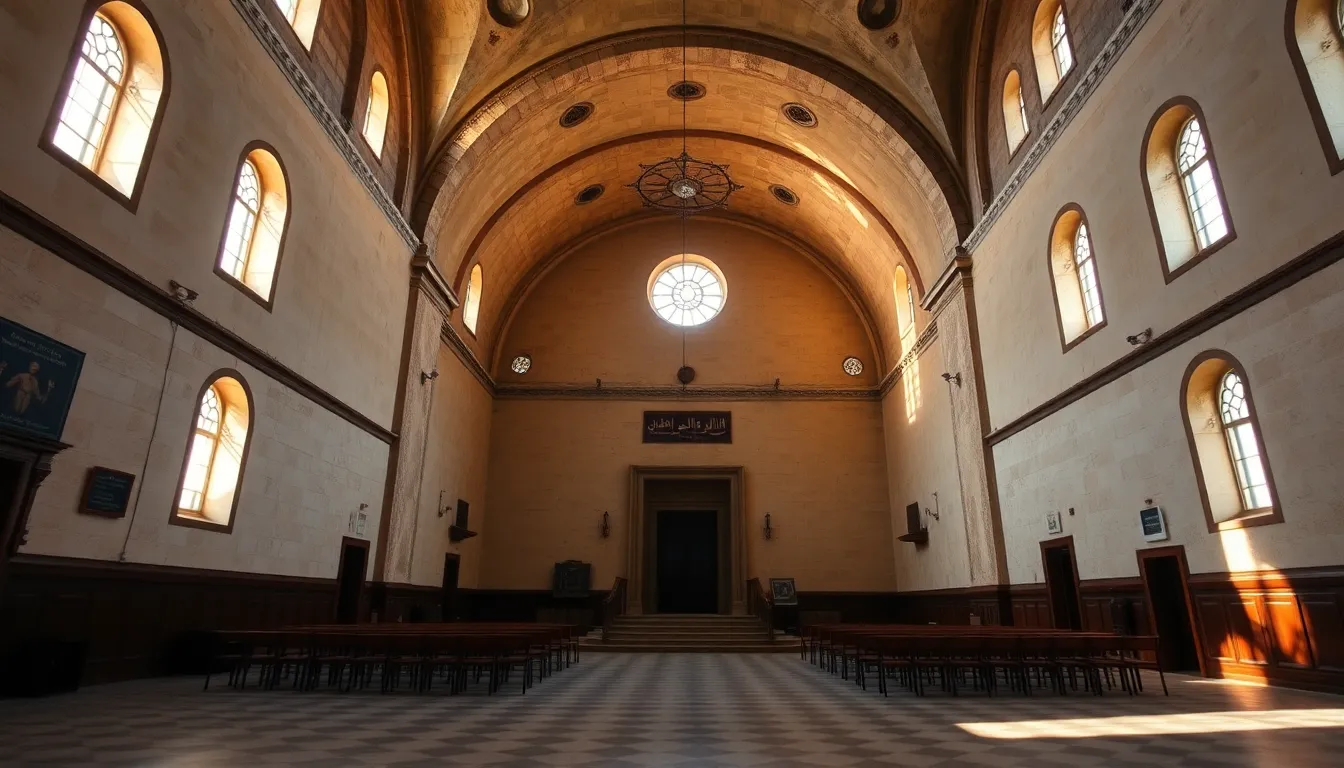
The first time I walked a group through Kemeralti, we got lost twice in fifteen minutes. That is not a complaint. Kemeralti is a working bazaar, loud and dense, and the synagogues sit tucked between fabric stalls and spice shops, behind doors you would walk past without a guide. Then one of those doors opens, the noise drops away, and you are standing inside a 17th-century sanctuary that almost no tour bus ever finds. The contrast is the whole point. I tell groups to slow down here, because this is the densest surviving cluster of historic synagogues anywhere in the Mediterranean, and you can walk between several of them in a single morning.
If you have read our overview of Jewish heritage in Turkey, you know the broad arc: Spain expels its Jews in 1492, the Ottoman Empire welcomes them, and five centuries of Sephardic life follow. Izmir is where that story gets concrete. This is the city where you can still walk the streets the exiles walked and stand in the rooms they prayed in.
Why So Many Synagogues in One Quarter
Most cities with a Jewish past have a synagogue or two. Kemeralti has a row of them, clustered within a few short streets. The reason is simple and tells you a lot about how the community lived.
Sephardic congregations in Izmir organized around the cities and regions their families came from in Spain and Portugal. A community from one place would build its own synagogue, keep its own customs, and worship beside neighbors from another place who did the same. The result was a tight grid of small congregations, each with its own house of worship, packed into the Jewish quarter beside the bazaar where most of them earned their living as merchants.
At its height, Izmir held more than thirty synagogues. Many are gone now, lost to fire, earthquake, and the slow decline of the community through the 20th century. But the survivors stand close together, and that density is exactly what makes Kemeralti so rewarding for a visiting group. You are not driving across a city to see one building. You are walking a neighborhood that was built as a Jewish neighborhood, with the prayer houses still in their original places.
The Synagogues You Can Visit
A handful of the Kemeralti synagogues are restored, open, or accessible by arrangement. These are the ones I build a morning around.
Algazi Synagogue
Algazi dates to the 17th century and is one of the best-preserved in the quarter. The interior follows the classic Izmir layout: the bimah set in the center of the room, the seating arranged around it, the ark against the wall facing Jerusalem. The central-plan design is distinctive to Izmir and you will see it repeated as you move from one synagogue to the next. Standing in Algazi, your group gets its first read on what the local tradition looked like.
Shalom Synagogue
Shalom is one of the oldest in the city, with roots reaching back to the period soon after the Sephardic arrival. It is modest from the street and significant inside, which is true of almost everything in Kemeralti. For a group, Shalom is a good place to pause and talk about how a refugee community, arriving with little, built institutions that lasted half a millennium.
Bikur Holim Synagogue
Bikur Holim is among the more ornate of the surviving synagogues, with painted decoration and a sense of the wealth the Izmir merchant community eventually reached. The name means “visiting the sick,” tied to the charitable society that maintained it. It speaks to a community that built not only places to pray but a full network of mutual care.
Signora and the Restoration Cluster
Several synagogues, including Signora Giveret and others nearby, have been part of a major restoration effort over the past decade. The Izmir Jewish Heritage Project, backed by local and international partners, has been stabilizing and reopening these buildings one by one, with the long-term aim of presenting Kemeralti as a connected heritage site rather than a scatter of locked doors. Which buildings are open shifts as the work progresses, and that is part of why a coordinated visit matters.
What the Restoration Is Trying to Save
For decades these buildings were at real risk. The community that filled them shrank as families emigrated, many to Israel after 1948, and the synagogues that were no longer needed for daily worship fell quiet. Roofs leaked. Plaster failed. A few collapsed entirely. What you see today in the restored buildings is the result of careful, patient work to hold on to a heritage that nearly slipped away.
I think this matters for how a group experiences Kemeralti. You are not looking at a museum that was always tended. You are looking at survival, at buildings pulled back from the edge by people who decided the story was worth keeping. When I explain that to a congregation, the rooms change for them. The fresh plaster stops looking new and starts looking like rescue.
Pairing Izmir With the Rest of the Coast
Izmir sits on the Aegean, which makes it easy to fold into a wider itinerary. Ephesus is about an hour south, so a morning in Kemeralti and an afternoon at Ephesus is a natural pairing for a group interested in both Jewish and early Christian heritage. The city is also the gateway to the Sephardic story that runs through the whole region, including the Sabbatai Zevi history rooted in Izmir, which began on these same streets.
For groups continuing on to Istanbul, Kemeralti makes a strong first chapter. You start with the intimate, walkable Jewish quarter of Izmir and then travel to the larger story in the capital, including the Quincentennial Foundation Museum of Turkish Jews, which ties the whole national history together.
Visiting Kemeralti With a Group
A few practical notes from leading groups here. The synagogues require advance arrangement. These are not buildings you walk into off the street, and access depends on coordinating with the Izmir Jewish community and the restoration project. Heritage Tours handles that coordination as part of any Turkey itinerary, so your group arrives to open doors and a guide who can read the quarter.
The bazaar itself is uneven underfoot and can be crowded, so I pace the walk for the group I have. Modest dress is appropriate inside the synagogues, and men are asked to cover their heads. We plan the route so the walking stays manageable and the meaningful stops are not rushed.
One detail worth knowing as you plan: with Heritage Tours, the group leader travels free when you bring fifteen or more participants. For a rabbi or educator building a congregational trip, that changes the budget in a real way, and it is worth factoring in from the start.
FAQ: Visiting Izmir’s Synagogues
How many synagogues are in Izmir’s Kemeralti quarter? At its height Izmir had more than thirty synagogues, most of them clustered in and around Kemeralti. A smaller number survive today, and several have been restored or are part of the ongoing Izmir Jewish Heritage Project. The exact number open to visitors changes as restoration work continues, which is why a coordinated visit is the reliable way to see them.
What makes the Izmir synagogues different from those in Istanbul? The Izmir synagogues are notable for their density and their distinctive central-plan layout, with the bimah set in the middle of the room. Because Sephardic congregations organized around the Spanish cities their families came from, the quarter ended up with many small synagogues packed close together, which you can walk between in a single morning.
Can groups visit the Kemeralti synagogues? Yes, with advance arrangement. The synagogues are not open for walk-in visits and require coordination with the Izmir Jewish community and the restoration project. Heritage Tours arranges this access as part of every Turkey Jewish heritage itinerary.
How long should a group spend in Kemeralti? Plan for a half day. A focused morning lets you visit several of the restored synagogues, walk the old Jewish quarter, and take in the bazaar that surrounds it without rushing. Pairing the morning with Ephesus in the afternoon is a common and comfortable structure.
Is Izmir worth including alongside Istanbul? Yes. Istanbul holds the larger story, but Izmir gives a group something Istanbul cannot: a compact, walkable Sephardic quarter with its synagogues still in their original places. Together they tell the fuller arc of Jewish life in Turkey.
If a journey through Izmir’s Jewish heritage speaks to your congregation, I would be glad to help you shape it. You can see how we structure these trips on our Turkey heritage page or learn how the group experience works on our group heritage tours page.
Contact us whenever you are ready to start planning.