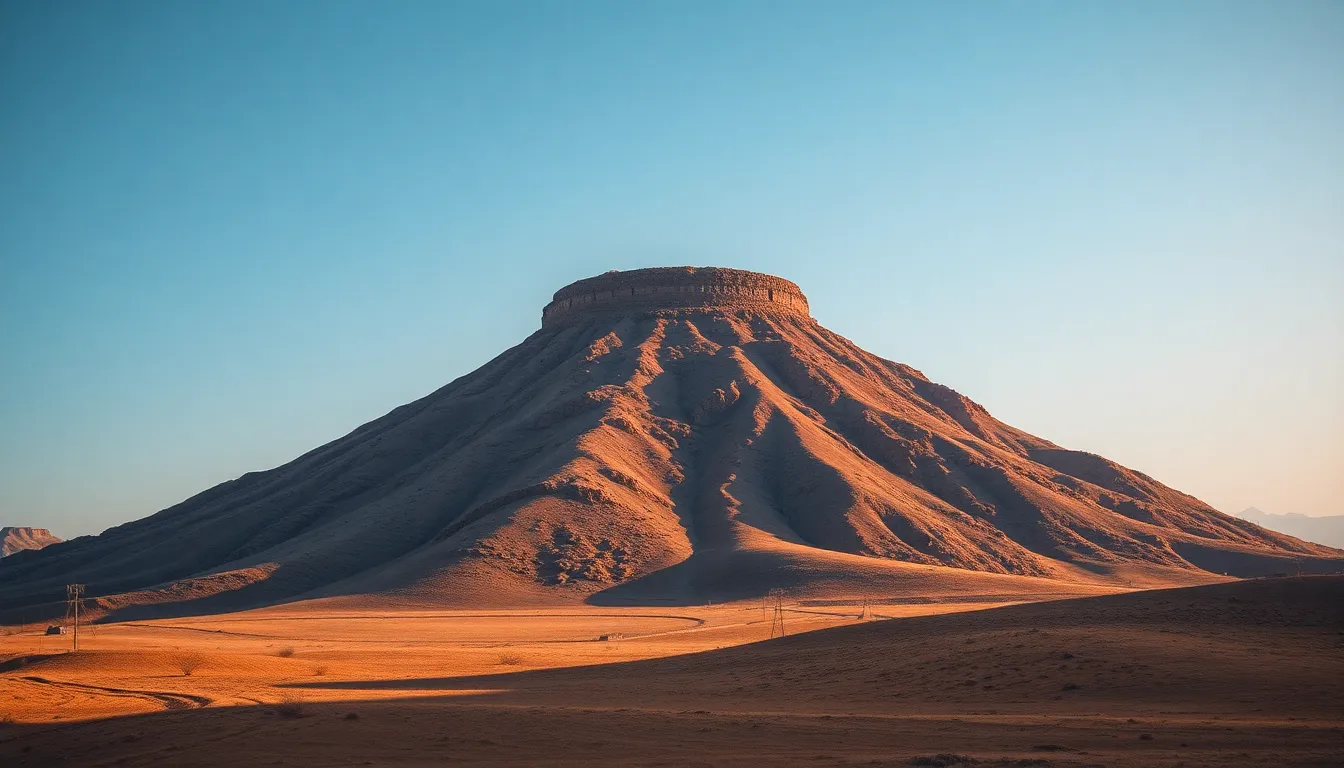
I will tell you the truth about this trail before we start, because I tell my groups the same thing. Iconium, Lystra, and Derbe are not three preserved cities you walk through like Ephesus. One is buried under a busy modern city. The other two are grassy mounds rising out of farmland. If your group is chasing postcard ruins, they will be disappointed. But if they come to walk where Paul was nearly killed, where he healed a man crippled from birth, and where a young Timothy first came into the story, this trail delivers something the famous sites cannot. It delivers the cost of the mission, written into the ground.
These three cities of Acts 14 sit on the Anatolian plateau in the old region of Lycaonia. Together they form the heart of Paul’s Galatian trail, the inland stretch of his first missionary journey, and for a group that wants to understand what it actually took to plant the early church, this is essential ground.
The Story of Acts 14 on the Ground
After preaching in Pisidian Antioch, Paul and Barnabas traveled on to these three cities, and Luke gives us vivid detail for each one. Walking them in order lets your group read Acts 14 almost as a map.
Iconium
Paul and Barnabas came to Iconium and preached in the synagogue, where Acts 14:1 says “a great multitude both of the Jews and also of the Greeks believed.” But the city divided over them, and when a plot formed to stone them, they fled. Iconium is the modern city of Konya, a large and historic Turkish city today, which means the ancient layer is mostly built over. You do not walk ruins here. You walk a living city and understand that Paul preached in a real urban place that has never stopped being inhabited. Konya has its own deep heritage, and a good guide helps your group feel the continuity.
Lystra
Lystra is where the story gets dramatic. Here Paul healed a man who had been lame from birth, and the crowd, speaking the local Lycaonian language, decided Paul and Barnabas were the gods Hermes and Zeus come down in human form. The priest of Zeus brought oxen and garlands to sacrifice to them. Paul and Barnabas tore their clothes in distress and cried out, “We also are men of like passions with you.” Then, in one of the sharpest turns in Acts, the same crowd was swayed by opponents from Antioch and Iconium, and they stoned Paul, dragged him out of the city, and left him for dead. He got up and went back in. Lystra is also Timothy’s hometown. Paul would return here and take the young disciple with him as a traveling companion, a partnership that runs through the rest of the New Testament.
Lystra today is an unexcavated mound near the village of Hatunsaray, south of Konya. An inscription found at the site confirmed its identity. You stand on a quiet hill of grass and earth, and you tell your group: this is where they tried to worship him as a god, and this is where they stoned him, and this is where Timothy watched it all and followed anyway.
Derbe
Derbe was the turning point of the outbound journey. Paul and Barnabas preached here and “taught many,” and Acts notes no persecution, a rare moment of peace on this leg. From Derbe they turned back, retracing their steps through Lystra, Iconium, and Pisidian Antioch to strengthen the new believers and appoint elders. Derbe is also an unexcavated mound, identified by an inscription, sitting in farmland in the southeast of the region. It marks the far edge of the first journey, the point where the apostles had gone as far as they would go before heading home.
The Letter Behind the Trail
Here is the connection that makes this trail land for a study-minded group. Many scholars believe Paul’s letter to the Galatians was written to these very churches, the ones he founded in Lycaonia and the surrounding region on this journey. When your group reads Galatians, with its fierce defense of grace and its warning not to add the law back onto the gospel, they are reading a letter sent to people in these towns. Standing on the mound at Lystra and reading from Galatians is the kind of moment that stays with a congregation for years.
What Visiting This Trail Actually Looks Like
Let me be practical, because leading this trail well means setting the right expectations.
The trail runs across the Anatolian plateau with Konya as the natural base. From Konya, the ancient Iconium, you drive out to the mounds of Lystra and Derbe through farmland and small villages. The sites themselves are humble. There are no ticket gates, no gift shops, sometimes only a marker. What you bring to them is scripture, and that is exactly the point.
This is a trail that rewards a leader who teaches. At each stop you read the passage, you talk about what happened, and you let the plainness of the place do its work. I have found that groups who visit the grand ruins and then come here often say the mounds moved them more. There is nothing to distract from the words.
How the Galatian Trail Fits a Turkey Itinerary
The Galatian trail is the natural continuation of Pisidian Antioch, where Paul preached his first recorded sermon. Together they form the inland heart of the first missionary journey. A group can trace the whole arc from the launch point at Antioch on the Orontes, where they were first called Christians, through Pisidian Antioch, and on across these three Lycaonian cities.
Most groups combine this central leg with the western highlights covered in our guide to spiritual sites in Turkey, Ephesus, Cappadocia, and the Seven Churches of Revelation. Cappadocia in particular pairs well with this route, since it sits in the same broad region of central Anatolia.
On the practical side, remember that with Heritage Tours the group leader travels free with fifteen or more participants. For a pastor planning a congregational trip, that is worth factoring in from the start.
Leading the Trail Well
My advice for the Galatian trail is simple. Lean into the plainness. Do not apologize to your group that the sites are mounds. Tell them why that is a gift. Read the stoning at Lystra where it happened. Read the misunderstanding with the priest of Zeus. Read about Timothy. Then read a passage from Galatians and let them sit with the fact that this letter, which has shaped Protestant theology for five centuries, was written to people who lived on these hills. The trail teaches courage and grace better than any preserved ruin I know.
You can see how we structure these inland journeys on our Turkey heritage page, or read about the group experience on our group heritage tours page.
FAQ: Visiting Iconium, Lystra, and Derbe
What happened at Lystra in the Bible?
In Acts 14, Paul healed a man lame from birth, and the crowd tried to worship Paul and Barnabas as the gods Zeus and Hermes. When the apostles refused, opponents turned the crowd, and Paul was stoned and left for dead outside the city. He recovered and went on. Lystra was also the hometown of Timothy, who became one of Paul’s closest companions.
Can you actually see ruins at Lystra and Derbe?
Not in the way you see Ephesus. Both Lystra and Derbe are unexcavated mounds in farmland, each identified by an ancient inscription. There are no standing ruins or visitor facilities. The value of these sites is the ground itself and the scripture read on it, not preserved architecture. I set this expectation with every group.
Where is Iconium today?
Iconium is the modern city of Konya, a large and historic city in central Turkey. Because it has been continuously inhabited, the ancient layer is mostly built over. Groups experience Iconium as a living city and use Konya as the base for reaching the mounds of Lystra and Derbe nearby.
Why is this trail called the Galatian trail?
These cities lie in the region associated with Paul’s letter to the Galatians, and many scholars believe that letter was written to the very churches Paul founded here on his first journey. Reading Galatians on this trail connects the letter to the people and places that first received it.
Is the Galatian trail suitable for a faith group?
Yes, for a group that comes to study and reflect rather than to sightsee grand ruins. The driving is straightforward with Konya as a base, and the sites are physically easy. This is a teaching trail, and it rewards a leader who reads the passages on site and lets the plain places carry the weight.
If you want your congregation to walk where the mission cost something, this trail is one of the most powerful in Turkey. The ruins are humble, the story is not. Start on our Turkey destination page or contact us when you are ready to plan.