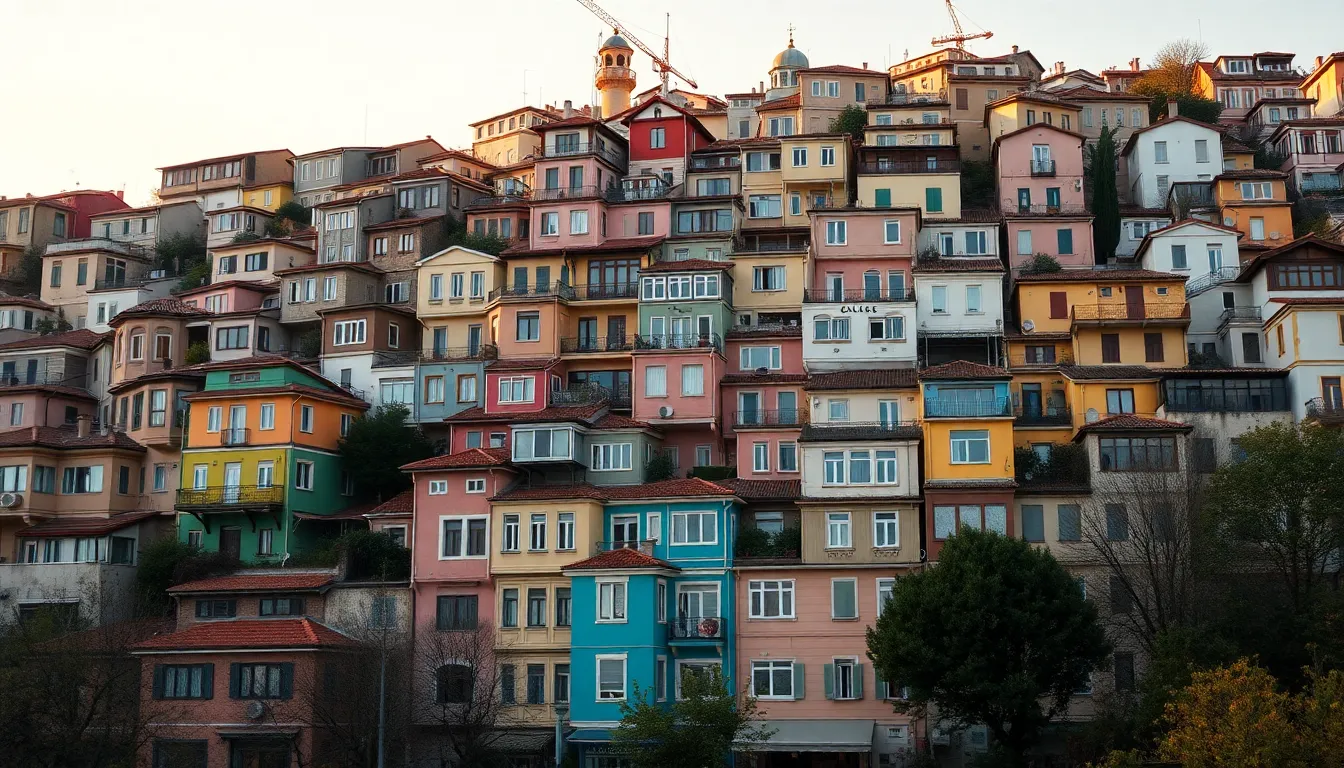
The first time I brought a group to Balat, we got a little lost. The streets there do not run in straight lines, and the map on your phone keeps insisting you are standing inside a building. We turned a corner we had not meant to turn, and there it was: a plain stone wall with a Star of David worked into the iron over a doorway, and an old man on a stool who told us, in a mix of Turkish and a few Ladino words, that his grandfather had prayed there. That is Balat. The history does not announce itself. You have to walk into it, and when you do, it is everywhere.
Istanbul holds two Jewish quarters that matter most to a heritage group: Balat, along the Golden Horn, and Galata, up the hill on the other side of the water. They tell different halves of the same story. Let me walk you through both the way I would walk you through them on the ground.
Why Istanbul Has Two Jewish Quarters
Jews lived in Constantinople long before the Ottomans arrived. The Romaniote community, Greek-speaking Jews who had been in these lands since Roman times, was here first. When the Sephardim arrived after the 1492 expulsion from Spain, they did not replace that older community. They joined it, and over time the Sephardic culture and the Ladino language became dominant.
The two neighborhoods grew along the Golden Horn, the inlet that splits the old city. Balat sat on the southern shore, near the Greek quarter of Fener, and became the densest Jewish neighborhood in the city. Galata, on the northern shore near the Genoese tower, drew a more commercial, outward-facing community, the families tied to trade, banking, and the European powers across the water.
For a group, understanding that split is half the value of the visit. Balat is where daily life happened. Galata is where the community met the wider world.
Balat: The Heart of Jewish Daily Life
Balat is about twenty minutes from Sultanahmet, and it feels like a different city. The famous photographs of Istanbul, the rainbow-colored houses stacked up a steep hill, were mostly taken here. For centuries this was a working Jewish neighborhood, crowded and poor and alive, where Ladino was the language of the market and the courtyard.
The anchor of any Balat visit is the Ahrida Synagogue, which dates to the mid-15th century and is still active. Its bimah is shaped like the prow of a ship, a design tradition that local memory ties to the vessels that carried the exiles to safety. It is one of the oldest synagogues in the city, and standing inside it is the closest thing your group will get to touching the moment the Sephardim arrived.
Nearby sits the Yanbol Synagogue, founded by Jews from the Bulgarian town of Yambol, smaller and quieter but part of the same fabric. Both require advance arrangement to enter, which I will come back to.
What I tell group leaders about Balat is this: do not rush it. The neighborhood rewards slow walking. Young artists and cafe owners have moved in over the last decade, and the area has a new energy, but the old bones are still there in the doorways, the worn steps, the Hebrew inscriptions you only see if someone points them out. A good local guide who can read the streets turns a pretty walk into a history lesson, and that context is part of what we build into every itinerary.
Galata: The Community That Faced the World
Cross the Golden Horn and climb the hill, and you reach Galata, marked by the stone tower the Genoese built in the 14th century. This was the cosmopolitan quarter, where Jewish merchants and bankers lived alongside Italians, Armenians, and Greeks, all of them trading across the Mediterranean.
The Galata neighborhood and the Karakoy waterfront below it held several synagogues. The most important to visit today is the Neve Shalom Synagogue, the largest in the city and the center of Istanbul’s living Jewish community. I give it a full treatment in our guide to Neve Shalom, because it deserves more than a paragraph. For a Galata walk, it is the natural endpoint.
Close by stands the Jewish Museum of Turkey, housed for years in the former Zulfaris Synagogue and now relocated near Neve Shalom. It is small, but it does something a walking tour cannot: it lays out five centuries of the community in objects, photographs, and documents. I almost always put it early in the day, because it gives your group the frame that makes the synagogues land harder.
Galata is also simply a beautiful place to walk. The streets are steep, the views over the water are wide, and the layering of cultures is visible on every block. For a group interested in how Jewish life connected to the broader Ottoman world, this is the neighborhood that shows it.
How a Group Walks These Quarters Today
Here is the practical shape I recommend. Balat and Galata sit on opposite sides of the Golden Horn, so I treat them as two halves of a single day or, for a group that wants to slow down, two separate mornings.
A workable single-day flow looks like this:
- Morning in Balat: the Ahrida and Yanbol synagogues, a walk through the old streets, time for the colorful houses and a coffee stop.
- Midday crossing: over the Golden Horn to Galata, with lunch on the way.
- Afternoon in Galata: the Jewish Museum of Turkey first, then Neve Shalom to close.
A few things worth knowing as you plan. The active synagogues are not open like museums. Visits must be arranged in advance through Istanbul’s Jewish community organizations, and security is serious, for reasons the community has lived through. You will need passport details submitted ahead of time. Heritage Tours handles all of that coordination as part of the itinerary, so your group arrives expected rather than turned away at the door.
Balat is hilly and the cobblestones are uneven. For older congregation members, I plan the route to minimize the steepest climbs and build in places to rest. No one should miss the meaningful stops because of the terrain, and with some care, no one has to.
One more note for pastors and rabbis building a trip. With Heritage Tours, the group leader travels free when you bring fifteen or more participants. For a congregation putting a journey together, that changes the budgeting, and it is worth knowing early.
What These Neighborhoods Carry
Most of Istanbul’s Jews no longer live in Balat or Galata. The community moved over the 20th century to other parts of the city, and the population is much smaller than it once was, thinned by emigration, especially to Israel after 1948. Walking these quarters, you feel that absence honestly. The synagogues that once served thousands now serve a handful.
But absence is not the same as erasure. The Ahrida Synagogue still holds services. Neve Shalom is full on the high holidays. The community that built these neighborhoods is smaller, but it never left, and the buildings are not ruins. They are still in use, still cared for, still standing where they have stood for five hundred years.
That is what I want a group to carry out of Balat and Galata. Not a sense of a vanished world, but a sense of a long one, still going, that you were briefly allowed to walk through.
FAQ: Visiting Jewish Balat and Galata in Istanbul
Can tourists visit the synagogues in Balat and Galata?
Yes, but only with advance arrangement. The active synagogues, including the Ahrida and Neve Shalom, require visits to be booked ahead through Istanbul’s Jewish community organizations, with passport details submitted in advance for security. Heritage Tours coordinates this access for every group, so your visit is approved and scheduled before you arrive.
What is the difference between Balat and Galata for a Jewish heritage visit?
Balat, on the southern shore of the Golden Horn, was the dense working-class Jewish neighborhood where daily life and the oldest synagogues are found. Galata, across the water, was the commercial and cosmopolitan quarter, home to merchant families and now to Neve Shalom and the Jewish Museum of Turkey. Visiting both gives a group the full picture of the community.
How much time should a group spend in Balat and Galata?
A focused group can cover both in a single full day, with a morning in Balat and an afternoon in Galata. Groups that prefer a slower pace, or that want time for the museum and a service, often split it across two mornings. Rushing either quarter is the mistake I see most.
Is Balat suitable for older travelers?
It can be, with planning. Balat is hilly with uneven cobblestone streets, so we route the walk to avoid the steepest climbs and build in rest stops. The meaningful sites are reachable for most groups when the pace is set thoughtfully.
Where does the Jewish history of Istanbul begin?
It predates the Ottomans. The Greek-speaking Romaniote Jews lived in Constantinople since Roman times. The community grew dramatically after 1492, when Sultan Bayezid II welcomed the Sephardim expelled from Spain, and over time Sephardic culture and the Ladino language became dominant in both Balat and Galata.
If you are picturing your congregation walking these streets, I would be glad to help you plan it well. The quarters are real, the synagogues are still standing, and a thoughtful route makes the history land. You can see how we build these journeys on our Turkey heritage page or learn how the group experience works on our group heritage tours page.
Contact us whenever you are ready to start planning.