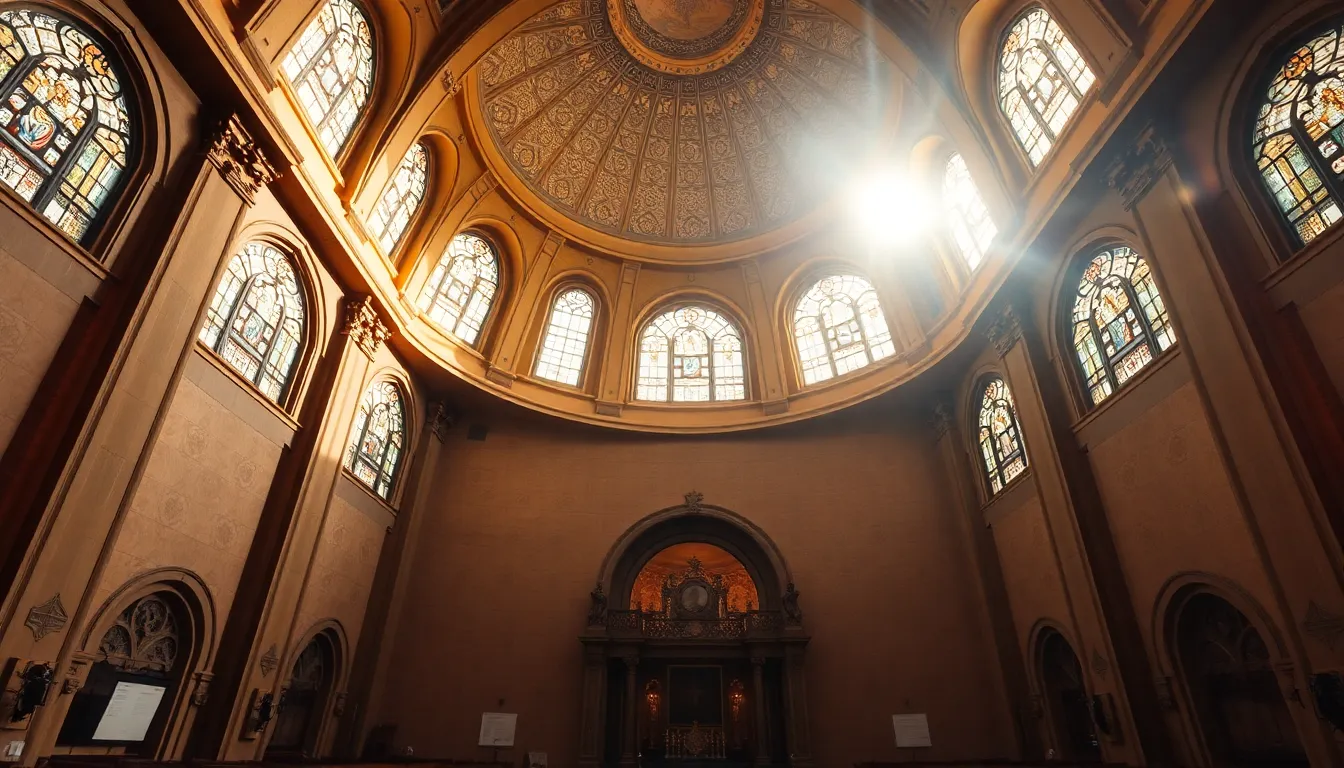
I have brought a lot of groups to Neve Shalom, and the thing I always say before we go in is this: you are not visiting a monument, you are visiting a congregation that is still here. The Ahrida down in Balat carries the weight of age. Neve Shalom carries something different and, in some ways, harder. It carries the weight of a community that has been tested and is still standing. When you walk into the sanctuary and the light comes down through the stained glass, that is what you are walking into.
Neve Shalom is the largest synagogue in Istanbul and the center of Turkish Jewish life today. For a heritage group, it is the place where the long history of Sephardic Istanbul stops being the past and becomes the present. Let me tell you its story and how a group visits it well.
The Center of a Living Community
Neve Shalom sits in the Galata neighborhood, on the Galata side of the Golden Horn, near the old tower. It was built in 1951 on the site of an earlier structure, and from the start it was meant to serve as the main house of worship for Istanbul’s Jews, the great synagogue of the community.
The name means “Oasis of Peace.” It is where the community holds its largest gatherings, its weddings, its bar and bat mitzvahs, its high holiday services. When a dignitary visits the Jewish community of Turkey, this is usually where it happens. For the roughly fifteen thousand Jews who remain in Istanbul, Neve Shalom is the spiritual address.
That is the first thing I want a group to understand. This is not a synagogue preserved for visitors. It is a working center of religious life, and your group is a guest in it. The services still follow the Sephardic rite, carried across the Mediterranean from Spain five centuries ago, the same tradition you can trace back through the Ottoman welcome of 1492.
Inside the Sanctuary
The interior of Neve Shalom is spacious and elegant in a way the older Balat synagogues are not. The ceiling is high. Large stained-glass windows fill the sanctuary with colored light through the day. The ark and the bimah follow the Sephardic arrangement, and the whole room is built to hold a crowd, which it does on the holidays.
What strikes most groups is the calm of the space. After the dense, intimate rooms of Balat, Neve Shalom feels open and luminous. I usually let a group sit in silence for a few minutes before anyone speaks. The room earns that silence.
If your visit lines up with a service, observing or attending one connects everything. The history your group has been walking through, the synagogues, the museum, the old quarters, suddenly has living voices in it. A congregation that came to see ruins discovers it is in the middle of a community that never stopped. That shift lands hard, in the best way.
A Story of Resilience
I do not skip the difficult part of Neve Shalom’s story, and I do not dwell on it sensationally either. I tell it plainly, because the community has lived it plainly.
Neve Shalom has been attacked more than once. In 1986, gunmen entered during Shabbat services and killed twenty-two worshippers. In 2003, a bombing outside the synagogue killed people inside and on the street, both Jews and Muslims. These were among the gravest assaults on a Jewish congregation anywhere in those decades.
Each time, the community buried its dead, repaired the building, and reopened. The synagogue is named Oasis of Peace, and its history has tested that name as severely as any name has been tested. The persistence is part of what you encounter when you visit. The security at the door, which is real and serious, is not bureaucratic caution. It is the memory of what happened here, and the determination to keep the doors open anyway.
When I bring a group, I make space to acknowledge those losses with dignity, often a moment of silence in the sanctuary. It is not the whole story of Neve Shalom, but it is part of it, and a heritage visit that ignores it would not be honest. The community chose to stay. Standing in the room they refused to abandon is its own kind of testimony.
How a Group Visits Neve Shalom
Visiting Neve Shalom takes arrangement, and there is no way around that. The synagogue requires visits to be booked well in advance through Istanbul’s Jewish community organizations. You submit passport details ahead of time, and security screening at the entrance is thorough. This is not a place you drop in on.
Heritage Tours coordinates all of it. We handle the advance registration, schedule the visit during permitted hours, and arrange a guide who can walk your group through the sanctuary and the story. Your group arrives on a list, expected and cleared, which is the only way the visit happens.
A few practical notes. Modest dress is expected. Men cover their heads, with kippot available at the door if needed. Photography is usually restricted, so I prepare groups not to expect to shoot freely inside. And because Neve Shalom is in Galata, it pairs naturally with the nearby Jewish Museum of Turkey and a walk through the Galata quarter, which is how I usually build the day.
For pastors and rabbis planning the trip, one more thing worth knowing early: with Heritage Tours, the group leader travels free when you bring fifteen or more participants. For a congregation, that shapes the budget from the start.
Why End a Jewish Istanbul Itinerary Here
I almost always make Neve Shalom the last major stop of a Jewish Istanbul itinerary, and the reason is structural. A group that starts in Balat moves backward in time, into the 15th century, into the Romaniote and Sephardic origins. Ending at Neve Shalom brings them forward again, into 1951, into the attacks, into the present, into a community of fifteen thousand people who are still here.
That arc, from origin to present, from arrival to endurance, gives a group a sense of completion. They do not leave Istanbul with a feeling that Jewish life there is finished. They leave knowing it continues, smaller and guarded and resilient, in a luminous room named for peace. That is the note I want a congregation to carry home.
FAQ: Visiting Neve Shalom Synagogue
What is Neve Shalom Synagogue?
Neve Shalom is the largest synagogue in Istanbul and the central house of worship for Turkey’s Jewish community. Built in 1951 in the Galata neighborhood, it serves the roughly fifteen thousand Jews who remain in the city, following the Sephardic rite carried from Spain after 1492. Its name means “Oasis of Peace.”
Can a group visit Neve Shalom?
Yes, with advance arrangement. Visits must be booked well ahead through Istanbul’s Jewish community organizations, with passport details submitted for security and thorough screening at the door. Heritage Tours handles the registration, scheduling, and a guide as part of the itinerary.
What happened at Neve Shalom?
The synagogue was the target of a deadly attack during Shabbat services in 1986 and a bombing outside the building in 2003. Each time, the community repaired the synagogue and reopened. The serious security today reflects that history. A heritage visit acknowledges these losses with dignity rather than passing over them.
Is Neve Shalom still an active synagogue?
Yes. It is the working center of Istanbul’s Jewish religious life, holding regular services, weddings, and high holiday gatherings. A group that visits is a guest in a living congregation, not a museum. If the visit aligns with a service, observing one connects the whole heritage story to a present-day community.
How does Neve Shalom fit into a Jewish Istanbul itinerary?
It works best as the final major stop. A group that begins in the older quarters of Balat moves back through the 15th-century origins, then Neve Shalom brings them forward to 1951 and the present-day community. That arc gives the itinerary a sense of completion and leaves a group with the sense that Jewish Istanbul endures.
If you want your congregation to stand in this room and meet a community that is still here, I would be glad to help you plan it. The visit takes arrangement, and that is exactly what we handle. You can see how we build these journeys on our Turkey heritage page or learn how the group experience works on our group heritage tours page.
Contact us whenever you are ready to start planning.